
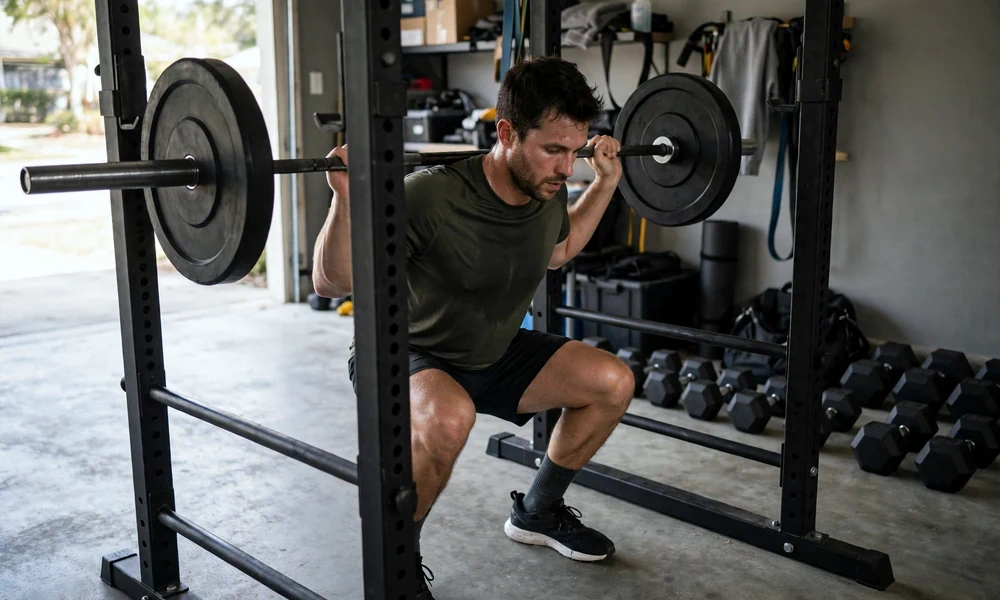
A squat rack is the single piece of equipment that turns a spare room or a garage corner into a real gym. It holds the bar at the right height, catches it when a lift goes wrong, and lets a lifter train heavy alone. Without one, a barbell is mostly a floor ornament: awkward to load, risky to lift from, and impossible to squat with safely at any serious weight. The best squat racks of 2026 are not the biggest or most expensive frames on the market. They are the racks that fit the space they live in, hold steady under load and keep working year after year.
What Makes a Rack Good
The first thing to judge is stability. A good rack does not rock, slide or flex when a bar is racked hard or a set ends with a thud. That steadiness comes from heavy steel, a wide footprint and feet that sit flat on the floor. Light, narrow racks feel fine with an empty bar and alarming with a loaded one. Before buying, check the steel gauge, the weight of the frame itself and whether the rack can be bolted down. A rack that stays put is a rack that can be trusted.
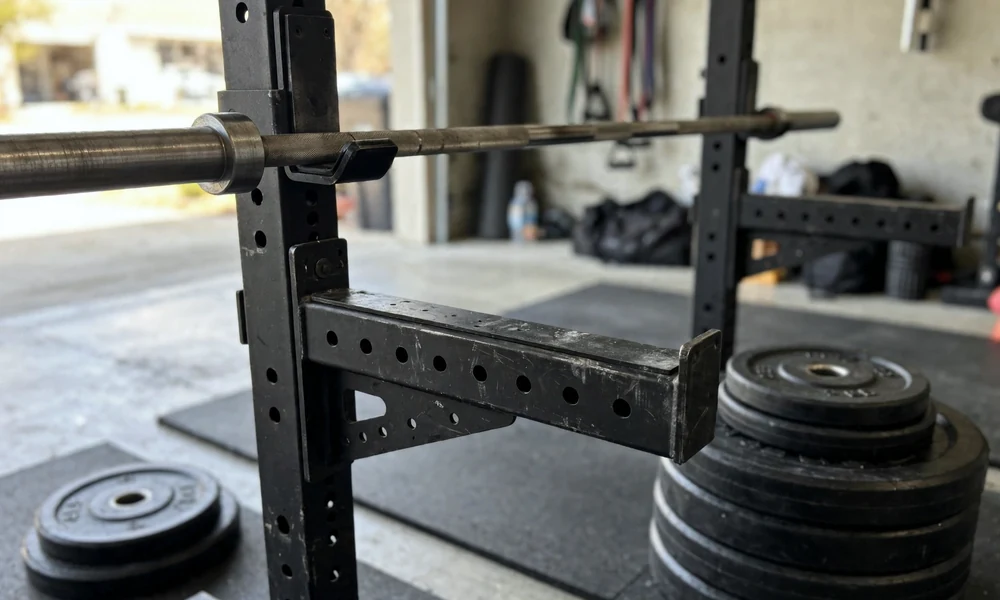
The second thing is the safety system. Safety bars, spotter arms or straps are what catch the bar when a rep fails, and they are the difference between a missed lift and an injury. They should be easy to move, lock firmly into place and sit at a height that catches the bar just below the bottom of the squat. Cheap racks often ship with thin pins or flimsy arms that bend under load. The safeties should be rated for more weight than the lifter will ever move.
The Four Main Types of Rack
Power racks, also called power cages, are four-post frames with safety bars running front to back. They surround the lifter on all four sides, which makes them the safest option for training alone, and they are the most versatile: squats, bench press, overhead press, pull-ups and barbell rows can all be done inside one frame. They take up the most floor space and cost the most, but for a dedicated home gym they are hard to beat. If the room allows it and the budget stretches to it, a power rack is the default choice.
Squat stands are the lighter, simpler alternative: two uprights on a base, with no back posts and no cage around the lifter. They are cheaper, easier to move and far better suited to small rooms, garages that still need to park a car and flats where a full cage would dominate the space. The trade-off is safety and stability. Most stands have no built-in safeties, so a failed rep has nowhere safe to go, and they can tip if a bar is racked unevenly. They suit lifters who train light, who have a spotter, or who simply have no room for anything bigger.
Half racks sit between the two. They have two uprights at the front and a shorter base at the back, often with safety arms and plate storage built in. They hold a bar as securely as a stand but with more stability and a smaller footprint than a full cage. Many half racks also include a pull-up bar and spots for storing plates, which keeps a small gym tidy. For lifters who want most of a power rack’s safety without giving up half a room to it, a half rack is the sweet spot.
Wall-mounted and folding racks are built for the tightest spaces of all. They bolt to a wall or fold flat against it when not in use, freeing the floor for everything else the room has to do. A folded rack can disappear against a garage wall in seconds, which is a genuine blessing in a shared space. The catch is the wall itself: it must be solid enough to anchor the frame, and these racks tend to have lower weight ratings than freestanding cages. For a small room used for more than lifting, though, they are often the only realistic option.
How to Choose Your Rack
Start with the room, not the rack. Measure the floor space, the ceiling height and the route the bar will take in and out of the frame. A power rack needs room around it for loading plates and stepping back, and a tall rack under a low ceiling makes overhead work impossible. Allow for the bar itself, which is longer than most people expect, and for a bench if one will be used inside the frame. A rack that fits on paper but leaves no room to move is a rack that will frustrate its owner every session.
Then match the rack to the lifter. Check the weight rating against the heaviest load the lifter expects to move, with a comfortable margin, and check the hole spacing on the uprights: holes every few centimetres allow fine adjustment of the bar height, which matters more than it sounds when a lifter is between settings. Taller lifters need taller uprights and a wider frame; shorter lifters need a rack that adjusts low enough for a comfortable unrack.
The Best Squat Racks of 2026
The best power rack of 2026 is a heavy four-post cage with thick steel uprights, Westside-style hole spacing and safety straps rather than solid bars. The straps catch a dropped bar more quietly and with less bounce, and they are kinder to the barbell itself. It adjusts quickly, holds steady under heavy loads and has room inside for a bench, so squats, bench press and overhead work all fit in one frame. It is the rack for the lifter who trains seriously several times a week and wants the safest possible set-up at home.
The best half rack of the year is a compact two-post frame with safety arms, plate storage and a pull-up bar across the top. It takes up far less floor than a full cage but still feels solid under a heavy bar, and the built-in storage keeps plates off the floor and close at hand. It suits the garage gym or spare room where space is limited but safety still matters. The pull-up bar adds a whole second exercise to the same footprint, which makes the half rack one of the best value choices in home gym equipment.
The best squat stand of 2026 is a wide-based pair of uprights with heavy feet, adjustable J-hooks and a connecting bar that stops the two sides drifting apart. It is light enough to move against a wall when the room is needed for something else, yet stable enough for steady squatting at moderate weights. It is the pick for the lifter who trains light to medium, who has a spotter or stays well within their limits, or who simply cannot fit a larger frame. Paired with a good bench, it covers the basics at a modest price.
The best folding rack of 2026 bolts to the wall and folds flat in under a minute, with a solid locking mechanism that leaves no doubt when it is open. It holds a bar securely, adjusts through a useful range of heights and disappears when the session is over. It is the rack for the small flat, the shared garage or the room that has to be a gym in the morning and something else by the evening. Installation needs a solid wall and careful fixings, but once it is up, it is the most space-efficient serious rack available.
The best budget rack of the year is a simple, honest half rack with no extras: solid steel, sensible hole spacing and safety arms included in the box. It does not have a pull-up bar, plate storage or fancy finishes, and it does not need them. What it does have is a stable base, J-hooks that hold the bar without slipping and a weight rating that covers most home lifters comfortably. For a first rack, it is the smartest buy.

What Else You Need
A rack on its own is only the frame of a home gym. A barbell and plates are the obvious partners, and they should be bought to match the rack: an Olympic bar and plates fit standard J-hooks, while cheap bars with odd diameters can sit badly in the hooks. A bench turns the rack into a full pressing station, and rubber mats protect the floor and plates from drops. A set of collars keeps plates from sliding mid-set, and a lifting belt helps when the weight gets serious. None of this needs to be expensive, but each piece makes the rack safer and more useful.
Common Mistakes to Avoid
The biggest mistake is buying a rack that does not fit the room. A cage that crowds the walls leaves no space to load plates, and a tall rack under a low ceiling turns overhead pressing into an exercise in frustration. Measure twice, then measure the bar and the bench as well, before ordering anything. The second mistake is choosing on price alone. A very cheap rack with thin steel and weak safeties is a false economy: it flexes, it rattles, and it is the one piece of equipment that absolutely must not fail.
Another common mistake is ignoring the safeties. Some lifters never set them, or set them at the wrong height, which leaves them with no protection at all. The safeties should be set before every heavy set, at a height that catches the bar just below the bottom of the squat, and they should be tested with a light bar first.
How a Rack Fits a Home Gym
A squat rack is usually the centrepiece of a home gym, and the rest of the room grows around it. The bar, the plates and the bench live close by, and the floor space in front of the rack becomes the training area. Readers building that room from scratch will find the best home gyms guide useful for planning the whole set-up, from flooring to layout, because a rack works best when the space around it is planned rather than improvised. The same thinking applies to the smaller pieces: a rack is only as good as the kit that goes with it.
The rack also pairs naturally with the simpler tools that fill out a training session. A warm-up with an exercise ball loosens the hips and back before the first heavy set, and a few sets with a medicine ball add power work that a barbell alone does not cover. Together they turn a rack from a single-exercise station into a complete training corner: strength from the bar, mobility from the ball, and power from the throws, all in a space not much bigger than a parking bay.
The Verdict
The best squat rack of 2026 is the one that fits the room, the lifter and the way they train. For most people that means a solid half rack or a full power cage: stable, safe and versatile enough to cover years of training. For a tight space, a good folding rack does the same job and then gets out of the way. Whatever the choice, buy for stability and safety first, measure the room before ordering, set the safeties on every heavy set and look after the frame. A rack chosen this way will still be holding the bar safely years from now.


