The top stainless steel cleaners for fingerprint-free appliances in 2026 are the ones that lift oily fingerprints without leaving streaks, haze, or a greasy film behind. Stainless steel looks superb when it is clean, but it shows every touch. A fridge door handled daily collects fingerprints and smears from cooking hands. The right cleaner removes that oily layer in one pass and leaves the steel looking even and calm again.
Choosing one is not about buying the strongest bottle. It is about matching the product to the finish, because brushed, polished, and fingerprint-resistant steel behave differently. This guide compares the strongest stainless steel cleaners of 2026 and shows the simple technique that keeps appliances fingerprint-free for longer.
Key Takeaways
- Fingerprints are oil, not dirt, so a cleaner must dissolve light grease and lift it away rather than simply wetting the surface.
- Always wipe with the grain of the brushed steel, never across it, because wiping across the grain pushes oil into the fine lines and leaves streaks.
- A spray or foam cleaner plus a clean microfibre cloth beats a paper towel every time, since paper leaves lint and can scratch a polished finish.
- Polishes leave a thin protective layer that resists new fingerprints, but they can build up if they are used too often.
- Test any new cleaner on a hidden patch first, especially on black stainless steel, which marks more easily than standard brushed steel.
Why Fingerprints Show So Clearly on Stainless Steel
Fingerprints show on stainless steel because the metal is smooth and reflective. When a fingertip touches the door, it leaves a thin film of skin oil, and that oil catches the light differently from the clean steel around it, so the print appears as a pale smudge. On brushed steel the effect is stronger, because the fine lines of the grain scatter light, and the oil fills those lines and changes how they reflect. Cooking makes it worse, since oily hands leave heavier prints and steam can set a film of grease across a whole front.
Ordinary water cannot fix this, because water does not dissolve oil. A damp cloth spreads the oil into a thin, even layer, which looks clean for a moment and then dries into a cloudy haze. A stainless steel cleaner works by surrounding the oil with surfactants, lifting it off the surface so the cloth can carry it away. Finish matters too: brushed steel has a visible grain, polished steel shows prints even more clearly, and black steel is a coated finish that abrasives can scratch permanently.
The Main Types of Stainless Steel Cleaner
Stainless steel cleaners come in several distinct forms, and the right one depends on the appliance, the finish, and how dirty it is. A spray that is perfect for a fridge door may be too light for a cooker hood coated in cooking grease, and a heavy polish will be wasted on a lightly touched dishwasher front. Most households need only one or two of the types below.
Spray Cleaners
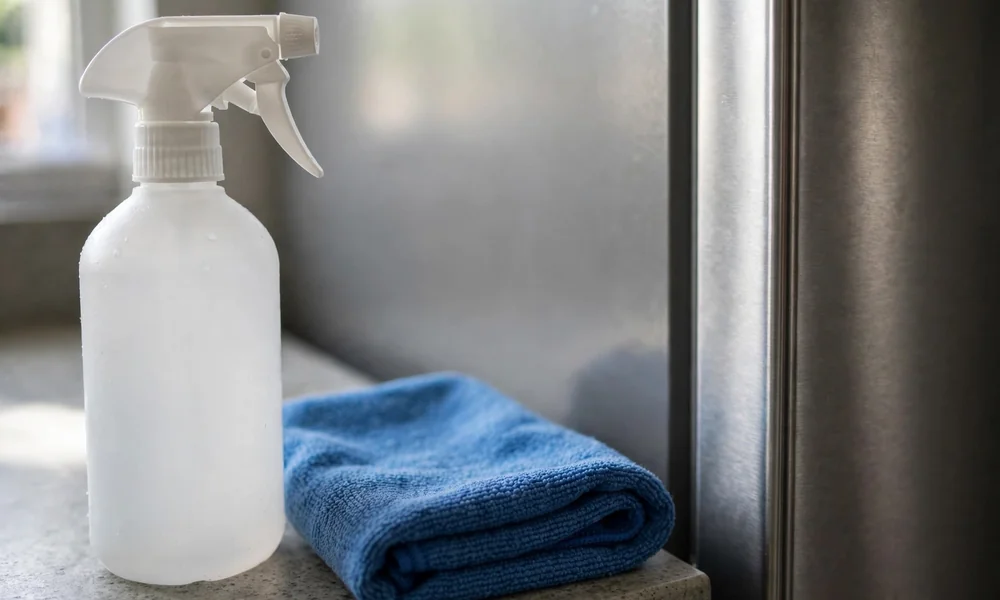
A spray cleaner is the best stainless steel cleaner for most homes in 2026, and the first bottle to buy. Sprays lift fingerprints, light grease, and everyday smudges with a short dwell and one wipe, and a good one dries without streaks on brushed steel, where cheaper sprays leave a cloudy film. Their weakness is heavy grease, since a light spray can struggle with a cooker hood that has collected months of cooking vapour. They suit fridge doors and oven doors wiped often; spray onto the cloth, not the appliance, so the cleaner does not run down the door.
Foam Cleaners
A foam cleaner is the best choice for vertical surfaces and for appliances that need a longer dwell. The thick foam stays where it is put instead of running down a fridge door, so it keeps contact with the dirt for the whole dwell time. That contact is what dissolves heavier smudges, so a foam often clears in one application what a thin spray needs two attempts to shift. Foam suits oven doors and cooker hoods, but it needs a minute or two to work and must be buffed off thoroughly with a dry cloth, or it leaves a pale residue in the grain.
Cleaning Wipes
Stainless steel wipes are the most convenient option, and the most expensive per clean. A wipe is pre-dosed with cleaner, so there is nothing to spray and nothing to measure, and it suits a quick pass over a fridge door before guests arrive. The weakness is coverage: one wipe dries out before it has cleaned a large appliance, and a second wipe is needed for the buffing pass. Wipes also leave more residue than a spray and cloth. Keep them for small jobs such as a microwave front. Never use a gritty wipe, or the same wipe on a hob and then a fridge, since grit can scratch the next surface.
Polishes and Creams
A stainless steel polish is a different product from a cleaner, and the distinction matters. A cleaner removes dirt; a polish adds a thin protective layer that makes the steel shine and resists new fingerprints. Polishes are rubbed on with a cloth and buffed to a shine, and they suit appliances that are already clean but look dull. Its strength is longevity: a polished door stays fingerprint-free for days, because new oil sits on the polish layer. Its weakness is build-up: used daily, polish turns cloudy, especially on black steel. Use it once a week at most, on steel that is already clean.
What Not to Use
Some cleaners damage stainless steel, and the worst offenders are already under the sink. Bleach-based sprays can pit and stain steel, especially around handles and edges, and they should never be used on an appliance front. Abrasive creams and scouring pads scratch the grain and leave pale lines that catch the light. Glass cleaner is a common mistake: it leaves a streaky film on brushed steel, because it is made for smooth glass rather than grained metal. An all-purpose spray is a safer fallback than bleach, but it is not designed for steel, and our guide to the best vs worst all-purpose cleaners explains why a general spray leaves residue where a dedicated steel cleaner dries clear.
Stainless Steel Cleaners at a Glance
| Best for | Cleaner type | Effort | Standout strength |
|---|---|---|---|
| Everyday fingerprints | Spray cleaner | Low | Fast, streak-free daily clean |
| Vertical doors and hoods | Foam cleaner | Medium | Clings and dissolves heavy smudges |
| Quick tidy before guests | Cleaning wipes | Low | Ready in seconds, no bottle needed |
| Lasting shine | Polish or cream | Medium | Protective layer resists new prints |
| Light grease on hobs | Spray degreaser | Medium | Cuts cooking grease near the steel |
| Delicate coated steel | Gentle pH-neutral spray | Low | Safe on black and coated finishes |
How to Clean Stainless Steel Without Streaks
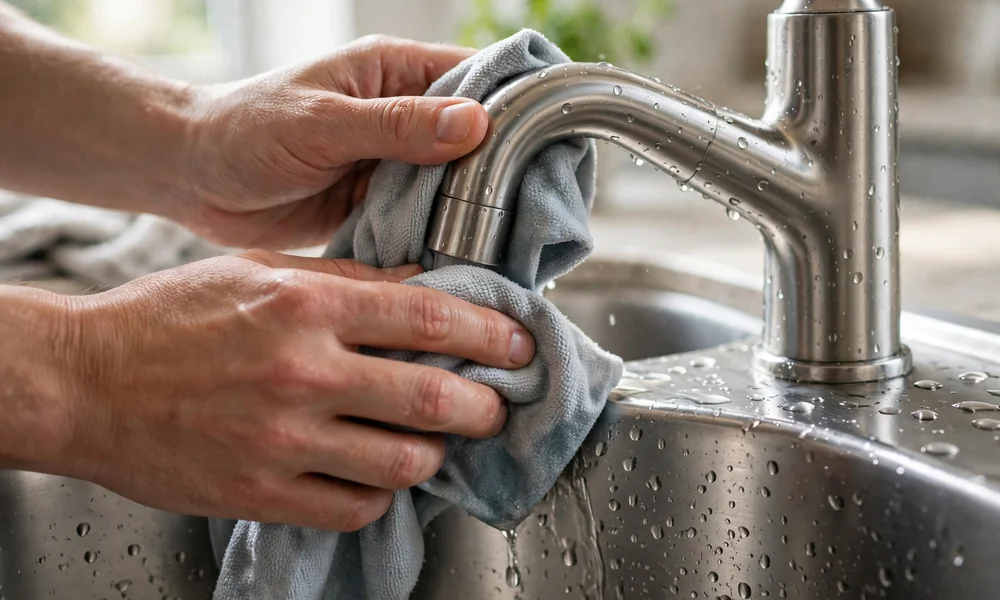
The technique matters as much as the bottle, and most streaks come from the method rather than the product. Start by finding the grain: fine parallel lines, usually horizontal on a fridge door and vertical on an oven. Every wipe should follow those lines. Wiping across the grain pushes oil into the lines and leaves a streak; wiping with the grain lifts the oil out.
Use two cloths: one damp with cleaner, one dry for buffing. Spray onto the first cloth and wipe with the grain in long strokes, then buff the same area with the dry cloth. That second pass removes the last traces of cleaner and oil, and it is the step most people skip. Wash the cloths without fabric softener, which coats the fibres and stops them picking up oil.

Clean little and often: a fridge door wiped daily takes thirty seconds, while a door left for a month needs foam, a long dwell, and two passes. Wipe the steel near the hob after frying. For heavy grease, a kitchen degreaser does the first pass, and our guide to kitchen cleaners that cut grease fast covers the bottles that lift cooking oil without damaging worktops or sinks. For the oven front, use the same grain technique, and read our guide to oven cleaners that cut through baked-on grease before tackling the inside, which is a different job entirely.
Mistakes That Leave Streaks
The most common mistake is using too much product: a heavy spray floods the grain and dries into a cloudy film. A light mist on the cloth is enough, and a second light pass beats one heavy one. The second mistake is wiping in circles, which works against the grain in every direction and leaves swirl marks. Long straight strokes with the grain are slower but far cleaner.
The third mistake is the wrong cloth: paper towels leave lint and can scratch polished steel, while old tea towels shed fibres. A clean microfibre cloth picks up oil rather than pushing it around. The fourth is cleaning in sunlight or on a hot appliance, since the cleaner dries before it can be buffed. Wait for the oven to cool, and do not forget the handles, which collect the most fingerprints of all.
Stainless Steel Cleaning Checklist
- Find the grain direction first, and wipe with it in long, straight strokes, never in circles.
- Spray the cleaner onto the cloth, not directly onto the appliance, to control the amount.
- Use two microfibre cloths: one for cleaning, one dry cloth for the final buff.
- Test a new cleaner on a hidden patch, especially on black or fingerprint-resistant steel.
- Wipe the steel little and often, and clean handles and edges as well as the flat front.
- Polish once a week at most, and always clean the steel properly before applying polish.
Frequently Asked Questions
Why does my stainless steel look worse after cleaning?
It usually looks worse because the oil was spread rather than lifted. A damp cloth with no cleaner, or a cleaner wiped across the grain, spreads fingerprints into a thin haze that dries cloudy. Use a steel cleaner, wipe with the grain, and finish with a dry buff.
Can I use vinegar on stainless steel?
Yes, for water marks. A cloth dampened with a little white vinegar lifts mineral spots, followed by a rinse and a dry buff. Do not leave vinegar on steel, or use it on black steel, where it can dull the coating.
Do stainless steel wipes work as well as a spray?
They work for a quick tidy, but not as well as a spray and two cloths: wipes dry out before covering a large door and leave more residue. Keep them for small jobs such as a microwave front.
How often should I polish stainless steel appliances?
Once a week at most. Polish resists new fingerprints, but daily use builds up a cloudy layer, especially on black steel. Clean the steel first, then polish.
Is black stainless steel harder to keep clean?
Yes: it is a coated finish rather than bare metal, and it marks more easily. Use only a gentle, pH-neutral cleaner and a soft cloth, never an abrasive, and test any new product on a hidden patch first.
What is the fastest way to remove fingerprints before guests arrive?
Spray a steel cleaner onto a microfibre cloth, wipe with the grain in long strokes, and buff with a dry cloth. It takes under a minute for a fridge door and leaves a clear finish for the evening.
The Bottom Line
The best stainless steel cleaner in 2026 is a spray or foam used with two microfibre cloths and a with-the-grain technique. Buy a spray for daily fingerprints, a foam for heavier smudges, and a polish for a weekly shine. Avoid bleach, abrasives, and glass cleaner, test new products first, and wipe little and often.