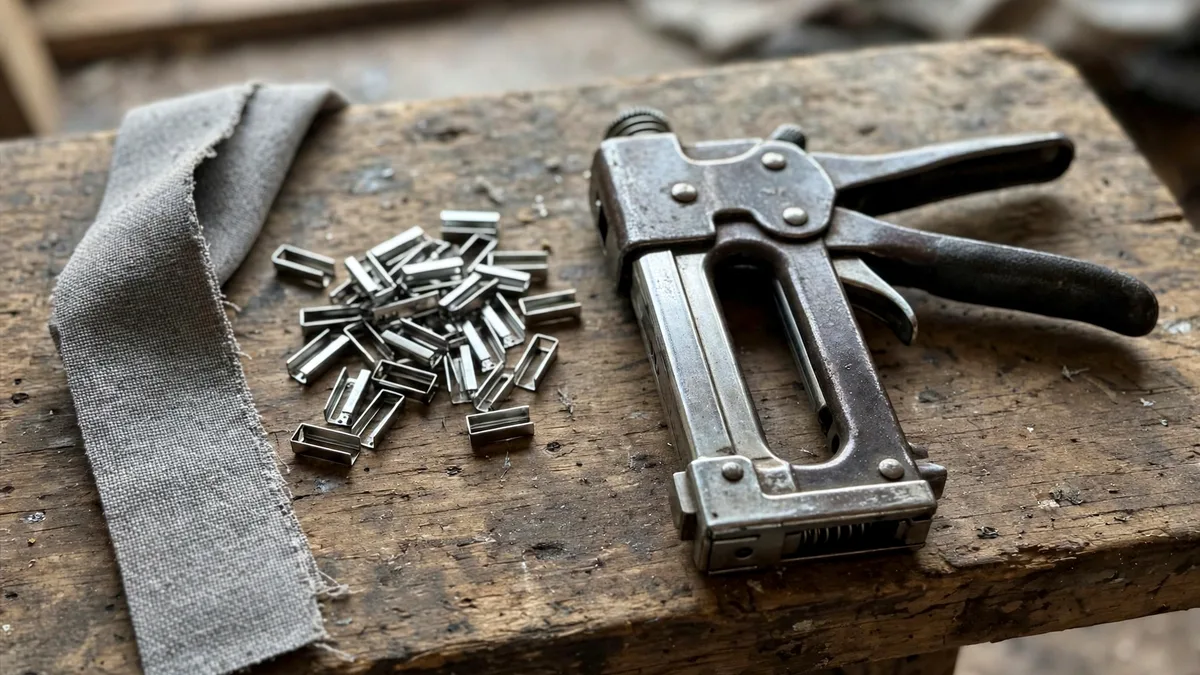
A staple that sits proud of the surface is a staple that will snag, scratch, and work loose. The staple guns that drive flush every time in 2026 put each staple exactly where it belongs: crown flat against the material, legs buried to the same depth, and nothing sticking up to catch a sleeve or a fingertip.
This guide explains how staple guns work, which type suits which job, and how to use one so every staple lands cleanly.
Key Takeaways
- A flush drive comes from matching the gun, the staple, and the material: no single setting works for everything.
- Manual guns suit upholstery and light work; electric and pneumatic guns suit long runs and hard materials.
- Buy the staple size first, then the gun: crown width and leg length decide whether the staple holds or splits the wood.
- Depth control, a firm grip, and a flat base against the work keep staples from standing proud.
- Test on scrap first, keep the magazine clean, and never force a jammed gun.
What a Staple Gun Actually Does
A staple gun drives a U-shaped metal staple into a surface with a single sharp blow: a spring or a burst of compressed air throws a driver blade down, pushing the staple’s two legs into the material while the crown presses down on the surface. A good gun delivers the same force on the hundredth staple as on the first, so every staple lands at the same depth. A weak gun leaves some staples flush and others standing proud.
The Main Types of Staple Gun
Manual staple guns are the classic squeeze-handle tool. You press the handle down, a spring loads, and at the bottom of the stroke it releases and fires the staple. They need no power or hose, and they are light enough to use overhead. Their limit is force: in hardwood, a manual gun may not drive the staple fully home, and after a hundred staples your hand will feel it. They suit upholstery, light fabric work, and short jobs.
Electric staple guns use a motor or a solenoid to fire at the pull of a trigger. They drive with the same force every time, which is exactly what a flush finish needs, and they take the effort out of long runs. Corded models are the strongest; battery models are heavier and need charging. They suit reupholstering a whole chair, fixing insulation, or any job with hundreds of staples.
Pneumatic staple guns run on compressed air from a compressor and are the workhorses of workshops. They fire fast, drive deep into hardwood, and rarely leave a staple proud. Their drawback is the setup: a compressor, a hose, and ear protection. For a professional upholsterer or a builder fixing house wrap all day, they are the obvious choice; for one chair at home, they are more tool than the job needs.

What “Flush” Means, and Why Staples Stand Proud
A staple is flush when its crown lies flat against the surface and its legs are fully buried, with no gap underneath and no tilt. A staple that stands proud has its crown raised a millimetre or two, usually because the gun ran out of force before the legs were fully in, or because the base of the gun was not flat against the work when it fired. The usual causes are easy to fix: a staple too long for the material, a gun too weak for hardwood, a gun held at an angle, or a worn driver blade. Each has a simple cure: shorter staples, a stronger gun, a flat hold, or a clean blade.
Depth matters beyond looks. A proud staple snags fabric, scratches skin, and catches on anything dragged across the surface. Worse, it is a weak staple: legs that are not fully buried have less grip, so the staple works loose over time. Flush is not cosmetic; it is the staple doing its job.
Staple Sizes and Types, Explained
Staples are described by three numbers: crown width, leg length, and wire thickness. The crown width is the flat bridge across the top, usually ten or twelve millimetres for upholstery; a wider crown spreads the load, while a narrow crown suits thin material and tight corners. The leg length is how deep the staple goes, from six millimetres for thin fabric on softwood to fourteen or more for thick foam and plywood.
Leg length is the number most people get wrong. Too short, and the staple barely grips, so it pulls out under tension. Too long, and the legs punch through thin wood and stick out the back. The rule is simple: the legs should go about two-thirds of the way through the wood, and never all the way through. Wire thickness decides strength: fine-wire staples suit fabric, heavy-wire staples suit carpet and sheeting, and stainless staples are worth the extra cost outdoors, where ordinary steel rusts and stains. Check the gun’s manual for the sizes it accepts.
Staple Guns Compared: Which Type for Which Job
| Staple gun type | Best for | Drive strength | Key point |
|---|---|---|---|
| Manual | Upholstery, light fabric, short jobs | Moderate | No power needed, but hard on the hand |
| Electric, corded | Long runs, reupholstery, insulation | Strong, even | Same force on every staple |
| Electric, battery | Jobs away from a socket | Strong | Heavier, needs charging |
| Pneumatic | Workshops, hardwood, all-day use | Strongest | Needs a compressor and hose |
| Hammer tacker | Roofing felt, house wrap, fast runs | Strong | Fast but less precise |
The Best Staple Guns of 2026
The best staple guns of 2026 are not the most powerful or the most expensive. They are the ones that drive flush, shot after shot, in the material they were bought for, without jamming and without tiring the hand that holds them.
Best Overall: A Heavy-Duty Manual Gun
A well-built manual gun with a steel body, a comfortable grip, and an adjustable drive is the right first buy for most homes. It fires the common ten-millimetre crown staples in six to fourteen-millimetre lengths, and it is light enough to use one-handed on a chair frame. Look for a bottom-loading magazine with a clear view of the strip.
Best for Upholstery: A Fine-Wire Electric Gun
Upholstery work means hundreds of staples through fabric, foam, and wadding into a wooden frame, and an electric gun keeps every one of them at the same depth. A fine-wire model suits this work best: the staples are small enough not to split the frame, and the crown holds the fabric without tearing it.
Best for the Workshop: A Pneumatic Stapler
In a workshop, a pneumatic stapler is the tool that never leaves a staple proud. Fed by a compressor, it drives heavy-wire staples deep into hardwood with a single pull, and the air pressure adjusts the depth, so the same gun can fix thin sheeting one minute and hardwood the next. A nail gun that drives true every time is the companion tool for the same bench: nails for structure, staples for holding fabric and sheeting flat.

Using a Staple Gun So Every Staple Sits Flush
Start by testing on scrap. Take a piece of the same wood and the same fabric you will use, fire five staples, and look at them: each crown should be flat, with no tilt and no gap. If they stand proud, increase the depth or switch to a stronger gun; if they sink too deep and cut the fabric, back the depth off or use a shorter staple. Five minutes of testing saves an afternoon of prising out bad staples.
Hold the gun flat against the work, with the whole base in contact, and press down firmly before you fire: a gun held loosely will bounce and leave a proud staple. Space the staples evenly, about two to three centimetres apart on a chair seat, and keep them in a straight line. On fabric, pull the material taut before each staple, but not so tight that it puckers.
Common Mistakes That Leave Staples Proud
The most common mistake is the wrong staple length. Long staples in thin wood bottom out and leave the crown raised; short staples in thick material barely grip. Match the leg length to the wood, and test on scrap before committing to the real piece. The second mistake is holding the gun at an angle: even a few degrees of tilt puts one leg deeper than the other, and the crown lifts on the shallow side. Keep the base flat and the gun square to the surface. A dirty driver blade also strikes off-centre, so brush the nose clean, and never staple into a knot or a screw: the legs stop dead and the crown stays proud.

Looking After Your Staple Gun
A staple gun lasts for years if it is kept clean and dry. After each job, brush the dust out of the nose and magazine channel. A drop of light machine oil on the moving parts every few months keeps the action smooth; wipe off the excess, since too much oil attracts dust. Store it with the magazine empty and the handle locked, somewhere dry. Keep a caulk gun beside it: staples hold things in place, and sealant fills the gaps they cannot.
To clear a jam, disconnect the power or air hose first, open the magazine, and lift the jammed staple out with pliers. Never look down the nose of a loaded gun. If jams keep happening, the staples are probably the wrong size, or the magazine spring is worn. A utility knife is for trimming fabric, not for prising at a jammed gun.
Checklist: Before You Buy a Staple Gun
- Decide the job first: upholstery, insulation, or workshop work, and how long each run will be.
- Check which staple sizes the gun takes, and that they fit the wood and fabric you will use.
- Look for depth adjustment, a bottom-loading magazine, and a narrow nose for corners.
- Test the grip: a gun that hurts your hand after ten staples will not finish a hundred.
- Buy the right staples with the gun, in the crown width and leg length the job needs.
- Test five staples on scrap before you start on the real piece.
Frequently Asked Questions
Why do my staples stick up instead of sitting flush?
Usually the gun is too weak, the staple is too long, or the gun was held at an angle. Test on scrap, increase the depth, and hold the base flat. If staples still stand proud in hardwood, you need a stronger gun.
What staple size should I use for upholstery?
A ten-millimetre crown with eight to ten-millimetre legs suits most chair frames in softwood, with the legs going about two-thirds of the way through the frame wood.
Can I use a staple gun on hardwood?
Yes, but a manual gun will struggle. Hardwood needs an electric or pneumatic gun, and shorter, heavy-wire staples. Avoid knots, which stop any staple dead.
How do I stop a staple gun from jamming?
Use the size the gun was built for, keep the magazine clean, and load the strip the right way round. Most jams come from wrong-size staples or a dirty nose.
Is an electric staple gun better than a manual one?
For long runs, yes: it drives with the same force every time and does not tire your hand. For a single chair, a manual gun is cheaper and lighter.
Can a staple gun fix carpet or insulation?
Yes. Heavy-wire staples hold carpet underlay and insulation batts well, and a hammer tacker is faster for large flat areas. Use stainless staples in damp rooms.
The Bottom Line
The staple guns that drive flush every time in 2026 are the ones matched to the job: the right type, the right staple size, and a flat, firm hold. Test on scrap, keep the gun clean, and every staple will sit flat, hold tight, and stay out of sight.