Caulk guns that lay a smooth bead in 2026 are the difference between a neat, waterproof seal and a wavy mess that peels away within months. The gun looks simple, just a frame, a trigger and a rod that pushes the sealant out, but a good one feeds the tube evenly, stops the flow the instant you release the trigger, and lets you control the bead with one hand. A bad one drips, jumps, and leaves sealant everywhere except the joint.
Choosing the best caulk gun is not about buying the most powerful or expensive tool on the shelf. It is about matching the gun to the job, because sealing a bath needs a different tool from filling gaps around a window frame. This guide compares the strongest caulk guns of 2026 and helps you pick one that lays a smooth bead first time.
Key Takeaways
- A dripless gun stops the flow when you release the trigger; a ratchet gun keeps pushing and wastes sealant.
- Thrust ratio matters: 10:1 suits thin sealants, while 18:1 or higher handles thick adhesives without straining your hand.
- Cut the nozzle small and at 45 degrees, because a wide cut makes a fat bead you cannot tidy up.
- Keep the gun moving at a steady speed and let the bead do the filling.
- Clean the gun after every use, because dried sealant ruins the mechanism.
Why a Good Caulk Gun Matters
Sealant is unforgiving. Once it is on the surface, you have only a few minutes to shape it before it starts to skin over, and there is no easy way to fix a bead that went on too thick, too thin, or in the wrong place. A smooth, even push gives you a bead of the same width from one end of the joint to the other, which is what makes the finished seal look professional.
A poor gun makes the same job far harder. The rod slips, the trigger needs two hands, or the sealant keeps oozing after you stop squeezing, and every fault shows up in the finished bead. The difference is usually only a few pounds, yet it decides whether a bathroom reseal takes twenty minutes or an afternoon of cleaning up.
Types of Caulk Guns Compared
Ratchet guns are the cheapest and most common type. Each squeeze advances the rod a notch, and the rod stays where it is when you let go. They are fine for a quick job with thin sealant, but they keep pushing after you stop, which wastes sealant and makes a mess at the end of every bead. They also need the most hand strength.
Dripless guns are the best choice for most people. A spring mechanism pulls the rod back slightly when you release the trigger, so the flow stops at once. They cost a little more than ratchet guns, but they waste far less sealant and give a much cleaner finish. Heavy-duty guns use a higher gear ratio, often 18:1 or 24:1, to push thick adhesives that a normal gun cannot move at all.

Electric and cordless caulk guns do the pushing for you, with a motor that feeds the tube at a steady, adjustable speed. They are the easiest option for long runs and thick materials. For a home user they are harder to justify, because they cost several times as much as a good manual gun and need charging, but for anyone with weak hands they can be worth every penny.
The Best Caulk Guns of 2026
We judged every gun on flow control, thrust, comfort, build quality and value, testing each one with silicone, acrylic and adhesive sealants. The five picks below cover every job and every budget.
Best Overall: Newborn 930-GTD Drip-Free Gun
The Newborn 930-GTD is the best caulk gun for most people in 2026. Its 10:1 thrust ratio handles silicone and acrylic easily, the drip-free mechanism stops the flow cleanly when you release the trigger, and the steel frame is strong enough to survive years in a toolbox. The rotating barrel keeps the nozzle at the right angle around corners, and at around $15 it costs little more than a basic ratchet gun.
Best Heavy-Duty: Albion B12S20 High-Thrust Gun
The Albion B12S20 is the pick for thick adhesives and construction sealants that defeat ordinary guns. Its 18:1 thrust ratio pushes stiff material smoothly with one hand, and the full-size steel cradle supports the tube so it cannot bend or burst. It is heavier than a standard gun, but for serious work it is the one professionals reach for.
Best Budget: Bates Choice Dripless Gun
The Bates Choice gun is the strongest budget caulk gun we found. It has a proper drip-free mechanism, a comfortable grip, and a 10:1 thrust ratio that copes with most household sealants. The frame is lighter than the Newborn and will flex slightly under a very stiff tube, but for occasional bathroom and kitchen jobs it lays a smooth bead at a price that is hard to argue with.
Best Cordless: Ryobi 18V One+ Caulk Gun
The Ryobi 18V One+ is the best cordless caulk gun for anyone who already owns Ryobi batteries. The motor feeds the tube at a steady, variable speed, so long beads come out perfectly even, and the auto-reverse stops drips at the end of each run. It is heavier and bulkier than a manual gun, but for big jobs or weak hands it takes the effort out of sealing entirely.
Best Compact: Cox Easiflow HD Skeleton Gun
The Cox Easiflow skeleton gun is the pick for tight spaces, where a full-size gun cannot fit. Its open frame is light and easy to hold at awkward angles, and the high-thrust mechanism handles thick sealant well. It holds the tube less securely than a cradle gun, so it is not the best choice for very stiff adhesives, but where space is tight nothing else comes close.
How to Lay a Smooth Bead
Preparation decides the result. Remove the old sealant completely, clean the joint with warm soapy water, and let it dry fully, because new sealant will not stick to damp or dirty surfaces. Mask both sides of the joint with painter’s tape, leaving a gap only as wide as the bead you want, and cut the nozzle small, at 45 degrees.
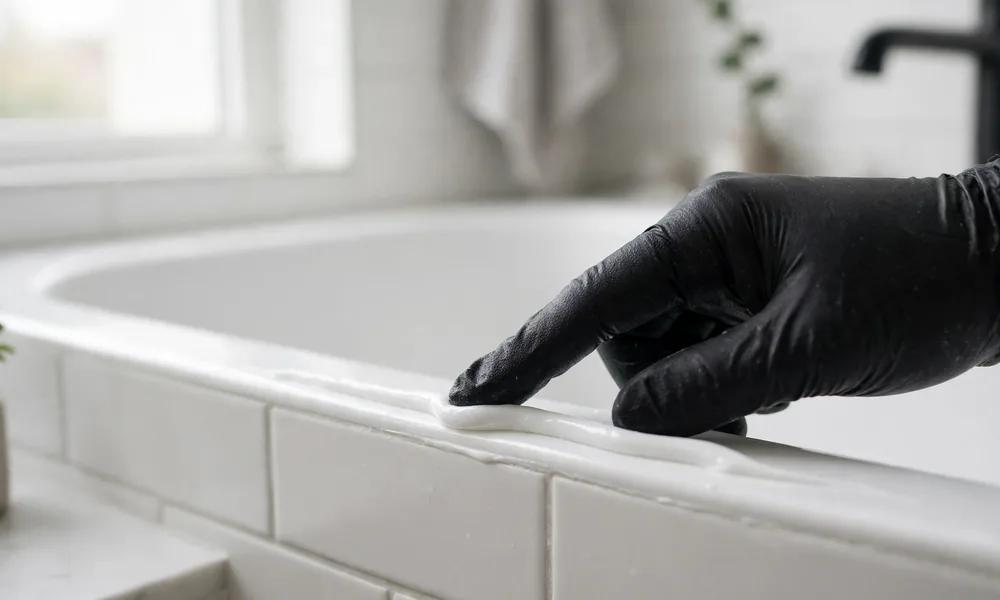
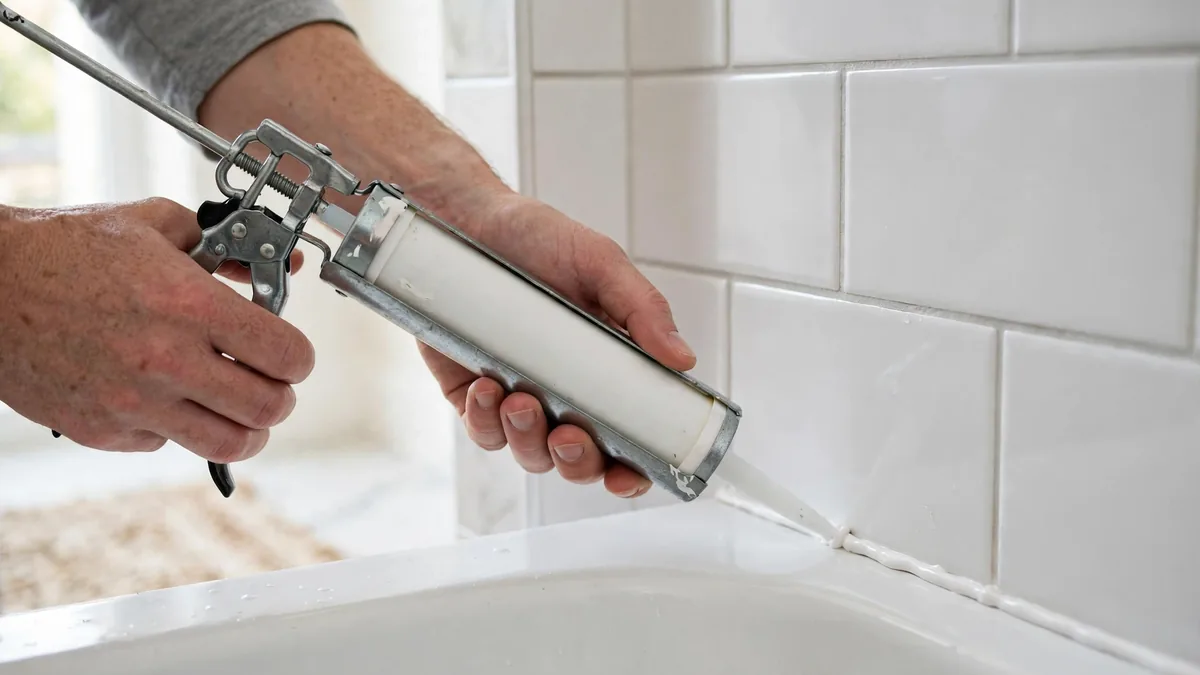
Load the tube, puncture the seal, and squeeze a short test bead onto cardboard to check the flow. Then hold the gun at 45 degrees, press the trigger steadily, and move along the joint at an even speed. Smooth it in one pass with a wet finger or a smoothing tool, pull the tape off immediately, and leave the sealant to cure without touching it.

The most common mistake is moving too slowly, which piles sealant into a fat bead that is impossible to smooth neatly. The second is cutting the nozzle too wide at the start, because you cannot make a bead narrower afterwards. Cut small, test on cardboard, and remember that you can always lay a second bead.
Mistakes That Ruin a Good Bead
Sealing over old, loose sealant is the fastest way to waste a tube. The new bead sticks to the old one instead of the surface, and both peel off together within weeks. Strip the old sealant out first, even when it looks sound, and check that the joint is dry underneath.
Using the wrong sealant is just as common. Bathroom joints need a mould-resistant silicone, window frames need a flexible acrylic that can be painted, and gaps that move need a sealant that stays elastic. The gun cannot fix a sealant chosen for the wrong job, so read the tube before you load it. If your sealing job is part of a bigger bathroom refresh, our guide to the best cordless drills for home projects covers the tool for fixtures and fittings, and our roundup of the best tool sets shows which sets include a decent caulk gun. Our guide to the best versus worst screwdrivers compares the drivers worth buying.
Caulk Guns Compared
| Caulk Gun | Best For | Thrust Ratio | Typical Price | Why It Wins |
|---|---|---|---|---|
| Newborn 930-GTD | Most jobs | 10:1 | Around $15 | Drip-free, rotating barrel |
| Albion B12S20 | Thick adhesives | 18:1 | Around $35 | High thrust, steel cradle |
| Bates Choice | Tight budgets | 10:1 | Around $8 | Drip-free at a low price |
| Ryobi 18V One+ | Big jobs | Motorised | Around $90 | Even feed, no effort |
| Cox Easiflow HD | Tight spaces | 18:1 | Around $20 | Compact, high thrust |
Caulk Gun Buying Checklist
- Choose a dripless gun unless you only ever seal one small joint a year.
- Match the thrust ratio to the sealant: 10:1 for silicone, 18:1 or higher for thick adhesives.
- Check the frame is steel, not thin plastic, and that the rod runs smoothly without sticking.
- Look for a rotating barrel, a built-in nozzle cutter and a seal puncture tool.
- Hold the gun before you buy it: the grip should fill your hand without straining your fingers.
- Clean the rod and frame after every use, and store the gun with the rod retracted.
Frequently Asked Questions
What is the difference between a dripless and a ratchet caulk gun?
A ratchet gun advances the rod a notch with each squeeze and holds it there, so sealant keeps flowing after you release the trigger. A dripless gun pulls the rod back slightly when you let go, which stops the flow at once. Dripless guns waste less sealant and make less mess, which is why they are worth the small extra cost.
What thrust ratio do I need?
A 10:1 ratio suits silicone, acrylic and most household sealants, and it is the standard for general use. Step up to 18:1 for thick construction adhesives, polyurethane sealants and cold-weather work. Ratios above 24:1 are for specialist adhesives and are overkill for most home jobs.
Can I use a caulk gun with any tube of sealant?
Almost every standard sealant tube fits a standard caulk gun, because the 310-millilitre cartridge is the same size across brands. Sausage packs and larger tubes need a different gun, so check the tube size before you buy.
Why does my caulk gun keep dripping?
Constant dripping usually means a ratchet gun, which cannot stop the flow on its own. Release the pressure by pressing the thumb lever and pulling the rod back slightly at the end of each bead. If a dripless gun drips, the mechanism may be clogged with dried sealant, so clean the rod and the trigger assembly and try again.
How do I cut the nozzle for a smooth bead?
Cut the tip small, at 45 degrees, with a sharp knife, and test the bead on cardboard first. A small cut gives a narrow bead that is easy to smooth, while a wide cut gives a fat bead you cannot tidy up. Cut a little more only if the bead is too thin, and always cut with the opening facing the joint so the sealant flows into it.
How do I clean a caulk gun?
Wipe the rod and frame with a damp cloth while the sealant is still wet, and use a little white spirit for silicone. Never leave a half-used tube in the gun, because sealant sets in the nozzle and the mechanism. Retract the rod fully, wipe it clean, and store the gun somewhere dry so the frame does not rust.
The Bottom Line
Caulk guns that lay a smooth bead in 2026 do not need to be expensive or powered. For most homes, the Newborn 930-GTD is the best all-round buy, the Bates Choice gun is the best budget option, and the Albion B12S20 is the best choice for thick adhesives. Pick a dripless gun, cut the nozzle small, keep the gun moving at a steady speed, and smooth the bead in one pass. Do those things, and every joint you seal will look like a professional did it.