
A screwdriver is the simplest tool in the house, and the one most people buy worst. It tightens a hinge, builds flat-pack furniture, opens a battery cover, and fixes a wobbly chair leg, and when it works well you never think about it at all. When it works badly, the tip slips out of the screw, chews up the head, and leaves you with a fastener that can never be turned again. The difference between a good screwdriver and a bad one is rarely obvious in the shop, where both look solid and both promise a comfortable grip on the packaging.
The gap between the best and the worst screwdrivers in 2026 is wider than the price tags suggest. Two screwdrivers can share the same size, the same tip shape, and the same glossy finish, yet one will still be turning screws cleanly in ten years while the other has a rounded tip, a cracked handle, and a shaft that bends under pressure. The difference lives in the steel, the tip, the handle, and the way the tool fits your hand, and it only shows up once you start using it for real work. This guide puts the two ends of the market side by side, across every type of screwdriver, so you can tell them apart before you spend anything.
Key Takeaways
- The best screwdrivers fit the screw exactly, hold their edge, and turn without slipping; the worst cam out, round off, and chew up screw heads.
- Match the tip to the screw: Phillips, flathead, Torx, and Pozidriv are not interchangeable, and the wrong tip ruins both the tool and the fastener.
- A good handle gives grip without blisters; a cheap handle twists in a sweaty palm and cracks under real torque.
- Hardened chrome vanadium steel holds its shape for years; soft steel rounds off after a few dozen screws.
- Buy the sizes you actually use, keep them dry and organised, and replace a worn tip before it damages your next screw.
Pick the Right Type First
Before looking at any single screwdriver, decide what kind of work you will actually do. A standard Phillips screwdriver, in sizes one and two, covers most home jobs: flat-pack furniture, hinges, light switches, and electrical faceplates. A flathead, or slotted, screwdriver still matters for older fittings, paint tins, and prying small covers, even though it slips more easily than any other tip. Torx screwdrivers, with their six-point star tips, grip far better than Phillips and turn up in cars, bicycles, appliances, and electronics, while Pozidriv looks like Phillips but has extra ribs that stop the tip slipping under load.
Precision screwdrivers are a different world again: tiny drivers for glasses, watches, phones, and laptops, where the wrong size strips a screw you cannot replace. Ratcheting screwdrivers let you turn a screw without lifting and re-gripping, which saves your wrist on long jobs, and multi-bit drivers pack a dozen tips into one handle for a drawer or a glovebox. Insulated screwdrivers, rated for live electrical work, protect you when a circuit cannot be switched off. If your work also needs holes drilled before the screws go in, a powered tool changes the job entirely, and our guide to the best versus the worst drills in 2026 compares the drills worth buying across every type.

What Separates the Best From the Worst
The best screwdrivers start with the tip. A well-machined tip fits the screw head snugly, with no wobble and no rocking, and the edges are crisp enough to grip under pressure. The tip is hardened properly, so it keeps its shape through hundreds of screws, and the shaft is straight, so the driver spins true instead of wobbling in your hand. Hold a good screwdriver up and spin it: the tip should stay dead centre. On a bad one, the tip wanders in a visible circle, which means every turn pushes sideways against the screw instead of driving it forward.
The worst screwdrivers fail at the tip first and everywhere else soon after. The tip is soft, so it rounds off after a few dozen screws, and once it is rounded it slips out of the screw head under load, a failure called cam-out that damages the screw and sometimes your knuckles. The shaft may be bent or loosely fitted into the handle, so the whole tool feels vague in the hand. The handle itself is often the giveaway: hard, shiny plastic with no grip, a shape that digs into your palm, and a cap that spins freely instead of letting you press down while you turn.
The Handle and the Grip
A screwdriver handle does two jobs: it transfers torque from your hand to the screw, and it lets you push down hard while you turn. The best handles are shaped to fill the palm without sharp edges, with a soft rubberised grip over a hard core, and a flat end you can press with your other hand for extra force. The grip stays secure when your hands are damp or dusty, and the handle is long enough to give leverage without being so bulky that it cannot reach into a tight space.
Tips, Steel and Fit
Steel quality decides how long a screwdriver lasts. Chrome vanadium steel is the standard worth looking for: hard enough to hold its shape, tough enough not to snap, and resistant to rust with a little care. Chrome molybdenum steel is a step up, used in professional sets, while cheap carbon steel softens quickly and rusts fast in a damp garage. The tip should be hardened to a specific level, hard enough to resist wear but not so brittle that it chips. A magnetised tip is a small luxury that pays for itself, holding the screw in place while you start it one-handed in an awkward corner.
Fit matters more than brand. A Phillips number two tip should fill a number two screw head completely, with no rocking from side to side, and a flathead should span the full width of the slot. Using a tip that is too small concentrates all the force on a tiny area and rounds the screw; using one that is too big will not seat at all. Keep a range of sizes, and reach for the one that fits, not the one that is nearest. A screwdriver that fits properly turns the screw with little effort; one that does not will fight you on every single turn.

Precision Screwdrivers
Precision screwdrivers live or die on accuracy. The best sets are machined to exact sizes, with tips that fit tiny screws perfectly, and the handles spin freely on a swivel cap so you can turn the shaft with your fingers while pressing down with your palm. The set should cover the sizes you actually meet: small Phillips, small flatheads, and Torx from T5 upwards for phones and laptops. A good precision set also includes a pair of tweezers and a spudger for opening cases without scratching them.
Ratcheting and Multi-Bit Drivers
A ratcheting screwdriver earns its place on long jobs. The ratchet lets you turn the screw in short strokes without lifting the tip out of the head, which keeps the driver seated and saves your wrist when you are driving dozens of screws into flat-pack furniture. The best ratchets switch direction cleanly, lock solidly for extra torque, and have almost no play in the mechanism. The handle should be comfortable enough for a full afternoon of work, and the bit storage should hold every bit firmly so none goes missing.
Insulated Screwdrivers and Safety
Insulated screwdrivers are the only safe choice for electrical work. A proper insulated driver is rated to one thousand volts, with the insulation moulded over the shaft right up to the tip, so only the very end of the metal is exposed. Each one is individually tested before it leaves the factory, and the best sets carry a clear voltage rating stamped on the handle. They cost more than ordinary drivers, but they protect you when a circuit turns out to be live after all.
The Worst Screwdrivers: Red Flags
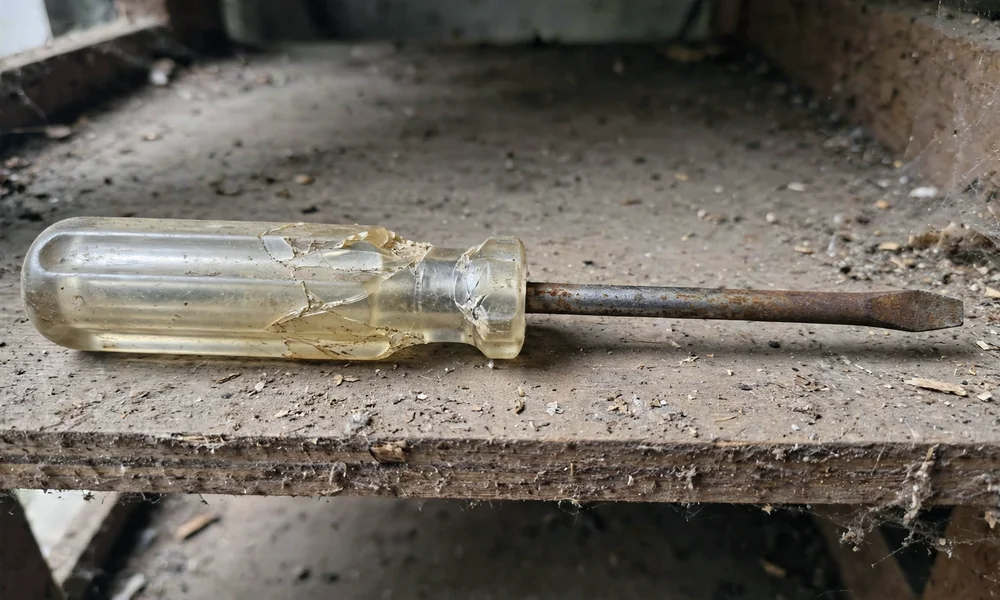
The worst screwdrivers share a handful of warning signs, and spotting them in the shop saves you money and frustration. The tip is visibly rough or uneven, with burrs along the edges, and it rocks in a screw head instead of seating firmly. The shaft is thin, bends easily, or wobbles where it meets the handle. The handle is hard, glossy plastic with no grip, and the whole tool feels light in a bad way, like a toy rather than a tool. Sets that advertise a huge piece count for a tiny price are almost always built to this standard, with soft tips that round off within weeks.
Care, Storage and the Rest of Your Kit
Good screwdrivers last decades with almost no care, but a little attention goes a long way. Wipe the tips clean after use, especially after working with plaster or damp wood, and put a drop of oil on the shaft now and then to keep rust away. Store them upright in a rack or a roll, with the tips protected, rather than loose in a drawer where they knock against each other and blunt the edges. Replace a driver the moment its tip starts to round, because a worn tip damages every screw it touches.
A screwdriver is only as useful as the kit around it. A good tool set puts the drivers you need alongside the spanners, pliers, and sockets for the rest of the job, and our guide to the best tool sets in 2026 compares the sets worth buying for a home. Keep the whole collection somewhere dry and organised, and our guide to the best versus the worst toolboxes in 2026 covers the boxes that keep every tool in its place. A tidy kit means the right screwdriver is the one you can find, not the one buried at the bottom of a drawer.
Who Each Side Is For
The best screwdrivers suit anyone who turns a screw more than once a month, anyone who owns a home with flat-pack furniture and loose hinges, and anyone who has ever been let down by a rounded tip halfway through a job. Homeowners, renters, cyclists, and electronics hobbyists all benefit from the same things: a tip that fits, a handle that grips, and steel that holds its shape. A good screwdriver is not a luxury; it is the tool that makes every small repair quick instead of frustrating.
The Verdict
The best screwdrivers of 2026 are not the ones with the biggest set or the flashiest handle. They are the ones with a tip that fits exactly, steel that holds its edge, and a handle that lets you push and turn without slipping. The worst screwdrivers look like a bargain and work like a warning: they cam out, round off, strip screws, and crack under pressure, and they cost more in ruined fasteners and wasted evenings than the price you saved.
So buy slowly, hold the screwdriver before you pay, and choose the driver for the screws you actually turn. Choose well, and it will still be turning screws cleanly, quietly, and reliably years after the bargain drivers have gone to the scrapheap.


