
Every home eventually asks the same question of its owner: do you have the right tool for this job? A loose hinge, a flat-pack bookcase, a dripping tap, a picture that needs hanging — each one is a small test, and the best tool sets 2026 make sure you pass them without a trip to the hardware store. A good set puts the essentials in one organised case, so the tool you need is the tool you can find.
The difference between a set you love and a set that gathers dust comes down to a handful of decisions. The steel has to hold an edge and resist rust. The case has to keep every piece in its place instead of letting sockets rattle around like loose change. And the selection has to match real jobs in a real home, not a fantasy workshop.
This guide walks through how to judge a tool set before you spend a penny: the main types compared, which pieces matter most, how to size a set for your home, and the traps that catch first-time buyers.
Key takeaways
- Choose a set by the jobs you actually do, not by the piece count on the box.
- Chrome vanadium steel, comfortable grips and a case that holds every tool in place matter more than a big number of pieces.
- A 100 to 150-piece home set covers most households; go bigger only if you work on cars or tackle frequent repairs.
- Test the case latches and handle before you buy — a broken case turns a good set into a junk drawer.
- Keep your set in one place, clean tools before they go back, and replace worn bits promptly.

What Makes a Great Tool Set
A tool set is only as good as its weakest piece. One soft screwdriver tip that rounds off, one socket that splits under load, and the whole set starts to feel unreliable. That trust starts with materials: chrome vanadium steel is the standard worth looking for — hard enough to hold its shape, tough enough to resist snapping, and it takes a corrosion-resistant finish well. Cheaper carbon steel rusts faster and wears sooner, a poor trade for tools you expect to keep for years.
Handles deserve as much attention as the metal. A screwdriver with a slim, hard plastic handle will twist in a sweaty palm and leave blisters after ten minutes of work. Look for handles with a soft, textured grip and a shape that fills the hand. Ratchets should turn smoothly with a clear click, and the direction switch should move cleanly with a thumb. Pliers should open and close without grinding, and their jaws should meet evenly.
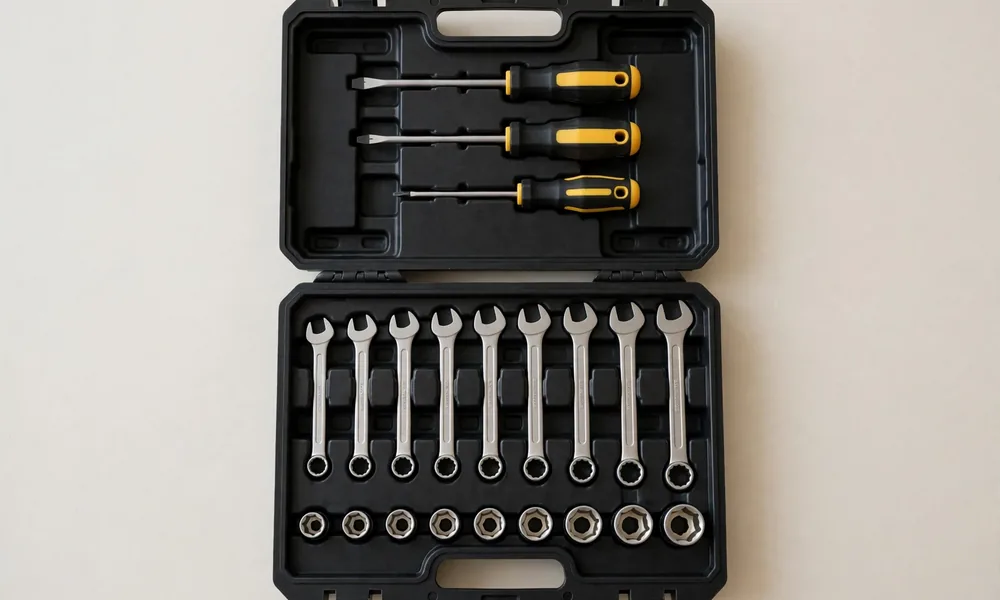
The case is the third pillar, and it is the one buyers most often ignore. A good case has a moulded slot for every single piece, latches that snap shut with confidence, and a handle that feels solid when the case is fully loaded. When every tool has a home, you can see at a glance when something is missing, and the tools stop damaging each other in transit. A case that lets pieces slide around chips coatings, dulls edges and turns organisation into chaos within a month.
Types of Tool Sets Compared
Not all tool sets are built for the same life. A home set is designed for the occasional repair, a mechanic set for daily work under a bonnet, and a specialist set for one kind of job done well. Matching the type to your life is the fastest way to avoid both overspending and under-buying.
| Type | Typical Pieces | Best For | Watch Out For |
|---|---|---|---|
| Home repair set | 60–150 | Everyday fixes, furniture assembly, hanging and small plumbing jobs | Thin sockets that flex under torque |
| Mechanic set | 150–300 | Car and bike maintenance, frequent heavy-duty work | Heavy case; overkill for a flat |
| Socket set | 40–100 | Bolts and nuts of many sizes, engine bays | Often lacks screwdrivers and pliers |
| Precision set | 30–120 | Electronics, glasses, small appliances | Too delicate for household repairs |
| Specialist set | 20–80 | One trade, such as plumbing or electrical work | Narrow range; poor as a first set |
For most households, the home repair set is the right starting point. It covers the widest range of everyday jobs with the least wasted weight. A socket set makes a strong second purchase once you know you need it, and a precision set is a smart add-on for anyone who repairs phones, laptops or small appliances. Outdoors, the same thinking applies: the best BBQ tools for grilling are the ones matched to the food you actually cook, not the longest list on the shelf.
The Best Tool Sets 2026: Our Picks
The strongest sets share a pattern: sensible piece counts, honest materials, comfortable grips and cases that actually organise. The styles below represent the best balance for different homes and budgets, so read them against your own jobs rather than looking for a single winner.
Best Overall Home Set
The best all-rounder sits in the 100 to 150-piece range and covers the full spread of home jobs. It includes a ratchet with a good range of metric sockets, a solid set of screwdrivers in flathead and Phillips, combination pliers, long-nose pliers, an adjustable wrench, a claw hammer, a tape measure and a set of Allen keys. Nothing in it is there for show, and the case is compact enough to live on a shelf rather than demanding a garage of its own. This is the set to buy if you want one purchase that quietly handles the next ten years of household repairs.
Best Budget Set
A tight budget does not have to mean a useless set. The best budget options keep the piece count modest — around 60 to 90 pieces — and spend the savings on decent steel rather than padding the box with duplicate bits. Expect a smaller ratchet and fewer deep sockets, but the core tools should still feel solid in the hand. This style suits renters and light users best: if you assemble flat-pack furniture twice a year and hang the occasional shelf, a budget set will serve you well.
Best Premium Set
Premium sets justify their price through refinement: a smoother ratchet, more comfortable grips, a finish that resists corrosion longer, and a case that still snaps shut after years of use. Buy premium if you repair things weekly and want tools that feel like a pleasure rather than a chore.
How to Choose the Right Size
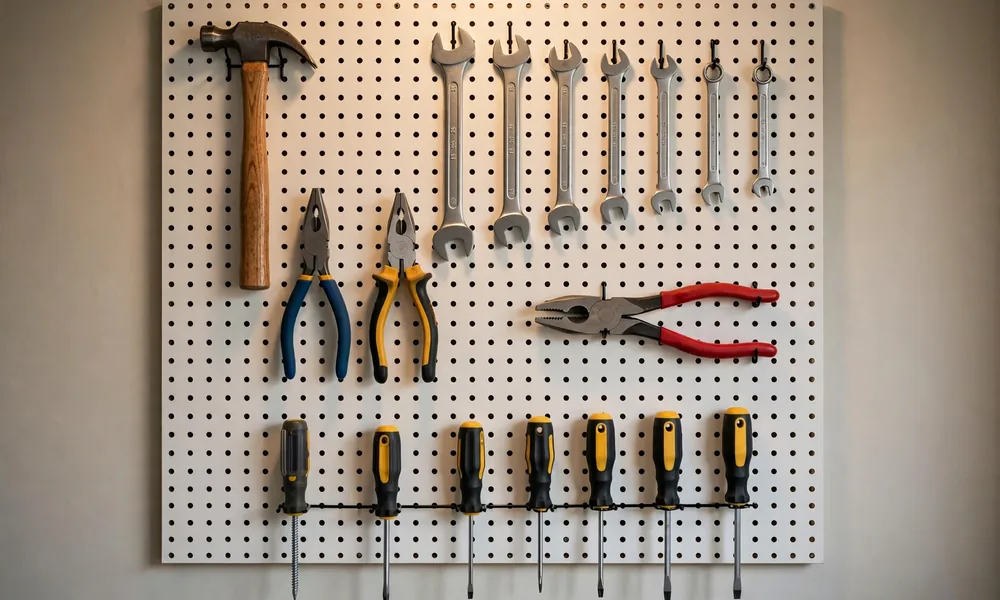
Piece count is the most quoted number on the box and the least useful on its own. A 200-piece set padded with twenty near-identical screwdriver bits is less useful than a 90-piece set with the right tools. Start by listing the jobs you did in the last year: assembling furniture, hanging pictures, fixing a wobbly chair, tightening a tap, changing a bike tyre. Then check that the set you are considering covers each of those jobs with a proper tool, not a makeshift one.
Think about where the set will live, too. A heavy mechanic set in a third-floor flat will spend its life in a cupboard because carrying it to the job is a job in itself. A compact set that lives within arm’s reach gets used; a big set that lives in the loft does not. Match the case to your storage as carefully as you match the tools to your jobs.
Budget follows the same logic. Spending more buys better steel, better grips and a better case, but only up to a point. For occasional home use, the middle of the range is the sweet spot: good enough to last, not so expensive that you hesitate to use it. If you are buying your first set, put the money into quality of the core tools rather than quantity of the extras. The same rule holds elsewhere in the home: the best cookware sets are chosen for the meals you actually cook, not the number of pans in the box.
What to Avoid When Buying
A few warning signs separate good sets from disappointing ones. The first is a piece count that seems too generous for the price. When a set promises 300 pieces for the price of a 100-piece set, the extras are usually thin, soft or duplicated. The second is a case with vague moulding — if the slots do not clearly match the tools, pieces will migrate and the case will never close properly again. Knowing what to skip matters everywhere in the home: the worst garden tools for beginners show how easily a bargain buy becomes a regret.
Also be wary of sets that skimp on the tools you use most. A set with twelve screwdrivers and one pair of pliers has its priorities backwards. Check the hammer weight as well: a well-balanced 500-gram claw hammer handles most home jobs comfortably. Finally, read the warranty. A lifetime warranty on hand tools is a strong signal that the maker trusts its steel; a 90-day warranty is a signal of the opposite.
Your Pre-Purchase Checklist
- List your five most common jobs and confirm the set covers each one with a proper tool.
- Check the steel: look for chrome vanadium markings and a smooth, even finish.
- Hold the screwdrivers and pliers — grips should feel comfortable, not slippery or sharp-edged.
- Open and close the case three times; latches should snap firmly and the handle should feel solid.
- Count the socket sizes you actually need and check the set includes them, including deep sockets if you work on cars.
- Confirm the warranty length and what it covers before you leave the shop or click buy.
Frequently Asked Questions
How many pieces should a first tool set have?
For most homes, 60 to 150 pieces is the right range. Fewer than 60 usually leaves gaps in socket sizes or screwdriver types, while more than 150 often means duplicates and specialist bits a beginner will not use. Start in the middle and add specialist tools as your skills grow.
Are expensive tool sets worth the money?
For frequent use, yes. Better steel holds its shape longer, better grips reduce fatigue, and a better case keeps everything organised for years. For occasional use, a mid-range set delivers most of the benefit at a much lower price. The worst value is the cheapest set, which often needs replacing within a year.
What is chrome vanadium steel?
Chrome vanadium is a steel alloy with chromium and vanadium added for hardness, toughness and corrosion resistance. It is the standard material for quality hand tools because it holds an edge, resists rust and survives the torque that would bend cheaper steel.
Should I buy a tool set or individual tools?
A set is almost always better value for a first purchase, and it solves the storage problem in one move. Buy individual tools later to fill specific gaps once you know which pieces you reach for most.
How do I keep my tool set in good condition?
Wipe tools clean before they go back in the case, keep the case dry, and oil moving parts such as ratchets and pliers lightly once a year. A quick wipe with an oily cloth prevents rust, and returning every tool to its slot means you always know when something is missing.
Can one tool set cover both home and car repairs?
A large home set with a good socket range can cover light car work such as changing a battery or tightening clamps. For heavier jobs like brakes or suspension, a dedicated mechanic set with deep sockets and a breaker bar is the safer choice.
Bottom Line
The best tool set is the one that matches your home, your hands and your habits. Pick a set with honest materials, a case that organises rather than confuses, and a piece list built around the jobs you actually do. Buy it once, keep it in one place, and look after it.


