How to Pick a Stick Vacuum That Actually Cleans in 2026
A stick vacuum earns its keep in two minutes a day, not in a deep clean once a week. It is the vacuum you grab when the dog sheds on the rug, cereal lands on the kitchen floor, and the stairs need doing before guests arrive. The best stick vacuum in 2026 is light enough to carry upstairs one-handed, strong enough to lift dust out of carpet, and ready on its dock every time you reach for it. Picking one that actually cleans means judging it at the floor, not by the numbers on the box.
Stick vacuums have improved fast. The best of 2026 clean hard floors as well as a full-size machine, handle low-pile carpet with ease, and convert into a handheld in seconds. The worst fade within months, lose suction as the bin fills, and run flat halfway through the lounge.
Key Takeaways
- Suction at the floor matters more than the wattage on the box: a sealed head with a spinning brush bar cleans carpet far better than a strong motor with a leaky design.
- Match the vacuum to your floors: hard floors need strong airflow, carpet needs a motorised brush bar.
- Real battery life is measured on standard power with the brush bar running, not the headline figure quoted on the lowest setting.
- Weight and balance decide whether you use it: the best sticks weigh 2 to 3 kilograms, with the motor low down.
- A small bin and a washable filter are the two faults that turn a good stick into a chore.
What Makes a Stick Vacuum Clean Well?
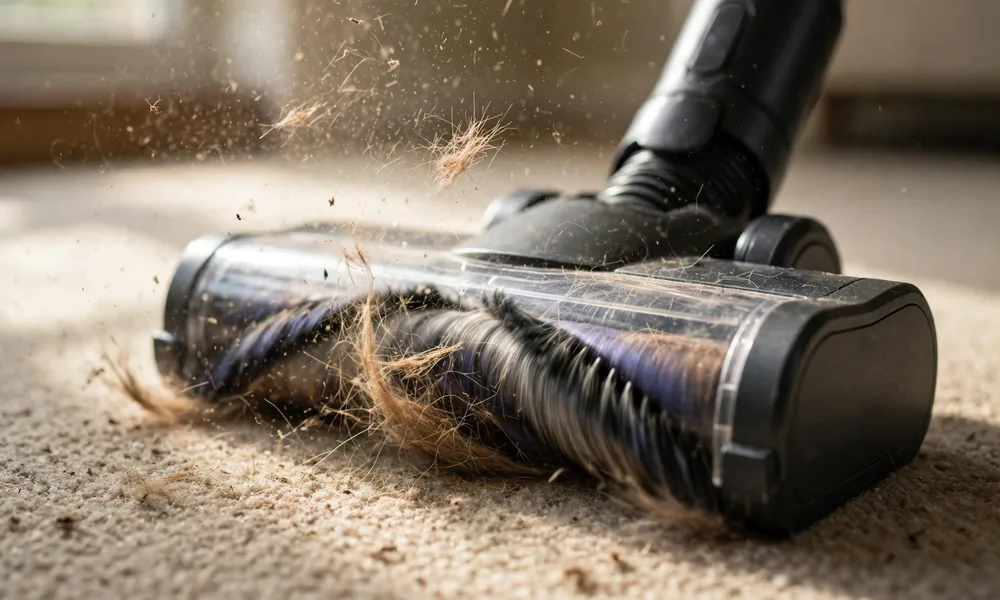
Cleaning performance comes down to three things working together: airflow, agitation and sealing. Airflow is the air the motor pulls through the head. Agitation is the spinning brush bar lifting carpet pile and shaking loose trapped dirt. Sealing is how much airflow reaches the floor instead of leaking around the head. A modest motor with a good brush bar and a well-sealed head will out-clean a more powerful machine whose head leaks.
Pet hair is the honest test: if a stick cannot lift hair from a rug in two passes, it is not doing the job. Hard floors are more forgiving, so the real difference shows up on carpet and at the edges of rooms. Our guide to the best vacuum cleaners of 2026 puts sticks in context against uprights, canisters and robots.
Suction Numbers: What Air Watts Really Mean
Manufacturers quote suction in air watts; the strongest sticks of 2026 reach 200 air watts or more. That number is useful for comparing machines from the same brand, but a poor way to compare across brands, because there is no single standard for how it is measured. A stick quoted at 150 air watts with a sealed head and a fast brush bar will clean carpet better than one quoted at 220 air watts with a leaky head.
Treat air watts as a rough filter: below 100 air watts, a stick will struggle on anything but hard floors; between 150 and 200, with a motorised brush bar, it becomes a genuine all-floor cleaner. Above that, the extra power mostly matters on deep-pile carpet — still the one job where a corded upright wins. If your home is mostly thick carpet, read our comparison of the best cordless vacuums of 2026 before deciding whether a stick alone is enough.
Stick Vacuums at a Glance: Which Type Suits Your Home?
| Stick Type | Weight | Runtime | Best For | Watch Out For |
|---|---|---|---|---|
| Lightweight everyday stick | 1.5–2 kg | 30–40 min | Flats, hard floors, stairs | Small bin, weak on carpet |
| All-round family stick | 2–2.5 kg | 40–60 min | Mixed floors, family homes | Heavier on the stairs |
| Pet-hair stick | 2.2–2.8 kg | 40–50 min | Pet hair, rugs, upholstery | Brush bar needs cleaning |
| Long-runtime stick | 2.5–3 kg | 60–70 min | Large homes, long cleans | Price, weight in the hand |
| Budget stick | 2–2.5 kg | 25–35 min | Small homes, hard floors | Short battery, basic filter |
Hard Floors First: What to Look For
If your home is mostly wood, tile or laminate, a stick vacuum has an easy job — and that is exactly why it is easy to buy the wrong one. On hard floors, almost any stick picks up visible dust, so the differences that matter are the ones you notice after a month: whether the head scatters crumbs forward, whether the brush bar scratches a soft floor, and whether the machine reaches under low furniture.
Look for a soft roller head or a brush bar you can switch off: a soft roller traps fine dust instead of flicking it away, and it is gentler on wood. A head that lies almost flat reaches under sofas and beds, and a bright LED shows dust you would otherwise walk past. Edge cleaning matters too: a head that cleans right up to the skirting board saves a second pass.
Carpet and Rugs: Where Sticks Are Tested
Carpet is where a stick vacuum proves itself or fails. A motorised brush bar is non-negotiable: it spins fast enough to lift the pile and shake embedded dust loose, and without it a stick merely skims the surface. Check the brush bar height adjusts, or the head adapts automatically.
Test the way you will clean at home: one slow pass forward, one slow pass back. A good stick leaves the carpet visibly lifted and cleaner in two passes; a poor one needs four or five. Deep-pile carpet is the limit: even the best sticks struggle with it, and a corded upright does the weekly deep clean better.
Battery Life: The Number That Decides Everything
Battery life is the most misleading specification on a stick vacuum. Manufacturers quote the longest possible runtime, measured on the lowest setting with the brush bar off. In real life, a stick quoted at 60 minutes may give you 25 minutes of serious cleaning on carpet.
Count your floors: a one-bedroom flat takes 15 to 20 minutes, a two-bedroom family home 30 to 40, and a large house 50 or more — or a swappable battery. Three power modes beat two: eco for daily cleans, standard for everyday use, and boost for stubborn dirt — it can drain a full battery in 8 to 12 minutes.

Weight, Balance and Handling
Weight decides whether a stick vacuum gets used every day or abandoned in a cupboard. A 2.2 kilogram stick with the motor near the floor head feels light. The same weight with the motor at the top feels heavy within minutes — and heavy in the hand means you stop cleaning the stairs.
Swivel steering matters too: a good stick turns around chair legs with a flick of the wrist, while a stiff one forces constant lifting and repositioning. The lightest machines, around 1.6 kilograms, are a joy on stairs, but they usually have smaller batteries and bins. The sweet spot is 2 to 2.5 kilograms: light enough to carry, heavy enough to hold a proper battery.
Handheld Conversion: One Machine, Three Jobs
The feature that separates a great stick vacuum from a good one is how easily it becomes a handheld. Remove the wand, clip on a small brush, and the same machine cleans stairs, sofas, car seats and worktops — the best designs convert in one click. Our guide to the best hand vacuums of 2026 covers dedicated handhelds, but for most homes a stick that converts well makes a separate handheld unnecessary.
This matters more than it sounds: stairs are the job people put off most, and a handheld under a kilogram turns it into a two-minute job. The car is the same story: a cordless handheld reaches under seats and into corners no full-size machine can touch. If you have stairs, a car or upholstery, handheld conversion is not a bonus feature. It is the feature.
Bins, Filters and the Maintenance Nobody Does
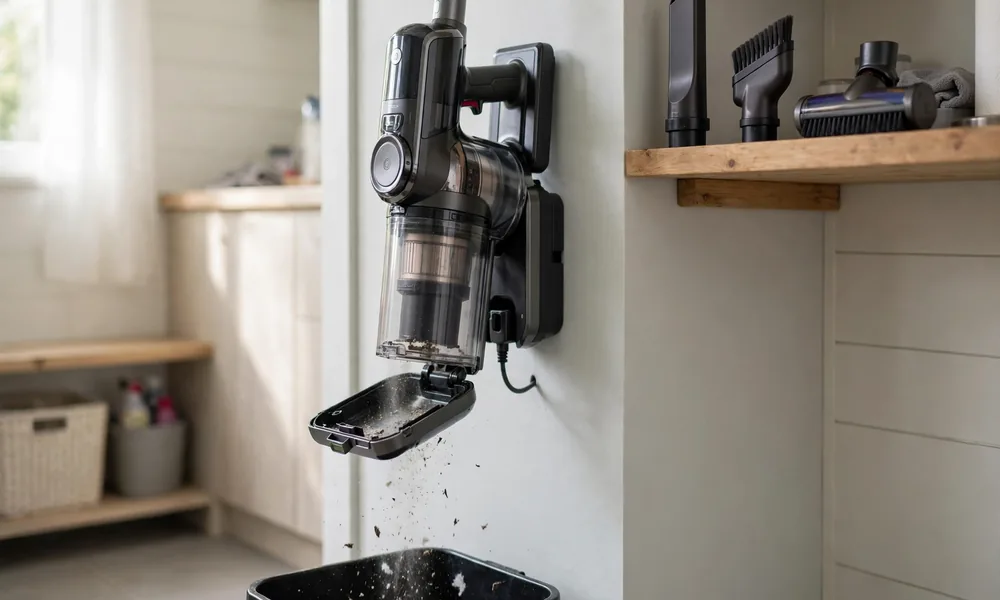
A stick vacuum lives or dies by its bin and its filter, both easy to overlook in the shop. The bin on a stick is small — usually 0.4 to 0.8 litres. A 0.4 litre bin fills fast in a pet home, and a full bin kills suction, so empty it after every clean. A hygienic emptying mechanism, where the bin opens over the rubbish bin, is worth paying for if anyone in the home has allergies.
Filters are the quieter problem: a sealed HEPA system traps fine dust and allergens instead of blowing them back into the room, which matters most in homes with asthma, allergies or pets. A clogged filter is the most common reason a good stick slowly turns into a bad one: wash it monthly if the maker allows and let it dry fully before refitting.
What to Avoid When Buying a Stick Vacuum
Skip sticks sold on a single headline number — air watts, runtime or a low price. A stick quoted at 70 minutes on its lowest setting will run flat halfway through your lounge on the setting you actually use, and a huge motor with a leaky head pushes dust around instead of collecting it.
Also avoid sticks with a bin you cannot empty cleanly, a filter you cannot wash or replace cheaply, and a battery you cannot swap: a sealed-in battery means the whole machine is finished when it fades, usually after two or three years. Check spare filter prices first — a cheap stick with expensive filters costs more over its life than a dearer stick with cheap ones. And beware of sticks with no motorised brush bar: without one, carpet cleaning is a promise the machine cannot keep.
Buying Checklist
- Match the stick to your floors: hard floors need a soft roller, carpet needs a motorised brush bar.
- Check real runtime on standard power with the brush bar running.
- Pick 2 to 2.5 kilograms with the weight low down, and test the balance on the stairs before you buy.
- Make sure it converts to a handheld in one click, with tools for stairs, sofas and the car.
- Check the bin empties cleanly and the filter is washable, sealed and cheap to replace.
- Confirm the battery is swappable, and check spare filter prices before you commit.
Frequently Asked Questions
Can a stick vacuum replace a full-size vacuum?
For flats and hard-floor homes, yes: a good stick is now the only vacuum most of those homes need. For large homes with deep-pile carpet, no: a corded upright still cleans thick carpet better.
How long should a stick vacuum battery last?
Look for 40 to 60 minutes on standard power with the brush bar running. Headline figures of 70 minutes or more are measured on the lowest setting.
Are stick vacuums good for pet hair?
Yes, if they have a motorised brush bar and a tangle-free design: a brush roll that sheds hair instead of wrapping it is the first thing to look for.
How often should I empty the dustbin?
After every clean: the bin is small, suction drops as it fills, and emptying takes ten seconds.
Do I need a HEPA filter on a stick vacuum?
If anyone in the home has allergies or asthma, yes: a sealed HEPA system traps fine dust instead of blowing it back into the room.
What is the difference between a stick vacuum and a cordless vacuum?
Almost every stick vacuum is cordless, but not every cordless vacuum is a stick. A stick is the long, upright cordless form that stands on its own dock and converts into a handheld.
Bottom Line
The stick vacuum that actually cleans in 2026 is the one whose brush bar, sealed head and real-world battery suit your floors, not the one with the biggest number on the box. For most homes that means an all-round stick of 2 to 2.5 kilograms, with a motorised brush bar, 40 to 60 minutes of real runtime, and a handheld conversion you will use weekly. Buy for your floors, test the weight on your stairs.