
The best string lights are the ones that still glow a year after you hang them, through rain, wind, summer heat and winter frost. String lights are the simplest way to make a garden, a balcony or a living room feel magical after dark, and they cost far less than most outdoor lighting. But not all string lights are equal: some fade within weeks, some fail at the first heavy rain, and some are so dim they barely show. The lights you hang in spring should still be working at Christmas.
This guide explains how to pick string lights that last all year in 2026, from festoon and fairy lights to solar and mains-powered sets, and how to hang them so they survive the weather. We judged every type on brightness, weatherproofing, bulb life and cable quality. The lights that last all year are not the cheapest sets: they have proper outdoor ratings, shatterproof bulbs and strong cables that keep the rain out.
Key Takeaways
- Outdoor string lights need a real weatherproof rating: look for IP44 or better, and IP65 for lights left out all winter.
- LED bulbs last far longer than old filament bulbs, use less power, and stay cool enough to touch.
- Shatterproof plastic bulbs survive drops and hail that would smash glass bulbs on the first night.
- Measure your space before you buy, and add at least two metres for the drop from the fixing point to the cable.
- Mains-powered lights are brighter and more reliable than solar lights, especially in winter when daylight is short.
What Makes String Lights Last
Durability starts with the weatherproof rating. The IP rating tells you how well a light resists dust and water. IP44 means protection against splashing water from any direction, enough for a sheltered patio. IP65 means the lights can handle jets of water, which is what you want for lights left out in open rain all winter. Anything without an IP rating is an indoor light, however tough it looks, and it will fail the first time it rains properly.
The bulbs matter just as much. LED bulbs are the standard in 2026: they last tens of thousands of hours, use a fraction of the power of old filament bulbs, and stay cool, so they will not scorch leaves or melt a plastic shade. Shatterproof bulbs are made from tough polycarbonate rather than glass, so they survive drops, branches and hail. Warm white LEDs, around 2700K, give the soft golden glow most people want; cool white looks harsh in a garden.
Cables, Sockets and Connections
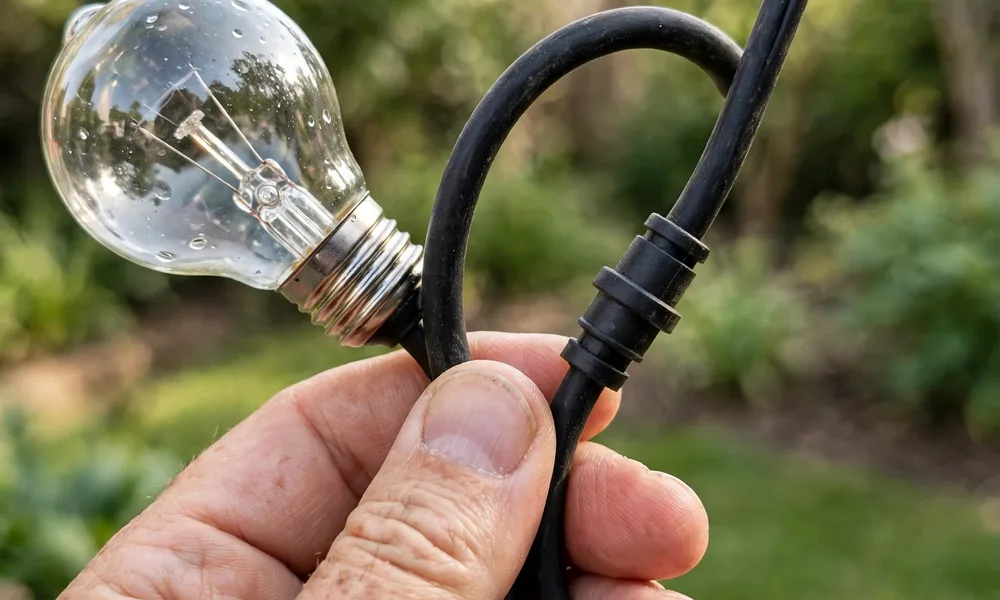
The cable is where cheap string lights fail first. A good outdoor cable is thick, flexible in cold weather, and long enough to reach your fixing points without being pulled tight. Look for heavy-duty rubber or PVC cable rather than thin wire, and check that the sockets seal tightly around each bulb. The connection where the string meets the mains is the most vulnerable point: it should be a sealed, weatherproof connector, not a bare plug tucked under a plant pot.
Solar vs Mains Power
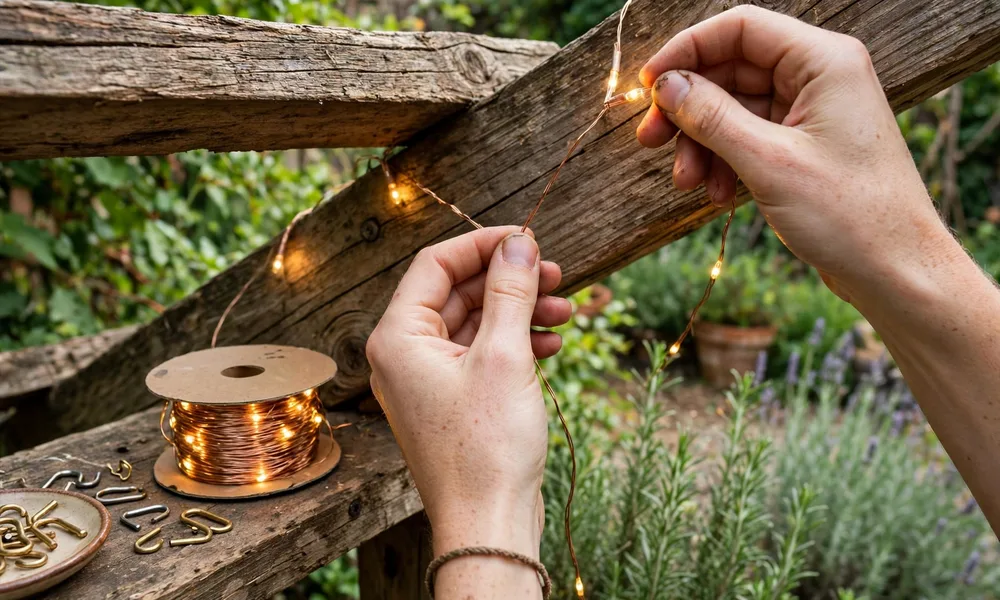
Solar string lights are tempting because they need no wiring and cost nothing to run, but they have real limits. A solar panel needs several hours of direct sun to charge fully, and in winter many solar sets glow for only an hour or two after dark. Mains-powered lights are brighter, they stay on as long as you want, and they work just as well in December as in July. If you want lights that last all year, mains power is the safer choice, and a timer plug lets them switch on at dusk and off at bedtime.
String Lights 2026 Compared
There is no single best string light for every space: the right set depends on where it will hang and how long it needs to stay there. Festoon lights are the classic choice for a patio, fairy lights suit a shelf or a bedroom, and heavy-duty commercial sets are the ones to buy for lights staying up through winter.
| Light Type | Best For | Brightness | Weatherproof | Typical Price |
|---|---|---|---|---|
| Festoon lights | Patios, gardens, pergolas | Bright | IP44–IP65 | $25–$80 |
| Fairy lights | Bedrooms, shelves, jars | Soft | Indoor, some IP44 | $10–$35 |
| Commercial-grade festoons | All-year outdoor use | Very bright | IP65 | $60–$150 |
| Solar string lights | Sunny spots, summer evenings | Moderate | IP44 | $15–$50 |
| Icicle lights | Roofs, fences, Christmas | Bright | IP44 | $20–$60 |
| Globe lights | Parties, balconies, bedrooms | Moderate | IP44 | $20–$55 |
Price is a rough guide, not a rule. A twenty-dollar set can be excellent for a summer party, and a hundred-dollar commercial set can be poor value if you only need it for a month. Judge by the IP rating, the bulb type and the cable, not the price tag.
Festoon Lights for Patios and Gardens
Festoon lights are the big, bold bulbs you see strung across restaurant terraces and garden parties, and they are the best choice for most patios. Each bulb is large enough to give a real pool of light, and the spacing between bulbs, usually about half a metre, gives an even glow along the whole string. The best festoon lights have shatterproof LED bulbs, heavy-duty cable, and sockets that seal against rain. They look best strung in a gentle sag between two high points, with the bulbs hanging just above head height.
When you hang festoon lights, give them a little slack. A cable pulled tight will snap in a strong wind or when the temperature drops and the cable contracts, while a cable with a gentle curve can move with the wind. Use screw-in hooks, cable ties, or guide wires, not nails hammered through the cable. And think about power before you hang anything: the plug end needs to reach an outdoor socket. If you are planning the whole outdoor space, our guide to patio furniture that turns your garden into a second living room in 2026 covers the seating and layout that string lights are meant to show off.
Fairy Lights and Indoor String Lights
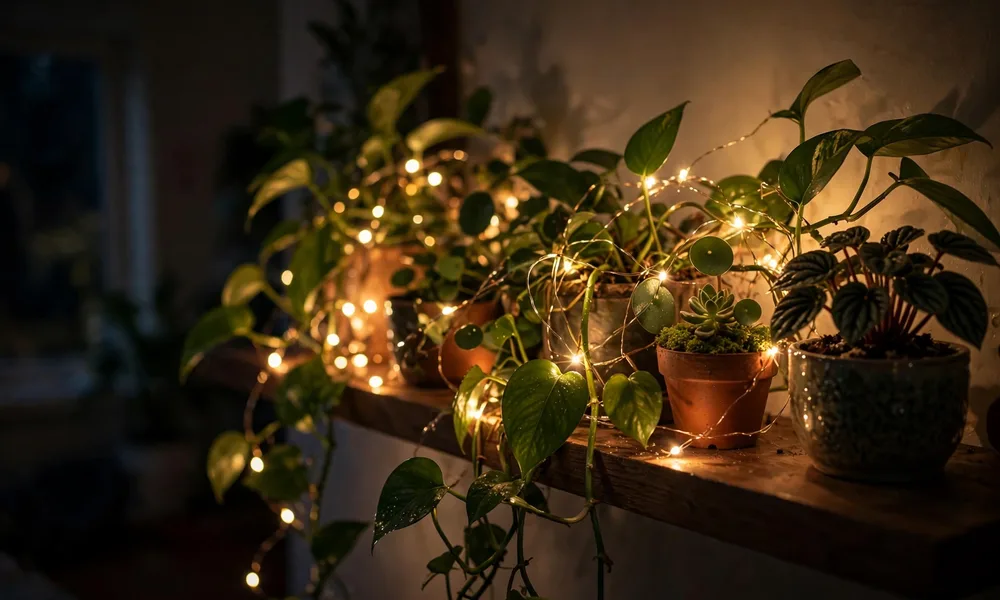
Fairy lights are the small, delicate cousins of festoon lights, and they belong indoors or in sheltered spots. Their tiny bulbs give a soft, sparkling glow that suits a bedroom shelf, a mirror, a bookcase or a jar on a table, and they are the easiest string lights to live with: battery or USB powered, light enough to hang with a single hook, and cheap enough to replace.
Indoor string lights still need care: keep them away from curtains and bedding, use a timer so they are not left on all night, and replace batteries before they leak. The right curtains matter as much as the right lights: our guide to the curtains that make any room feel finished in 2026 shows how soft furnishings and lighting work together to finish a room.
How to Hang String Lights So They Survive
Hanging is where most string lights fail, and where a little care makes the biggest difference. Measure the distance between your fixing points, and add at least two metres for the drop: the cable needs to sag gently, not run dead straight. Buy a string longer than you think you need, because a string that is too short will be pulled tight, and a tight string will snap. If the gap is wide, run a steel guide wire between the fixing points first, and hang the lights from it, so the wire takes the strain.
Fixing points matter too. A pergola beam, a sturdy fence post, a wall bracket or a tree branch all work, but a thin branch will bend in the wind and a weak fence panel will pull out. Use screw-in hooks or wall plugs, not adhesive hooks, for anything staying up all year, and keep the plug and transformer under cover. For outdoor evenings under the lights, a projector turns the garden into a cinema: our guide to the best vs worst projectors in 2026 covers the models bright enough to use outdoors after dark.
Common Mistakes When Buying String Lights
The first mistake is buying indoor lights for outdoor use. A set with no IP rating will look fine for a week, then fail at the first heavy rain, and the failure is often a safety risk, not just a dead bulb. The second mistake is buying a set that is too short, then joining two sets with a cheap connector that lets the rain in. If you need a long run, buy one long set, or sets designed to connect. The third mistake is glass bulbs in a garden: one dropped bulb, one hailstorm, or one ball from a game of catch, and you have broken glass on the patio.
Other buyers forget about the power source. A solar set in a shady garden will never charge properly, and a mains set with a short lead will need an extension cable running across the lawn. Check where the sun falls before you buy solar, and where the nearest outdoor socket is before you buy mains. Finally, do not leave cheap fairy lights up all winter: take them down in autumn, coil them loosely, and store them in a dry box.
String Lights Buying Checklist
- Check the IP rating: IP44 for sheltered patios, IP65 for lights left out all winter.
- Choose LED bulbs, warm white around 2700K, and shatterproof plastic rather than glass.
- Measure your space first, then add at least two metres for the sag between fixing points.
- Pick mains power for all-year use, and solar only for sunny spots in summer.
- Make sure the cable is thick and flexible, and that the plug and connections stay dry.
- Hang lights with a gentle sag from a guide wire, and use screw-in hooks, not adhesive ones.
Frequently Asked Questions
Can string lights stay outside all year?
Yes, if they are rated for it. Look for IP65, shatterproof bulbs, and heavy-duty cable, and keep the plug and connections under cover. Fairy lights and indoor sets should come down in autumn: they are not built to survive frost and heavy rain.
Are solar string lights bright enough?
Solar lights are bright enough for decoration on a summer evening, but they are rarely as bright as mains-powered lights, and they fade quickly in winter. If you want reliable light all year, choose mains power and put the lights on a timer.
How long do LED string lights last?
A good LED bulb lasts 20,000 to 50,000 hours, many years of evening use. The bulbs usually outlast the cable and sockets, so the real limit is the weatherproofing: a well-made set can last three to five years outdoors, while a cheap set may fail in one season.
What is the best colour temperature for string lights?
Warm white around 2700K is best for gardens, patios and living rooms, because it gives a soft golden glow. Cool white above 4000K looks harsh outdoors and suits security lighting better than decoration.
Can you connect two sets of string lights together?
Only if the sets are designed for it. Look for end-to-end connectors with a proper weatherproof seal, and check the maximum number of sets the maker allows. Joining sets with a cheap adapter, or overloading one plug, is a fire risk.
How do I stop string lights from tangling in storage?
Coil them loosely around your arm or a piece of cardboard, and secure the coil with a cable tie. Store them in a dry box, with the bulbs facing inwards so they do not get knocked. Never wind them tightly around a nail or a hook.
The Bottom Line
The string lights that last all year in 2026 are built for the weather: IP65 rated, shatterproof LED bulbs, thick flexible cable, and sealed connections. Measure your space, choose mains power for all-year use, hang the lights with a gentle sag from a guide wire, and keep the plug dry. Get those things right and the lights you hang in spring will still be glowing at Christmas, and the spring after that.


