A nursing pillow looks like a simple cushion, and in the first week with a newborn that is exactly what it feels like: one more thing to buy, one more thing to find room for. Then comes the third feed of the night, the arms start to ache and the baby keeps slipping down an inch at a time. That is when a good nursing pillow earns its place. It lifts the baby to the right height, takes the weight off the arms, and turns a tiring feed into a calm, comfortable one. The best nursing pillows of 2026 are not the fanciest ones, and they are not the ones with the longest list of features. They are the pillows that hold their shape, fit the body using them and wash well.

What Makes a Nursing Pillow Good
The first thing to judge is height. A nursing pillow has one main job: to bring the baby up to breast or bottle height so the parent does not have to hunch or hold the baby up with tired arms. If the pillow is too flat, the shoulders round and the neck aches within minutes. If it is too tall, the baby sits too high and the latch becomes awkward. A good pillow lifts the baby to a level where the parent can sit upright with relaxed shoulders, and stays there for the whole feed instead of slowly sinking. That steady support matters more than colour, brand or extras.
The second thing is firmness. A pillow that is too soft feels lovely for a minute, then collapses, leaving the baby sliding toward the lap. A pillow that is too hard feels like a board and digs into the waist. The best nursing pillows strike a balance: firm enough to hold the baby’s weight without flattening, soft enough to be comfortable against the body for twenty or thirty minutes at a time. The fill should spring back after each use, and the shape should stay curved rather than spreading flat after weeks of washing.
The Main Types of Nursing Pillow
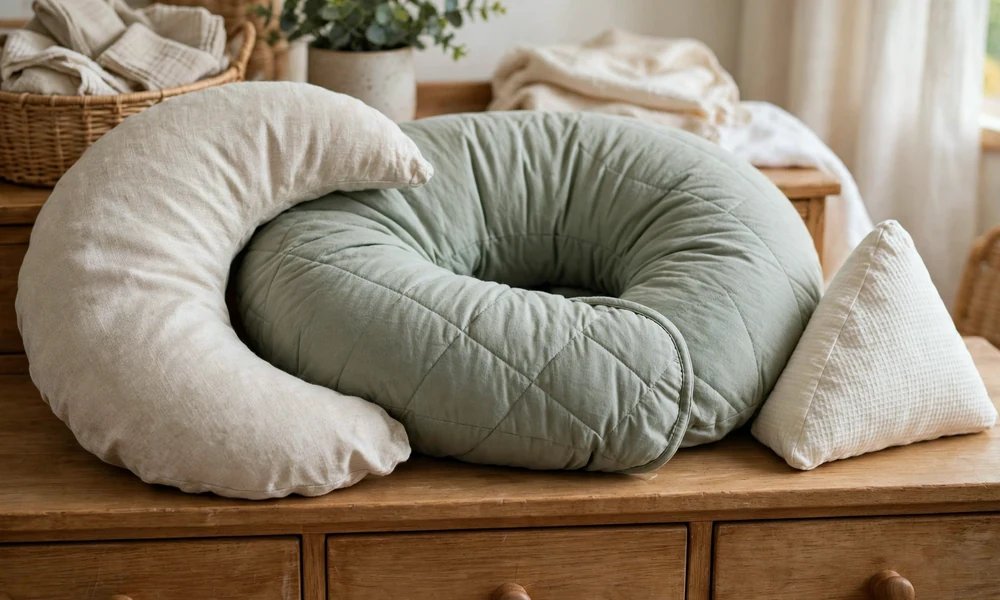
Crescent pillows are the classic shape most people picture when they think of a nursing pillow. A firm C-shaped cushion wraps around the waist, with the baby resting in the curve at the front. Crescent pillows are simple and light, easy to move from sofa to bed to nursery chair, and they work well for most body shapes. They are easy to wash too, since the cover usually comes off and the pillow is one solid piece. For a first nursing pillow, a crescent is the honest place to start.
Wraparound pillows go further around the body, with a longer belt or a fuller curve that fastens at the back. They stay in place better than a loose crescent, which matters when the baby is wriggly or the parent needs a free hand for a drink of water or a phone. Wraparound designs also offer a wider, flatter surface, which suits larger babies and longer feeds. The trade-off is bulk: they are heavier, take up more room, and are harder to pack for a visit to family. At home, though, the extra security is often worth it.
Wedge and lounger pillows are smaller, flatter shapes that work as a second pillow rather than a main one. A wedge props the baby at a gentle incline, which can help a baby who spits up after feeds, and a lounger gives the baby a supported place to rest beside the parent. These are not replacements for a proper nursing pillow, and a baby should never be left to sleep unsupervised on one, but they are useful extras for tummy time and the early weeks when the baby is still small. For a complete setup, a crescent or wraparound for feeding plus a small wedge for everything else covers most days.

How to Choose the Right Height and Firmness
Choosing the right nursing pillow starts with the chair it will be used in. A deep sofa needs a thicker, firmer pillow, because the parent sinks in and the baby ends up lower; a firm upright chair needs less height, because the parent already sits high. The best way to judge is to sit in the usual feeding spot and notice where the arms want to rest: if the elbows hang in the air, the pillow is too low; if the shoulders hunch, it is too high. The right pillow lets the forearms rest naturally with the baby at breast height, and should feel comfortable within a minute. Body shape matters too: a shorter parent may need a slimmer pillow, while a taller or broader parent often needs a wider curve that wraps properly instead of perching on the lap.
The Best Nursing Pillows of 2026
The best nursing pillow for most parents this year is a mid-priced crescent with firm fill and a washable cotton cover. It holds its height through a full feed, keeps its shape after dozens of washes, and fits a wide range of body shapes without slipping. The cover comes off easily for spills, and the pillow is light enough to carry from room to room with one hand. It is not the cheapest or the most feature-packed, but it makes the most sense for the most families: comfortable, durable and simple to live with.
The best wraparound nursing pillow of 2026 is a fuller, belted design that fastens snugly and stays put. It offers a wide, stable surface for bigger babies and longer feeds, and the adjustable strap fits small and large waists alike. The raised edges keep a wriggly baby centred, and the firm fill does not flatten even after months of heavy use. It is the pillow for the parent who feeds mostly at home and wants both hands free now and then, in exchange for the most secure feed.
The best nursing pillow for taller and plus-size parents is a wider, longer crescent with a generous curve. Standard pillows can feel like they perch on the lap instead of wrapping the waist, which leaves the baby too far forward and the arms doing all the work. A wider design sits properly around a larger body, keeps the baby close, and gives the forearms a real resting place. It also works well for feeding twins one at a time. The right size makes an enormous difference, and parents who struggled with a standard pillow often find this is the one that finally feels right.
The best nursing pillow for bottle feeding is a firm, flat-topped design that holds the baby at a gentle incline. Bottle feeding needs the same height and arm support as breastfeeding, plus a surface that keeps the baby steady while the bottle is held at the right angle. A flatter top stops the baby rolling toward the parent, and a waterproof inner layer protects the fill from milk spills. It suits families who bottle feed from the start, parents who mix breast and bottle, and anyone who wants one pillow for every kind of feed.
The best budget nursing pillow is a simple crescent with a removable, machine-washable cover and a solid, no-frills fill. It costs far less than the premium designs, but it still holds its height, keeps the baby at the right level, and survives regular washing. It may lack an adjustable strap or a fancy fabric, but none of that affects the feed itself. For a first baby, a second pillow for grandparents’ house, or a family watching the budget, this is the most comfort for the least money.
What Else You Need
A nursing pillow on its own is only half the setup. A spare cover matters more than most parents expect, because milk and dribble mean the cover is in the wash at least once a week, and a pillow with no cover cannot be used. A small muslin cloth over the pillow protects it during feeds and washes in seconds. A firm chair with good back support makes the pillow work far better than a soft sagging sofa, and a footstool lifts the knees and eases the lower back. A bottle of water and a phone charger within reach complete the setup, because once the baby is settled, nobody wants to get up. None of this costs much, and all of it makes the long hours of feeding far more comfortable.
Common Mistakes to Avoid
The biggest mistake is buying a pillow that is too soft. A plush, squashy pillow feels wonderful in the shop and collapses under a real baby, leaving the parent holding the baby up with tired arms. The second mistake is choosing by looks alone: a beautiful fabric means nothing if the shape does not fit the body using it. The third is forgetting about washing, because a nursing pillow lives a messy life, and a cover that cannot be removed, or a fill that clumps after one wash, turns a useful tool into clutter within a month.
Another common mistake is using the pillow for unsupervised sleep. A nursing pillow is a feeding aid, not a sleep surface, and a baby should never be left sleeping on one unsupervised. The pillow should be used while the parent is awake and watching, then put aside when the feed is over. It is also worth checking the pillow for wear: a fill gone flat, a seam splitting, or a strap that no longer fastens means the pillow has done its job and it is time for a replacement. A well-kept pillow will serve through the whole nursing period and still be good enough to pass on.
How a Nursing Pillow Fits a Calm Routine
Feeding a newborn happens around the clock, and the small comforts around it add up. A good nursing pillow is part of a wider routine of rest: a comfortable chair, a quiet room, and a little time that belongs to the parent and the baby alone. The same thinking applies beyond the nursery. Families who travel with a baby soon learn that comfort on the move matters just as much, and the best travel pillows for long flights guide covers the cushions that make a long journey bearable. Rest runs through the whole house, and the right support in one place usually means better sleep everywhere else.
The pillow also sits alongside the rest of the family’s sleep setup. Once the baby is older, the nursery chair gives way to the family bed and the sofa, and the question becomes which cushion supports whom. Readers sorting out the household’s bedding will find the best pillows guide useful for the grown-ups, and the best body pillows guide covers the long pillows that help with sleep in late pregnancy and beyond. The same idea runs through all of them: the right pillow, matched to the person using it, makes rest easier, and rest makes everything else easier too.
The Verdict
The best nursing pillow of 2026 is the one that fits the parent using it. For most families that means a firm, washable crescent: supportive, simple and easy to live with. For the parent who feeds mostly at home, a belted wraparound is the better tool. For taller or plus-size parents, a wider curve makes all the difference, and for bottle feeding a flat-topped design with a waterproof layer is the smartest pick. Whatever the choice, pick firm over soft, check the fit in the usual chair, and buy a spare cover. A pillow chosen this way will still be earning its place months later, through every feed of every long night.