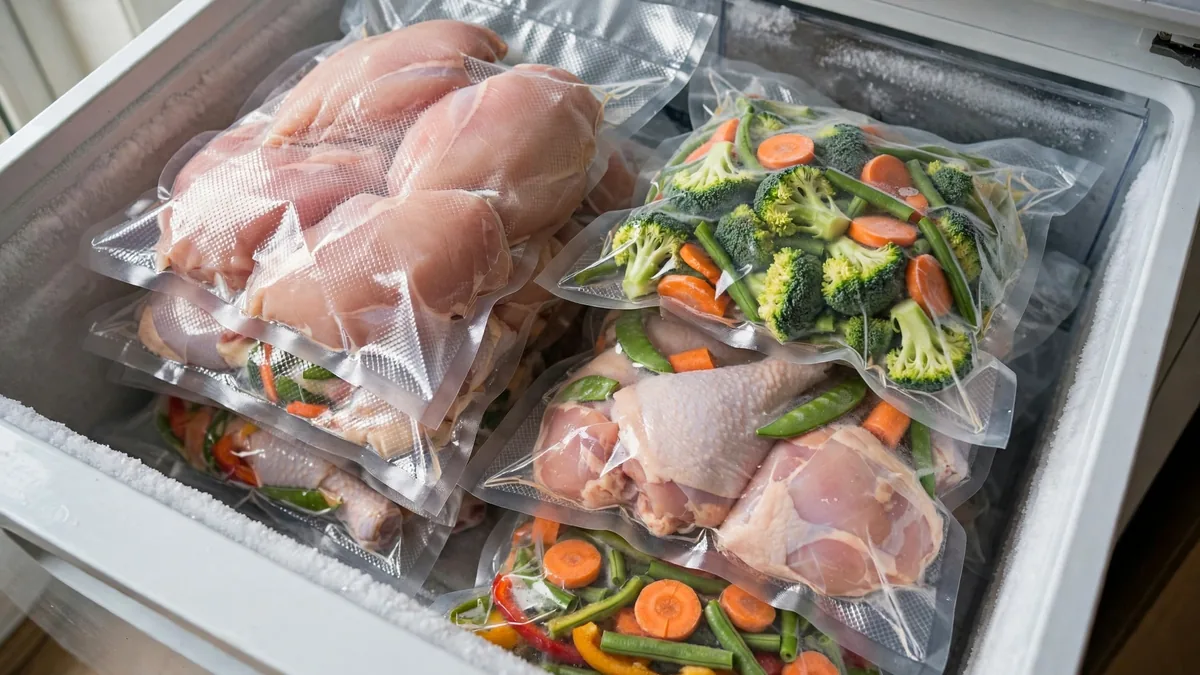
The best vacuum seal bags in 2026 are the ones that hold a tight seal for months, resist punctures from bones and sharp edges, and work with the sealer you already own. A vacuum seal bag sounds like a simple piece of plastic, yet the difference between a good one and a bad one shows up weeks later in the freezer: one bag delivers a steak that tastes freshly bought, while the other gives you grey, freezer-burned meat and a bag that has quietly lost its seal.
Key Takeaways
- Textured vacuum seal bags work with external suction sealers; smooth bags only work with chamber sealers, so check your machine before you buy.
- A thickness of around 3 mil or more resists punctures and slows moisture loss far better than thin, cheap bags.
- Rolls cost less per bag and let you cut any size, while pre-cut bags are faster and tidier for everyday sealing.
- Leave at least three inches of headroom at the top of the bag, and double-seal anything that will sit in the freezer for months.
- Vacuum sealing slows spoilage but does not replace refrigeration, and it cannot make food that is already going off safe to eat.
What a Vacuum Seal Bag Actually Is
A vacuum seal bag is a heavy plastic bag designed to have the air sucked out of it before it is heat-sealed shut. Removing the air matters because oxygen is what drives most food spoilage: it feeds the bacteria and moulds that turn fresh food slimy, and it drives the oxidation that makes fats go rancid and colours fade. With the air gone and the bag sealed, food sits in a low-oxygen environment where spoilage slows dramatically.
In the freezer the benefit is even clearer. Freezer burn is caused by air reaching the surface of food, drawing moisture out and leaving dry patches and stale flavours. A vacuum-sealed bag leaves almost no air in contact with the food, so there is almost nothing for ice crystals to form from. Meat sealed this way can keep for a year or more, compared with a few months in an ordinary freezer bag.
Textured Bags and Smooth Bags
The most important distinction is between textured and smooth bags. External suction sealers, the kind most home kitchens own, need textured bags. One side of the bag has a fine embossed pattern of tiny channels, and those channels are what let the air escape when the machine sucks. Without them, the plastic would collapse flat against itself and trap pockets of air inside. If you own an external sealer, textured bags are not optional; smooth bags simply will not vacuum properly in it.
Smooth bags work with chamber sealers, where the whole bag sits inside a chamber and the air is removed from the chamber itself, so no channels are needed. Smooth bags are usually cheaper, and they seal very cleanly, but they are useless in a standard home suction sealer. Before ordering a bulk box, check which type your machine needs. The machine manual will say, and if you are unsure, the bags that came with the machine are the type to match. For a closer look at the machines themselves, see the vacuum sealers that keep food fresh for weeks.
The Main Types of Vacuum Seal Bags
Pre-Cut Bags
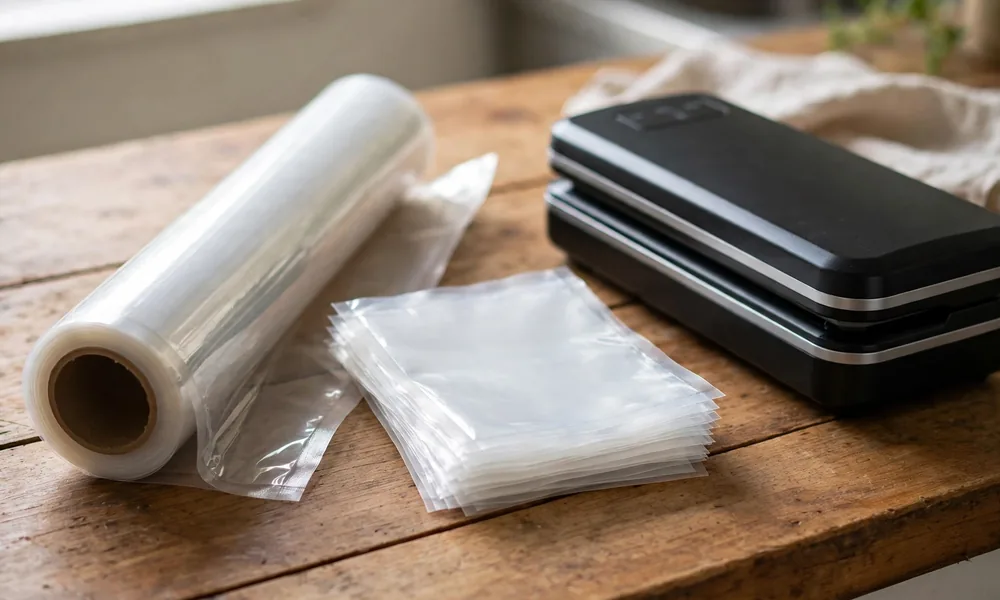
Pre-cut bags come ready to use in standard sizes, usually quart and gallon. You fill the bag, place the open end in the sealer, and seal. They are the fastest option and the tidiest to store, and they suit anyone who seals a few bags a week of roughly the same size. Their weakness is waste: a small portion in a gallon bag uses far more plastic than it needs, and an oversized cut of meat will not fit at all.
Rolls
Rolls are long tubes of bag material that you cut to whatever length you need, seal one end, fill, and seal the other. They cost noticeably less per bag than pre-cut bags, and they handle awkward sizes well, from a single chicken breast to a whole rack of ribs. The trade-off is time: every bag needs cutting and one extra seal. Many sealers have a built-in roll cutter and storage, which makes the process much quicker. If you seal in bulk or buy meat by the side, rolls are the economical choice.
Vacuum Seal Bags Compared
| Bag type | Works with | Seal strength | Cost per bag | Best for |
|---|---|---|---|---|
| Pre-cut textured bags | External suction sealers | Excellent | Medium | Everyday sealing |
| Textured rolls | External suction sealers | Excellent | Low | Bulk buys, odd sizes |
| Smooth bags | Chamber sealers | Excellent | Low | Chamber machines, liquids |
| Zip-top vacuum bags | Handheld sealers | Moderate | High | Leftovers, fridge use |
| Reusable silicone bags | Handheld sealers | Good | High upfront | Soups, marinades, reuse |
Thickness and Material: What Actually Matters
Vacuum bags are measured in mils, thousandths of an inch, and most good ones sit between 3 and 4 mil. A bag at 3 mil feels noticeably sturdier than a thin bag at 2 mil, and it resists punctures from sharp bones, pasta edges, and frozen berries. Thicker bags also slow the migration of moisture through the plastic itself, which is what keeps food from drying out over months in the freezer.
Material matters too. Look for bags described as BPA-free, which is standard for reputable food-grade bags in 2026. The layered polyethylene and nylon construction is the norm for heat-seal bags, and it is worth checking before buying unbranded bulk bags, because the cheapest imports sometimes use a single thin layer that seals poorly and splits when frozen. A bag that splits in the freezer has failed at the one job it had.
Choosing the Right Sizes
Most households need three sizes. Quart bags suit single portions, chicken breasts, fish fillets, and vegetables. Gallon bags suit family portions, whole chickens, large cuts of meat, and bulk vegetables. An 11-inch roll covers most everyday sealing, while a wider roll suits large cuts and whole fish.
What Seals Well and What Does Not
Meat, fish, and poultry are the stars. A steak sealed and frozen keeps its colour and texture for months, and portioned chicken breasts thaw quickly and evenly. Vegetables do well too, especially if blanched first: blanching stops the enzymes that keep breaking food down even in the freezer, so blanched green beans hold their colour far longer than raw ones.

Soft and delicate foods need care. Berries, bread, crisps, and pastries crush under full suction, so use a pulse or manual mode and stop before the food is damaged, or freeze them first on a tray and seal them once solid. Liquids are the hardest case for an external sealer: soup or marinade can get sucked towards the seal. Freeze liquids first in a container, then seal the frozen block, or use a chamber sealer if you seal liquids every week.
How to Seal a Bag So It Holds
Good sealing is a habit, not a talent. Portion food before you pack, in the amounts you will actually use, so you never thaw a large bag just to use a little of it. Smaller portions freeze faster, which means smaller ice crystals and better texture, and they thaw faster too.
Keep the seal area clean and dry. Wipe the inside of the bag’s top edge before sealing, because moisture, fat, or crumbs on the seal line cause weak seals that fail in the freezer. For moist foods, fold the top of the bag down like a cuff while you fill it, then unfold it for a clean edge. Double-seal anything that will sit in the freezer for months: run a second seal a few millimetres from the first, and you have insurance against the one seal that would have failed.
Freeze bags flat where you can. Lay a filled bag flat on a baking tray until solid, then stack the flat bags like files in a drawer. Flat bags take up far less space than lumpy ones, thaw in a fraction of the time, and are far less likely to be punctured by their neighbours. A chest freezer full of flat, labelled bags is one of the most satisfying sights in a well-run kitchen, and the chest freezers that hold a bulk shop make the most of that flat stacking.
Mistakes That Ruin Good Bags
Reusing a bag that held raw meat is the most common mistake. A used bag can carry bacteria in its seams, and washing rarely cleans it properly. Reuse bags only for dry goods or vegetables, and always use a fresh bag for raw meat and fish.
If you are still deciding between bag types for everyday freezing, it helps to compare with the ordinary option: which freezer bag keeps food freshest covers the zip-top bags most kitchens already own, and where vacuum bags genuinely beat them.
Vacuum Seal Bag Checklist
- Match the bag texture to your sealer: textured for external suction sealers, smooth only for chamber sealers.
- Choose 3 mil or thicker for freezer storage, and check the bags are BPA-free and food-grade.
- Stock quart and gallon pre-cut bags plus one roll, and size the bag to the portion, not the other way round.
- Leave three inches of headroom, keep the seal edge clean and dry, and double-seal for long freezer storage.
- Label every bag with contents and date, and freeze flat so bags stack and thaw quickly.
- Use fresh bags for raw meat and fish, and never vacuum seal raw mushrooms, garlic, or soft cheeses for storage.
Frequently Asked Questions
Can I use any plastic bag in a vacuum sealer?
No. A vacuum sealer needs a bag made for it: textured on one side for external suction sealers, and thick enough to survive the heat seal and the freezer. Ordinary sandwich bags and thin storage bags will not vacuum properly and often split or melt.
Are vacuum seal bags reusable?
Sometimes. Bags that held dry goods or vegetables can be washed and reused, but bags that held raw meat or fish should be thrown away, because bacteria can linger in the seams. Cut a used bag open below the old seal and reseal it shorter if you reuse it.
How long does food last in a vacuum seal bag?
In the freezer, meat and fish commonly keep for a year or more, and vegetables for eight to twelve months. In the fridge, sealed meat lasts three to five times longer than unsealed meat. These are guides, not guarantees: the food still needs to have been fresh when it was sealed.
Can vacuum seal bags go in the microwave or boiling water?
Only if the bag is rated for it. Many bags are safe for simmering and sous vide cooking, but not all are microwave-safe. Check the packaging, never microwave a sealed bag, and cut a corner open so steam can escape.
Why did my bag lose its seal in the freezer?
The usual causes are a wet or greasy seal edge, an overfilled bag, a single seal on a long-storage item, or a puncture from a bone or sharp edge. Keep the seal area clean and dry, leave headroom, double-seal for months of storage, and wrap sharp bones in a layer of cling film first.
Are vacuum seal bags worth it if I already own freezer bags?
For meat, fish, and bulk buys, yes: the extra storage life easily repays the higher cost per bag. For short-term freezing of a week or two, ordinary freezer bags are fine, and a vacuum bag is overkill.
The Bottom Line
The best vacuum seal bags in 2026 are textured bags of at least 3 mil, BPA-free, in the sizes you actually use, with a roll alongside the pre-cut boxes for odd sizes. Match the bag to your sealer first, leave headroom, keep the seal clean, and double-seal for the freezer. Do that, and a cheap bag becomes the difference between food that lasts a year and food that quietly spoils in a month.


