
Finding the best strollers in 2026 should feel exciting, not exhausting. A stroller is the one piece of baby gear you will use almost every single day, from the first walk home from the hospital to nursery runs, holidays, and weekend adventures. The right one glides over pavements, folds in seconds, and keeps your little one comfortable for hours, while the wrong one fights you at every kerb, doorway, and car boot.
The market in 2026 is full of clever designs. Full-size strollers now fold smaller than ever, lightweight city models weigh less than a bag of shopping, jogging strollers handle rough trails with real suspension, and travel strollers pack down to cabin size. The choice is no longer about finding a stroller that works — it is about finding the one that fits your life, your car, your home, and the way you actually move through the day.
This guide cuts through the noise. We compared the leading stroller types side by side, tested the features that matter in daily use, and weighed comfort, safety, weight, fold, storage, and value. Whether you need one do-it-all workhorse or a second stroller for travel, you will find a clear, honest recommendation below.
Key Takeaways
- Match the stroller to your daily life first: city pavements, rough trails, and air travel all demand different designs.
- A one-hand fold and a weight under 8 kg matter more than extra gadgets once you are carrying a baby, a bag, and a coffee.
- Look for a five-point harness, a reliable brake, and a deep recline that suits newborns as well as toddlers.
- Big rear wheels and real suspension make a bigger difference to comfort than a padded seat alone.
- Buy the stroller for the child you have now, not the one you imagine in two years — the best stroller is the one you reach for every day.
How We Picked the Best Strollers in 2026
We started with the way families actually use a stroller. That means school runs in the rain, narrow shop aisles, buses and trains, gravel paths in the park, and the weekly shop. A stroller that only performs well on a smooth showroom floor does not earn a place here.
Every type was judged on the same six measures: safety, comfort, fold, weight, manoeuvrability, and storage. Safety covers the harness, the brake, and the stability of the frame. Comfort covers the seat, the recline, the canopy, and the ride. The fold and weight decide whether the stroller is a pleasure or a chore to lift into a car. Manoeuvrability decides whether you can steer one-handed through a crowd. Storage decides whether the basket actually holds what a day out needs.
The Best Strollers of 2026 at a Glance
| Type | Best For | Weight | Fold | Standout Feature |
|---|---|---|---|---|
| Full-size stroller | Everyday use, newborn to toddler | 9–11 kg | One-hand, stands upright | Deep recline and huge basket |
| Lightweight city stroller | Public transport and tight spaces | 5–7 kg | One-hand, compact | Featherweight frame |
| Jogging stroller | Running and rough ground | 10–12 kg | Two-hand, flat | Fixed front wheel and suspension |
| Travel stroller | Flights and holidays | 5–6 kg | One-hand, cabin size | Folds to hand-luggage size |
| Double stroller | Twins or two young children | 12–15 kg | Two-hand, flat | Two full seats, one frame |
Best Full-Size Stroller for Everyday Use
The full-size stroller is the workhorse of the range, and for most families it is the only stroller they will ever need. It takes a newborn with a lie-flat recline, grows with your child through the toddler years, and carries the shopping, the changing bag, and the rain cover without complaint. If you buy one stroller and one only, buy this type.
Why It Wins
The seat is the star. It reclines almost flat for naps, sits fully upright for curious toddlers, and offers a roomy, padded space that smaller strollers cannot match. The canopy extends far enough to shield a sleeping baby from low sun, and the basket underneath is genuinely useful — big enough for a day bag, a coat, and a bag of groceries.
What to Watch
Full-size strollers are heavier and bulkier than the rest, so check your car boot before you buy. Measure the folded dimensions against the boot, and try the fold yourself in the shop. A clever one-hand fold is worth paying for, because you will often be folding it while holding your baby. Also check the width: some full-size models are too wide for the narrowest shop aisles and older lifts.
Best Lightweight City Stroller
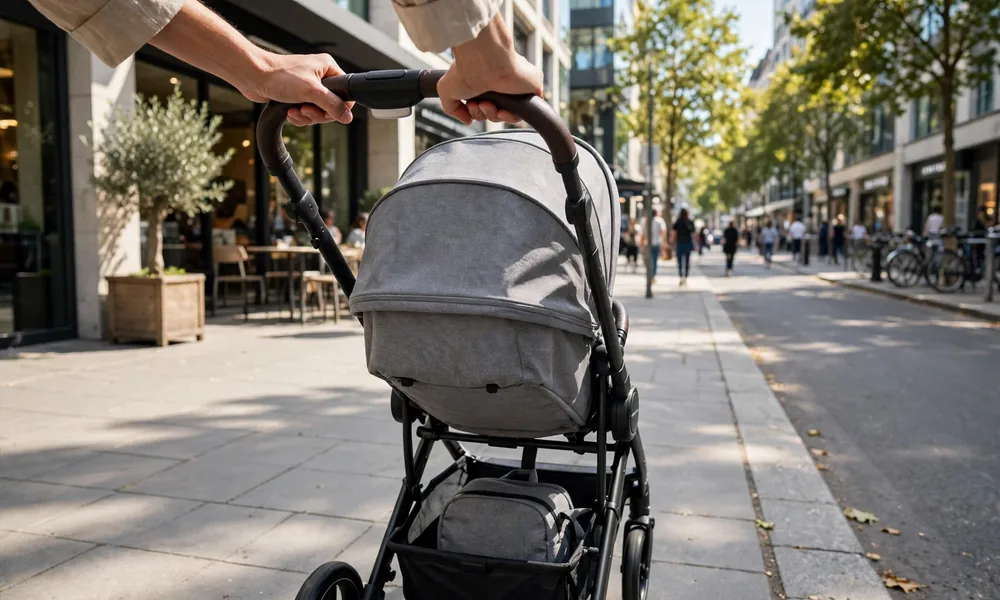
City life punishes a heavy stroller. Buses, trains, stairs, and crowded pavements all reward a frame you can lift with one hand and fold in three seconds. The best lightweight city strollers in 2026 weigh between five and seven kilograms yet still offer a decent recline, a real canopy, and a basket that holds more than a phone.
Why It Wins
The weight changes everything. You can carry it up a flight of stairs, lift it onto a bus, and pop it into a taxi boot without a second thought. The steering is light and precise, with swivel front wheels that turn on the spot in a crowded market. Many models now fold with one hand while the other holds your child, which is the single most useful feature a city parent can own.
What to Watch
City trips with a little one go smoother when the rest of the kit is just as light, so it is worth pairing a compact stroller with the best travel pillows for toddlers for naps on the move.
Best Jogging Stroller
A jogging stroller is built for parents who refuse to give up their run. Three large wheels, a lockable front wheel, and real suspension turn bumpy trails into a smooth ride, while a hand brake gives you control on downhill stretches. It is the only stroller type that is genuinely safe and comfortable at running pace.

Why It Wins
The large air-filled tyres are the secret. They absorb shocks that would jolt a baby awake in a standard stroller, and they roll easily over grass, gravel, and packed earth. The fixed front wheel keeps the stroller tracking straight at speed instead of wobbling, and the wrist strap means the stroller can never roll away from you. The seat is deep and well padded, with a five-point harness that holds a wriggling toddler securely.
What to Watch
Jogging strollers are long, heavy, and awkward in shops, so they work best as a second stroller rather than your only one. Wait until your baby is at least six months old — and check with your doctor — before running with them, since a newborn’s neck needs more support than a jogging seat provides. The fold is usually a two-hand job, and the frame takes up a large share of the car boot.
Best Travel Stroller
Flying with a baby is stressful enough without wrestling a full-size frame through security. The best travel strollers fold down to cabin-luggage size, weigh around five kilograms, and open again in seconds at the other end. They turn the airport from an obstacle course into a manageable walk.

Why It Wins
The fold is the whole point, and the best travel strollers do it brilliantly: one hand, one motion, and the frame collapses into a neat package that fits in an overhead locker or under a seat. Despite the tiny folded size, the seat reclines enough for a proper nap, the canopy gives decent shade, and the basket holds the essentials. A carry strap or travel bag makes the folded stroller easy to sling over a shoulder.
What to Watch
Travel strollers are built for smooth floors, not rough ground. Small wheels struggle on cobbles and grass, and the ride is firmer than a full-size model. Check your airline’s cabin dimensions before you travel, since allowances vary, and remember that a travel stroller is a specialist tool: wonderful for holidays and flights, but not a replacement for a sturdy everyday frame. Packing light helps too, and the best travel backpacks for toddlers keep snacks, toys, and spare clothes within easy reach on the journey.
Best Double Stroller for Two
Twins, or two children close in age, change the maths completely. A double stroller carries both children on one frame, with two full seats, two canopies, and a basket that has to work twice as hard. The best models balance the needs of both children without turning into a bus.
Why It Wins
The leading double strollers give each child a proper seat with its own recline and canopy, so one can nap while the other sits up and watches the world. Tandem models, with one seat behind the other, fit through standard doorways, while side-by-side models give both children an equal view and are easier to steer. Either way, the frame feels stable and planted, even with two toddlers and a full basket.
What to Watch
Weight and width are the trade-offs. A loaded double stroller can weigh over twenty kilograms, so a good push and a strong brake matter more than ever. Measure your doorways, your car boot, and the lift in your building before you commit. If your children are different ages, look for a model that takes a baby carrier or a ride-on board, so the stroller grows with the family instead of being outgrown in a year.
Stroller Buying Checklist
- Try the one-hand fold in the shop, and check the folded stroller fits your car boot and hallway.
- Buckle the harness and test the brake with the shoes you actually wear.
- Push the stroller one-handed around a tight corner to test the steering.
- Recline the seat fully and check the canopy reaches far enough for a proper nap.
- Load the basket with your real day bag and check it still feels balanced.
- Check the weight limit and seat size against your child’s height, not just their age.
Frequently Asked Questions
When can a baby use a stroller?
Most babies can use a stroller from birth if the seat reclines fully flat or the stroller takes a carrycot or car seat. A standard seat without a lie-flat recline is usually suitable from around six months, when a baby can sit up with support. Always follow the maker’s guidance for your model.
What is the difference between a stroller and a pram?
A pram is designed for newborns, with a flat bassinet for lying down, while a stroller is a seated pushchair suited to babies who can sit up and toddlers. Many modern strollers convert between the two with a carrycot, giving you a pram for the early months and a stroller for the years after.
Can I take a stroller on a plane?
Yes, in most cases. Many airlines let you check a stroller free of charge, and compact travel strollers often fit in the cabin as hand luggage. Check your airline’s size and weight limits before you fly, and consider a protective travel bag for checked strollers. For longer trips, a light foldable seat for rest stops pairs well with the best camping chairs for toddlers once you reach your destination.
How do I clean a stroller?
Remove the fabric parts where you can and wash them according to the label, usually on a gentle cycle. Wipe the frame with warm soapy water, clean the wheels of mud and grit, and let everything dry fully before folding it away. A quick wipe-down after muddy outings keeps the fabric fresh and stops grime building up in the joints.
The Bottom Line
The best strollers are the ones that fit your life. A full-size suits most families as the workhorse, a lightweight city stroller wins for public transport, a jogging stroller earns its place on trails, and a travel stroller makes flying with a baby manageable. Pick the type that matches your days, test the fold, and choose the stroller that feels right in your hands — the one you reach for every day.


