Sweatbands are the simplest piece of workout kit you can own, and the best sweatbands of 2026 do one job well: they catch sweat before it reaches your eyes, your hands or your grip. A sweatband is a loop of absorbent fabric worn around the forehead or the wrist during exercise. The headband version stops sweat running into your eyes; the wristband version lets you wipe your forehead mid-set and keeps sweat off your hands when you are holding a racket, a bar or a dumbbell. This guide explains the types on sale, the fabrics that actually absorb, and how to choose sweatbands that stay put and dry out between sessions.
Key Takeaways
- A sweatband is a workout tool, not a hair accessory: it exists to absorb sweat, and absorbency matters more than looks.
- Thick terry cotton absorbs the most sweat, while moisture-wicking synthetics dry faster and suit long sessions.
- Head sweatbands keep sweat out of your eyes; wrist sweatbands keep your hands dry and give you something to wipe with mid-workout.
- Fit is everything: a band that is too tight gives you a headache, and a band that is too loose slides down within minutes.
- Wash sweatbands after every two or three uses, or they stiffen with salt and start to smell.
What Is a Sweatband?
A sweatband is a stretchy loop of absorbent fabric, usually terry cotton, worn on the forehead or wrist during exercise. The headband sits across the forehead, just above the eyebrows, and catches sweat as it runs down from the hairline. The wristband sits on the forearm, where it is easy to reach with the other hand, and doubles as a wipe and as a barrier that stops sweat running down onto the palm. Both versions are simple, cheap and washable, and both do a job that no other piece of kit does: they manage sweat at the point where it causes trouble.
Sweatbands come in two widths. Narrow bands, about five centimetres wide, are light and unobtrusive, and they suit shorter workouts and cooler conditions. Wide bands, about eight to ten centimetres, hold far more sweat and suit long runs, hot gyms and tennis matches. Most sweatbands are sold in pairs or packs of three, and a pack costs less than a single pair of running socks.

Sweatbands vs Headbands: What’s the Difference?
Sweatbands and headbands overlap, but they are not the same product. A headband is a hair accessory: it keeps hair out of your face, and its job is grip and looks. A sweatband is a workout tool: it absorbs sweat, and its job is absorbency and drying. A fashion headband made of velvet or satin will hold your hair beautifully and absorb almost nothing. A terry sweatband will soak up a remarkable amount of sweat and look plain doing it. If you train hard, buy a sweatband. If you want your hair to look tidy at work, buy a headband. Our guide to the best headbands of 2026 covers the hair side of this divide in full, including the sport bands that sit in the middle.
The Main Types of Sweatbands
Terry Cotton Headbands
Terry cotton is the classic sweatband material, and it is still the best absorber. The looped pile of terry cloth soaks up sweat fast and holds it, and a thick terry headband can get through a forty-five-minute workout before it feels heavy. Cotton is soft against the skin, it does not irritate, and it survives hundreds of washes. The downside is drying time: a soaked terry band takes hours to dry, so you need more than one in rotation. Wash cold and let it dry flat if you want the fit to stay true.
Terry Cotton Wristbands
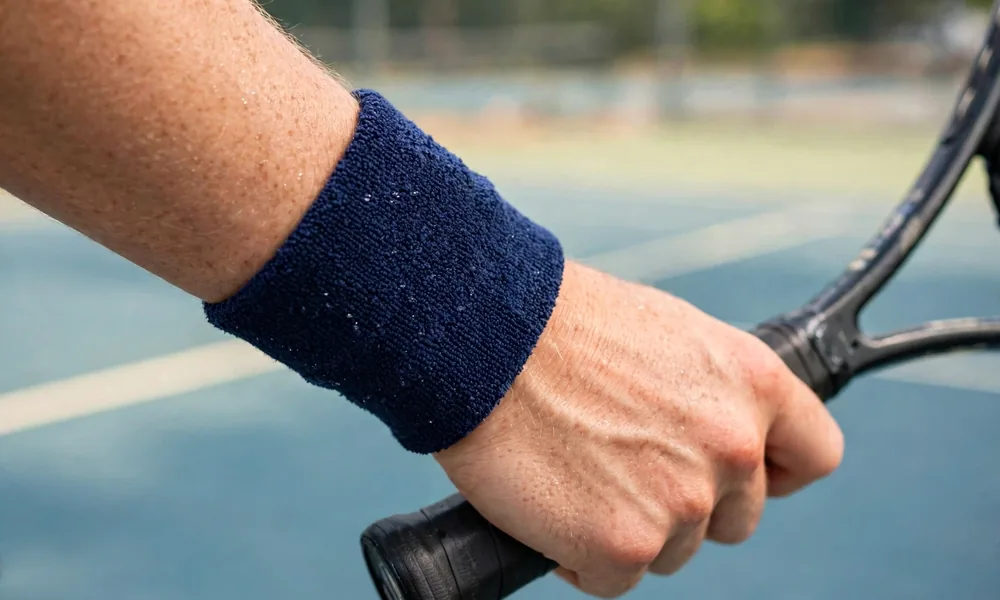
Wristbands are the same terry fabric in a smaller loop, worn on the forearm. Their job is different from a headband’s: they keep sweat off your hands and give you a wipe that is always within reach. Tennis players wear them on both wrists, because a sweaty palm loses grip on a racket at the worst moment. Weightlifters wear one on the wrist of the hand that grips the bar. The best wristbands are about eight centimetres wide, thick enough to absorb, and tight enough to stay on the forearm without cutting off circulation.
Moisture-Wicking Bands
Moisture-wicking bands are made of synthetic fabrics, usually polyester or a polyester-elastane blend, that pull sweat through the fabric and spread it out so it evaporates. They do not absorb as much as terry, but they stay lighter when wet and dry far faster, which makes them the better choice for long sessions, hot weather and multi-day trips where you cannot wash every night. Cheap wicking bands feel slippery when wet and slide down the forehead within minutes.
The Best Sweatbands of 2026 Compared
| Sweatband type | Best for | Absorbency | Drying time | Watch out for |
|---|---|---|---|---|
| Terry cotton headband | Runs, gym sessions, tennis | Excellent | Slow, hours | Shrinks in a hot wash |
| Terry cotton wristband | Grip sports, wiping mid-set | Very good | Slow | Too tight cuts circulation |
| Moisture-wicking band | Long sessions, hot weather | Good | Fast | Cheap ones slip when wet |
How to Choose Sweatbands
Pick the Fabric for Your Workout
For most people, most workouts, thick terry cotton is the right answer. It absorbs the most, it is comfortable, and it is cheap enough to own three or four. If you train for more than an hour, or you train in heat, a moisture-wicking band is the better second purchase: it will not absorb as much, but it will not turn into a heavy wet towel on your forehead either. Own both, and choose on the day. A cooling band is worth adding only if you regularly train outdoors in summer heat.
Get the Fit Right
A sweatband should feel snug, not tight. You should be able to slide two fingers under it without forcing, and it should stay in place when you shake your head. Too tight, and you will get a headache within twenty minutes; too loose, and it slides down over your eyebrows the moment you start sweating. Most bands come in one size with a stretchy core, but the stretch varies wildly between brands. If you have a larger head, look for bands sold in large sizes.
Choose the Width for the Session
Width is absorbency. A five-centimetre band is light and suits short workouts and cooler days. An eight- to ten-centimetre band holds far more sweat and suits long runs, tennis matches and hot gyms. Wide bands also stay in place better, because they spread their grip over a larger area. If you only buy one band, buy a medium width of about seven centimetres.
Head, Wrist or Both?
Most people need a headband first, because sweat in the eyes is the problem that stops a workout. But if you play a grip sport, a wristband matters just as much: a sweaty palm loses a racket, a bar or a dumbbell, and a wristband is the cheapest grip insurance you can buy. Tennis players wear both. Runners usually wear only a headband. Gym-goers who lift heavy should wear a wristband on the hand that grips, and a headband if they sweat heavily. Buy a pack that includes both, and you will use all of it.
How to Wear and Use Sweatbands
Wear a head sweatband across the forehead, just above the eyebrows, with the hair pushed back underneath it. If you wear it too high, sweat runs under it; if you wear it too low, it slips into your eyes when you look down. Put it on before you start warming up, not after you are already sweating, because a dry band absorbs far better than one put on wet skin. Wear a wristband on the forearm, about five centimetres above the wrist bone, where it is easy to reach and does not interfere with a watch. During a workout, wipe with the wristband rather than your hand: the band is there to be soaked, your palm is not.
Carry a spare. A sweatband that saturates halfway through a long run is worse than useless, because a soaked band drips sweat into your eyes in a steady stream. Keep the spare in a small bag with your water bottle. Our guide to the best gym bags of 2026 covers the bags with a separate wet pocket that keeps a used band away from your dry clothes. If you train with resistance bands as well, our guide to the best resistance bands of 2026 pairs naturally with a wristband, since both are about keeping your hands dry and your grip sure.
Care and Washing
Wash sweatbands after every two or three uses at the latest. Sweat leaves salt in the fabric, and salt stiffens terry cloth and breeds smell. Wash in cold or warm water with a mild detergent, skip the fabric softener, which coats the fibres and kills absorbency, and let the band dry flat or hang it in the air. Do not tumble dry terry bands on high heat: it shrinks them and wears out the elastic faster. Replace a band when the elastic no longer holds it in place, or when it smells even straight out of the wash.

Buying Checklist
- Choose thick terry cotton for maximum absorbency, and add a moisture-wicking band for long or hot sessions.
- Check the fit: snug, not tight, two fingers under the band, and no headache after twenty minutes.
- Pick the width for the session: five centimetres for short workouts, eight to ten for long runs and matches.
- Buy head and wrist bands together if you play a grip sport like tennis or lift weights.
- Check the elastic and the seam: a wide firm core and a flat seam outlast a thin cord and a bulky join.
- Own at least three bands so you always have a dry one while the others are in the wash.
Frequently Asked Questions
Are sweatbands and headbands the same thing?
No. A sweatband is a workout tool built to absorb sweat, while a headband is a hair accessory built to hold hair back and look good. Some sport headbands do both, but a proper terry sweatband absorbs far more.
Do sweatbands actually work?
Yes, if they are thick enough. A thick terry headband keeps sweat out of your eyes for forty-five minutes or more, and a wristband keeps your hands dry during grip sports. Thin elastic bands saturate in minutes and work far less well.
How tight should a sweatband be?
Snug, not tight. You should be able to slide two fingers underneath it, and it should stay put when you shake your head. Too tight gives you a headache; too loose slides down within minutes.
How often should I wash sweatbands?
After every two or three uses. Sweat leaves salt in the fabric, which stiffens terry and causes smell. Wash cold or warm, skip fabric softener, and dry flat or in the air.
Can I wear a sweatband under a helmet or cap?
Yes, but choose a thin elastic band for that. A thick terry band bunches up under a helmet. Thin bands absorb less, so they suit shorter sessions under headgear.
How many sweatbands do I need?
At least three: one to wear, one in the wash, and one dry spare. If you train daily or play tennis, five is a more honest number.
The Bottom Line
The best sweatband of 2026 is a thick terry cotton band, about seven centimetres wide, snug but not tight, with a wide elastic core and a flat seam. Buy a headband first, add wristbands if you play a grip sport, and keep at least three in rotation so you always have a dry one. Moisture-wicking bands are the right second purchase for long or hot sessions. Whatever you buy, remember what it is for: a sweatband manages sweat, not hair, and the only test that matters is whether your eyes stay dry when the workout gets hard.