The Tent Stakes That Hold Firm in Any Ground in 2026
A tent is only as strong as the pegs holding it down, and the best tent stakes of 2026 decide whether you sleep dry or chase your shelter across a field at 2 a.m. The right stake grips soft soil, bites into hard ground, holds in loose sand, and stays put when the wind changes in the night. This guide compares the stakes that hold firm in 2026, explains which shape suits each surface, and shows you how to pitch so your tent stays put.
Key Takeaways
- Match the stake to the ground: soft soil needs long wide stakes, hard ground needs tough narrow ones, sand needs broad pegs or buried anchors.
- Y-shaped aluminium stakes are the best all-round choice, balancing grip, weight, and durability across mixed ground.
- Length matters: a stake driven two-thirds in holds far better than a short stake hammered flat.
- Angle stakes away from the tent at roughly 45 degrees, so the guy line pulls against the stake instead of lifting it out.
- Carry two spare stakes and a small mallet: one bent stake can leave a whole side of the tent unsecured.
Why Your Tent Is Only as Strong as Its Stakes
A tent stake turns a loose guy line into a fixed anchor. Wind pulls the fabric, the fabric pulls the guy line, and the guy line pulls the stake. If the stake moves, the tent moves with it, letting rain in and flapping all night. Strong stakes are cheap insurance, costing less than one night in a hotel.
The mistake most beginners make is treating all stakes as the same. The thin wire hooks that come free with a tent are fine for a calm night on soft grass, but they bend on stones, spin in sand, and pull straight out of wet soil. A stake designed for the ground you are camping on holds with a fraction of the effort. If you are still choosing shelter, our guide to the best camping tents pairs well with the stakes below, because a tent and its stakes work as one system.
The Main Types of Tent Stakes Compared
Every stake shape trades grip, weight, strength, and price. The table compares the main types, and the notes explain where each one shines.
| Stake Type | Best Ground | Weight Each | Holding Power | Weakness |
|---|---|---|---|---|
| Hooked steel wire | Soft grass | 10 g | Low | Bends on stones |
| Y-shaped aluminium | Mixed ground | 13 g | High | Snaps if hammered hard |
| V-shaped aluminium | Firm soil | 11 g | Medium-high | Poor in loose sand |
| Wide sand peg | Sand and snow | 25 g | High in sand | Heavy and bulky |
| Rock peg / nail stake | Hard and rocky | 30 g | Very high | Useless in soft soil |
| Screw-in stake | Soft and sandy | 40 g | Very high | Slow to place |
Hooked Steel Wire Stakes
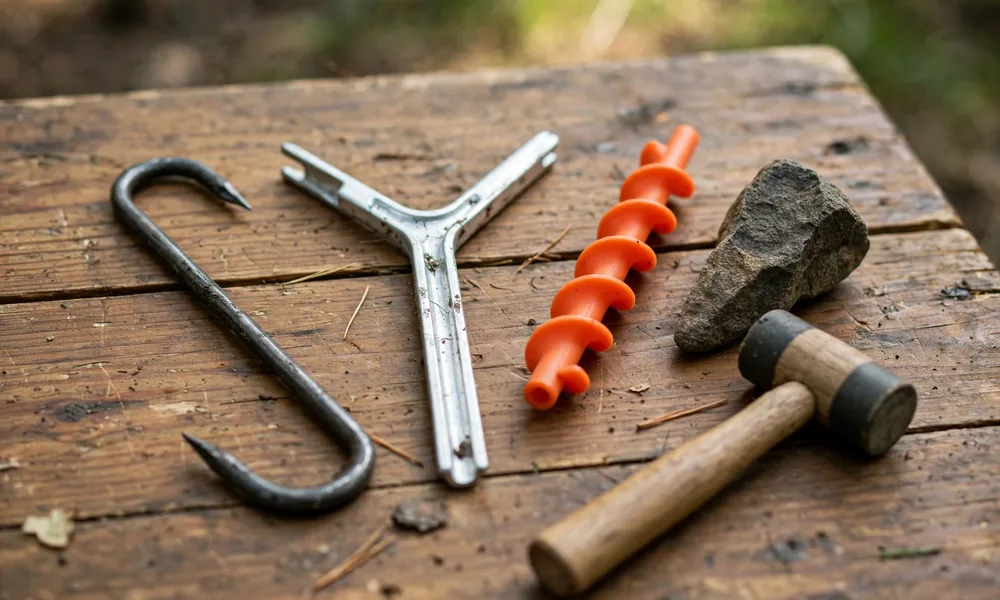
The hooked wire stake is the classic peg that ships with most tents: a bent length of steel wire with a hook at the top for the guy line. It is cheap, light, and easy to push into soft grass by hand. Its weakness is strength. Hit a stone and it bends, and in wet soil the thin profile gives the ground almost nothing to grip.
Y-Shaped Aluminium Stakes
Y-shaped stakes are the best all-round tent stakes for most campers in 2026. The three-sided profile gives the ground far more surface to grip than a round wire, so the stake resists pulling and twisting, and the aluminium keeps the weight low enough for backpacking. Their one flaw is brittleness: hammer one into solid rock and it can snap, so use a rock peg on hard ground.
V-Shaped and Flat Stakes
V-shaped stakes sit between wire hooks and Y stakes: light and cheap, good in firm soil, but they twist easily and offer little in loose sand. Flat sand pegs are wide blades that spread the load across sand or snow, the right choice for beaches and winter camping, where narrow stakes slide out.
Rock Pegs and Screw-In Stakes
Rock pegs, or nail stakes, are short, thick steel spikes for ground that defeats everything else. Hammer one into a crack and it stays put through the worst weather, though it is heavy and nearly useless in soft soil. Screw-in stakes twist into soft, sandy ground like a corkscrew and hold with remarkable force, though they are slow to place by hand.
Matching the Stake to the Ground
The ground decides the stake. Arrive at camp, read the soil, and choose before you pitch: a minute now saves an hour of re-pegging in the dark.
Soft Grass and Woodland Soil
Soft, damp soil is easy to pitch in but easy to pull out of. Use long stakes, at least 18 centimetres, with a wide Y-shaped profile, driven fully in. In very wet ground, a screw-in stake gives extra grip.
Hard and Rocky Ground
Hard ground is the most common reason stakes bend. Use thick steel rock pegs and a proper mallet, aiming for cracks and softer patches rather than hammering blindly at stone. If a stake will not go in, move it a few centimetres and try again: a bent stake is a lost stake.
Sand, Beaches, and Dunes
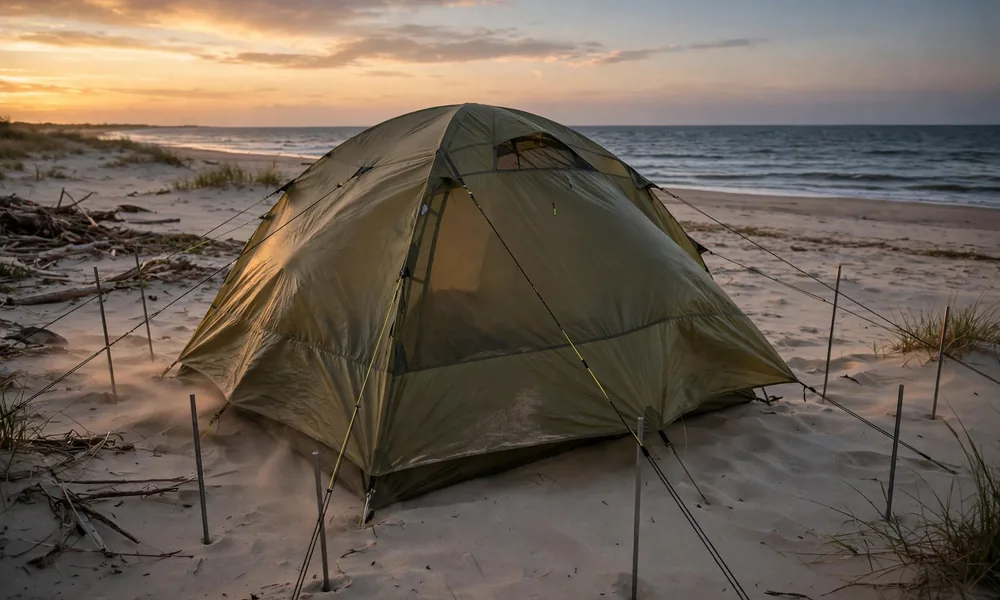
Sand defeats narrow stakes completely, because nothing firm grips them. Use wide sand pegs driven deep, or bury a stuff sack filled with sand as a deadman anchor. Set the anchor further from the tent than usual, since sand gives way gradually and the extra distance spreads the load.
Snow and Frozen Ground
In snow, wide pegs buried sideways work as deadman anchors: pack snow over them, let it set, and they will hold through a storm. In frozen ground, use steel pegs or anchor to trees and rocks. Never rely on a stake only half in: frozen ground thaws around it by day and lets go at night.
What Makes a Stake Hold Firm
Four things decide holding power: profile, length, material, and angle. A Y or V shape grips far better than a round wire because the ground presses against flat faces instead of sliding around a curve. A longer stake reaches firmer, deeper ground and spreads the pull over more surface.
Steel is the strongest and heaviest, suiting car camping and rocky ground. Aluminium is lighter and strong enough for most conditions, which is why backpackers prefer it. Titanium is lighter still but costs several times more and is easy to lose. Plastic stakes are light and cheap, but they bend in hard ground and suit only sand and soft soil.
Angle is the free upgrade most campers miss. Drive the stake leaning away from the tent at about 45 degrees, hook facing the tent, so the guy line pulls down along the stake rather than up out of the ground. Keep guy lines taut but not guitar-string tight, because over-tensioned lines pull stakes out and strain the tent fabric. A well-chosen set belongs on any list of camping essentials, and weighs less than your water bottle.

The Best Tent Stakes of 2026
The stakes below are our picks for each style of camping: the most reliable choice for the ground each is made for, proven on real nights in real weather.
Best All-Round: Y-Shaped Aluminium Stake
The Y-shaped aluminium stake is the pick for most campers, because it holds in the widest range of ground and weighs almost nothing. At 13 grams each, a set of eight adds barely 100 grams, and the three-sided profile grips soft soil, firm grass, and woodland ground alike. Buy it first if you only buy one kind.
Best for Hard Ground: Steel Rock Peg
When the ground is hard, dry, or full of stones, the steel rock peg is the only stake that keeps working. Its thick spike takes a mallet without bending and bites into cracks that would snap an aluminium stake. At around 30 grams, carry four for the windward corners and lighter stakes elsewhere; even gram-counting backpackers should carry two, because one rocky pitch can ruin a trip.
Best for Sand: Wide Sand Peg
On beaches and dunes, the wide sand peg is in a class of its own. Its broad blade spreads the load across loose sand, and driven deep it holds through gusts that pull narrow stakes out in seconds. It is bulkier than other stakes, so it suits car camping and beach trips more than long hikes, and a buried stuff sack full of sand is a free backup anchor.
Best Ultralight: Titanium Nail Stake
Ultralight hikers will like the titanium nail stake: strong for its weight, clean-driving in firm ground, and unbothered by stones that bend a wire hook. It is expensive and grips soft soil worse than a Y shape, so it is a specialist pick, but on fast trips over firm ground it is hard to beat. Keep them in a bright stuff sack: they are small, dark, and easy to leave behind.
Best Value: Steel Wire Hook Set
A few weekends a year on soft grass? Steel wire hooks are perfectly good value: cheap, light, and fine in gentle conditions. Treat them as fair-weather stakes, upgrade the windward corners to Y stakes, and keep them as spares. For longer trips, check our guide to the best hiking backpacks to match stakes and pack to the way you travel.
Checklist: Packing and Pitching Stakes That Hold
- Count stakes before you leave: one per guy line plus two spares, checked for bends or cracks.
- Pack a small mallet: pushing stakes in by hand rarely seats them deep enough.
- Read the ground on arrival and pick the stake for the soil you have, not the soil you expected.
- Drive each stake two-thirds in, leaning away from the tent at 45 degrees with the hook facing the tent.
- Tension guy lines evenly and re-check them after an hour, since fabric stretches and soil settles.
- Count stakes again when packing up, and pull them with a cord or stake puller.
Frequently Asked Questions
How many tent stakes do I need?
Most two-person tents need eight to twelve stakes: one per corner, one per guy line, and two spares. Count the guy-out points before you pack, and carry two extra.
What angle should tent stakes go into the ground?
Drive stakes leaning away from the tent at roughly 45 degrees, hook facing the tent, so the guy line pulls down along the stake instead of lifting it out.
Are aluminium or steel tent stakes better?
Aluminium stakes are lighter and best for backpacking and mixed ground; steel stakes are stronger and better for hard, rocky ground. Most campers are happiest with aluminium Y stakes generally and a few steel rock pegs for hard pitches.
How do I stop tent stakes pulling out in wind?
Use longer, wider stakes, drive them fully in at 45 degrees, and set them further from the tent so the guy line pulls at a shallower angle. In sand, bury the anchor or use a deadman.
Can I use rocks instead of tent stakes?
Yes: on very rocky ground rocks are often better than stakes. Tie guy lines around heavy rocks, or pile rocks over a buried stake or stuff sack, keeping the line low so it cannot slip off and the rock heavy enough that wind cannot shift it.
How do I get a stuck tent stake out?
Rock the stake gently side to side to loosen the soil, then pull it straight up with a pull cord or stake puller. Never yank the guy line: it bends the stake and can tear the line.
The Bottom Line
The best tent stakes of 2026 are the ones matched to the ground under your tent. Carry Y-shaped aluminium stakes generally, add steel rock pegs for hard ground and wide sand pegs for beaches, drive them in at 45 degrees, and pack two spares. Do that, and your tent will stay put through the night.