
Thread That Holds Every Seam in 2026
Thread is the smallest and cheapest part of any sewing project, and the one that decides whether the whole thing holds together. A seam is only as strong as the thread inside it, and good fabric can be let down by a thread that snaps, puckers, or fades. The best thread in 2026 is not the most expensive reel on the shelf. It is the thread that matches the fabric in front of you, the job you are asking it to do, and the way the finished piece will be worn and washed. This is a thread-only guide — fibre, weight, colourfastness, stretch, and spool versus cone — so you can buy the right thread first time.
Most trouble that looks like a machine problem is a thread problem. Skipped stitches, tangled nests, seams that pucker after washing, and hems that split all trace back to the wrong thread, a tired thread, or a thread and needle that do not suit each other. A good thread runs smoothly, forms even stitches, and keeps its strength for years. A poor thread frays, sheds lint, snaps under tension, or fades.
Key Takeaways
- Match the fibre to the fabric: polyester suits most everyday sewing, cotton suits natural fabrics and quilting, silk suits fine, delicate work.
- Weight runs backwards: a lower number means a thicker thread, so 40-weight is the all-rounder, 50-weight suits fine cotton, and 30-weight suits denim and topstitching.
- Colourfastness matters more than an exact colour match: a thread that fades or bleeds in the wash spoils a garment even if it looked perfect in the shop.
- Stretch fabrics need a thread with give: polyester moves with the fabric, while rigid cotton thread snaps at the seam.
- Buy spools for single projects and cones for heavy use.
What Thread Actually Does in a Seam
A seam is two pieces of fabric held together by a loop of thread passing through both layers again and again. The thread carries the load every time the garment is pulled, sat on, stretched, or washed. On a shirt, the shoulder thread takes strain every time you reach up; on trousers, the seat seam takes strain every time you sit down. The thread never gets the credit when a garment lasts for years, but it gets the blame, fairly, when a seam gives way. Thread also shapes the look: too thick leaves holes and a ridged seam, too thin pulls apart, and the wrong colour shows as a dotted line.

Fibre Types: What Each Thread Is Made Of
Fibre decides how thread behaves in the machine, how it ages, and what it suits. Four fibres matter for home sewing.
Polyester Thread
Polyester is the workhorse of the sewing world: strong, slightly stretchy, colourfast, and resistant to mildew and sunlight. It sews smoothly on cotton, linen, synthetics, and blends, survives washing without shrinking or fading, and its slight give lets it move with the fabric instead of snapping. For dressmaking and repairs, it is the safest single choice.
Cotton Thread
Cotton has a soft, matt finish that suits natural fabrics and quilting, and it presses beautifully, which matters when crisp seams are part of the look. It has almost no stretch, so it suits stable woven fabrics. Its weakness is age: cotton weakens over time, especially in sunlight, and an old reel can snap for no obvious reason — replace old reels rather than trusting them.
Silk Thread
Silk is fine, strong, and smooth, with a gentle sheen that suits delicate fabrics and hand sewing. It slides through silk, wool, and fine cotton without leaving holes, and it makes beautiful hand stitches for hems and finishing. It is expensive, but for a special garment nothing else looks quite the same.
Specialist Threads
Topstitching thread is thicker and more visible, for the decorative lines on jeans and jackets. Upholstery thread is heavy and strong, for thick fabric and furniture. Embroidery thread is fine and glossy, for decoration rather than seams. Metallic thread adds sparkle but is fragile and needs a larger needle and slower speed.
Thread Weight Explained
Thread weight is the number printed on the reel, and it confuses almost everyone at first, because the numbers run backwards: a lower number means a thicker thread. A 30-weight thread is thicker than a 40-weight thread, which is thicker than a 50-weight thread. A 40-weight thread is the all-rounder for most home sewing, strong enough for cotton, linen, and light denim, and fine enough not to leave holes in ordinary fabric. A 50-weight thread is finer and suits lightweight cotton, silk, and fine dressmaking. A 30-weight thread is thicker and suits denim, canvas, topstitching, and heavy seams. Match the needle to the thread: 40-weight pairs with a size 80 or 90 needle, 30-weight needs size 90 or 100, and 50-weight suits size 70 or 80. If thread shreds or snaps, try a larger needle before blaming the reel.
Comparison Table: The Main Thread Types at a Glance
| Thread type | Best for | Stretch | Colourfastness | Weakness |
|---|---|---|---|---|
| Polyester, 40-weight | Everyday sewing, most fabrics | Slight give | Excellent | Can look shiny on matt fabric |
| Cotton, 50-weight | Quilting, natural fabrics | Almost none | Good | Weakens with age and sunlight |
| Silk thread | Fine fabrics, hand finishing | A little | Good | Expensive, not for heavy seams |
| Topstitching, 30-weight | Jeans, jackets, visible seams | Slight give | Excellent | Too heavy for fine fabric |
| Upholstery thread | Thick fabric, furniture | Almost none | Good | Needs a heavy needle and machine |
Colour, Colourfastness and Matching
Choosing a thread colour is a matter of light, not just shade. A thread that matches the fabric in the shop can look wrong in daylight, and a thread that looks a shade dark on the reel often disappears into the seam once sewn. When in doubt, choose a shade darker than the fabric rather than lighter, because a darker thread sinks into the seam while a lighter thread catches the eye. Colourfastness matters more: a thread that is not colourfast will bleed into pale fabric in the wash or fade until the seams stand out. Before sewing a garment in a strong colour, soak a length of thread in warm water with a little detergent, lay it on a white cloth, and check for transfer. A small stock of neutrals — black, white, navy, grey, beige — covers most repairs.
Spool or Cone: Which Format to Buy
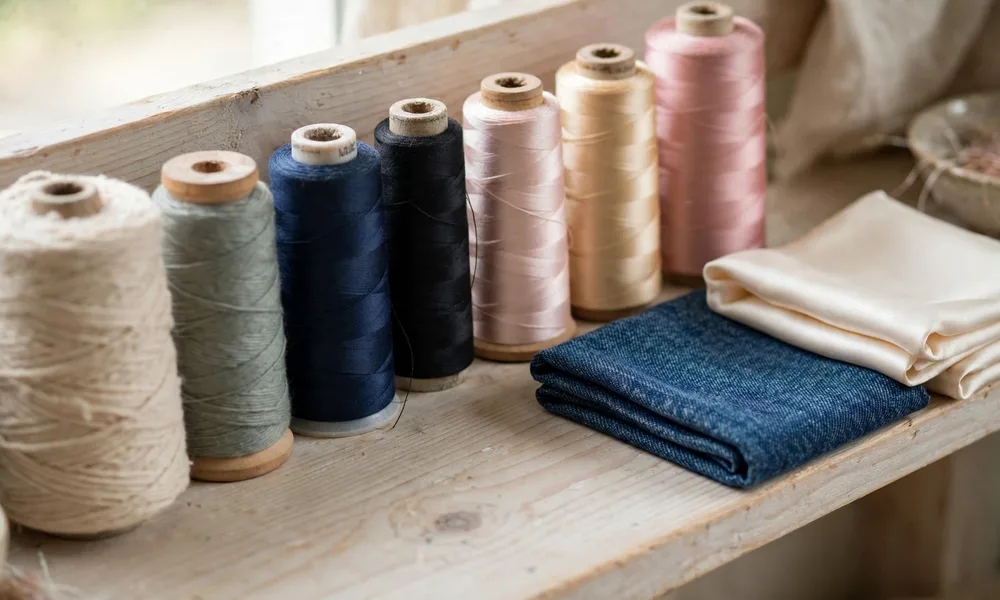
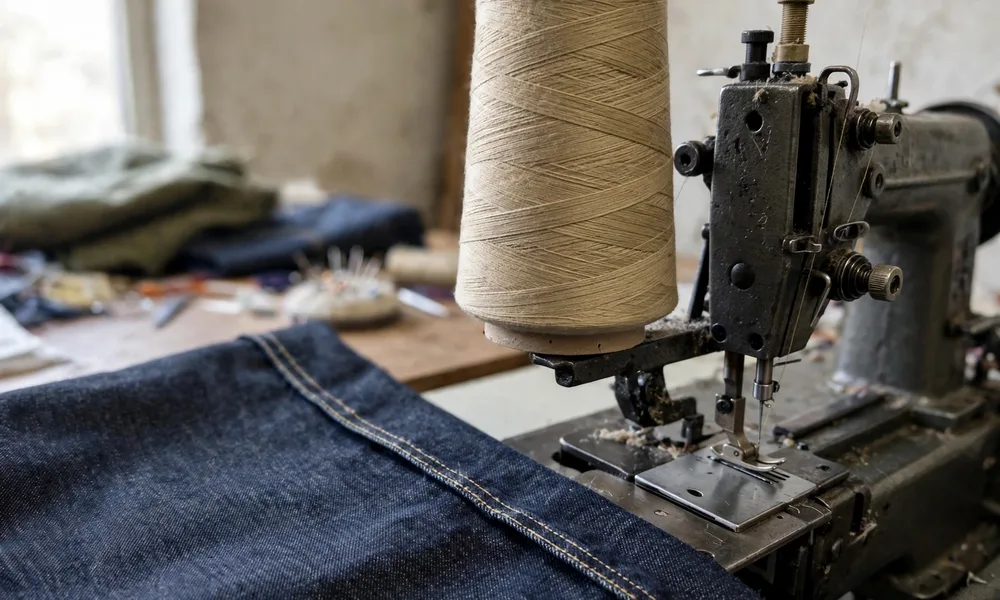
A spool is a small reel holding roughly 100 to 500 metres. It is cheap, easy to store, and the right choice for a single project or a colour you use rarely. A cone is a large upright reel holding 1,000 to 5,000 metres. It costs more up front but far less per metre, and it is the right choice for a thread you use constantly, such as black, white, or navy polyester. Cones feed differently: a spool turns as the thread unwinds, while a cone stands still and the thread lifts off the top in a spiral, so a cone feeds best from a thread stand behind the machine. Most home sewers need a mix: spools in project colours, and one or two cones in the most-used neutrals.
Stretch Thread and Knit Fabrics
Stretch fabric needs a thread that can move. A seam in a T-shirt or a jersey dress is stretched every time the garment is pulled on, and a rigid thread will snap at the weakest point. Polyester has enough natural give for most knits, which is why it is the default choice for stretch sewing; for very stretchy fabrics, a woolly nylon thread in the bobbin gives the seam more room to move. The stitch matters as much as the thread: a straight stitch on stretch fabric will snap, while a narrow zigzag, a stretch stitch, or an overlock stitch lets the seam move with the fabric. Do not use cotton thread on stretch fabric: it has almost no give and will break even if the stitch is right.
Common Thread Problems and Fixes
Thread that snaps as you sew usually points to a needle too small for the thread, a thread path that is catching, or thread that is old or poor quality. Change the needle first, going up a size, and rethread the machine fully. If the thread still snaps, try a fresh reel. Puckering is usually a tension problem, a thread problem, or both: a thread too heavy for the fabric pulls the seam tight, and a tension set too high does the same, so loosen the tension, try a finer thread, and sew a test seam first. For more on keeping the rest of your sewing setup in order, see our guide to sewing kits that cover every quick fix, and if a seam does need taking apart, our guide to seam rippers that cut stitches without tearing shows how to do it without damaging the fabric. Store thread in a cool, dark, dry place: sunlight fades and weakens it, and heat makes it brittle. A drawer beats an open rack by a window.
Buying Checklist: Six Things to Check Before You Pay
- Match the fibre to the fabric: polyester for most sewing, cotton for quilting and natural fabrics, silk for fine work.
- Check the weight: 40-weight for general sewing, 50-weight for fine fabric, 30-weight for denim.
- Hold the thread up to the fabric in daylight and choose a shade darker rather than lighter when unsure.
- Test colourfastness on strong colours by soaking a length in warm soapy water and checking for transfer onto white cloth.
- Feel the thread for smoothness and even thickness, and tug it firmly to check it is strong for its size.
- Choose a spool for a single project and a cone with a thread stand for the neutrals you use every week.
Frequently Asked Questions
What is the best all-purpose sewing thread?
A 40-weight polyester thread is the best all-purpose choice for most home sewers. It suits cotton, linen, synthetics, and blends, it has a little give, it is colourfast, and it survives washing well.
Can I use cotton thread on a sewing machine?
Yes, on natural fabrics and quilting, but use a fresh reel and the right needle size. Old cotton thread weakens and snaps, so replace reels that have sat in sunlight or damp for years. Never use cotton thread on stretch fabrics, because it has no give and the seam will break.
How do I know what weight of thread to buy?
Read the number on the reel: lower means thicker. A 40-weight thread is the general all-rounder, 50-weight is finer for lightweight fabric, and 30-weight is thicker for denim and topstitching. A thicker thread needs a larger needle eye.
Should I buy thread on a spool or a cone?
Buy a spool for a single project or a colour you rarely use, and a cone for the neutrals you sew with every week. A cone holds far more thread for the money, but it feeds best from a thread stand behind the machine.
Why does my thread keep breaking in the machine?
The usual causes are a needle too small for the thread, a thread path that is catching, or old or poor-quality thread. Change to a larger needle, rethread the machine fully, and try a fresh reel. A clean cut starts a clean seam, so our guide to rotary cutters that slice fabric clean is worth a look before your next project.
How should I store sewing thread?
Store thread in a cool, dark, dry place, away from sunlight, damp, and heat. A closed drawer or box beats an open rack by a window. Throw away any reel that feels brittle, faded, or dusty.
The Bottom Line
Thread is the cheapest part of sewing and the easiest to get wrong. Match the fibre to the fabric, read the weight, and choose a colour a shade darker than the cloth. A good reel costs little and holds every seam you ask it to hold.


