
Top Tissue Box Covers for Bedrooms and Bathrooms in 2026
The best tissue box covers of 2026 hide the cardboard box, fit the tissues you already buy, and suit the room they sit in. A tissue box cover is a sleeve, box or wrap that slips over a standard tissue box, so the bright printed cardboard disappears and only a neat cover and a tissue poking out of the slot remain. The right cover fits snugly, lets tissues pull out one at a time without snagging, and survives the room it lives in, including bathroom steam.
Key Takeaways
- Measure the box first: standard rectangular boxes and square cube boxes need different covers, and a wrong-size cover sags or will not close.
- Fabric covers suit bedrooms and living rooms, while wood, metal and leather cope better with bathroom steam and splashes.
- A wide, smooth opening matters more than looks: a narrow or rough slot snags tissues and tears them halfway out.
- Weight keeps a cover in place, because a light cover lifts with the tissue when the box is nearly empty.
- Pick a cover you can clean in the way the room demands: machine-washable fabric, wipe-clean wood, leather, or metal.

The Main Types of Tissue Box Cover
Tissue box covers come in six main materials: fabric is soft and washable, wood is warm and solid, leather looks smart on a desk, metal survives the bathroom, and woven covers add texture. Rectangular covers fit the standard long box, while square covers fit cube boxes.
Fabric and linen slipcovers
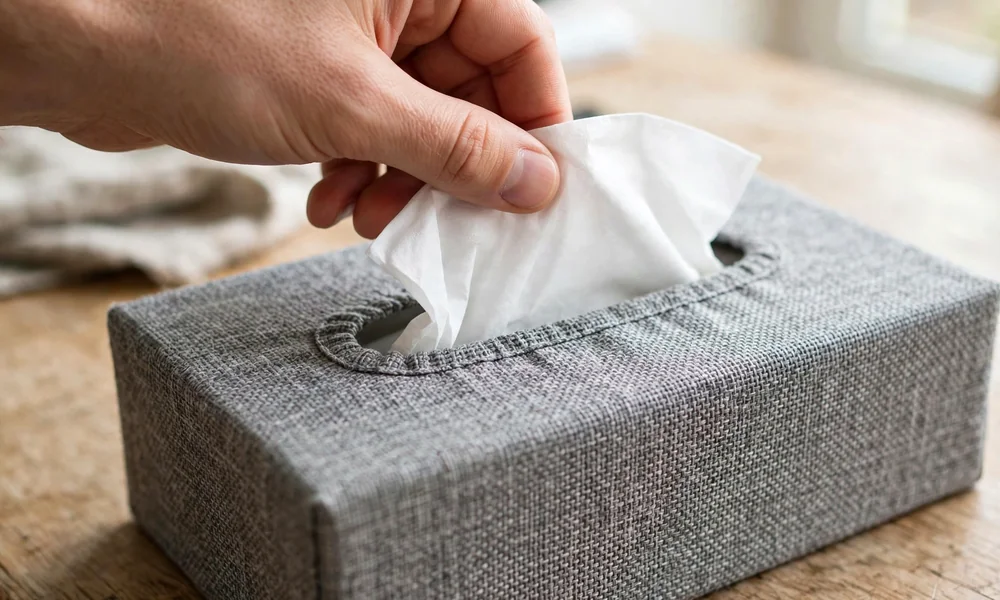
Fabric covers are the most popular choice, and the easiest to live with. A linen or cotton slipcover pulls over the box like a pillowcase, with an elastic or Velcro base that holds it in place, and a bound slot on top for the tissues. Fabric comes in every colour and pattern, and most covers are machine washable. The weakness is structure: a thin fabric cover sags as the box empties, and it absorbs bathroom steam, so it suits dry rooms better than wet ones.
Wooden tissue box covers
Wooden covers are the solid, furniture-like option. A wooden box, usually oak, walnut or bamboo, hides the cardboard completely and looks like part of the room rather than a cover. Wood is heavy enough to stay put when you pull a tissue, and a lacquered or oiled finish wipes clean with a damp cloth. The downsides are fit and weight: a wooden cover only fits boxes of one size, so measure before you buy. Wood also dislikes standing water, so keep it away from the sink edge.
Leather and faux leather covers
Leather covers suit desks, offices and smart living rooms. A stitched leather sleeve over a rigid core looks like a desk accessory rather than a tissue box, and the smooth surface wipes clean in seconds. The weakness is the opening: leather covers need a well-cut slot, since a stiff edge can snag tissues, and cheap faux leather peels at the corners after a year or two.
Metal tissue box covers
Metal covers are the bathroom choice. Stainless steel, brass or powder-coated metal will not absorb steam, will not stain from splashes, and wipes clean with a cloth. A metal cover is heavy for its size, so it stays put, and a brushed or matt finish hides fingerprints better than a polished one. Buy metal for the bathroom and the kitchen, where steam and splashes rule out fabric and wood.
Woven, rattan and seagrass covers
Woven covers add texture and warmth to a living room or bedroom. Rattan, seagrass and woven cotton covers look handmade and relaxed, and they suit rooms with natural materials and plants. Choose a woven cover when the room is already full of baskets, wood and linen, and the tissue box should blend in rather than stand out.
Square cube covers
Square covers fit cube tissue boxes, the short square boxes that suit desks, cars and small bedside tables. A cube cover is a different shape from a rectangular cover, and the two do not swap: a rectangular cover will not fit a cube box, and a square cover will not fit a long box. A standard cube box is about 12 centimetres on each side, but brands vary, which is enough to make a tight cover impossible to fit.
| Type | Best room | Cleaning | Watch out for |
|---|---|---|---|
| Fabric and linen | Bedroom, living room | Machine wash | Sags as the box empties |
| Wood | Living room, study | Wipe with damp cloth | Fits one box size only |
| Leather | Desk, office | Wipe clean | Stiff slot can snag tissues |
| Metal | Bathroom, kitchen | Wipe clean | Dents, shows fingerprints |
| Woven and rattan | Living room, bedroom | Brush or shake out | Light, needs a snug fit |
| Square cube | Desk, bedside, car | Depends on material | Box sizes vary by brand |
Getting the Fit Right
Fit is the decision most people get wrong, and it is the one that matters most day to day. Tissue boxes come in two shapes, rectangular and cube, and in several sizes within each shape, so a cover bought on looks alone often sags, gaps at the corners, or will not close at the base. Measure the box you actually buy: length, width and height, in centimetres. A standard rectangular box is about 23 centimetres long, 12 wide and 8 high, while a cube box is about 12 on each side, but brands vary by a centimetre or two. Check the opening too. The slot should sit over the middle of the box opening, and it should be wide enough for a tissue to pull through without tearing. A slot that is too narrow snags every tissue, and a slot that is too wide lets dust in. If you switch brands often, buy a fabric cover with a generous slot.

Matching the Cover to the Room
Each room asks something different of a tissue box cover. In the bedroom, softness and quiet matter: a linen cover that does not clink or slide is the right call. In the bathroom, steam and splashes rule, so a metal or lacquered wood cover that wipes clean beats fabric that would absorb moisture and smell damp. Our guide to the best bathroom organizers covers the rest of the counter. In the living room, the cover is on display, so it should match the room: wood with wood furniture, woven with baskets and plants, leather with a smart sofa. On a desk, a small cube cover in leather or metal keeps the surface tidy without taking up room, and a heavy base stops it sliding when you pull a tissue one-handed.
What to Look for Before You Buy
Before you buy, check the base. A good cover opens at the bottom so you can slide the box in and swap it when it is empty, and the base should close snugly, with elastic, Velcro or a fitted panel, so the cover does not ride up when you pull a tissue. Check the weight: pick the cover up and imagine pulling a tissue from it with one hand. A light cover lifts with the tissue when the box is nearly empty, which is the most annoying thing a tissue cover can do. Wood, metal and leather are heavy enough; fabric covers need a weighted base or a stiff lining. Check the slot: it should be bound or finished, with no raw edges or loose threads, and wide enough for a folded tissue to pass without tearing. The tissue paper you buy matters too: thick tissues pull out cleanly, while thin ones tear at the slot.
Care and Cleaning
Fabric covers are the easiest to keep clean: most go in the washing machine on a gentle cycle, then dry flat so the lining does not warp. Wooden covers need a wipe with a damp cloth and an occasional rub with furniture oil, and they should never be soaked or left in standing water. Leather covers should be wiped with a damp cloth and left to air dry, and a little leather conditioner once a year keeps the surface from cracking. Woven covers should be brushed or shaken out, and a vacuum with a brush head will lift dust from the weave. Whatever the material, empty the cover and shake it out when you swap the box, since tissue dust and shreds collect inside.
Common Mistakes
The most common mistake is buying a cover without measuring the box, which is how covers end up sagging, gaping or refusing to close. The second is choosing fabric for the bathroom, where steam and splashes turn it damp and musty within weeks. The third is a slot that is too narrow, which tears every tissue halfway out and leaves shreds inside the cover. The fourth is a cover that is too light, so it lifts off the table with the tissue when the box is nearly empty. The fifth is buying a rigid cover for a household that switches tissue brands, since a centimetre of difference between brands is enough to make a wooden or metal cover useless.
Checklist: Buying a Tissue Box Cover
- Measure the box first: rectangular and cube boxes need different covers, and brands vary by a centimetre or two.
- Match the material to the room: fabric for bedrooms, wood or leather for living rooms, metal for bathrooms.
- Check the slot is wide and smoothly finished, so tissues pull out without snagging or tearing.
- Make sure the cover is heavy enough to stay put when the box is nearly empty.
- Check the base opens for swapping the box and closes snugly so the cover does not ride up.
- Pick a cover you can clean the way the room demands: machine wash, wipe clean, or brush out.
Frequently Asked Questions
What size tissue box cover do I need?
Measure the box you buy: a standard rectangular box is about 23 by 12 by 8 centimetres, and a cube box is about 12 centimetres on each side. Brands vary by a centimetre or two, so measure the actual box.
Do tissue box covers fit all tissue brands?
No. Fabric covers forgive a centimetre of difference and fit most brands, but wooden and metal covers fit only one box size.
Can I use a fabric tissue box cover in the bathroom?
It is not the best choice: fabric absorbs steam and can smell damp within weeks. A metal or lacquered wood cover wipes clean and copes with humidity far better.
How do I stop the cover lifting when I pull a tissue?
Buy a heavier cover, or a fabric cover with a weighted base. Wood, metal and leather stay put, while a light fabric cover lifts with the tissue.
How do I clean a tissue box cover?
Most fabric covers go in the washing machine on a gentle cycle and dry flat. Wood and leather wipe clean, metal needs only a wipe, and woven covers should be brushed out.
What is the difference between a tissue box cover and a tissue box holder?
A cover is a sleeve or shell that hides the cardboard box itself, while a holder is an open tray or stand the box sits in. A cover changes how the box looks; a holder changes where it sits. A napkin holder does the same job for table napkins, keeping a stack tidy and within reach.
The Bottom Line
The best tissue box cover in 2026 is one that fits the box you actually buy, suits the room it lives in, and lets tissues pull out cleanly one at a time. Choose fabric for the bedroom, metal for the bathroom, wood or leather for the living room, and measure the box before you buy.


