Why the Right Tool Belt Changes a Workday
A good tool belt does not feel like gear. It feels like an extra pair of hands, one that never puts your hammer down in the wrong place or leaves your tape measure on the far side of the room. Ask any carpenter, electrician, or weekend builder what they reach for first in the morning and the answer is rarely a power tool. It is the belt that carries everything else, the quiet foundation that decides whether a job flows or stutters. In 2026, when a well-made rig can last a decade and a cheap one sags within a season, the difference is worth understanding before you spend anything. This guide explains what separates a belt worth buying from one worth skipping, from the leather and nylon that actually last to the pouch layouts, weight balance, and sizing rules that keep a full load comfortable from the first hour to the last.
Leather or Nylon: The First Decision
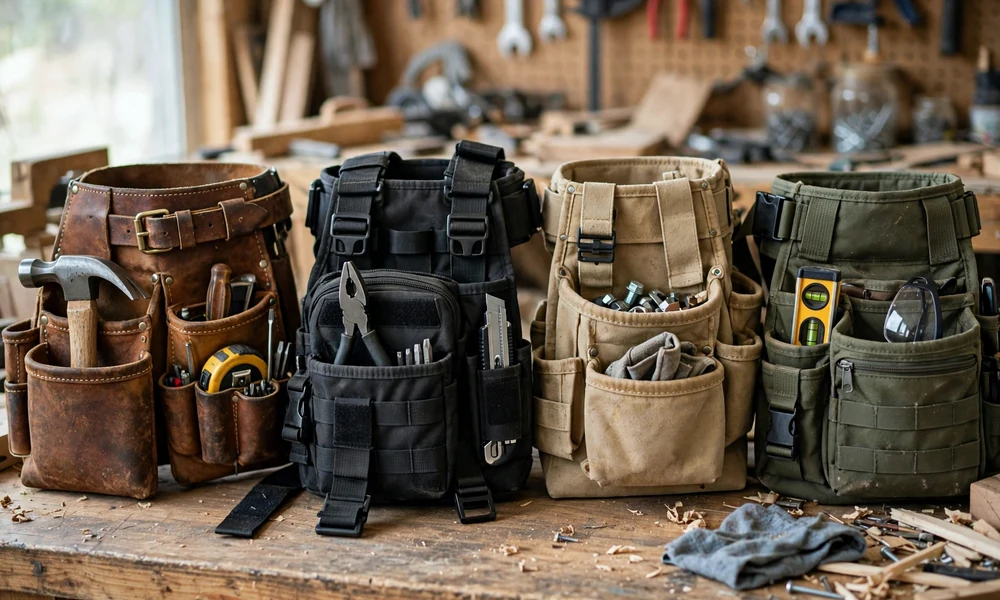
Leather is the traditional choice, and for good reason. Full-grain leather starts stiff, softens with wear, and eventually moulds to the shape of your body and your tools. A leather pouch holds its shape when empty, so a screwdriver slides home without a fight, and a hammer loop made of thick leather will not stretch out of shape after a summer of use. The trade-off is weight and care. Leather is heavier than nylon, it needs occasional conditioning, and it soaks up rain if you work outdoors in bad weather. For a carpenter who wears the same belt every day for years, that trade is usually worth it.
Heavy nylon, usually sold as ballistic nylon or Cordura, is the modern answer. It weighs far less, shrugs off rain and mud, and costs less than a comparable leather rig. The best nylon belts use riveted seams and reinforced pouch bottoms, because stitching alone will not survive a pouch full of fasteners. The weakness is structure. Cheap nylon pouches collapse when empty, which makes one-handed returns awkward, and thin fabric wears through at the corners where screws and driver bits rub. If you work in wet conditions, move between sites, or want the lightest possible load, nylon wins. If you want a belt that ages with you, leather wins.
Apron, Belt, or Suspenders: Three Ways to Carry
The classic tool belt is a wide waist belt with two pouches, one on each hip, and a hammer loop at the back or side. It is the fastest to put on and take off, and it keeps your tools exactly where your hands fall. Its limit is weight. Once the load passes a certain point, everything rides on your hips and lower back, and by the afternoon you feel it. For light to medium loads, the classic belt is still the best choice for most people.
An apron-style rig hangs pouches from the shoulders and waist, spreading the load across the torso. Electricians and finish carpenters who carry a dozen small tools often prefer it, because nothing swings at the hip when they crouch or climb a ladder. Suspenders are the middle path. They clip onto a standard belt and move much of the weight onto your shoulders while keeping the familiar pouch layout. If your belt regularly carries a drill, a full fastener pouch, and a hammer at once, suspenders are the single most comfortable upgrade you can buy. They cost little, fit most belts, and change the whole feel of a heavy day.
Getting the Fit Right
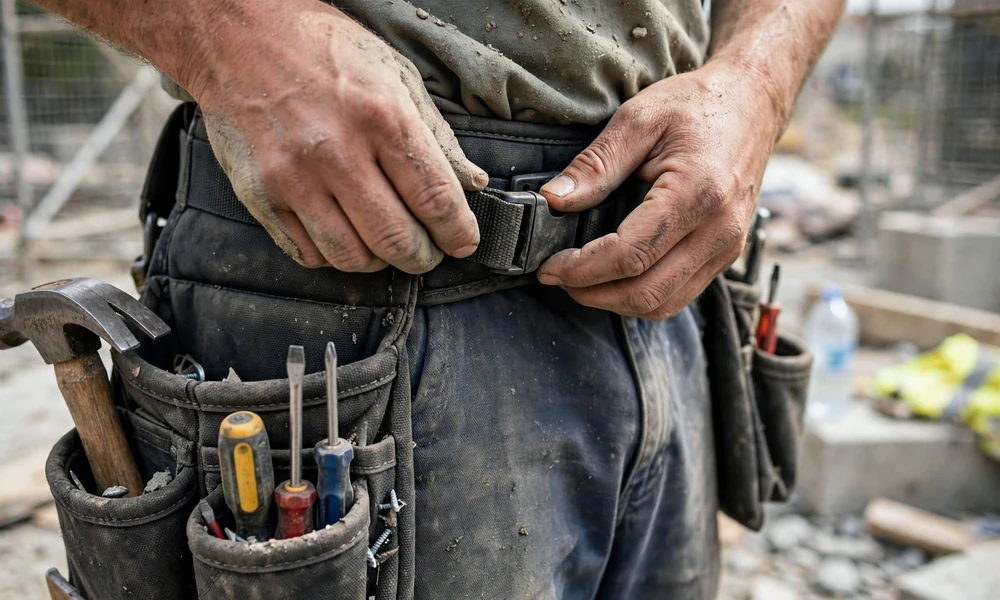
Sizing is where most first-time buyers go wrong. A tool belt is worn over work clothes, often over a jacket in winter, so measure your waist while wearing what you will actually work in, then add two inches. The belt should sit on your hips, not your waist, with the buckle centred and the pouches sitting just behind your hip bones. Too high and the pouches dig into your ribs when you bend. Too low and they swing against your thighs with every step. A good belt has enough adjustment range to tighten down over a T-shirt in summer and loosen over layers in winter, so check the sizing range before you buy rather than trusting a single number.
Padding matters more than it looks. A thin belt concentrates a heavy load into a narrow band, which is why cheap belts hurt by lunchtime. A padded belt, usually two to three inches wide with a foam or gel core, spreads the same load over twice the area. Look for padding that is stitched rather than glued, because glue fails when the belt gets hot in a van in summer. The padding should be firm enough to hold its shape under load and soft enough that you forget it is there. Try the belt loaded before you commit to it, even if that just means filling the pouches at home and wearing it for an hour.
Pouches and Layout: Where Everything Lives
A tool belt is only as good as its layout, and the best layouts are boring in the best way. The tools you reach for most should live in the pouch on your dominant side, at the front, where your hand finds them without looking. Fasteners belong in a deep, open pouch on the other side, where you can scoop a handful without spilling the rest. Small items, pencils, markers, and driver bits, need a dedicated slim pocket, because anything loose in a big pouch sinks to the bottom and disappears. A tape measure deserves its own clip or holster rather than a pouch, since it is the tool you grab and return most often.
Weight Distribution: The Difference Between Tired and Hurt
Weight is the hidden cost of a tool belt. A fully loaded rig can weigh five kilos or more, and where that weight sits decides whether you finish the day tired or sore. The rule is simple: heavy tools low and close to the body, light tools high and to the sides. A hammer hanging far from your hip pulls with every step, while the same hammer tucked tight against your side barely registers. Keep the load balanced left and right. A belt that is heavy on one side will twist your spine a little with every movement, and those little twists add up over a ten-hour day.
The Best Tool Belt for Each Trade
Carpenters need capacity and durability above all. A leather rig with deep pouches, a sturdy hammer loop, and room for a speed square and a pencil is the standard for a reason. The pouches should be big enough for a handful of nails without spilling, and the leather should be thick enough to survive being set down on concrete day after day. Framers go further, adding a second hammer loop and a pouch for a chalk line, while finish carpenters trade some capacity for a slimmer profile that will not mark fresh paint or scratch a finished surface. Whatever the speciality, a carpenter’s belt is a working tool in itself, and it should be bought with the same care as a saw.
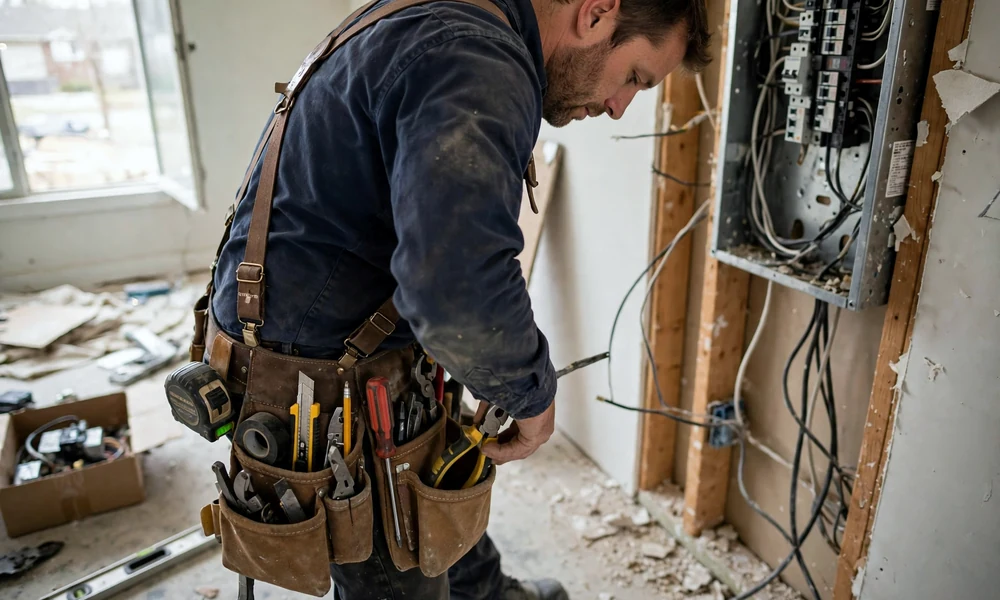
Electricians need organisation more than capacity. A dozen small tools, wire nuts, connectors, and testers must each have a home, or the belt becomes a lucky dip. Look for a rig with many slim pockets, a dedicated pouch for a voltage tester, and a tape measure holster that keeps the measure out of the way of live panels. Suspenders are common among electricians because the work involves so much reaching overhead, where a heavy hip load pulls hardest. A nylon rig often suits electrical work better than leather, since it is lighter and will not conduct, though any belt should be kept clear of live circuits regardless of material. The right choice here is the one that lets you find the right connector in the dark, by touch, without looking down.
General builders and home improvers need versatility. A mid-sized nylon or combination rig with two pouches, a hammer loop, and a tape holster covers most jobs, from hanging a shelf to building a deck. The key is not to overbuy. A professional framer’s rig is too heavy and too wide for a weekend of flat-pack furniture, while a tiny apron will not hold the tools for a garden fence. Start with the middle of the range, wear it for a few jobs, and only add pouches or suspenders once you know what you actually miss. For a first belt, the most useful feature is not a pocket count but an adjustable fit, because a belt that fits badly will sit in the garage no matter how good its pouches are. If you are also kitting out the rest of your kit, it helps to think about the tools the belt will carry: a reliable cordless drill is the first thing most belts are loaded for, and a good tape measure is the tool you will reach for more than any other.
Care and Maintenance: Making a Belt Last
A tool belt lasts as long as you look after it, and the care is simple. Empty it at the end of each day. Fasteners left in a pouch overnight rust, and rust stains leather and weakens nylon stitching. Brush out dust and sawdust weekly, because grit works its way into seams and slowly cuts the thread. Leather needs a wipe with a damp cloth and an occasional coat of conditioner, especially after a wet day. Nylon needs little more than a brush and a hose down, but check the rivets and the stitching at the pouch bottoms, since those are the first places to fail. Replace a frayed strap or a cracked buckle immediately. A belt that fails on a ladder is not an inconvenience, it is a hazard.
Frequently Asked Questions
Can one belt serve every trade? Almost, but not quite. A mid-sized rig with two pouches and a hammer loop will handle most general work, and for a home improver that is enough. A specialist will always want a specialist layout, because a framer’s pouch full of nails is a hindrance to an electrician, and an electrician’s forest of slim pockets is wasted on a carpenter. If you work across trades, choose the layout for the trade you do most, and keep a second pouch or a small bag for the rest. Comfort on the job you do every day beats versatility on the job you do twice a year. And when the day is done, the rest of your kit matters too: sturdy work boots take the same pounding your belt does, so they deserve the same care.
The Bottom Line
The best tool belt is not the biggest, the most expensive, or the one with the most pockets. It is the one that fits your body, matches your trade, and disappears while you work. Leather rewards the tradesperson who wants a rig for life. Nylon rewards the one who wants light weight and weather resistance. Suspenders reward anyone whose belt is heavy enough to notice. Measure over your work clothes, load only the job in front of you, balance the weight, and buy stitching and fit before brand names. Get those choices right and the belt stops being something you think about, which is exactly what a good tool should do.