A tortilla warmer is the small, unglamorous tool that decides whether the last tortilla on the table is as soft as the first. Without one, a stack of warm tortillas goes stiff within minutes: the steam escapes, the edges dry out, and corn tortillas in particular start to crack the moment you try to fold them. With a good tortilla warmer, that same stack stays warm, soft and flexible for a whole meal, so every taco, quesadilla and wrap tastes the way it did straight off the pan. The best tortilla warmers of 2026 are not complicated. They hold heat, they trap just enough steam, and they are easy to wash — and the differences between them come down to material, size and how long your meals actually last.
It is worth choosing carefully, because a warmer does not cook anything: it holds finished food at serving temperature while people help themselves. A warmer that is too small leaves half the stack out in the cold air, one that traps too much steam turns flour tortillas soggy, and one that cannot be washed easily becomes the item you dread cleaning. This guide compares the types, explains what actually keeps tortillas soft, and shows how to pick a warmer that suits the way your household eats.
Key takeaways
- A cloth tortilla warmer is the best all-round choice for most households: light, washable, microwave-safe and good at keeping a stack soft for twenty to thirty minutes.
- Buy the size for the tortillas you actually eat: eight inches suits most corn and flour tortillas, while ten or twelve inches is needed for burrito-sized flour tortillas.
- Heat retention comes from trapped steam, not from a hot surface, so a lid that closes properly matters more than a thick wall.
- Ceramic and stoneware warmers hold heat longest at the table, but they are heavy, breakable and usually not microwave-safe with a lid on.
- Warm the tortillas fully on the pan or griddle first: a warmer keeps tortillas warm, it does not warm cold ones.
What a tortilla warmer actually does
A tortilla warmer works by slowing down the two things that ruin a warm tortilla: heat loss and moisture loss. A tortilla straight off a hot pan is full of steam. Left in the open air, that steam escapes in a minute or two, the surface dries, and the starches in the tortilla begin to firm up as it cools. Corn tortillas suffer first, because they have no gluten to hold them together, so a dried corn tortilla cracks instead of folding. Flour tortillas last a little longer, but they too go stiff and leathery once they are cold.
A warmer slows both processes at once. Its insulated walls and close-fitting lid hold warm air around the stack, and the steam coming off the tortillas stays inside, keeping them flexible. The trick is balance: too little steam and the tortillas dry out anyway; too much and condensation drips back onto the stack and makes the top tortilla soggy. The best warmers get this right with a cloth lining that absorbs a little excess moisture.
That is also why a warmer is not a substitute for cooking tortillas properly. A cold tortilla put into a warmer stays cold, and a half-warmed one never quite softens. Always warm each tortilla on the pan first, until it puffs slightly and picks up a few light brown spots, then stack it straight into the warmer and close the lid. Our guide to the best tortilla presses covers the tool that shapes the tortillas before they reach the pan, and a press and a warmer are natural partners: one makes the tortilla, the other keeps it ready to eat.
The main types of tortilla warmer
Most tortilla warmers fall into four types, and each suits a different way of eating. The cloth pouch is the most common: a round, padded fabric pouch with a flap lid, usually made from cotton with an insulated lining. You put the stack inside, fold the flap over, and the pouch goes straight to the table. It is light, it folds flat for storage, it usually goes in the washing machine, and many can go in the microwave with the tortillas inside. Its weakness is heat retention: about twenty to thirty minutes, which suits a normal family meal but not a long, slow gathering.

The ceramic or stoneware warmer is the heavyweight option. It is a lidded dish, often glazed, that you warm in the oven or microwave before filling, and its thick walls hold heat far longer than cloth — often forty minutes or more. It looks good on the table and suits a household that eats slowly. The trade-offs are weight and fragility: it is heavy to lift with one hand, it can chip if dropped, and the lid usually has to come off in the microwave.
Insulated baskets and hard plastic warmers
An insulated basket is the middle ground: a rigid basket, often with a cloth lining and a lid, that holds its shape on the table and keeps tortillas warm for about half an hour. Baskets suit larger stacks, because their straight sides do not squeeze the tortillas, and they are easier to load than a soft pouch. Some have a removable lining that washes separately, which is the feature to look for, since the lining is what absorbs grease and steam.
What to look for before you buy
Size comes first, because a warmer that does not fit your tortillas is useless however well it is made. Measure the tortillas you buy most often: most corn tortillas are six to eight inches across, most flour tortillas for tacos are eight inches, and burrito-sized flour tortillas are ten to twelve inches. An eight-inch warmer suits most households, but if you regularly eat large flour tortillas, buy the ten-inch size. A warmer that is slightly larger than the tortillas is fine; one that is smaller will fold the edges of the stack and leave them to dry.
Next, look at how the lid closes. A lid that sits flat and covers the whole opening keeps steam and heat in; a lid that gaps at the edge lets both escape, and the tortillas at the top of the stack dry out first. Cloth pouches should have a flap that overlaps the opening by a good margin, and rigid warmers should have a lid that sits squarely without rocking.
Heat retention is mostly a matter of insulation and wall thickness. A padded cloth warmer holds heat better than a thin single-layer one, and a pre-warmed ceramic dish holds it longest. Test it at home: after twenty minutes with the lid closed, the top tortilla should still be warm and flexible, not cool and stiff.
Tortilla warmers compared
| Type | Heat retention | Best for | Weakness |
|---|---|---|---|
| Cloth pouch | 20–30 minutes | Everyday family meals | Cools fastest |
| Ceramic / stoneware | 40+ minutes | Slow meals, serving at the table | Heavy, breakable |
| Insulated basket | 25–35 minutes | Large stacks | Takes up cupboard space |
| Hard plastic | 15–20 minutes | Microwave reheating | Weakest insulation, can warp |
| Cloth-lined basket | 20–30 minutes | Taco nights with guests | Lining needs washing |
There is no single best warmer. A cloth pouch wins on convenience, ceramic on heat retention, a basket on capacity, and plastic on microwave reheating. Match the type to the meal: a quick weeknight taco dinner suits a pouch, while a long weekend gathering suits ceramic.
Using a tortilla warmer well
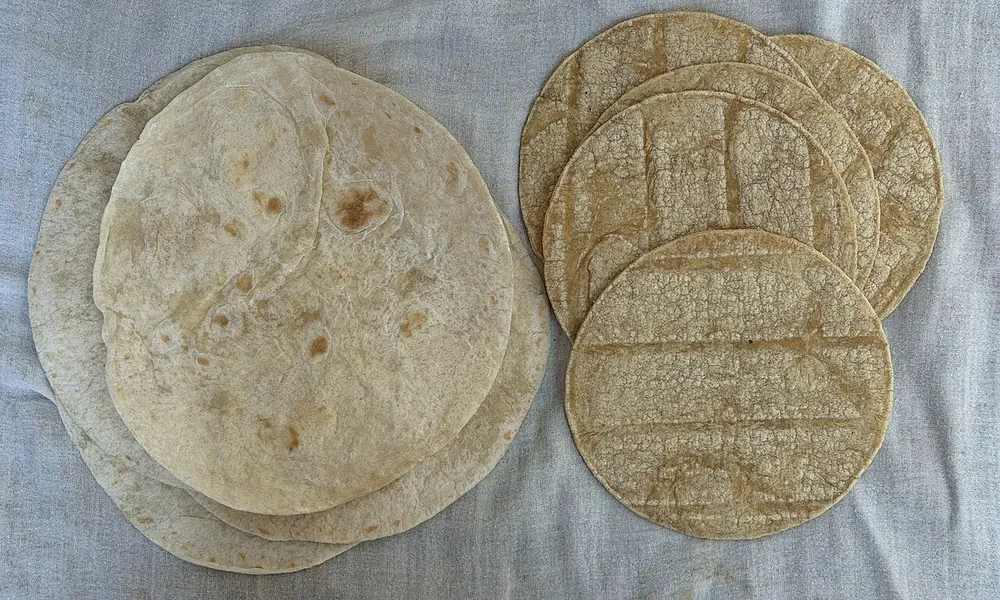
Good technique matters as much as the warmer itself. Warm each tortilla fully before it goes in — about a minute a side on a hot, dry pan, until it puffs and picks up light brown spots — then stack it straight into the warmer and close the lid immediately.
A cloth or paper towel inside the warmer absorbs excess steam that would otherwise condense on the lid and drip onto the top tortilla. Replace it if it gets damp, since a soaked towel makes tortillas soggy. A dry towel suits flour tortillas; a very lightly dampened one helps corn tortillas, which dry out faster.
What else belongs on a taco night table
A warmer works best as part of a small set of tools that make taco night easy. The tortillas themselves matter too: our guide to the best tortillas for tacos that do not tear covers which corn and flour tortillas hold up to filling and folding, since even the best warmer cannot save a tortilla that tears the moment it is filled. And if you want inspiration for what to put in them, our guide to the best tacos is a good place to start.

Checklist: choosing a tortilla warmer
- Measure your tortillas first, and buy eight inches for most tacos or ten to twelve inches for burrito-sized flour tortillas.
- Pick a cloth pouch for everyday use, or ceramic if your meals last longer than half an hour.
- Check that the lid closes flat with no gap, since steam escapes through even a small opening.
- Make sure the warmer, or at least its lining, can be washed in the machine, sink or dishwasher.
- Test heat retention at home: the top tortilla should still be warm and flexible after twenty minutes.
- Keep it somewhere reachable, or it will not get used on busy weeknights.
Frequently asked questions
Do I really need a tortilla warmer?
Not for one or two tortillas eaten straight off the pan, but yes for a stack served at the table. Without a warmer, tortillas go stiff within minutes and corn tortillas crack when folded. A warmer keeps a whole stack soft for the length of a meal.
Can I microwave tortillas in a warmer?
Yes, if the warmer is microwave-safe. Cloth pouches and hard plastic warmers usually are, and many are sold for exactly that purpose. Ceramic warmers can go in the microwave too, but take the lid off first unless the maker says otherwise. Never microwave a warmer with metal parts, a foil lining or a decorative metal trim.
How long do tortillas stay warm in a warmer?
A cloth pouch keeps them warm for twenty to thirty minutes, an insulated basket for about half an hour, and a pre-warmed ceramic dish for forty minutes or more. Reheat the stack briefly on the pan if a meal runs very long.
Why do my tortillas go soggy in the warmer?
Too much trapped steam, usually because the tortillas went in very wet. Put a dry cloth inside the warmer, and do not stack tortillas that are still dripping with water or oil.
Can a tortilla warmer keep other breads warm?
Yes, within reason. It works well for flatbreads, naan, pita and pancakes, which suffer from the same drying-out problem. It is less useful for crusty bread, which needs air to stay crisp — a warmer holds serving temperature, it does not cook or reheat cold food.
How do I clean a cloth tortilla warmer?
Most cloth warmers go in the washing machine on a gentle cycle, then air-dry. If it cannot go in the machine, hand-wash it in warm soapy water and dry it fully before storing, or it will smell stale.
The bottom line
The best tortilla warmer in 2026 is the one that matches how your household eats: a washable cloth pouch for most families, a pre-warmed ceramic dish for long, slow meals, and a microwave-safe plastic warmer if you mostly reheat shop-bought tortillas. Buy the right size, check that the lid closes flat, and make sure it can be washed easily. Warm the tortillas properly on the pan first, stack them straight into the warmer, close the lid, and keep the warmer where you can reach it. Do those few things, and the last tortilla on the table will be as soft as the first — and taco night will taste the way it should.