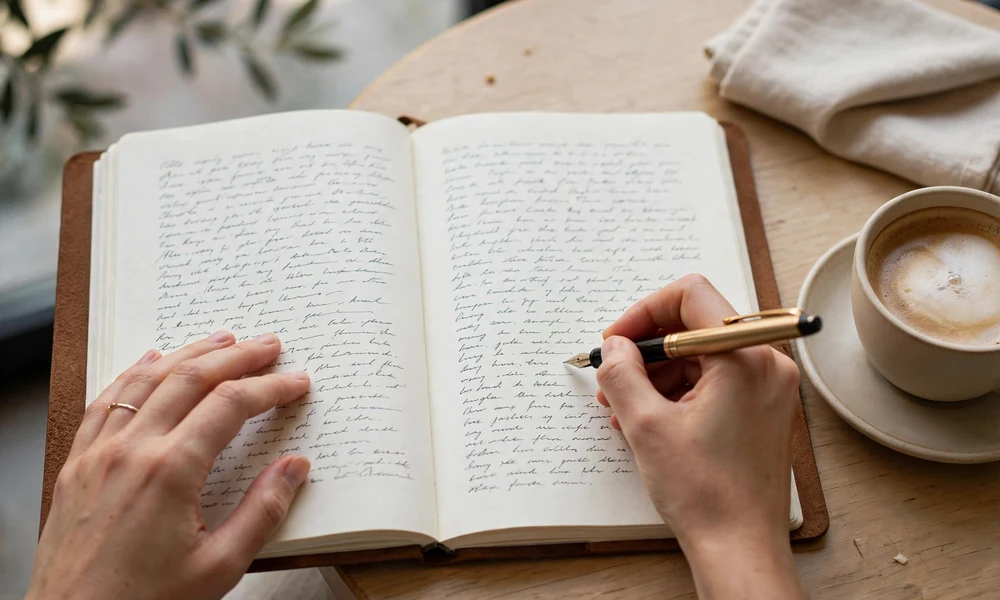
The best travel journals of 2026 turn a good trip into a story you can keep forever. Photos fade into crowded camera rolls and memories blur within weeks, but a few honest lines written on a train, in a cafe, or on a mountain trail can bring a whole journey back in vivid detail years later. A travel journal records the small moments that make a trip yours: the smell of rain on a new street, the name of a stranger who helped you, the meal you still think about.
Choosing the right journal matters more than most travellers expect. A book that is too heavy stays in the hotel room, and paper that bleeds through ruins the page behind it. The best travel journals solve these problems quietly, with good paper, a size that fits your bag, and a cover that survives real travel.
In this guide, we compare the best travel journals of 2026 across every style that matters, from leather-bound books to waterproof field journals and guided journals. We judged them on paper, binding, size, weight, and durability, so you can pick the one you will actually carry and treasure.
Key takeaways
- The best travel journal is the one you will actually carry, so size and weight matter more than looks.
- Thick, fountain-pen-friendly paper prevents bleed-through and keeps both sides of every page usable.
- Leather-bound journals last longest, while waterproof journals are best for outdoor and adventure trips.
- Guided journals with prompts help new journalers get started, while blank journals suit experienced writers.
- Pair your journal with a good pen and a small kit, and write a little every day rather than saving it all for the end.
What Makes a Great Travel Journal in 2026
A great travel journal is built around three things: paper you enjoy writing on, a size you are happy to carry, and a binding that holds up to real travel. Judge a journal on these three fundamentals first.
Paper Quality Matters Most
Paper is the heart of any travel journal. Thick paper, usually 100 gsm or more, stops ink from bleeding through and lets you use both sides of every page. Smooth paper suits fountain pens and fine liners, while lightly textured paper gives pencils something to grip. Cheap, thin paper curls in humidity and feathers with wet ink.
Look for acid-free paper if you want your journal to last for decades without yellowing. If you sketch as well as write, choose mixed-media paper that can handle watercolour without buckling. Many travellers also pair their journal with one of the best travel cameras, sketching from their own photographs later.
Size and Weight You Will Actually Carry
The most common mistake is buying a journal that is too big. A large A4 book looks impressive on a desk but stays in the hotel once the trip begins. The sweet spot for most travellers is A5 or slightly smaller: big enough to write comfortably, small enough to slip into a daypack or a jacket pocket. Pocket journals work well for short city breaks and quick notes on the move.
Weight matters too. A heavy leather journal adds real bulk to a light carry-on, so check it before you buy, and if you travel with only a small bag, a slim softcover may serve you better.
Binding and Durability
Travel is hard on books. A journal gets tossed into bags, pressed against water bottles, and opened hundreds of times in a few weeks. Lay-flat binding, where the book opens fully without being held down, makes writing far easier on trains and in cafes. Stitched bindings generally outlast glued ones, and a sturdy cover protects the pages inside.
Small details add up too. An elastic closure keeps the book shut in a crowded bag, a ribbon marker saves you flipping for your place, and a back pocket holds tickets and maps. Together, they turn a notebook into a tool you reach for every day.
The Best Travel Journals of 2026
We compared the leading travel journals of 2026 on paper, binding, portability, and value, and each pick below suits a different kind of traveller.
The Classic Leather-Bound Journal
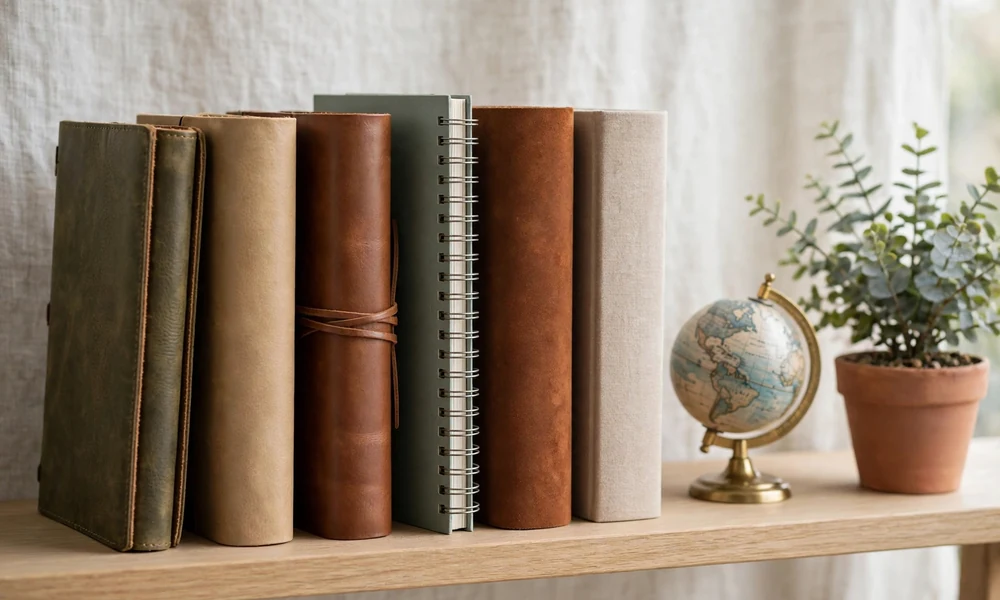
The classic leather-bound journal remains the gold standard for most travellers. Full-grain leather ages beautifully, developing a rich patina that records every trip in scuffs and softened edges. Inside, thick cream paper handles fountain pens with ease, and a stitched binding lets the book open flat from the first page to the last.
Leather journals are heavier and the best ones are not cheap, but they are the journals most likely to be kept for life. Choose a refillable cover to use it trip after trip.
The Best Waterproof Travel Journal
For hikers, kayakers, and anyone travelling in wet weather, a waterproof travel journal is a genuine game changer. Waterproof paper sheds rain and splashes without smearing, and it works with a pencil or an all-weather pen even when the page is wet. These journals are lighter than leather books and nearly indestructible.
The trade-off is feel: waterproof paper is smoother than normal paper, and fountain pens will not work on it. But for mountains, boats, or monsoon season, no other journal survives like this one.
The Best Pocket Travel Journal
A pocket travel journal is the one you always have with you. Small enough for a jacket pocket or a tiny cross-body bag, it is perfect for quick notes, addresses, phrases in a new language, and ideas that strike while you walk. The best pocket journals use surprisingly good paper for their size and open flat despite their small format.
The limit is space: no long essays, and only small sketches. Many travellers carry a pocket journal by day and transfer the best notes into a larger journal each evening.
The Best Sketching and Art Travel Journal
If you draw, paint, or collage your way through a trip, a sketching travel journal is the right tool. These books use heavy mixed-media paper that takes watercolour, ink, and pencil without buckling or bleeding. Hardcover versions protect finished work, and many open fully flat so you can draw across a double-page spread.
Sketch journals are heavier than plain writing journals, so choose the smallest size you can work in. A5 balances drawing space with portability, and 120 gsm paper is a good minimum.
The Best Guided Travel Journal
Guided travel journals include prompts, questions, and structured pages that make starting easy. Instead of a blank page, you get gentle nudges: what surprised you today, the best thing you ate, a person you met, a place you would return to. For new journalers, or anyone who finds blank pages intimidating, this structure is genuinely helpful.
The best guided journals leave plenty of free space beside the prompts, so they never feel like homework, and they make good gifts for first-time travellers.
| Journal Type | Best For | Typical Pages | Price Range |
|---|---|---|---|
| Leather-bound | Daily writers and keepsakes | 192 to 240 | High |
| Waterproof | Outdoor and adventure trips | 100 to 150 | Medium |
| Quick notes on the move | 96 to 160 | Low to medium | |
| Sketching and art | Drawing and watercolour | 110 to 140 | Medium to high |
| Guided | Beginners and gifts | 150 to 200 | Low to medium |

How to Choose the Right Travel Journal for Your Trip
Start with your trip, not the journal. A two-week hike needs a tough, light, weatherproof book, a slow city break suits a leather journal for cafes, and a family holiday calls for something cheap and replaceable.
Next, think honestly about how you write. If you write long entries every evening, you need plenty of pages and comfortable paper. If you scribble short notes through the day, a pocket journal may be enough. If you sketch, paper weight matters more than anything else.
Finally, consider your kit: one reliable pen, a pencil, and perhaps a glue stick for tickets and maps, kept light so it is always with you. Your journal also shares bag space with other gear, so check it fits alongside essentials like the best travel adapters you need on the road.
How to Use a Travel Journal Well
The secret to a good travel journal is small, regular entries rather than long sessions. Write for ten minutes each evening while the day is fresh. Record one vivid detail, one conversation, and one thing that surprised you. These small notes add up into a rich account without ever feeling like a chore.
Mix writing with other memories: a ticket stub, a restaurant card, a pressed flower, a quick sketch of a neighbourhood you loved. Note prices too, so you remember what things really cost.
Do not worry about neatness. A travel journal is a private record, not a performance, and crossings out are part of its charm. Pack it where you can reach it easily, and check the best luggage scales before you leave to avoid overweight fees at the airport.
Travel Journal Checklist
Use this quick checklist before your next trip so your journal is ready from day one.
- Choose a journal that fits your bag and your style, and test your pen on its paper first.
- Pack a spare pen and a pencil, plus a small glue stick for tickets, maps, and other keepsakes.
- Write the first entry on the journey there, so the habit starts before the trip gets busy.
- Note names, places, and prices as you go, because these details fade fastest from memory.
- Leave a few pages free at the back for addresses, packing notes, and ideas for your next trip.
- Photograph your favourite pages as a backup, and store the finished journal safely at home.
Frequently Asked Questions
What size travel journal is best?
For most travellers, A5 is best: large enough to write comfortably, small enough for a daypack. Pocket journals suit short trips; A4 books are best left at home.
Should I choose lined, dotted, or blank pages?
Lined pages suit long writing, dotted pages work well for a mix of writing and lists, and blank pages are best for sketching. Dotted paper is the most flexible choice if you want to both write and draw.
Can I use a fountain pen in a travel journal?
Yes, if the paper is thick enough: look for 100 gsm or more and test your pen first. Thin paper will bleed and feather.
How many pages do I need for a two-week trip?
Most travellers use between 30 and 60 pages on a two-week trip. A journal with 160 to 200 pages will comfortably cover a long holiday with room to spare.
Are waterproof travel journals worth it?
They are worth it for outdoor, adventure, and wet-weather travel, where normal paper would be ruined. For city breaks and indoor trips, a standard journal with good paper is a better choice.
What is the best travel journal for beginners?
A guided travel journal is the best start for beginners: its prompts remove the fear of the blank page and build a daily habit.
The Bottom Line
The best travel journals of 2026 share the same qualities: good paper, a size you will carry, and a binding that survives the trip. Leather-bound is the best all-rounder, waterproof is the pick for adventure, and guided is the easiest way to start. Choose the one that matches your trip, write a little every day, and you will come home with the story of your journey, in your own words.