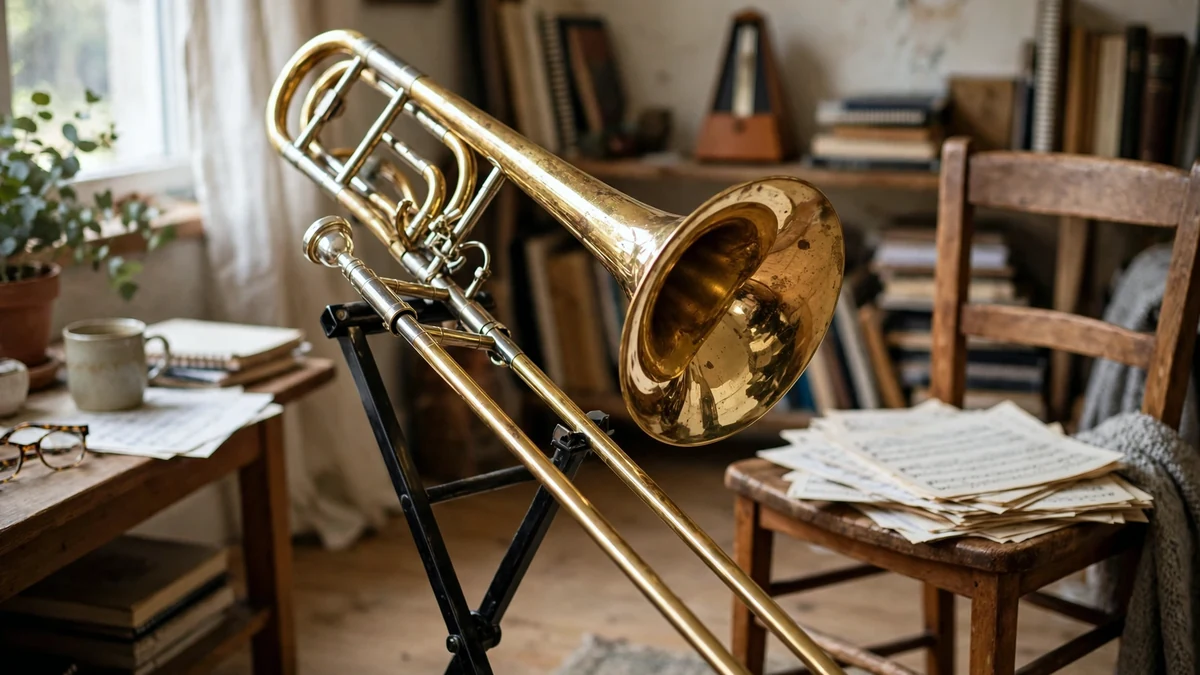
A trombone is one of the most honest instruments in music. It has no keys to hide behind and no valves to do the work for the player. The sound comes from the lips, the breath and one long sliding tube, and that direct connection is exactly why players love it. A good trombone feels alive in the hands: the slide moves smoothly, the notes speak quickly, and the tone stays warm whether the player is whispering a soft melody or filling a hall with a bold, brassy chord. A poor trombone fights the player, with a sticky slide and a tone that turns thin just when it should bloom. The best trombones of 2026 are not always the most expensive ones, and they are not the ones with the shiniest lacquer. They are the instruments that play easily, sound rich, and keep working year after year without fuss.

What Makes a Trombone Good
The first thing to judge is the slide. The slide is the heart of the trombone, and it should move like it is floating on air. A good slide glides out and back with almost no effort, stops exactly where the player expects, and never catches or drags in the middle of a phrase. If the slide is rough, slow or uneven, every fast passage becomes a struggle and every quiet note risks a wobble. Players test a slide by moving it gently with two fingers: it should feel light, even and silent. That smoothness matters more than the brand on the bell, more than the finish, and more than any extra feature.
The second thing is the sound. A good trombone has a warm, centred tone that holds together across the whole range. The low notes should feel full rather than muddy, the middle notes should sing without forcing, and the high notes should stay clear instead of turning pinched or shrill. The instrument should respond quickly, so a soft attack speaks at once and a loud attack does not need a shove. Good intonation matters too: the notes should sit close to in tune without the player having to push the slide far from its natural positions. When tone, response and tuning line up, practising feels rewarding instead of frustrating.
The third thing is build quality. A trombone is a long, delicate piece of brass, and small flaws show up quickly. The bracing should feel solid, the water key should seal cleanly, and the tuning slide should move freely without leaking air. The bell should be free of dents, the inner slide tubes should be straight, and the lacquer or silver plating should be even. A well-made trombone survives daily use, while a cheaply made one starts leaking and sticking within months.
The Main Types of Trombone
The tenor trombone is the standard trombone most people picture, and it is the right starting point for almost every player. It plays in the key of B flat, covers the range most music needs, and comes in a huge choice of models, from student instruments to professional orchestral horns. Tenor trombones suit school bands, jazz bands, orchestras and brass ensembles alike. For a first trombone, or for a player who wants one instrument that can do almost everything, a tenor is the honest choice.
The bass trombone is larger, deeper and more powerful. It has a wider bore, a bigger bell and usually two trigger valves that extend the low range far below the tenor. Bass trombones anchor the brass section in orchestras and big bands, giving weight to the bottom of the sound. They need more air, so they suit experienced players who love holding the foundation of an ensemble.
How to Choose the Right Size
Bore size is the width of the inside of the trombone, and it shapes the sound more than any other single feature. A small bore, around half an inch, gives a bright, focused sound that suits jazz, commercial playing and younger players, because it needs less air and responds quickly. A medium bore suits school and concert bands, offering a balance of warmth and projection. A large bore, around point five four seven of an inch, gives the broad, dark sound orchestras want, but it needs more air and more control. The right bore matches the music the player actually plays.
Bell size and material matter too. A larger bell, around eight and a half inches, projects more sound and suits orchestral playing, while a smaller bell keeps the sound lighter and more nimble. Yellow brass gives a bright, lively tone, rose brass gives a warmer, darker sound, and silver plating adds a little brilliance and a very smooth feel. Play the instrument, listen, and choose the one that feels easy.
The Best Trombones of 2026
The best trombone for most players this year is a mid-priced tenor with a medium-large bore, an F attachment and a smooth, well-made slide. It plays easily in a school band, a jazz band and a concert band, and it has the trigger that opens up the lower notes without the player having to learn long slide positions. The tone is warm without being dull, the response is quick, and the build is solid enough to survive daily use. For a player buying one trombone to cover years of playing, this is the pick that makes the most sense.
The best student trombone is a simple, light tenor with a small to medium bore and no trigger. It is easy to hold, easy to blow, and forgiving when the embouchure is still developing. The slide should be the priority: a student trombone lives or dies by how freely its slide moves, because a stiff slide teaches bad habits fast. A good student model costs far less than a professional horn, holds its value well, and can be passed on to a younger player when the first owner outgrows it. It is the trombone that turns a curious beginner into a regular player.
The best intermediate trombone is a step up in bore and bell, usually with an F attachment and a slightly larger bell. It gives a fuller sound than a student model, better intonation in the low register, and enough headroom for a player who is starting to play solos and lead parts. The slide is smoother, the bracing is stronger, and the instrument feels more refined without demanding professional-level air. For a player who has played for two or three years, this is the natural next step.
The best bass trombone of 2026 is a large-bore instrument with two independent trigger valves, a wide bell and a deep, solid low register. It speaks clearly in the pedal range, stays in tune through the trigger combinations, and has enough power to anchor a big band without forcing. The valves should move quickly and quietly, the slide should stay smooth even with the extra weight, and the instrument should balance well in the hands. It is a specialist instrument, and it suits the player who already knows the tenor well and wants to own the bottom of the brass section.
The best trombone for jazz is a small-bore tenor with a bright, quick response and a light, nimble feel. Jazz playing asks for fast slides, crisp attacks, clean high notes and a sound that can cut through a rhythm section without shouting. A small-bore horn does all of that with less air, so the player can focus on phrasing and improvisation instead of wrestling the instrument. Many jazz players keep a small-bore trombone as their main horn for life.

What Else You Need
A trombone on its own is only half the kit. A mouthpiece matters as much as the instrument: a medium cup suits most beginners, a deeper cup gives a warmer sound, and a shallower cup helps high notes, but the mouthpiece should always feel comfortable and never force the lips. Slide cream or slide oil keeps the slide moving freely, and a spray bottle of water is part of every trombone player’s daily routine. A sturdy case protects the long slide, a music stand holds the part at the right height, and a mute opens up practice at home and new colours in performance. All of it makes playing far more enjoyable.
Common Mistakes to Avoid
The biggest mistake is buying a trombone with a poor slide. A rough slide looks fine in a photograph and feels awful in the hand, and it builds habits that are hard to break. The second mistake is buying too big too soon: a large-bore orchestral trombone needs more air than a beginner has, and it will sound stuffy and tired in young hands. The third is skipping maintenance: never put a trombone away wet, never force a stuck slide, and never leave it in a hot car.
Another common mistake is neglecting the mouthpiece and the breathing. A mouthpiece that is too big or too small will tire the lips quickly, and shallow breathing will starve the sound of air. Daily long tones and regular cleaning keep the slide free. A well-kept trombone will play well for decades.
How the Trombone Fits With Other Instruments
The trombone sits in the middle of the brass family, and it pairs naturally with the instruments around it. The trumpet sits above it, bright and quick, and many brass players enjoy both: the trumpet teaches lightness and precision, while the trombone teaches breath and phrasing. Readers who are curious about the higher brass voice will find plenty to like in the best trumpets, which cover the same idea from a different angle: the right horn, matched to the player, makes the whole section sound better.
The clarinet sits on the other side of the band, with a woody, flexible voice that blends beautifully with brass in concert bands and jazz groups. Players who enjoy switching between brass and woodwind, or who simply love the sound of a full wind band, will enjoy the best clarinets guide, which shows how a single-reed instrument can carry a melody with the same warmth a trombone brings to a low line. And the violin, though it belongs to the strings, shares the trombone’s gift for sliding between notes and shaping a phrase with the hand rather than a key. Readers who love that singing, expressive quality will find it in the best violins guide, which covers instruments that reward exactly the same patience and listening.
The Verdict
The best trombone of 2026 is the one that fits the player holding it. For most people that means a mid-priced tenor with an F attachment: smooth, warm and able to cover band, jazz and solo playing. For a beginner, a light student tenor with a free-moving slide is the smarter buy. For the low brass specialist, a two-valve bass trombone is the better tool. For the jazz player, a small-bore tenor is the most rewarding horn in the room. Whatever the choice, test the slide first, listen to the tone, match the bore to the music, and look after the instrument. A trombone chosen this way will not just play well on the first day; it will still be playing well years from now, and every good phrase will feel like it was earned.