Best Kegerators 2026
A kegerator turns an ordinary corner of the house into a proper draught station. Instead of stacking bottles and cans in the fridge and hoping one is cold enough, you keep a whole keg chilled and ready, and you pour a fresh glass with a pull of the tap. The difference is not just convenience. Draught beer from a keg tastes fresher, holds its head better, and costs less per glass than the same beer bought in bottles. For anyone who hosts friends or enjoys a cold beer at the end of the day, a kegerator is one of the most satisfying home upgrades you can buy.
The best kegerators of 2026 are not the biggest or the flashiest. They are the ones that hold a steady cold temperature, pour smoothly without excess foam, and fit the space and the kegs you actually buy. A good kegerator should be quiet enough to live in a kitchen or living room, sturdy enough to last for years, and simple enough that changing a keg takes minutes. This guide explains what to look for, the main types on sale, and the picks that make the most sense for different homes.

What Makes a Kegerator Good
The first thing to judge is temperature control. Beer tastes best when it is served cold but not frozen, usually between three and five degrees, and a kegerator must hold that range steady even when the room warms up in summer. A good unit has a reliable thermostat, a compressor that cycles quietly, and insulation thick enough that the temperature does not swing every time the door opens. If the beer warms up, it pours foamy and flat. If it gets too cold, it loses flavour and can even freeze in the lines. Steady cold is the foundation of everything else.
The second thing is the pour itself. A kegerator works by pushing beer from the keg with carbon dioxide gas, and the pressure has to be right. Too much pressure and the glass fills with foam; too little and the beer goes flat and pours slowly. The best kegerators come with a proper regulator that shows the pressure clearly and lets you adjust it in small steps. The beer lines should be short, clean and kept cold, because warm lines are the most common cause of a foamy first glass. A good tap should open smoothly, shut off cleanly and never drip onto the counter.
The Main Types of Kegerator
Single-tap kegerators are the classic choice and the right one for most homes. They hold one full-size keg, or two smaller ones in some models, and they pour one beer at a time. That sounds limiting, but for most households one beer on tap is enough, and a single-tap unit is cheaper, simpler and easier to keep clean. It takes up less floor space, uses less electricity, and there is only one line to clean and one regulator to watch. If you have a favourite beer that you drink most of the time, a single-tap kegerator is the sensible pick.
Dual-tap kegerators hold two kegs and pour two different beers, which makes them the favourite for hosts and for households where tastes differ. One tap can pour a lager while the other pours a pale ale or a stout, and guests can choose without anyone opening a bottle. The trade-off is size, price and upkeep: a dual-tap unit is wider, heavier and has twice as many lines to clean. It also tempts you to keep two kegs open at once, which means both need drinking before they lose their freshness. For a busy home bar, that trade-off is worth it.
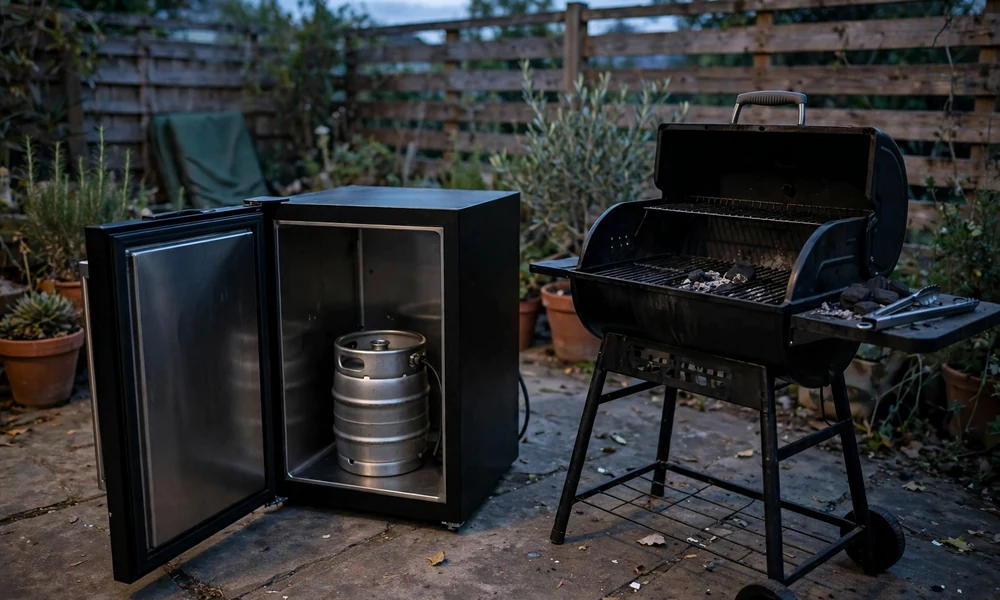
Outdoor and portable kegerators are built for patios, gardens and barbecues. They are tougher, often with a weather-resistant finish, and some run on a smaller footprint so they can sit beside a grill without taking over the patio. The best outdoor models cope with warm weather without the compressor working too hard, and they have a lid or cover that keeps rain and dust out of the tap. A portable kegerator with wheels can be rolled out for a party and rolled back into the garage afterwards, which suits anyone who does not want a permanent bar outside.

How to Choose the Right Size
Size starts with the kegs you can actually buy near you. A standard full-size keg holds about fifty litres, a quarter keg about thirty, and a sixth keg about nineteen, and not every kegerator fits every size. Before you buy, check which keg sizes are sold by your local suppliers and which of those fit the model you are considering. There is nothing more frustrating than bringing home a keg that is a few centimetres too tall for the cabinet. Measure the inside height, not just the outside, and remember that the gas bottle and the tap connections need room too.
Think about how much beer you will actually drink. A full keg is a lot of beer, and once it is tapped it should be finished within a few weeks to stay fresh. A household that drinks a few glasses a week will do better with a smaller keg in a compact kegerator, while a household that hosts every weekend can justify a full-size unit. A kegerator that is too big wastes electricity cooling empty space, while one that is too small means constant keg changes. Match the size to your real drinking habits, not to the biggest party you can imagine.
The Best Kegerators of 2026
The best overall kegerator of 2026 is a mid-sized single-tap model with a stainless steel finish, a digital temperature display and a quiet compressor. It holds a full-size keg or a smaller one with room to spare, pours a smooth glass with very little foam, and looks smart enough to sit in a living room rather than being hidden in the garage. The temperature stays steady, the tap shuts off cleanly, and the drip tray lifts out for washing. For most homes this is the pick that makes the most sense: it does the core job brilliantly without asking you to pay for features you will never use.
The best dual-tap kegerator of 2026 is a wider unit with two chrome taps, two regulators and enough room inside for two sixth-size kegs. It pours two beers at different pressures, which matters because a lager and a stout do not want the same serving pressure. The cabinet is sturdy, the tower stays cool so the first glass of the evening is not foamy, and the castors make it easy to move for cleaning. It is the right choice for the host who likes to offer a choice, and for the household where two people drink two different beers.
The best compact kegerator is a small single-tap unit that fits under a counter or in the corner of a flat. It takes a sixth-size keg, which is plenty for one or two people, and it uses far less electricity than a full-size model. The best compact models still have a proper regulator and a real tap rather than a plastic toy, so the beer tastes just as good as it does from a bigger unit. It suits a small kitchen, a home office with a drinks corner, or anyone who wants draught beer without giving up half a room to it.
The best outdoor kegerator of 2026 is a tough, weather-resistant model with a solid top, a covered tap and a compressor that copes with warm summer evenings. It sits happily beside a barbecue, pours a cold glass even on a hot day, and wipes clean after a party. The wheels are large enough to roll over patio slabs and grass, and the tap guard stops the handle being knocked by passing guests. For anyone who spends summer outside, this is the kegerator that turns a barbecue into a proper occasion.
What Else You Need
A kegerator on its own is only half the set-up. You will need a gas bottle, usually carbon dioxide, and a regulator to control the pressure. Most kegerators include these, but check before you buy, because a missing regulator means an extra trip to the supplier. You will also need the right coupler, which is the fitting that connects the keg to the beer line, and different kegs use different couplers, so ask your supplier which type your local kegs need. Spare washers, a cleaning kit and a few proper beer glasses complete the kit.
Common Mistakes to Avoid
The biggest mistake is buying the wrong keg size for the cabinet, which usually means a keg that will not fit or a coupler that does not match. The second mistake is setting the gas pressure by guesswork instead of using the regulator gauge: too high and every glass is foam, too low and the beer goes flat within days. The third mistake is neglecting the lines, which turn a good keg into a bad-tasting pour in a matter of weeks. None of these mistakes is hard to avoid, but each one can spoil the first month of owning a kegerator.
Another common mistake is putting the kegerator somewhere too warm or too cramped. A unit squeezed against a wall with no airflow will work hard, run loudly and struggle to stay cold, while one left in direct sun on a patio will never hold its temperature. Give it shade, give it air, and give it a level floor so the door seals properly. A little thought about placement saves a lot of frustration, and it also keeps the electricity bill down, because a kegerator that does not have to fight the heat uses far less power.
How a Kegerator Fits a Home Bar
A kegerator rarely stands alone. It usually sits beside other drinks storage, and the two work best when they are planned together. If you also keep wine at home, a dedicated wine store keeps bottles at the right temperature without taking space in the kegerator, and readers who are planning that side of the bar will find the best wine fridges guide useful for matching size and temperature to the bottles they actually buy. The same planning applies to the tools of the bar, and the best bar tools guide covers the kit that earns its place on the counter.
Glasses matter more than most people expect. A draught beer poured into a thick mug tastes different from the same beer poured into a proper pint glass, because the shape of the glass controls the head and releases the aroma. The same is true of wine, where the glass shapes the whole experience, and the best wine glasses guide explains how shape, size and thickness change what you taste. Keep a small set of proper beer glasses beside the kegerator, wash them without harsh detergent, and dry them upside down so they are ready for the next pour.
The Verdict
The best kegerator of 2026 is the one that fits your home, your keg supplier and your drinking habits. For most people that means a mid-sized single-tap model: steady cold, a clean pour and a size that suits a real room. For the host who likes to offer a choice, a dual-tap unit is the better tool. For a small flat, a compact model pours just as well, and for the garden, an outdoor kegerator is the pick. Whatever you choose, match the keg size, set the pressure carefully, keep the lines clean and give the unit room to breathe.