Best Xylophones 2026
A xylophone is one of the simplest instruments a person can pick up, and one of the easiest to buy badly. It looks like a row of coloured bars on a frame, and in a way that is all it is, but the difference between a good xylophone and a poor one is obvious the moment a mallet lands. A good xylophone rings clear and true, each bar singing its own note without buzzing or rattling, and the sound fades away cleanly instead of dying with a dull thud. A bad one clatters, goes out of tune in a warm room, and turns every tune into a guessing game. The best xylophones of 2026 are not the biggest or the most expensive ones. They are the instruments that sound right, feel right under the mallets, and keep working for years without fuss.
What Makes a Xylophone Good
The first thing to judge is the sound of the bars. A good bar rings with a clear, pure tone when it is struck in the middle, and the note it gives should match the note written on it. The bars should all sound even, so the low notes are not booming while the high notes squeak, and none of them should buzz, rattle or sound dead. If a bar sounds dull or flat, no amount of good playing will fix it. Listening to each bar, one at a time, is the quickest test of any xylophone, and it tells a buyer more than the price tag ever will.
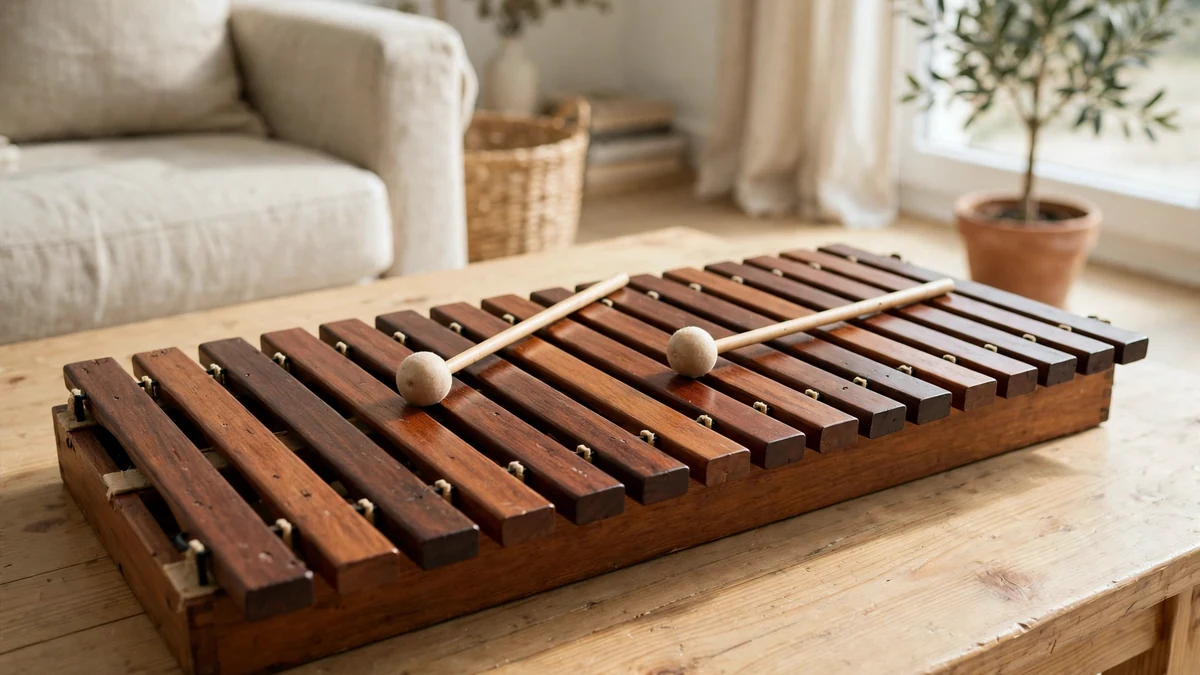
The second thing is the material. Real wooden bars, usually rosewood or a similar hardwood, give the warmest and most musical sound, and they are the choice for serious players and good school instruments alike. Cheaper xylophones often use plastic or thin metal bars, which can sound bright and cheerful for a toddler but lack the depth and staying power of wood. Metal bars, often found on glockenspiels rather than true xylophones, ring longer and higher, which suits some styles of music and not others. For most buyers, a solid wooden instrument is the best starting point, because it sounds the most like a xylophone should.
The Main Types of Xylophone
School and student xylophones are larger, with two or more rows of bars covering a full octave or two, and they are built to survive daily use by a whole class. The bars are usually wooden and tuned properly, the frame is sturdy, and the mallets are sized for young hands but strong enough not to snap. These are the workhorses of the music classroom, and they are also a sensible choice for a family that wants one instrument a child can grow into rather than outgrow in a year.
Professional xylophones are bigger still, with three and a half octaves or more, graduated bars that get narrower as the notes get higher, and resonator tubes underneath that give the sound extra depth and sustain. They sit on a proper stand at the right height for a standing player, and they are tuned precisely enough for orchestral and solo performance. They cost far more than a student model, but for a player who performs, the difference in sound and response is worth every penny.

How to Choose the Right Size
Size is really about range, and range is about how much music the instrument can play. A one-octave xylophone covers eight notes, which is enough for nursery rhymes and first tunes, but it runs out of notes quickly once a child starts playing real melodies. A two-octave instrument covers far more songs and is the sweet spot for most families and classrooms. A three-octave instrument covers almost anything a student will be asked to play, and anything beyond that belongs in a professional setting.
Age matters too. A toddler needs an instrument that is low, light and impossible to tip over, with bars that are wide enough to hit easily and mallets that are short and light. A primary school child needs a proper two-octave instrument that sounds in tune and stands up to daily practice. A teenager or adult learner can go straight to a larger student model, because a small toy will feel cramped and limiting within weeks. Buying for the player who will use the instrument in a year, not just today, usually saves money in the long run.
The Best Xylophones of 2026
The best xylophone for most families this year is a well-made two-octave wooden student model with clearly labelled bars and a sturdy frame. It sounds in tune across its whole range, its bars ring cleanly without buzzing, and its mallets are light enough for a child and strong enough for an adult. It is big enough to play real tunes and small enough to keep in a living room, and it costs far less than a professional instrument. For a first proper xylophone, or for a classroom that needs one reliable instrument, this is the pick that makes the most sense for the most people.
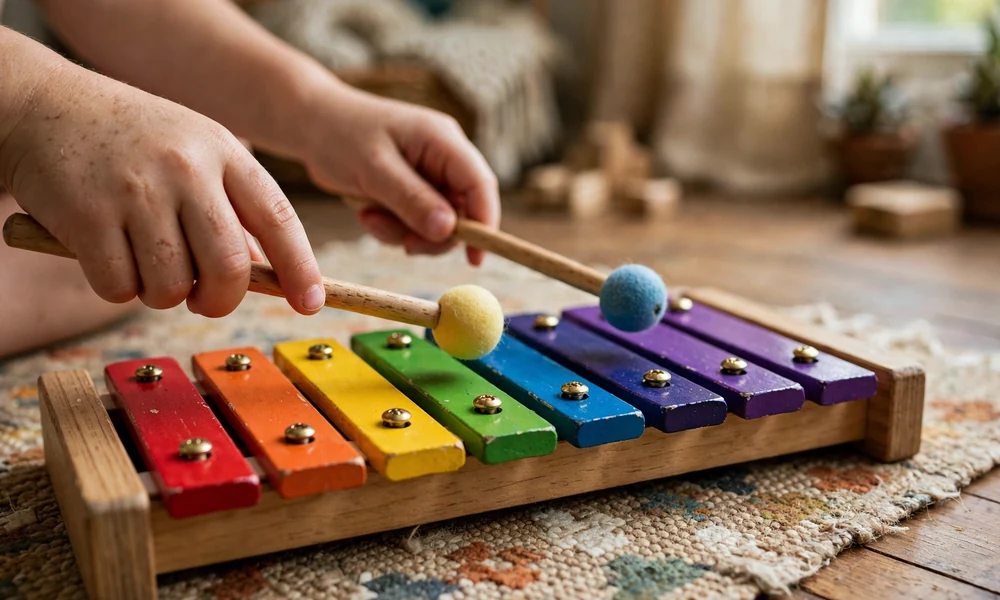
The best xylophone for a young child is a small, brightly coloured wooden model with wide bars and short, chunky mallets. It should be low enough to play on the floor, heavy enough not to slide around, and tuned well enough that the tunes a child learns on it are the right notes. The colours should help, not confuse: bars marked with their note names let a child follow along with a songbook, and a frame with rounded edges keeps little fingers safe. It is not the instrument for a concert, but it is the instrument that turns a curious toddler into a child who loves music, and that is worth more than a bigger range.
The best professional xylophone of 2026 is a large rosewood instrument with three and a half octaves, graduated bars and resonator tubes, mounted on a solid adjustable stand. Each bar is tuned precisely, the sound is bright and even from the lowest note to the highest, and the instrument responds to soft playing as well as to loud playing, which is what separates a good professional instrument from a merely large one. It is the xylophone for the player who performs, records or teaches at a high level, and who needs an instrument that will hold its tuning and its tone for years of hard use.
The best xylophone for a school or music room is a tough, two-and-a-half-octave student model built to survive a class of thirty. Its frame is reinforced, its bars are thick enough to take enthusiastic playing, and spare mallets are easy to find when one goes missing, as one always does. It sounds good enough for concerts and assemblies, and it is simple enough that a teacher can set it up and pack it away in a minute. For a school buying one instrument to serve many children, durability matters as much as sound, and this pick gives both.
The best xylophone for an adult beginner is a compact two-octave wooden model with a warm tone and a frame that sits comfortably on a table. It is quiet enough for evening practice in a flat, clear enough to hear every note properly, and attractive enough to leave out in a living room rather than hide in a cupboard. Many adults start the xylophone as a relaxing hobby, often after years away from music, and this kind of instrument suits that gentle pace: it asks for ten minutes a day, not hours, and it rewards those ten minutes with real tunes.
What Else You Need
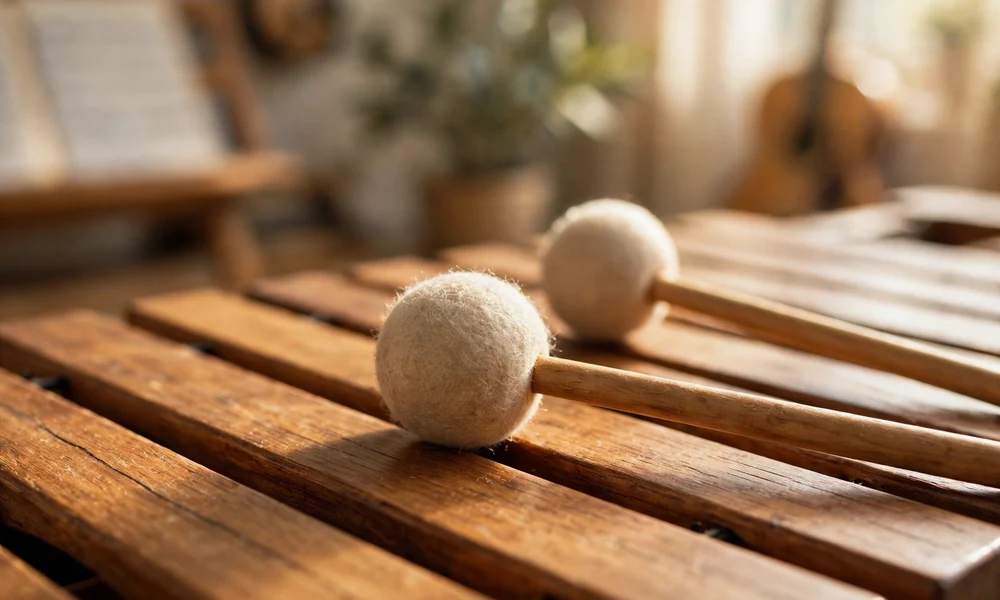
A xylophone on its own is nearly complete, which is part of its appeal, but a few extras make it much better. Mallets matter more than most buyers expect: hard mallets give a bright, sharp sound, soft mallets give a rounder, gentler one, and most players end up owning both. A second pair of mallets is worth having, because mallets roll off tables and disappear, and playing with one mallet is no fun at all. A carry bag or case protects the bars on the way to lessons, and a simple music stand holds the songbook at the right height.
Common Mistakes to Avoid
The biggest mistake is buying the cheapest xylophone on the shelf without listening to it first. A badly tuned instrument teaches wrong notes, and a child who practises on one will struggle twice as hard when they move to a good one. The second mistake is buying too small: a one-octave toy is fun for a week and limiting for a year, and the family ends up buying twice. The third mistake is forgetting the mallets, which are easy to lose and surprisingly hard to replace if the instrument uses an unusual size.
Learning and Playing Together
A xylophone is one of the friendliest instruments to learn as a family, because two people can play it at once, one at each end, and because a wrong note on a xylophone is a small, cheerful mistake rather than a horrible noise. Parents who sit down with a child and learn a tune together usually find the child practises far more than a child left alone with the instrument. Ten minutes of shared playing after dinner beats an hour of forced practice, and the tunes a family learns together tend to be the ones everyone remembers.
The skills a xylophone teaches travel well into other instruments. Reading notes, keeping time and listening for pitch are the same skills a piano player, a guitarist or a drummer needs, and a child who learns them on a xylophone will find the next instrument far easier. Readers who enjoy that kind of musical start will find plenty to like in the best digital pianos, which cover the same idea from a different angle: an instrument that is easy to begin and rewarding to keep playing. The patience that steadies a mallet stroke makes for a good musician in any style, and the ear that learns to hear a true note will serve every instrument that follows.
Music also sits happily beside other quiet pastimes, and a xylophone afternoon pairs naturally with a relaxed evening afterwards. Many families keep a musical instrument in the living room and a game on the shelf beside it, and the same household that plays together often relaxes together too. Readers who enjoy that kind of easy, shared evening will find plenty to like in the best banjos and the best guitars guides, which cover other friendly instruments that suit a home full of music: the right instrument, matched to the player, makes the whole evening more fun.
The Verdict
The best xylophone of 2026 is the one that fits the player holding the mallets. For most families that means a well-made two-octave wooden student model: in tune, sturdy and big enough to play real music. For a young child, a small, colourful wooden instrument with wide bars is the right start. For the performing player, a large rosewood professional xylophone with resonators is the only sensible choice. Whatever the choice, listen to every bar before buying, buy for the player the child will become as well as the one they are today, and keep the instrument dry and indoors. A xylophone chosen this way will not just sound good on the first day; it will still be ringing true years from now, and every tune played on it will feel like it was earned.


