
A conga is one of the most welcoming instruments a person can buy. It needs no reeds, no strings, no tuning keys in the middle of a song, and no years of lessons before it starts to sound like music. Put your hands on the skin, find the bass tone in the centre and the slap near the edge, and you are already playing. A good conga rewards that first touch with a warm, round sound that sits beautifully under a voice, a guitar or a whole band. A bad one fights back from the start: a dull thud, a skin that will not tune, hardware that rattles, and a shell that sounds boxy no matter how you play it. The best congas of 2026 are not the flashiest drums in the shop, and they are not always the most expensive.
What Makes a Conga Good
The first thing to judge is the sound of the drum itself. Tap the head gently with your fingertips and listen. A good conga gives a clear, warm tone with a little ring that fades naturally, not a dead thud and not a harsh ping. Press the head in the centre: it should feel firm but alive, with some give under your hand. The best drums speak easily at low volume, which matters more than most beginners realise, because most practice happens quietly at home.
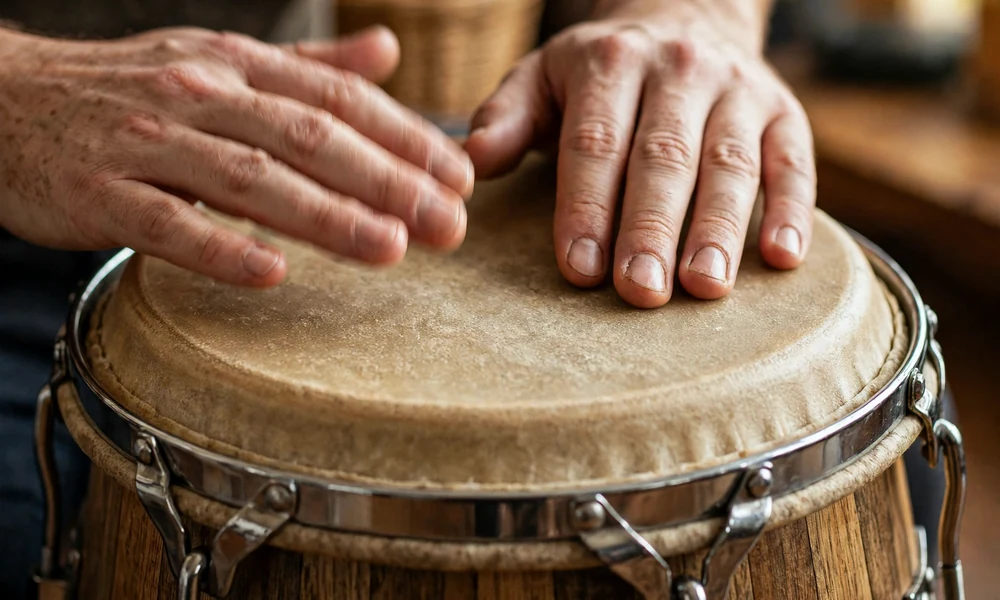
The second thing is the shell. Congas are traditionally made from staves of wood, glued and shaped into a tall, slightly tapered drum, and the quality of that woodwork decides how the drum projects. A well-made shell feels solid and heavy for its size, with smooth joints, a clean interior and no rattles when you tap the side. Run your hand around the bearing edge where the skin meets the shell: it should be smooth and even all the way round, because a rough or uneven edge will make tuning a misery.
The Three Main Sizes
Congas come in three main sizes, and they are usually played as a set. The quinto is the smallest and highest-pitched, roughly eleven inches across the head, and it carries the bright, cutting sounds that dance on top of a rhythm. The conga itself, sometimes called the segundo, is the middle drum at about eleven and three-quarter inches, and it is the workhorse of the set, warm and versatile enough for almost any pattern. The tumba is the largest and deepest, around twelve and a half inches, and it adds the low, grounding notes that make a groove feel full. Most players start with a single middle conga, then add a quinto or a tumba as their playing grows.
Buying a pair is the most common next step, and a matched pair matters more than many shoppers expect. Two drums from the same maker and the same range will tune together, look alike and sit at the same height on their stands, which makes playing far more comfortable. If you plan to play standing up, check the height: a conga on its stand should put the head roughly at hip level, so your hands fall naturally onto the skin without hunching over the drum or reaching up to it.

Shells, Skins and Hardware
The skin, or head, is where the sound is born. Most good congas use natural animal skin, usually cow or buffalo, which gives a warm, complex tone with a satisfying slap. Synthetic heads are steadier in changing weather and easier to keep in tune, and modern ones sound far better than the plastic heads of twenty years ago. They are a sensible choice for a drum that will live in a school hall, a damp rehearsal room or a hot car boot.
Hardware is the part buyers overlook and players curse. A conga head is held by a metal rim pulled down by tuning lugs, usually five or six around the drum, and those lugs must turn smoothly and hold their setting. Cheap lugs strip, seize or bend, and once they do, the drum will never tune evenly again. Look for solid steel lugs, a sturdy rim that sits flat, and a stand that does not wobble when you play hard. A good stand holds the drum steady, keeps it off a cold floor and lets the sound breathe underneath.
How to Choose Your First Conga
Start by deciding where the drum will live and how it will be played. A single middle conga is the right first buy for most people: it covers the widest range of music, it fits in a car, and it costs far less than a full set. If you will mostly play at home, a wooden shell with a natural head will give you the warmest sound. If the drum will travel to rehearsals, gigs or lessons, a tougher shell and a synthetic head will save you tuning time and worry.
The Best Congas of 2026
The best conga for most players this year is a mid-priced wooden model with a natural skin head and solid steel hardware. It tunes easily, holds its pitch through a long session, and gives a warm bass tone with a crisp, clear slap. The shell is sturdy enough to survive regular travel, the finish is simple and handsome, and the price leaves room for a decent stand. For a first drum, a regular practice drum or the heart of a growing set, this is the pick that makes the most sense for the most people.
The best conga for beginners is a complete starter set with two drums, stands and a simple tuning key in the box. It costs less than buying the pieces separately, and it removes every excuse not to start. The drums are forgiving and easy to tune, the stands adjust to different heights, and the pair lets a beginner learn the conversation between a high and a low drum from the very first week.
The best professional conga of 2026 is a hand-finished wooden drum with a premium natural skin and heavy-duty hardware built for the stage. It projects clearly without a microphone, stays in tune under hot stage lights, and gives a full range of tones from a deep, singing bass to a sharp, cutting slap. It suits the player who gigs regularly, records, or simply wants a drum that will still be sounding wonderful in twenty years.
The best conga for small spaces is a compact, slightly shorter drum that keeps the full head size but trims the shell depth. It fits in a flat, a small practice room or the corner of a bedroom without dominating the space, and it is light enough to carry up a flight of stairs. For a flat dweller or a player who travels light, it is the sensible compromise.
The best conga for children and younger players is a smaller, lighter drum with a head around ten inches and a lower stand. It is light enough for a child to move, low enough to play comfortably while seated, and tough enough to survive enthusiastic practice. The skin is easy to tune, the hardware is simple, and the drum still makes a proper musical sound, which matters: a child who hears a real tone is far more likely to keep playing than one stuck with a drum that only thuds. An adult should help with tuning and always supervise the first sessions.

What Else You Need
A conga on its own is only half the kit. A stand is the first essential, because playing a conga flat on the floor muffles the sound and strains the back. A good stand is stable, adjustable and easy to fold for travel. A tuning key, usually a simple lug wrench, should live in the drum bag, because natural skins need a small adjustment whenever the weather changes. None of this costs much, and all of it makes playing far more enjoyable.
Common Mistakes to Avoid
The biggest mistake is buying the cheapest drum in the shop. A very cheap conga often has a thin shell, a poor skin and lugs that will not hold a tune, and it sounds so dull that a beginner gives up before learning a single rhythm. The second mistake is over-tightening the head in pursuit of a bright sound: a skin pulled too tight will choke, crack, or split, and a cracked head is an expensive replacement.
Another common mistake is storing the drum badly. A conga left in a hot car, a damp garage or leaning against a radiator will suffer: the shell can warp, the skin can split, and the hardware can rust. A little care goes a long way: a well-kept conga will sound better every year, while a neglected one loses its voice in a single season.
Playing Your First Rhythms
Once the drum is tuned, the fastest way to improve is to learn three basic sounds and practise them slowly. The bass tone comes from a relaxed, flat hand in the centre of the head, the open tone from the fingers near the edge with the hand lifting away quickly, and the slap from a cupped hand that catches the skin. Practise each sound on its own until it is steady, then join them into a simple pattern, leaving generous gaps between the notes. Play along with slow songs you love, keep the volume gentle, and stop when your hands feel tired, because relaxed hands learn faster than tense ones.
Congas and Other Instruments
Congas sit happily beside almost any other instrument, and many players collect a small family of percussion and melody instruments over time. The hand-eye coordination and sense of rhythm that congas build carry straight into other instruments, and players who enjoy the bright, dancing top end of a quinto often enjoy the shimmer of tuned percussion too. Readers who like that side of music will find plenty to enjoy in the best xylophones guide, which covers a melodic instrument with the same hands-on, play-it-yourself charm.
The same gentle, portable spirit runs through the smaller instruments that share a shelf with a conga. A thumb piano is quiet, calming and easy to pick up between drum sessions, and many conga players keep one nearby for winding down after practice. Readers curious about that quieter corner of the music room will like the best kalimbas guide, and those who want a louder, stringed companion for a band night will find the best banjos guide covers an instrument with the same joyful, social energy as the conga itself.
The Verdict
The best conga of 2026 is the one that fits the player holding it. For most people that means a mid-priced wooden drum with a natural skin and solid hardware: warm, tunable and built to last. For the beginner, a two-drum starter set is the smarter buy, because it teaches the conversation between drums from day one. For the gigging player, a hand-finished professional drum is worth every penny. Whatever the choice, start with a single good drum, tune it gently, look after the skin, and play a little every day. A conga chosen this way will not just sound good on the first day; it will still be sounding better years from now, and every good groove will feel like it was earned.


