A trumpet is a sturdy instrument, but it is also a heavy one, and the worst place for it between pieces is almost anywhere except a proper stand. Laid on a chair it slides, leaned against a wall it slips, and left on a table it is one knocked elbow away from a dented bell and a repair bill. A good trumpet stand solves all of that in a few seconds. It holds the instrument upright, keeps it within reach, and lets a player put the trumpet down and pick it up again without thinking twice. The best trumpet stands of 2026 are not the flashiest ones, and they are not the ones with the longest list of features. They are the stands that hold steady, fit the trumpet properly, fold away neatly, and keep working gig after gig without fuss.

What Makes a Trumpet Stand Good
The first thing to judge is stability. A trumpet stand has one job above all others, and that is to stay upright with a valuable instrument on top of it. The legs should spread wide enough to make a solid base, and the stand should not wobble when it is nudged or when someone walks past on a wooden floor. A stand that tips at the lightest touch is worse than no stand at all, because it gives a false sense of safety. Look for legs that lock firmly into place, feet that grip the floor, and a low centre of gravity. On a flat floor a good stand should feel planted, and a gentle push from the side should rock it rather than topple it.
The second thing is how the stand meets the trumpet. Most stands hold the instrument by a peg that slides into the bell, and that peg has to fit well. Too loose, and the trumpet leans and rattles; too tight, and it is hard to lift the instrument off in a hurry. The peg should be covered in a soft, non-marking material so it cannot scratch the inside of the bell, and the trumpet should sit straight and level once it is in place. Some stands add a small support arm or a shaped cradle, which can help, but the peg itself does the real work. If the trumpet sits crooked or feels as though it might slip, the stand is not doing its job.
Stability on Real Floors
Stands are tested in shops on perfect floors, but they are used on stage floors, school hall floors, carpet, and uneven ground at outdoor concerts. A stand that is rock solid on a flat shop floor can still wobble on a slope or sink into thick carpet. Wide tripod legs cope better with uneven ground than narrow ones, and rubber feet help on smooth stages where a metal foot would slide. Before buying, it is worth setting the stand up on the kind of floor where it will actually be used, putting the trumpet on it, and giving the whole thing a gentle nudge from each side. That one-minute test tells a buyer more than any product description ever will.
The Main Types of Trumpet Stand
The classic tripod peg stand is the most common type, and for most players it is the right choice. Three legs fold out from a central column, a peg rises from the top, and the trumpet sits bell-down over the peg. It sets up in seconds, packs down small, and suits the home, the rehearsal room, and the concert stage alike. The best tripod stands are made from sturdy steel or aluminium, with legs that lock with a firm click rather than a vague friction fit. They are the workhorse of the trumpet world, and a good one can last for decades with almost no maintenance beyond an occasional wipe.
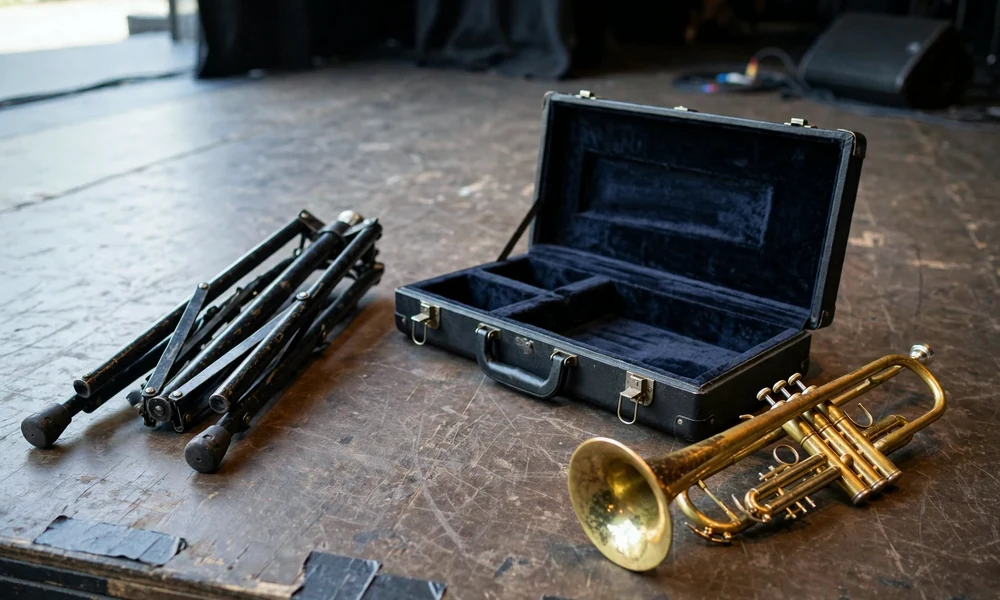
Folding travel stands are a lighter, more compact version of the same idea. They fold down to little more than a bundle of tubes, often small enough to slip into the pocket of an instrument case or a gig bag. They are the stand of choice for players who travel light, for school musicians who carry everything in one bag, and for anyone who plays in different places every week. The trade-off is stability: a travel stand is never quite as planted as a full-size tripod, so it suits careful use on flat floors rather than crowded stages. For a player who values portability above all else, though, the compromise is well worth it.
How to Choose the Right Stand
Start with the trumpet itself. Most modern trumpets have a standard bell size, and most stands are made to fit it, but older instruments, cornets, and pocket trumpets can be smaller, and a large-bore trumpet with a wide bell may need a wider peg. If the trumpet is unusual in any way, it is worth checking the peg size before buying, or better still trying the trumpet on the stand. A stand that fits one trumpet perfectly may hold another loosely, and the difference between a good fit and a poor one is the difference between confidence and worry every time the instrument is put down.
Next, think about where the stand will be used most. A player who practises at home and plays the occasional concert needs a sturdy tripod that can live in a corner of the room. A student who carries an instrument to school every day needs something light that folds small. A gigging player who sets up and packs down every night needs a stand that opens and closes quickly without fiddly knobs. There is no single best stand for everyone, because the best stand is the one that matches the player’s routine. Buying for the real routine, rather than an imagined one, avoids the common mistake of owning a stand that never leaves the house.
The Best Trumpet Stands of 2026
The best overall trumpet stand of 2026 is a sturdy steel tripod with a well-padded peg, wide locking legs, and rubber feet that grip the floor. It sets up in a couple of seconds, holds the trumpet straight and steady, and folds down neatly when the session is over. It is not the lightest stand and it is not the cheapest, but it is the one that most players will reach for most often, at home, in rehearsal, and on stage. It suits beginners and professionals alike, because its strengths are the basics done well: stability, fit, and build quality that does not wear out after a season.
The best portable trumpet stand is a compact folding model that slips into a case pocket and weighs almost nothing. It opens with a flick of the wrist, holds the trumpet securely on a flat floor, and folds away again just as fast. It is the stand for the player who travels by bus or train, for the student who carries everything in one bag, and for anyone who plays in a different room every week. It gives up a little stability compared with a full tripod, but for careful use on flat floors it is more than steady enough, and its portability means it is actually there when it is needed.
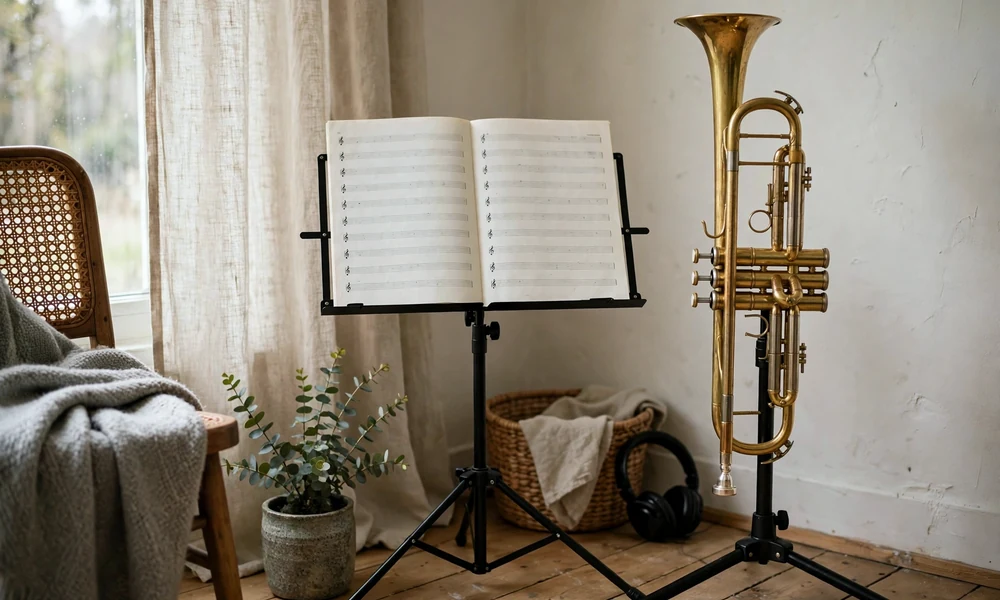
The best trumpet stand for home is a solid, good-looking tripod that can stay set up in a corner of the practice room. It does not need to fold small, so it can have wider legs and a heavier base, and it can be the stand the trumpet lives on between practice sessions. A home stand should be stable enough to survive a busy household, with pets, children, and visitors passing by, and it should hold the trumpet at a height that makes picking it up feel natural. For a player who practises every day, a dedicated home stand is one of the best small purchases in music.
The best budget trumpet stand is a simple tripod that gets the essentials right and skips the extras. It has locking legs, a padded peg, and rubber feet, and it holds the trumpet safely without costing much at all. It may not fold as small as a travel stand or look as polished as a premium one, but it does the one job that matters. For a beginner, a student, or a player buying a first stand, it is the sensible choice: spend little, get a stand that works, and upgrade later if a particular need appears. A cheap stand that holds the trumpet safely is far better than an expensive one that is left at home.
How a Trumpet Stand Fits a Music Room
The stand is only one part of a player’s kit, of course, and it makes most sense alongside the instrument itself. Readers who are still choosing a trumpet, or thinking about upgrading, will find the best trumpets guide a useful companion to this one, because the right stand depends on the trumpet it holds. A larger bell, a heavier instrument, or a different bore all change what a stand needs to do, and choosing the two together avoids the frustration of a stand that fits one trumpet but not the next.
Trumpet players rarely play alone, and a practice room often holds more than one instrument. A household with a clarinet player will find the same ideas apply, with a peg and a stable base doing the same job for a lighter instrument, and the best clarinets guide covers the instruments that share the room. The same is true for string players: the best cellos guide looks at an instrument that needs its own kind of support, and a home that gives each instrument a proper place is a home where music gets played more often and instruments stay in better condition.
Common Mistakes to Avoid
The biggest mistake is buying a stand that is too cheap and too flimsy. A stand that wobbles or has a peg that is too loose will not protect the trumpet, and the money saved is nothing compared with the cost of repairing a dented bell. The second mistake is leaving the trumpet on the stand in a risky place, such as a doorway, a narrow passage, or a room where children and pets run through. A stand is safe when it is out of the traffic, and it is a hazard when it is in the way. The third mistake is forgetting to check the stand now and then: tightening a loose leg, replacing a worn rubber foot, or re-padding a peg that has gone hard with age.
The Verdict
The best trumpet stand of 2026 is the one that holds the trumpet safely, fits the player’s routine, and gets used every day. For most players that means a sturdy steel tripod with a padded peg and wide locking legs: stable, simple, and built to last. Whatever the choice, set it up on the floor where it will be used, put the trumpet on it, and give it a gentle nudge before trusting it. A stand chosen this way will hold the trumpet safely for years, and every practice session will start the easy way, with the trumpet already waiting.