A baby spends more hours in a crib than anywhere else in the first two years of life, so this is the one nursery purchase where getting it wrong has real consequences. A good crib is solid, safe, and still useful when your baby becomes a toddler. A bad one wobbles, traps a mattress badly, or falls apart just when your child starts pulling up on the rails. This guide names the best cribs of 2026 and the worst ones too, so you can see both sides of the shelf before you spend a penny.
We judged every crib on five questions: is the frame solid, with fixed sides and tight joints? Are the slats close enough that a small head cannot pass between them? Does the mattress fit snugly, with no gap wider than two fingers? Will it last past the first year? And is it honestly priced? A crib that fails the first three cannot be saved by a pretty finish or a low price.
Best vs Worst Baby Cribs 2026 at a Glance
| Crib type | Verdict | Best for | Typical lifespan |
|---|---|---|---|
| Solid wood convertible crib | Best overall | Most families | Birth to around 4 years |
| Standard full-size crib | Best simple choice | First nursery | Birth to around 3 years |
| Mini crib | Best for small rooms | Bedside sleeping | Birth to around 12 months |
| Portable crib | Best second crib | Travel and grandparents | Birth to around 2 years |
| Drop-side crib | Worst: avoid | Nobody | Unsafe at any age |
| Worn second-hand crib | Worst: avoid | Nobody | Unreliable |
| Ultra-cheap flat-pack crib | Worst: avoid | Nobody | Months, not years |
The Best Baby Cribs of 2026
1. The Solid Wood Convertible Crib: Best Overall
The best crib of 2026 is a standard-size convertible crib in solid wood, with three or four mattress heights and a kit that turns it into a toddler bed and then a daybed. It starts as a newborn crib with the mattress at its highest setting, so you can lift a small baby out without straining your back. As your child grows, you lower the mattress, and when climbing out becomes a risk, one side comes off, a low safety rail goes on, and the same frame becomes a first big-kid bed.
What sets the good ones apart is the hardware: tight joints, bolts that stay put, and a frame that barely moves when you shake it. Check the conversion kit before you buy: some brands include the toddler rail, others sell it separately, and a few discontinue the kit for older models. A convertible crib without its kit is just an expensive standard crib.
2. The Standard Full-Size Crib: Best Simple Choice
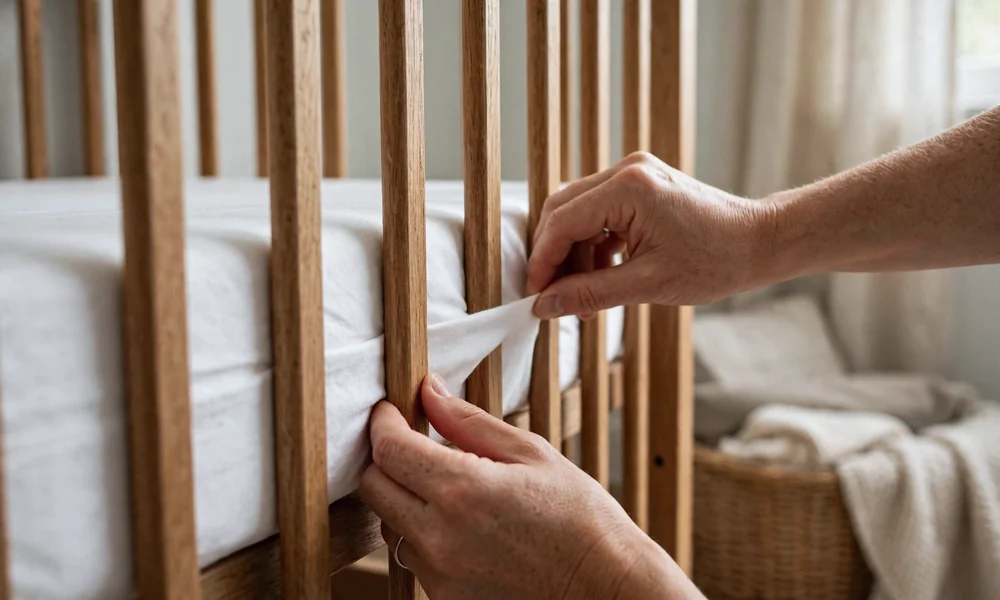
A standard full-size crib is the straightforward option, and for many families it is the right one. It takes a standard-size mattress, fits the usual fitted sheets, and lasts from birth until your child is ready for a toddler bed, usually between eighteen months and three years. It costs less than a convertible model, every crib accessory is designed to fit it, and there is nothing to convert, assemble twice, or lose in a drawer.
The trade-off is a second purchase later: a separate toddler bed. A well-made standard crib that you sell on or hand down can cost less over three years than a cheap convertible that wobbles after six months. Check the slat spacing with a drinks can: if the can fits between two slats, the gaps are too wide.
3. The Mini Crib: Best for Small Rooms
A mini crib is the right choice when space is tight, or when you want the baby beside your bed. Most babies outgrow a mini crib between six and twelve months, so plan the next step early: a standard crib waiting in the nursery, or a convertible model that takes over. What the mini crib gives you is closeness. Night feeds are shorter, settling is quicker, and you can check on your baby without getting up.
The best mini cribs meet the same safety standards as full-size ones: fixed sides, close slats, a firm mattress that fits exactly, and a frame that does not rock or flex. The worst are little more than a basket on legs, with thin rails and a mattress that slides.
4. The Portable Crib: Best Second Crib
A portable crib folds flat, weighs little, and works as a travel bed, a downstairs nap spot, and a safe place to put the baby while you work in another room. It will not replace a full-size crib at home, because the mattress is thinner and the frame is lighter, but as a second crib it is genuinely useful. The best ones set up in under a minute and lock firmly open.
Look for a sturdy locking mechanism you can check at a glance, mesh sides for airflow, and a carry bag that fits the folded frame. If the sides bow inward when you press them, or the lock feels vague, walk away.
5. The Bedside Sleeper Crib: Best for Night Feeds
A bedside sleeper attaches to the side of your bed, with one low side that lets you reach your baby without standing up. For the first six months, when night feeds come every few hours, that matters more than any other feature. The best bedside sleepers strap firmly to the adult bed, sit at exactly the right height, and have a firm, flat mattress with no gap between the sleeper and your own mattress.
The catch is the short lifespan: most babies outgrow one by six months, so treat it as a stage-one purchase. Check the attachment straps every night, and never use it with a gap beside your bed.
The Worst Baby Cribs of 2026
1. The Drop-Side Crib: Worst Overall, Do Not Buy
Drop-side cribs, where one side slides down, are the worst cribs you can buy, however convenient they look. The moving mechanism is the part that fails, and a side that drops, sticks, or leaves a gap is dangerous. Modern safety standards favour fixed sides throughout, and every crib worth buying in 2026 has them. If you already own a drop-side crib, stop using it. If a relative offers you one, say no politely and buy a fixed-side crib instead.
They still appear at car boot sales and on second-hand listings, often described as vintage or charming. The sliding hardware is now old, worn, and often impossible to replace. No bargain is worth a side that can come loose in the night.
2. The Worn Second-Hand Crib: Worst Value
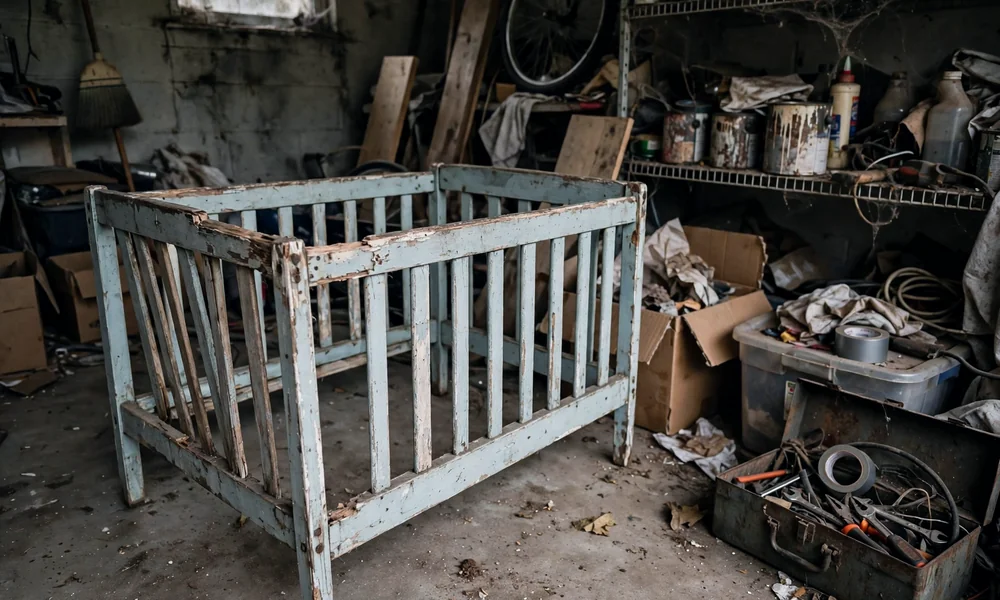
A second-hand crib can be a good buy, but a worn one is the worst value in the nursery. Look at the joints: if they have been taken apart and rebuilt several times, they will be loose. Look at the paint: chipped or peeling paint on an old crib can hide damage and may not meet current safety rules. Look at the slats: a missing or cracked slat cannot be fixed with glue, and a replacement from another model will not fit properly.
Buy second-hand only if you can see the crib assembled, shake it hard, check every bolt, and confirm the model still meets current standards with all its parts present. If any of that fails, it is not a bargain.
3. The Ultra-Cheap Flat-Pack Crib: Worst Build Quality
The cheapest flat-pack cribs look fine in the photograph and fall apart in real life. The panels are thin, the fixings are small, and the frame flexes every time your baby pulls up on the rails. Within months, the joints loosen, the sides rattle, and the mattress platform sags. A crib that flexes is a crib that will not survive a toddler, and a crib that will not survive a toddler was never cheap. It was just sold cheaply.
The warning signs are easy to spot: a low weight limit, no spare parts service, reviews that mention wobbling, and a finish that scratches the first time you wipe it. Spend the difference on a solid standard crib instead.
4. The Style-Led Round Crib: Worst for Practical Families
Round and oval cribs look beautiful in a styled nursery photograph, and that is where their advantages end. They take up more floor space than a rectangular crib, they need special mattresses and special sheets that cost more and are harder to find, and most cannot convert into a toddler bed. Your baby outgrows one by around eighteen months, and you are left with a large, awkward piece of furniture that nobody wants second-hand.
If style is your priority and you accept the short lifespan and the expensive bedding, a round crib is not unsafe, just poor value. The same money buys a convertible crib that lasts twice as long and fits standard bedding from any shop.
What to Avoid When You Buy a Crib
Whatever style you choose, the same checks apply. Shake the crib firmly as soon as it arrives: a good one barely moves, while a cheap one rattles and flexes at the corners. Measure the slats all the way around, and make sure none are more than six centimetres apart. Press the mattress with your palm: it should feel firm and spring back at once, not sink under your hand.
Keep the sleep space bare: a fitted sheet that stays taut is all the bedding a newborn needs. No pillows, duvets, blankets, bumper pads, or soft toys in the sleep space. Dress the baby in a sleep sack instead. Put the crib away from windows, radiators, and dangling blind cords.
How to Choose the Right Crib for Your Home
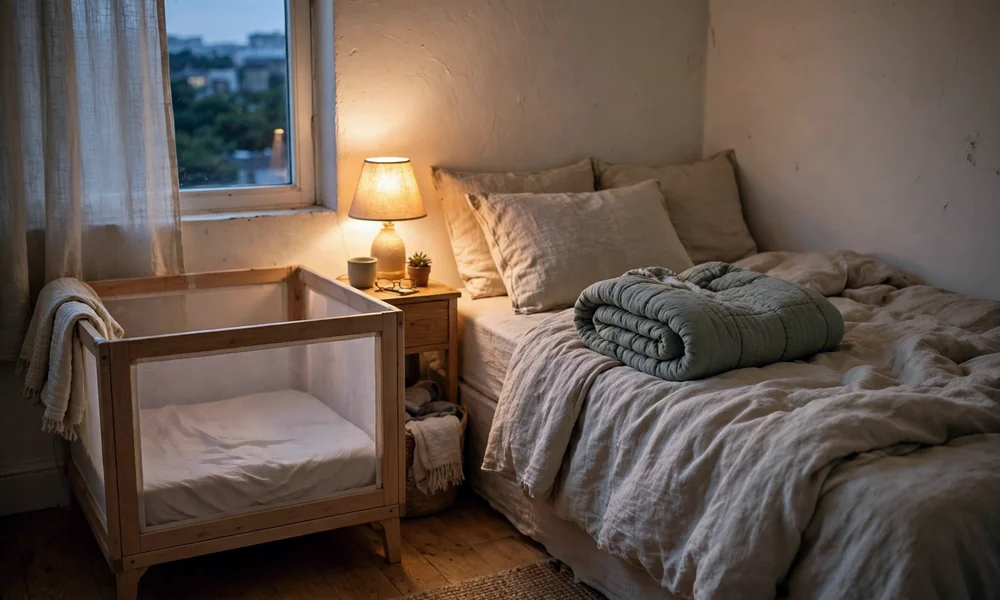
Start with your room, not the catalogue. Measure the space where the crib will stand, including room to walk around it and to lower the mattress as your baby grows. A convertible crib suits most families because it covers the longest span of childhood in one purchase, but a standard crib is better if you want the lowest upfront cost. A mini crib or bedside sleeper suits the first months, and a portable crib earns its keep as a second bed for travel and grandparents.
Think about who will use it. If two parents of different heights will lift the baby out, several mattress heights matter more than a pretty finish. If you move house often, a crib that comes apart and rebuilds cleanly is worth more than one that survives a single assembly. If you plan a second child, buy the sturdiest frame you can afford.
For the wider nursery, the same thinking applies. A crib is one piece of a room that also needs storage, light, and a safe sleep routine, and getting the big pieces right first makes everything else easier. If you are setting up the whole room, our guide to the best nursery essentials covers what is worth buying and what you can skip. The crib itself is covered in more detail in our guide to cribs that grow with your baby, and once your baby is older, a good diaper bag is the next piece of kit that has to survive daily use.
The Verdict
Buy a solid wood convertible crib with fixed sides, close slats, and a firm, snug mattress, and you have bought the best crib of 2026. Buy a standard crib if you want simplicity, a mini crib if space is tight, and a portable crib as a second bed. Avoid drop-side cribs entirely, walk away from worn second-hand frames and ultra-cheap flat-packs, and think twice before paying extra for a round crib that lasts half as long. The best crib is not the prettiest one in the catalogue. It is the one that stays solid, safe, and useful for years.