A Bluetooth speaker is the simplest promise in all of technology: press a button, and music fills the room, the garden, or the beach. The best ones keep that promise so well you forget the speaker is there at all. Voices sound warm and clear, bass has real weight without booming, and the music keeps playing all evening while the speaker sits in the rain without complaint. The worst ones break the promise in small ways that ruin the mood. The sound turns thin and rattly the moment you turn it up, the battery dies halfway through dinner, and the connection drops just as your favourite chorus starts.
This comparison puts the best Bluetooth speakers of 2026 head to head against the worst, judged the way you actually live with one: how good the sound is at real listening volume, how long the battery lasts outdoors, how stable the connection stays when you walk around, how tough the build is, and how much fuss the speaker causes. The difference between the two sides is not subtle, and it is not only about price. Some expensive speakers disappoint, and some modest ones punch far above their weight.
Key Takeaways
- The best speakers sound full at the volume you actually listen at, with clear voices and controlled bass that does not distort.
- Real battery life is measured outdoors at normal volume, not in a quiet room at the lowest setting.
- A stable connection matters as much as sound. The best speakers hold their link across a room, through a wall, and in a crowded park.
- Toughness is not a luxury for a portable speaker. Water, sand, and drops are a matter of when, not if.
- The worst speakers hide behind big wattage numbers and flashing lights. Sound, battery, and build are what you actually live with.
What Makes a Bluetooth Speaker Good
A good Bluetooth speaker starts with a simple job: make music sound like music, anywhere you take it. That takes a decent driver, an enclosure tuned to that driver, and an amplifier that does not run out of power when the volume rises. The best speakers of 2026 manage all three in a box you can carry with one hand. Pairing takes seconds, the buttons are easy to find without looking, and the speaker remembers your phone the next time you switch it on.
There are four sizes to choose from, and the right one depends on where you listen most. Pocket speakers fit in a jacket and suit a desk or a small room. Mid-size portables are the sweet spot for most people: loud enough for a garden, small enough for a bag. Large party speakers fill a big space and often add lights and a microphone input, but they are heavy to carry. Rugged outdoor speakers trade a little sound quality for waterproofing and toughness, and they suit pools, beaches, and campsites. If you want music that fills a whole home rather than a single room, our guide to the Sonos vs Bose smart speakers for 2026 compares the two multi-room systems that dominate the shelf.
The Best Side: Speakers Worth Your Money
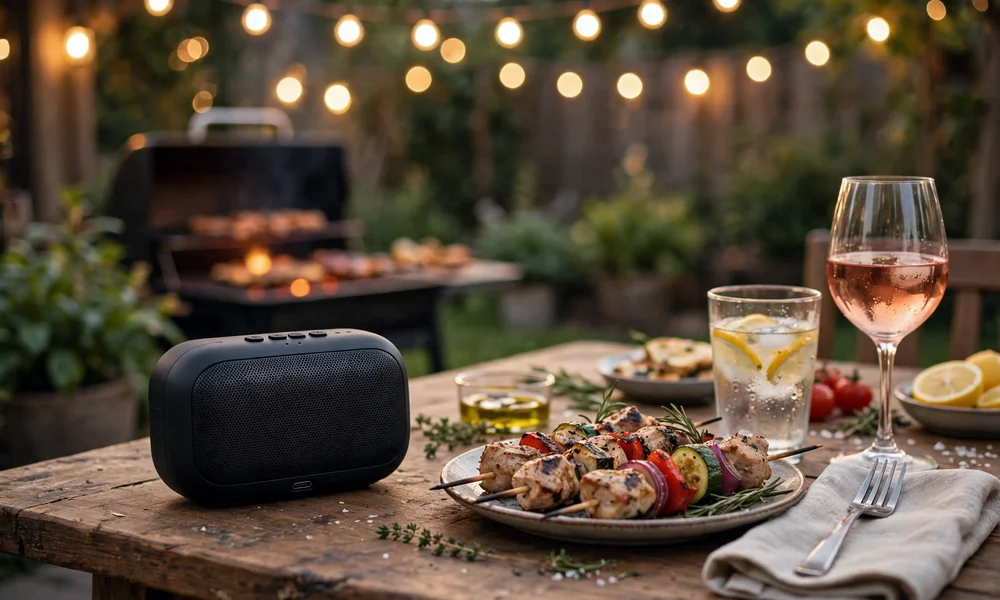
The best Bluetooth speakers of 2026 share a quality that shows up within minutes of switching one on: the music sounds right. A familiar song sounds like itself, not like a thin copy played through a tin can. Voices sit forward and clear, drums have weight without drowning everything else, and the high notes stay smooth even when you turn the volume up. That balance comes from drivers and enclosures that were tuned together, rather than a big driver squeezed into a box that was never designed for it.
Sound That Holds Up at Real Volume
Sound quality is the first test, and the honest way to judge it is at the volume you actually use. A good speaker keeps voices clear, bass controlled, and treble smooth from quiet background listening right up to party volume. The bass deserves special attention, because it is where cheap speakers cheat. A good speaker produces bass you can feel on a bass-heavy track, without the rattling and buzzing of a driver pushed past its limits. The best models also sound good outdoors, where there are no walls to bounce the sound back. They project clearly across a garden or a beach, instead of fading into a thin whisper the moment you step away.
Battery Life and a Rock-Solid Connection
Battery life is the second test, and the best speakers treat it honestly. A speaker that promises twenty hours should still be playing after a long afternoon and evening outdoors, at the volume you actually listen at. The best models manage fifteen to twenty-four real hours, and they charge quickly over a standard USB cable, so a short top-up before you leave the house is enough. The connection matters just as much. Modern Bluetooth holds its link across a room and through a wall, and the best speakers keep playing when your phone is in your pocket on the other side of the garden. They also reconnect instantly when you come back into range.
Tough Enough for Real Life
A portable speaker lives a rough life, and the best ones are built for it. They survive rain, splashes, and the occasional drop into a pool, thanks to proper waterproofing that is tested rather than merely claimed. A rating of IP67 is the practical minimum for pool, beach, and camping use: it means the speaker can survive being dunked and will keep playing afterwards. The best models also survive sand, dust, and knocks, with rubberised corners and a grille that does not dent the first time the speaker falls off a table. If water is your main concern, our guide to the best waterproof speakers of 2026 covers the whole category, from shower speakers to marine models.
Simple to Use, Easy to Live With
The best speakers pair in seconds, show their battery level honestly, and have buttons you can find by touch in the dark. The app, if there is one, adds useful features such as adjusting the bass and treble, pairing two speakers for stereo sound, and updating the software. It does not demand an account or hide basic controls behind a login screen. A good speaker also sounds fine without the app at all.

The Worst Side: Speakers That Ruin the Mood
The worst Bluetooth speakers of 2026 fail in small, irritating ways that add up every time you use them. The bass rattles, voices sound thin, the battery dies halfway through the evening, and the connection drops just as your favourite chorus starts. None of these failures is dramatic alone, but together they turn a simple pleasure into a recurring annoyance.
Thin Sound and Distortion
Thin, tinny sound is the most common failure: a tiny driver in a small box cannot produce real bass, no matter what the listing claims. The result is music that sounds hollow, with distant vocals and drums that sound like taps on a table. Turn the volume up and it gets worse. The speaker buzzes, crackles, and distorts, and the high notes turn harsh enough to hurt. Some speakers try to hide this with a bass boost button, but all it does is make the distortion louder.
Battery Claims and Dropped Connections
Battery figures are where bad speakers lie most boldly. A box that promises twenty hours often delivers six, because the figure was measured indoors at low volume. At the volume you actually listen at, outdoors, the battery drains far faster, and the speaker dies halfway through a barbecue. The connection is the other quiet failure. An old Bluetooth version, a weak antenna, or a crowded room can all cause dropouts, even when your phone is only a few steps away. The music stutters and cuts out, just off-beat enough to be maddening. The worst speakers also forget your phone every time they switch off.
Cheap Build and Gimmicks Instead of Sound
The cheapest speakers cut corners you can feel the moment you pick them up. Thin plastic creaks in your hand, buttons wobble, and the charging port feels loose after a month. A speaker that rattles when you shake it will not survive a year of being tossed into a bag and knocked off a table. The other trap is gimmicks. Flashing lights, a dozen sound modes, and a voice that announces every action are cheap to add and do nothing for the sound. If a speaker’s box talks more about its lights than its sound, that tells you where the money went. For the living room, where sound matters more than portability, our guide to the best vs worst soundbars of 2026 applies the same tests to television sound.

Best vs Worst Bluetooth Speakers at a Glance
| What matters | The best side | The worst side |
|---|---|---|
| Sound | Full, clear, controlled bass | Thin, rattly, distorts when loud |
| Battery life | 15 to 24 real hours | Dies hours before the stated time |
| Connection | Stable across a room and garden | Drops out when you move around |
| Build | Waterproof, tough, survives drops | Thin plastic, loose buttons, worn port |
| Ease of use | Pairs in seconds, honest battery level | Forgets your phone, fiddly controls |
| Value | Money spent on sound and battery | Money spent on lights and gimmicks |
Who Each Side Is For
The best speakers are for anyone who actually listens to music rather than just filling silence. Garden hosts, beachgoers, campers, and people who work from home with music on all day will notice the difference within a week. The common thread is use: the more hours a speaker plays, the more its sound, battery, and toughness matter. If you listen every day, spend a little more on a speaker that sounds good at real volume, lasts all evening, and survives being knocked over. It will still be playing next summer.
The worst speakers suit nobody, but they do have a buyer: the person who wants the cheapest option for a single occasion, or the brightest lights for a teenager’s bedroom. If you only need background music for a small room and paid very little, even a basic speaker can be enough, provided you know its limits. The danger is paying a mid-range price for a speaker that sounds thin, dies early, and falls apart. That buyer would have been better off saving a little longer for a good one. A bad speaker is not a bargain. It is money spent on an annoyance.
The Verdict
The verdict is simple: buy the speaker that sounds best at the volume you actually listen at, with the longest real battery life and the toughest build you can afford, and ignore wattage numbers and flashing lights until those three boxes are ticked. Sound, battery, and build are the foundation. Without them, a low price or a clever design is worth nothing. The best Bluetooth speakers of 2026 are not the loudest or the flashiest. They are the ones that play your music clearly, all evening, wherever you take them.
Avoid the worst side by testing before you commit. Listen at high volume, check the bass on a song you know well, walk away with your phone in your pocket, and read the returns policy before you buy. If the sound thins out, the connection stutters, or the build feels flimsy, send it back. A good speaker should disappear into the music, not demand your attention with its faults. Buy the one that sounds right, charge it once a week, and let it play.