Top Ties for Weddings, Work and Formal Nights in 2026
The best ties in 2026 are the ones you stop thinking about the moment you put them on. A good tie sits straight without constant adjusting, holds its knot all day, and makes the rest of your outfit look considered. Whether it is a wedding, a job interview or a formal dinner, the right tie frames your face, ties your shirt and jacket together, and tells the room you paid attention.
Ties look simple, which is why they are easy to buy badly. A tie that is too wide for your lapels, too shiny for daylight, or made from stiff fabric that will not hold a knot can undo an otherwise good suit. This guide picks the ties that earn their place, from classic silk for the office to softer knits for relaxed weddings, and explains how to choose the width, fabric and knot for the occasion in front of you.
Key takeaways
- Silk is still the safest tie fabric for work and weddings: it knots cleanly, drapes well and holds its shape all day.
- Match your tie width to your lapel width. A tie much wider or narrower than your lapels looks out of proportion, however good the tie itself is.
- For weddings, choose a tie one shade deeper than your shirt and let the suit do the talking; the tie should complement, not compete.
- A four-in-hand knot suits most collars and most occasions, while a half-Windsor is the better choice for wide spread collars and formal nights.
- Own three ties before you buy a fourth: a solid navy, a solid burgundy, and a subtle pattern. Those three cover almost every formal occasion.
How we judged the best ties
Every tie here was judged on the same five points. First, the knot: does it form cleanly, sit straight, and stay put for a full day without slipping or loosening? Second, the drape: does the tie hang straight from the knot to the belt, or does it twist, curl or flare? Third, the fabric: does it feel substantial without being stiff, and does it recover from being folded or packed? Fourth, versatility: how many shirts, suits and occasions does it work with? Fifth, care and durability: does it survive being untied properly, stored rolled, and worn regularly without fraying at the tip or staining at the knot?
The best ties at a glance
| Tie | Best for | Fabric | Knot | Approx. price |
|---|---|---|---|---|
| Classic solid silk tie | Work and formal nights | Silk | Four-in-hand or half-Windsor | $40–$90 |
| Knit silk tie | Relaxed weddings and smart days out | Knit silk | Four-in-hand | $35–$70 |
| Linen-blend tie | Summer weddings and warm days | Linen and silk | Four-in-hand | $40–$80 |
| Satin wedding tie | Weddings and black-tie evenings | Satin silk | Half-Windsor | $50–$120 |
| Matte wool tie | Autumn and winter formality | Wool | Four-in-hand | $45–$85 |

Silk ties: the workhorse of a formal wardrobe
If you buy one tie this year, make it a solid silk tie in navy. Silk takes a knot better than any other common tie fabric, which is the single most important thing a tie has to do. The fibres grip each other just enough that the knot stays where you put it, and the fabric has a natural weight that pulls the blade straight. A navy silk tie works with a charcoal suit, a grey suit, a white shirt, a pale blue shirt, and even a navy suit when the shades are far enough apart to read as deliberate.
Burgundy is the second tie to own: it warms up a grey or navy suit and pairs with shirts that navy cannot, including pink and pale lilac. The rule is simple: solid colours first, patterns second. A solid tie cannot clash with a patterned shirt, which is why it is the safest choice when you are dressing in a hurry.
What to look for in a silk tie
Hold the tie up and look at the tip. A well-made tie has a neat, even point and a lining that gives the blade body without making it stiff. Squeeze the fabric gently: it should spring back rather than hold a crease. Check the back for a loop that holds the narrow end, and check the stitching along the back seam, which should be a single loose slip stitch that lets the tie move. The width matters more than the brand. For most men in 2026, a blade between seven and eight centimetres wide suits a standard lapel, while slimmer lapels call for a tie closer to six centimetres.
Knit ties: relaxed, textured and harder to get wrong
A knit silk tie is the most forgiving tie you can buy. Its soft, slightly matte texture hides small imperfections, it works with a four-in-hand knot every time, and it looks right at the weddings and dinners where a shiny silk tie would feel too formal. The flat square tip is part of the charm: it signals that you dressed up without dressing stiffly.
Ties for weddings
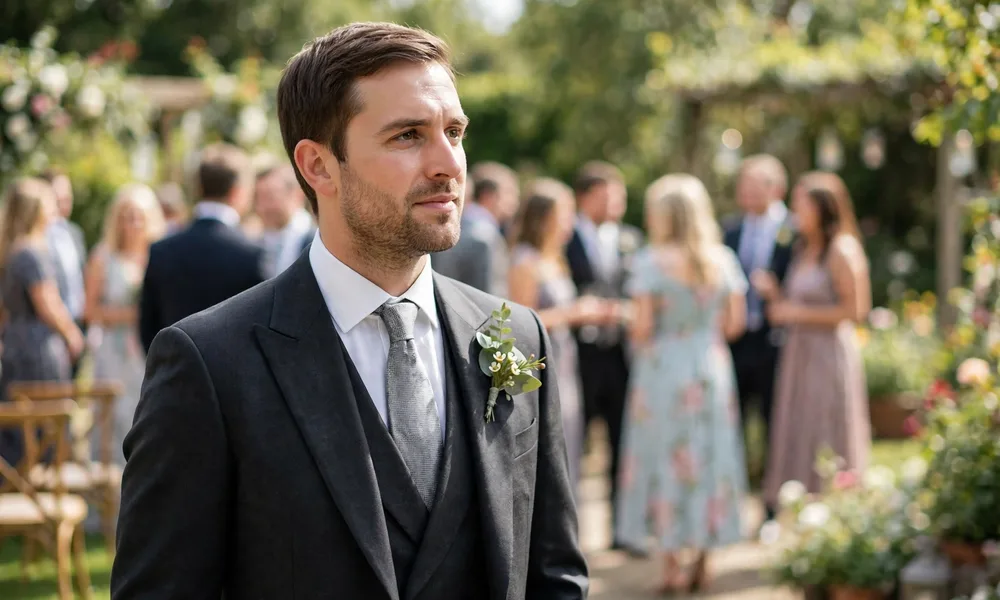
A wedding tie has two jobs: to look good in photographs that will be looked at for decades, and to survive a very long day. Satin silk in silver grey, pale champagne or dusty blue photographs beautifully against a morning suit or a dark suit, and it catches the light without looking flashy. If you are the groom, match the formality of the day rather than the bridesmaids: a tie that is one shade deeper than your shirt and in the same family as your suit will always look right.
Guests have more freedom, but the same principle applies: no novelty ties, loud patterns, or colours that fight your jacket. If the dress code is vague, a solid silk tie in burgundy or navy with a white or pale blue shirt is never wrong, and for a summer wedding a linen-blend tie in a soft tone looks right for the season.
Ties for work
At work, a tie should be the least interesting thing about your outfit, in the best sense. It should support the shirt and suit, not demand attention. That means solid colours, small dots, or a quiet stripe, in navy, burgundy, grey or deep green. A good dress shirt makes the tie’s job easier: a clean collar frames the knot, and a shirt that fits your neck means the knot sits where it should instead of being pulled sideways.
How to tie a tie that stays put
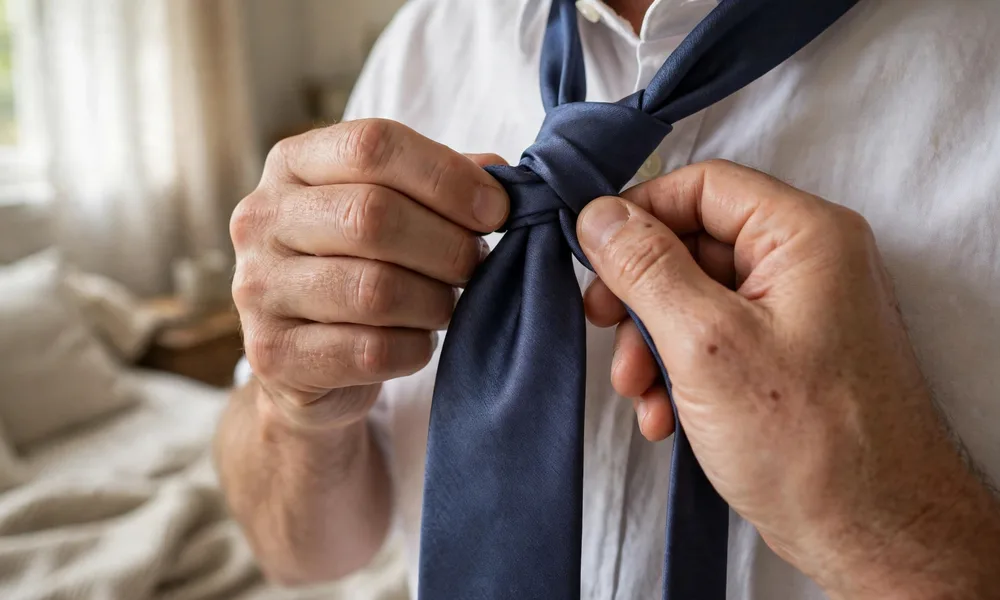
Start with the wide end longer than the narrow end, roughly a hand’s length longer. The four-in-hand knot is the one to learn first: it is slightly asymmetric, which suits most collars, and it uses less fabric, so it works well with thicker ties. Cross the wide end over the narrow, bring it behind, then across the front again, up through the neck loop, and down through the loop you have just made. Tighten by holding the knot and pulling the narrow end, then slide the knot up to your collar.
The half-Windsor is the knot for wide spread collars and formal nights: more symmetrical and slightly larger, it fills a wide collar properly. Whichever knot you choose, pinch the fabric just below the knot as you tighten for the small dimple that makes a tie look finished.
Colours and patterns that actually work
The safest tie colours are the ones that sit next to your suit rather than fighting it. Navy with grey or charcoal, burgundy with navy or grey, grey with navy or black, and deep green with brown or charcoal. If your shirt is patterned, your tie should be solid. If your shirt is solid, your tie can carry a pattern: small dots, a neat stripe, or a quiet geometric print. Two patterns can work together, but only when they are clearly different in scale, such as a fine-striped shirt with a boldly dotted tie.
What to avoid when buying a tie
The most common tie mistake is buying on price alone. A very cheap tie is usually made from stiff polyester that will not hold a knot, shines under light, and frays at the tip within months. You do not need to spend a fortune, but a tie in the middle of the price range, in silk or a silk blend, will outlast three cheap ones and look better every time you wear it.
Caring for your ties
A tie lasts longest when it is untied properly. Reverse the knot step by step instead of pulling the narrow end through, which stretches the fabric and wears the lining. Roll the tie loosely for storage rather than hanging it, which can stretch the tip over time. If a tie gets creased, hang it in a steamy bathroom rather than ironing it directly, which can flatten the fabric and leave a shine. And keep ties away from food and drink at formal events: a stain on silk is hard to remove, and a tie bar cannot hide it.
Before you buy: a quick checklist
- Check the width against your lapels: the tie blade should be close to the lapel width.
- Check the length: the tip should reach your belt buckle when the knot is tied.
- Feel the fabric: it should have weight and spring back from a gentle squeeze.
- Tie a test knot in the shop if you can: it should form cleanly and stay put.
- Hold it against your suit and shirt: the tie should be one shade deeper than the shirt.
- Check the back: a keeper loop and a neat slip stitch are signs of a well-made tie.
Frequently asked questions
What is the best tie colour for a wedding?
A solid tie one shade deeper than your shirt. Silver grey, burgundy and navy all photograph well and suit most suits.
How wide should a tie be in 2026?
For most men, a blade between seven and eight centimetres wide suits a standard lapel. Slimmer lapels call for a tie closer to six centimetres. The tie width should be close to the lapel width, not dramatically wider or narrower.
Is a knit tie formal enough for a wedding?
Yes, for a relaxed or outdoor wedding: a knit silk tie in a solid colour looks smart without being stiff. For a very formal wedding, choose smooth silk.
What knot should I use for a job interview?
The four-in-hand: neat, slightly asymmetric, and suited to most collars. Use a half-Windsor only if your shirt has a wide spread collar.
Can I wear a tie with a patterned shirt?
Yes, but keep the tie solid. A patterned shirt with a patterned tie is hard to get right, while a solid tie works with almost any shirt. If both are patterned, they need to be clearly different in scale.
How many ties do I actually need?
Three: a solid navy, a solid burgundy, and one subtle pattern. Add a knit tie for relaxed occasions and a linen-blend tie for summer.
The bottom line
The best ties in 2026 are not the most expensive or the most fashionable. They are the ones that knot cleanly, hang straight, and work with the suits and shirts you already own. Start with a solid navy silk tie, add burgundy, and choose the fabric and width for the occasion in front of you. A tie is a small thing, but on the days that matter, it is the detail people remember. Choose it well, tie it properly, and then forget about it and enjoy the day. For the rest of the outfit, the right shoes matter just as much: a good pair of loafers and a well-chosen watch complete a formal look without stealing attention from it.