
An eyebrow tint does something no pencil, powder or pomade can do: it changes the colour of the brow hairs themselves. Instead of drawing colour on top of the skin, a tint dyes the fine hairs, so the brow looks fuller and more defined even when your face is completely bare. The colour lasts for days, through washing, swimming and sleep, and it fades gradually rather than smudging off by lunchtime. That is why tinting has become the quiet favourite of people who want to wake up with brows already done, and why it is the first treatment many salons suggest when the brows are fair, sparse or washed out by the sun. When it works, nobody can tell anything has been done at all. The brows simply look like yours, only better, with every fine hair visible and the shape suddenly clear.
This comparison puts the best eyebrow tints of 2026 head to head against the worst, judging each one the way you would actually live with it: tinting fair brows at home on a Sunday evening, having a professional tint done before a holiday, wearing the tint through a week of workouts and showers, and checking it in daylight after the colour has settled. We look at how evenly the dye takes to the hairs, whether the shade reads true or turns warm and brassy, how long the colour genuinely lasts, whether the skin underneath stains, and whether the finished brow looks natural and full or flat and obviously dyed. A great eyebrow tint disappears into the brow. A bad one announces itself every time you look in the mirror.
Key Takeaways
- An eyebrow tint dyes the brow hairs themselves, which is why the best ones make fair or sparse brows look fuller for weeks without any daily makeup.
- The best eyebrow tints of 2026 take evenly, stay true to shade, and fade gradually over two to four weeks instead of washing out in days.
- Tint suits fair, grey or sparse brows best, because it darkens the fine hairs that pencils and powders can only paint over.
- A patch test and a shade one step lighter than you think you need are what stop a tint from going too dark or irritating the skin.
- Tint only colours the hairs, so our comparison of the best and worst eyebrow pencils of 2026 is where to look when the brows also need shaping and definition drawn in.
How We Judged the Eyebrow Tints
We judged every eyebrow tint on five things that matter when you actually live with it rather than when you read the box. First, the take: whether the dye colours every hair evenly, including the fine pale ones at the front and tail, or leaves patchy gaps that make the brow look worse than before. Second, the shade: whether the colour reads the same on the brow as it does on the chart, or turns warm, orange or grey once it meets real hair and daylight. Third, the wear: whether the colour is still there after two weeks of washing and sun, or has faded to nothing within days. Fourth, the skin: whether the dye stays on the hairs and leaves the skin clean, or stains the skin underneath in a dark block that takes days to fade. Fifth, the finish: whether the brow looks naturally full and soft, or flat, heavy and obviously dyed.
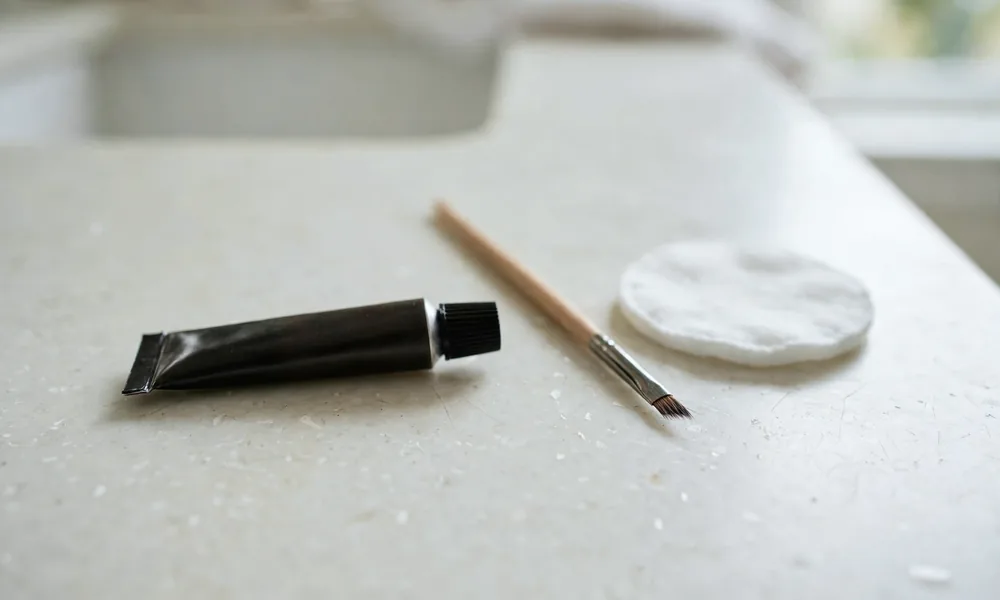
What the Best Eyebrow Tints Do Differently
The best eyebrow tints take evenly, and that is harder than it sounds. Brow hairs are not all the same: the hairs at the front are fine and pale, the hairs at the arch are coarser, and the hairs at the tail are often the fairest of all. A good tint colours all of them to the same depth, so the brow reads as one continuous shape rather than a dark middle with pale ends. That even take comes from a formula that stays wet long enough to work, instead of drying on the surface within a minute, and from a consistency that coats each hair instead of pooling on the skin. When the tint is wiped away, the whole brow should look present, front to tail, with no gaps left to fill in with a pencil.
The second thing the best tints do is stay honest about shade. A good tint is usually a touch cooler in the tube than it looks, because dye warms slightly on the hair, and the best formulas allow for that. A good ash brown stays ash brown on the brow instead of warming up to ginger in sunlight. A good soft black stays soft black instead of turning blue-grey by the second week. The result is a brow that matches the hair on your head, not the hair on the chart, and that still matches a fortnight later. Shade honesty matters more with tint than with any other brow product, because a pencil can be wiped off in seconds while a tint stays for weeks.

Where the Worst Eyebrow Tints Go Wrong
The worst eyebrow tints announce themselves the moment the dye comes off. The most common failure is patchiness: a tint so thin or so fast-drying that it colours some hairs and misses others, leaving a brow that is dark in the middle, pale at the front and almost bare at the tail. It is worst on fair brows, where the missed hairs were the whole reason for tinting, and worst on brows with a mix of coarse and fine hair, where the dye grips one type and slides off the other. A patchy tint cannot be fixed by leaving it on longer, because the hairs that took the dye only get darker while the ones that missed it stay pale.
The second failure is shade drift. Some tints look like a perfect cool brown in the tube and then turn warm, orange or even green on the brow, because the dye oxidises badly or because the formula leans red underneath its brown surface. The effect is obvious in daylight within a day, and it gets worse as the tint fades, because the warm undertone is the last thing to go. Warm drift is the single biggest reason people swear off tinting after one try, and it is almost always the fault of the tint, not the person wearing it. A tint that turns orange has failed at its one job.
Irritation is the fourth failure, and it is the one that matters most, because it is about your skin, not your appearance. A tint that stings, itches or leaves the brow area red and sore has failed the most basic test of all, and no amount of colour payoff excuses it. Tinting sits close to the eyes, on thin skin, which is why the patch test exists and why it should never be skipped. A good tint feels like nothing at all once it is on, and a bad one burns from the first minute. If a tint hurts, wipe it off, wash the area well, and do not try it again.
How to Get the Best Out of Brow Tint
Start with a patch test, every time, even with a tint you have used before. Put a tiny amount behind your ear or on the inside of your arm a day before tinting, and check that the skin stays calm, with no redness, itching or bumps. This matters most of all with tint, because the dye sits close to your eyes and stays on the skin for minutes at a time. A tint that fails the patch test will not get better on your face, so do not skip this step, however keen you are to get started.
Choose a shade one step lighter than you think you need. Tint always looks darker when it is wet, and it looks darker again on the first day, before it settles and the skin stain fades. A light brown on dark blonde hair usually gives a soft, natural result, while a dark brown on the same hair can look almost black until it fades. Start light, live with it for a week, and go darker next time if the brow still looks too pale. It is far easier to tint again than to undo a tint that went too dark.
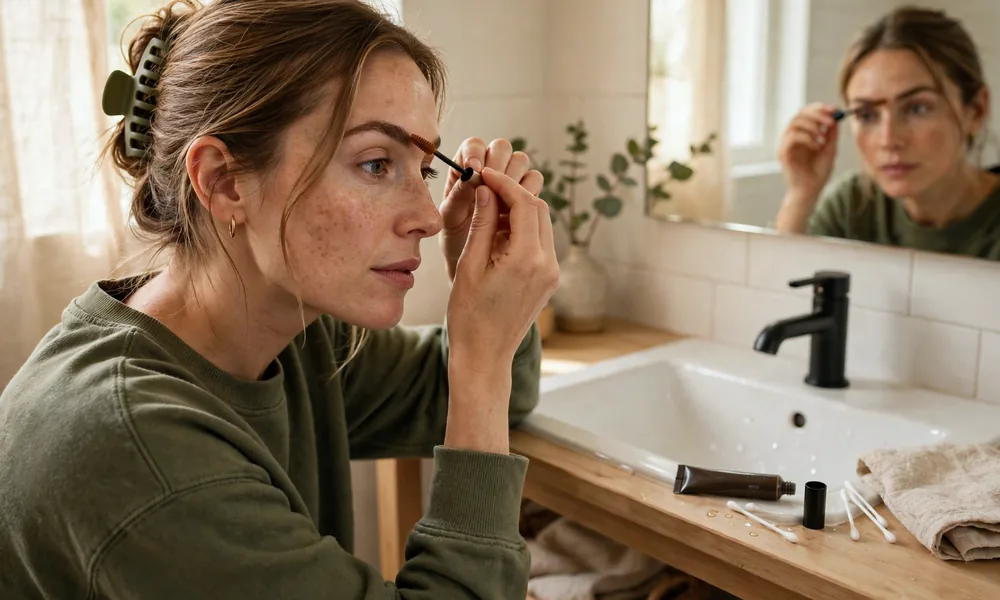
Tint, Pencil, Powder or Gel: Which One Is Right for You
Tint is the right choice when the brows are fair, grey or sparse, and the problem is that the hairs themselves are invisible. If the shape is already there but the hairs disappear in photographs, or the brows look washed out without makeup, tint brings the hairs back into view and keeps them there for weeks. It is the best choice for holidays, swimming and anyone who wants to wake up with brows already done. Anyone who is tired of filling in the same brows every morning should start with tint.
Pencil is the better choice when the brow needs shaping as well as colour. A pencil draws the tail, lifts the arch and fills the gaps where no hairs grow at all, which no tint can do, because tint only colours the hairs that are already there. Many people use both, tint for the base colour and pencil for the shape, and that combination gives fullness and definition together. Our comparison of the best and worst eyebrow powders of 2026 covers the softer end of the range, for days when a gentle fill is all the brow needs.
Powder and gel are the better choices when the tint is already doing its job and only a little help is needed on top. Powder softens the edges of a fresh tint and fills any gaps the dye missed, and gel sets the tinted hairs in place without adding colour of its own. Both are more forgiving than tint, and both are kinder to beginners. Our comparison of the best and worst eyebrow gels of 2026 shows which gels hold tinted brows without flaking or stiffening, and a light layer of gel over a fresh tint can make the result last even longer.
The Verdict
The best eyebrow tints of 2026 are the ones you forget you had done. They colour every hair evenly, stay true to shade, leave the skin clean and fade so gradually that the brow never looks half done. They ask for a patch test, a lighter shade than you expect and a careful eye on the clock, and in return they give the most effortless brow of any product on the shelf, one that is there when you wake up and still there after a swim. The worst tints do the opposite in every way: they patch, they turn orange, they stain the skin and they fade in days.
If you tint once this year, choose a gentle formula in a shade one step lighter than your hair, patch test it the day before, and time it at the short end on your first try. Keep the dye on the hairs and off the skin, brush through with a spoolie when it is done, and let the tint do the rest. A good eyebrow tint does not change your face. It simply lets the brows you already have be seen, every day, without a pencil in sight.


