A floor lamp is the easiest lighting change a room can have, and the one people get wrong most often. It needs no wiring and no electrician, yet it decides whether a living room feels warm and finished in the evening or cold and half-lit. A good one throws a soft pool of light exactly where you sit, stands steady when the dog barges past, and looks like it has always belonged there. A bad one glares, wobbles, leans a little more, and ends up switched off for good.
Floor lamps have changed a lot in recent years. The best ones now come with warm dimmable bulbs, heavy bases that refuse to tip, and shades that spread light evenly instead of throwing a hard cone at the ceiling. The worst ones look the same in a catalogue photo and fall apart in real life: thin poles that bend, shades that yellow, and switches that stop working after a few months of evening use.
This head-to-head comparison puts the two sides against each other properly. On one side, the floor lamps that light a room beautifully, stay upright, and last for years. On the other, the ones that topple, glare, buzz, or lean. By the end, you will know which kind belongs beside your sofa and which kind should never have come home in the first place.
Key Takeaways
- Warm light between 2700K and 3000K makes a living room feel cosy; cool white light above 4000K belongs in a workspace.
- An arc lamp is the best choice for light over a sofa, while a slim reading lamp works best beside an armchair.
- A heavy, wide base is the single most important safety feature, especially in homes with children or pets.
- Cheap thin-poled lamps bend, lean, and topple, and their shades yellow within a year.
- A dimmer turns one lamp into three: bright for reading, low for films, and barely there for late evenings.
What Makes a Great Floor Lamp
A great floor lamp is judged by four things: the quality of its light, its height and reach, its stability, and how it looks in the room. Light quality comes first, because a lamp that throws harsh, glaring light will sit switched off no matter how beautiful it is. Look for a warm colour temperature, a shade that diffuses the light, and enough brightness to read by, roughly 800 lumens for a reading spot and 1,100 or more for lighting a whole corner.
Height and reach matter just as much. The shade should sit at about eye level when you are seated. An arc lamp should reach far enough over the sofa that the light lands on the cushions, not on the floor in front of them. A lamp that is too tall throws its light over your head, while one that is too short lights your knees and leaves your book in shadow.
Stability is the part buyers overlook until the lamp is on the floor. A tall lamp is a lever, and a light base is an invitation to fall. The best lamps have a wide, heavy base, often weighted with stone or steel, that keeps the lamp upright when it is bumped by a vacuum cleaner, a child, or a dog. Build quality shows in the details too: a pole that does not flex when you nudge it, a shade that stays level, and a switch that still clicks cleanly after years of use.
The Best Side: Lamps That Make a Room Feel Finished
The best floor lamps share one quality: you stop thinking about them. The light is where it should be, the lamp stands where you put it, and it does its job for years. Three kinds stand out in 2026, each suited to a different corner of the home.
Arc Lamps Done Right
A good arc lamp is the closest thing to a pendant light you can have without drilling into the ceiling. Its long curved arm reaches over the sofa and hangs a generous shade above the seating, throwing a wide, even pool of warm light down onto the cushions. The best models have a heavy marble or steel base, a shade at least sixteen inches across, and a dimmer on the pole, so the same lamp can be bright for reading and low for a film.
Arc lamps need space to work. They suit rooms with a sofa set away from the wall and a ceiling high enough that the curve clears your head when you stand up. In a small flat with low ceilings, the same lamp can feel like an obstacle course. Measured before buying, and placed with care, a good arc lamp turns the sofa into the best seat in the house.

Reading Lamps
The reading lamp is the most useful floor lamp there is, and the best all-round choice for most living rooms. It stands beside an armchair, slim and unobtrusive, with an adjustable head that aims the light down onto the page. The best ones have a solid metal arm that holds its position, a shade that directs light without leaking it sideways, and a dimmer you can work without getting up.
A good reading lamp earns its place every evening. It lets one person read in comfort while the rest of the room stays dim, and it doubles as a gentle light for late-night conversation. Look for a model with a standard bulb socket, because you can change the bulb when it fails or when you want a warmer glow, and check that the base is heavy enough that the lamp does not tip when you brush past it in the dark.
Torchiere Lamps
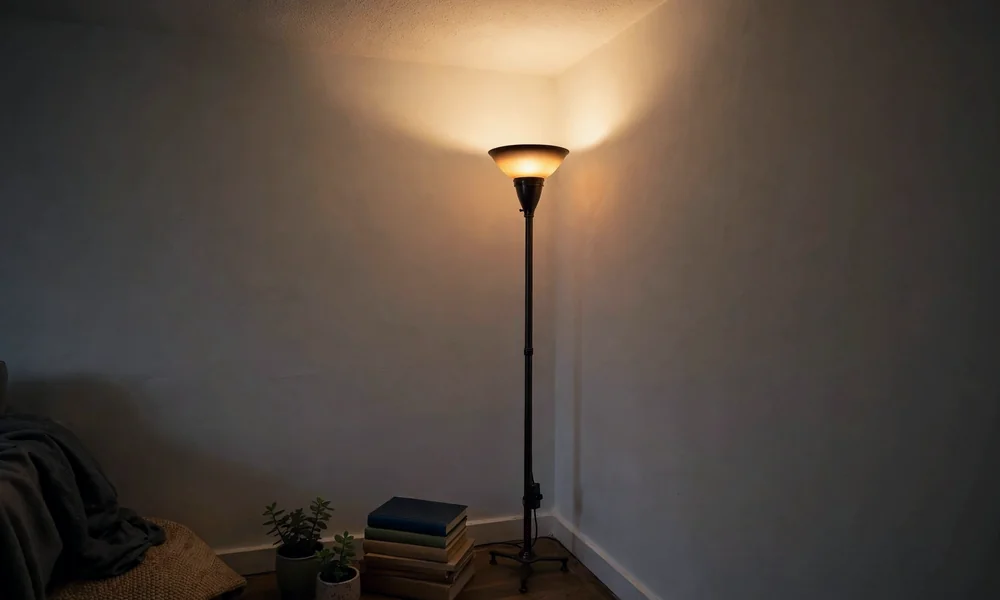
A torchiere is the quiet workhorse of the floor-lamp world. It points its light upward, bouncing it off the ceiling to fill a whole room with a soft, even glow that has no harsh shadows and no glare. The best torchieres have a heavy base, a glass or metal bowl that spreads the light wide, and a dimmer, because full brightness can be too much for a small room in the evening.
Torchiere lamps are the pick for dark corners, rooms with no ceiling light, and anyone who hates the feeling of a bare bulb in the room. They are also the safest choice in a home with small children, because there is no exposed bulb at eye level to stare into. A well-made torchiere makes a room feel taller and brighter.
The Worst Side: Lamps That Ruin the Room
The worst floor lamps are not merely disappointing. They make a room actively worse to sit in, and they do it slowly, so you adjust to the glare and the lean instead of fixing it. Three kinds dominate the worst side, and they are all still easy to buy.
Cheap Thin-Poled Lamps
The most common bad floor lamp is the cheapest one on the shelf: a thin metal pole, a light plastic base, and a flimsy shade. It feels light in the hand, and that lightness is the warning. Within months, the pole starts to bend, the shade sits at a tilt, and the whole lamp leans a little further every time it is knocked.
These lamps are also a safety problem. A light base on a tall pole topples easily, and a falling lamp can smash a shade, scorch a carpet, or hurt a child. The wiring is often just as cheap as the pole, with a switch that crackles and a cable that frays where it meets the base. They are the lamps that make people blame their room, when the lamp was never fit for the room in the first place.
Top-Heavy Statement Lamps
The second worst kind is not cheap at all. It is the tall, dramatic statement lamp bought for looks alone: a huge shade on a slim stem, a base barely wide enough to hold it, and a centre of gravity that belongs in a museum, not a living room. It looks wonderful in a photograph and terrifying in a home with a dog, a toddler, or anyone who walks past it in socks.
These lamps fall, and they fall hard. A heavy shade dropping from five feet can break a table, crack a tile, or worse. Even when they stay upright, they wobble every time the floor vibrates, and the shade slowly works itself loose on its fitting. A floor lamp should be judged by its base first and its looks second, and any lamp that fails the base test is a bad buy at any price.
Glare Machines
The third worst kind is the lamp with no shade worth the name: a bare bulb on a pole, a thin paper shade that lets the bulb show through, or a metal shade with the bulb hanging below its rim. It throws hard, direct light into the eyes of anyone sitting nearby, and it turns the rest of the room into a cave by comparison. Reading under it is miserable, watching television near it is worse, and conversation feels like an interrogation.
These lamps fail at the one job a floor lamp has. A lamp should make light comfortable, and a bare bulb does the opposite, creating sharp shadows and sore eyes. If you can see the bulb itself from your seat, the lamp is wrong for the room, whatever it cost and however stylish it looked in the shop.

The Verdict
The best floor lamps win on every measure that matters. A good arc lamp, a solid reading lamp, or a well-made torchiere gives warm, even light, stands steady for years, and makes the room feel finished the moment you switch it on. The worst lamps lose on all the same measures: they glare, they lean, they topple, and they fade within months.
The gap between the two sides is small in money and large in daily life. A good floor lamp costs a little more than a bad one, and it repays that difference every single evening. A bad lamp costs you comfort, safety, and patience, and it keeps charging that price for as long as it stays in the corner. If your lamp leans, glares, or wobbles when you walk past, it is the first thing to change.
Who Each Is For
The best arc lamps are for living rooms with a sofa set away from the wall and anyone who wants a warm pool of light over the seating. The best reading lamps are for armchair readers and small rooms, where a slim, steady lamp does the work of three. Torchiere lamps are for dark corners and rooms with no ceiling light, and for homes with children where a bare bulb is a bad idea. A good lamp in any of these kinds will serve for years with nothing more than an occasional new bulb.
The worst lamps are for nobody, but they still end up in living rooms everywhere, usually because they were cheap, bundled with furniture, or bought for looks alone. If you recognise your lamp in the worst side of this comparison, do not wait for it to fall. A good floor lamp is one of the cheapest upgrades a room can have, and it is the one you will notice every evening. For more living-room picks judged the same way, see our guide to the best floor lamps of 2026, our round-up of the best sofas for real living rooms, and our look at the best curtains for any room.