A garlic press is the most argued-over tool in the kitchen, and the argument never quite settles because both sides are right. Chefs say it is a waste of drawer space, and home cooks say it is the difference between cooking with garlic and skipping it on a busy night. A good press turns a clove into fine, even garlic in two seconds, with no peeling, no sticky fingers, and no board to wash. A bad one traps half the clove, jams on the skin, leaves a sour, bitter smear in the pan, and takes longer to clean than mincing by hand ever would.
The gap between the best garlic presses of 2026 and the worst is wider than the price tags suggest, and it shows up in four places: the chamber, the holes, the hinge, and the clean-up. A great press has a deep chamber that holds a whole fat clove, holes fine enough to make a smooth paste, and a hinge strong enough to crush an unpeeled clove without flexing. A bad one has a shallow chamber that only takes half a clove, holes so coarse the garlic comes out in lumps, and a hinge that bends the first time you meet a firm clove. This comparison puts them head to head the way you would actually use them: pressing garlic for a weeknight pasta, a stir-fry, and a roast, then washing up afterwards.
Key Takeaways
- A good garlic press has a deep chamber, fine holes, and a hinge that does not flex under pressure; those three things matter more than brand or price.
- Pressed garlic tastes stronger and slightly sweeter than minced garlic, because crushing breaks more cell walls and releases more flavour compounds.
- The worst presses trap half the clove in the chamber, jam on the skin, and leave you scraping garlic out with a knife.
- A press that cannot be cleaned in under a minute will spend its life in the drawer, however well it crushes.
- The same honest approach sits behind our guide to the garlic presses worth the drawer space in 2026, which looks at the same tools from the buying side.
How We Judged the Garlic Presses
We judged every press on five things that matter at the stove rather than on the box. First, crushing: whether a whole clove, skin on or off, goes through in one firm squeeze, and how much garlic is left stuck in the chamber afterwards. Second, texture: whether the garlic comes out as a fine, even paste or as coarse lumps that burn in the pan. Third, strength: whether the hinge and handles flex, creak, or bend when you press a firm clove. Fourth, cleaning: how long it takes to get the press properly clean, and whether the holes clog with dried garlic. Fifth, comfort: whether the handles suit small hands as well as large ones, and whether the press is stable enough to use one-handed over a hot pan.
The Best Garlic Presses of 2026
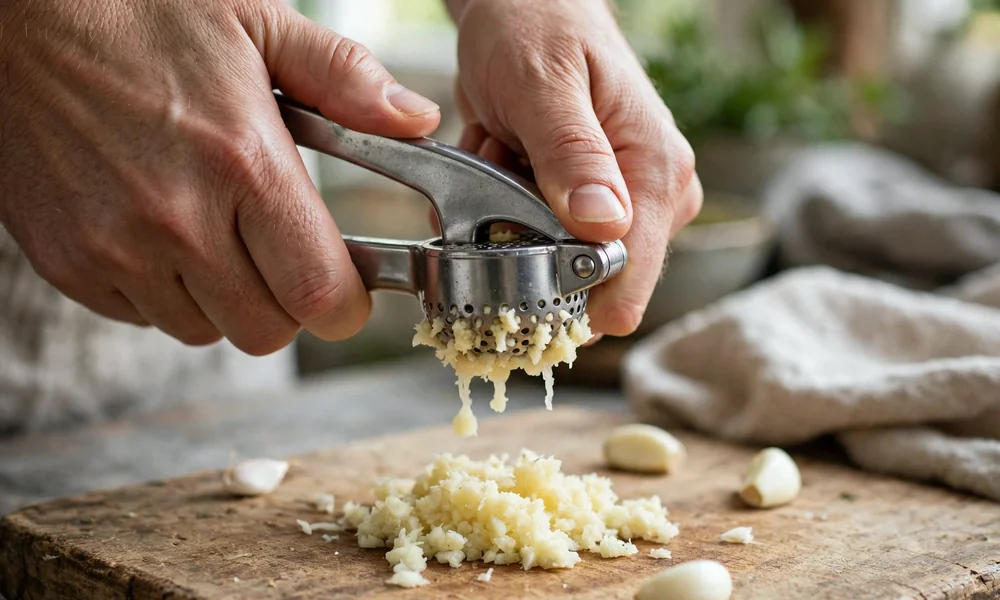
The best presses share one quality: they make the job disappear. You put a clove in, squeeze once, and a fine, even paste lands in the pan, with almost nothing left behind. The chamber is deep enough for a fat clove without trimming it first, and the holes are small and evenly spaced, so the garlic comes out smooth rather than stringy. The handles are long enough to give real leverage, so the squeeze feels easy even for smaller hands, and the hinge is pinned properly, with no wobble and no sideways play.
What sets the best apart is what happens after the squeeze. The plunger lifts cleanly away from the chamber, and the little bit of garlic left behind rinses off under the tap in seconds. The best presses are made from solid stainless steel, not plated zinc, so they do not flake, pit, or go dull in the dishwasher. Some have a built-in cleaning pin that pushes the leftover skin out of the holes, and a few come with a small scraper for the chamber. These are small touches, but they are the difference between a press you reach for every night and one you stop using after a week.
The Worst Garlic Presses of 2026
The worst presses fail in the same few ways, and the first sign is the chamber. A shallow chamber only holds half a clove, so you have to cut every clove in half before you start, which defeats the whole point of the tool. A chamber with holes that are too large lets the garlic through in coarse strands that burn in hot oil, while a chamber with holes that are too small clogs after one clove and needs a toothpick to clear. Either way, you end up with less garlic in the pan than you started with, and more of it stuck to the tool.
Then there is the hinge, which is where cheap presses give themselves away. A weak hinge flexes the moment you meet a firm clove, so half your effort goes into bending the metal instead of crushing the garlic. On the worst presses the hinge pin works loose within weeks, and the handles start to wobble sideways, which makes the press feel unsafe over a hot pan. Plastic handles are the other warning sign: they look comfortable in the shop, but they crack where they meet the metal, and once a handle cracks, the press is finished.
The worst offence, though, is cleaning. Some presses have chambers that do not come apart, holes that cannot be reached with a brush, and corners that hold dried garlic for days. A press that takes five minutes to clean will not be used, however well it crushes, and a dirty press is worse than no press at all, because old garlic turns bitter and taints everything it touches. If you cannot rinse it clean in under a minute, it does not belong in your drawer.
Pressed Garlic vs Minced Garlic
Pressed garlic and minced garlic do not taste the same, and the difference is real chemistry rather than snobbery. Crushing a clove breaks more cell walls than chopping it, which releases more of the compounds that give garlic its pungency. Pressed garlic tastes stronger, slightly sweeter, and a little more rounded, which is why it works so well in sauces, dressings, and marinades, where the garlic needs to melt into the dish. Minced garlic keeps more of its bite and its texture, which suits a stir-fry or a roast, where you want to see and taste distinct pieces.
The practical difference is timing. Pressed garlic burns faster than minced garlic, because the fine paste has more surface area exposed to hot oil. If you are pressing garlic into a hot pan, add it last, keep the heat moderate, and give it thirty seconds, not two minutes. Burnt garlic turns bitter in seconds, and there is no saving a dish once it has happened. The same care with a blade matters across the kitchen, which is why our comparison of the best and worst knives of 2026 looks at the edge that minces garlic when a press is not the right tool.
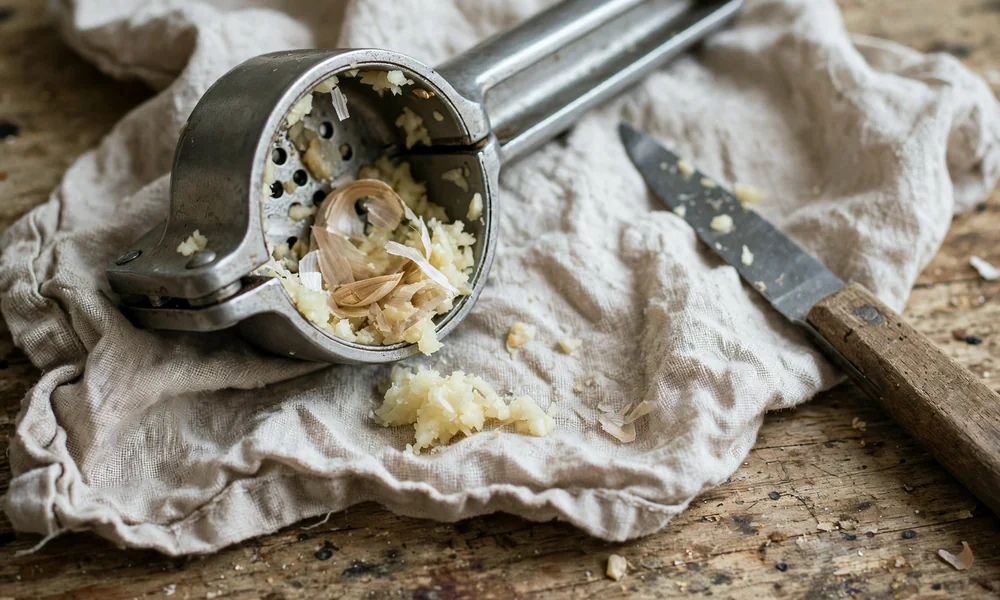
There is also the question of peeling. A good press handles an unpeeled clove without complaint, and the skin stays behind in the chamber to be lifted out in one piece. A weak press jams on the skin and needs the clove peeled first, which costs you the very time the press was meant to save. Try any press with an unpeeled clove before you decide: if it crushes cleanly and the skin lifts out whole, the chamber and the hinge are doing their job.
Cleaning and Caring for Your Press
A garlic press lives or dies by how easy it is to clean, so treat the first wash as part of the test. Rinse it straight after use, while the garlic is still wet, and most of it will come off under the tap. Leave it until after dinner and the garlic dries into the holes like cement, and no amount of soaking will shift it quickly. A quick rinse, a flick with the cleaning pin or an old toothbrush, and the press is done.
Dishwasher-safe does not always mean dishwasher-proof. Solid stainless steel presses come out of the dishwasher unchanged, year after year. Plated presses lose their shine, then their coating, and then they start to rust around the hinge, which is the one place you cannot scrub properly. If the press is not solid steel, wash it by hand and dry it straight away, and keep it out of the dishwasher altogether.
Storage matters more than it should. A press rattling around in a crowded drawer gets its hinge knocked loose and its holes dented, so give it a fixed spot, ideally hanging on a hook or sitting in a utensil pot. A spare cleaning pin is worth keeping with it, because the day you lose the pin is the day the holes start clogging. Look after the press, and the best ones last a decade; neglect it, and even a good one turns into a drawer ornament.

How Much Should You Spend?
A good garlic press costs less than a takeaway dinner, and spending more rarely buys a better press. The sweet spot is a solid stainless steel lever press with a deep chamber and a proper hinge, which you will find for the price of a couple of coffees. Cheaper presses cut corners on the hinge and the metal, and they fail within months. More expensive presses add nicer handles and a cleaning pin, which are pleasant but not essential.
The one reason to spend more is if you cook with garlic every day. A heavy, well-made press with a long handle is kinder on your hands over years of use, and a rocker press is worth considering if you hate cleaning. For everyone else, a mid-priced steel press is the right buy. Big batches are the exception: if you are pressing a whole bulb for a crowd, a press is the wrong tool altogether, and our comparison of the best and worst food processors of 2026 covers the machines that handle bulk prep without wearing your hands out.
Buy the press that fits your cooking, not the one with the most features on the box. Check the chamber depth with a fat clove, squeeze it with an unpeeled clove, and rinse it under the tap before you decide. A press is a simple tool, and the simple ones, made well, are the ones that last.
The Verdict
The best garlic presses of 2026 are the ones that respect the simplicity of the job: a deep chamber, fine holes, a hinge that does not flex, and a clean-up that takes seconds. The worst are shallow, coarse, flimsy, and hard to clean, and they turn a two-second job into a fiddly chore that leaves half the garlic stuck to the tool. Buy the press with the sturdiest hinge, the finest holes, and the chamber that fits a whole clove, rinse it straight after use, and add pressed garlic to the pan last so it never burns. A good garlic press does not need gadgets or gimmicks to earn its place in the drawer; it only needs solid steel, a proper hinge, and just enough patience to rinse it clean.