How to Choose Cold Brew Coffee That Actually Tastes Smooth in 2026
Cold brew coffee earns its fans the same way every time: one sip of a genuinely smooth cup, and hot coffee suddenly feels like hard work. The best cold brew coffee in 2026 is sweet without sugar, strong without bitterness, and gentler on the stomach than iced coffee poured over cubes. But not every bottle is the same drink: some are thin and sour, some concentrates dilute badly, and some home batches turn out cloudy and dull. Choosing well is mostly knowing what to look for before you buy or brew.
This guide is about the drink, not the equipment: the three ways cold brew reaches your glass, how roast and origin change the flavour, what sweetness and acidity mean on a label, and how to serve it well. For the hardware, our guide to the best cold brew coffee makers compares the pitchers and brewers.
Key Takeaways
- The best cold brew coffee tastes naturally sweet and chocolatey, with low acidity and no sharp or sour edge.
- Ready-to-drink bottles suit busy mornings, concentrates suit daily drinkers, and brewing at home is cheapest.
- A medium roast from Brazil or Colombia is the safest starting point; light roasts taste brighter and more acidic.
- Check the label for a 12 to 24 hour brew time and a short ingredient list: coffee and water, ideally nothing else.
- Serve over plenty of ice; dilute concentrate one to one with water or milk, then adjust to taste.
What Cold Brew Coffee Actually Is
Cold brew coffee is coffee steeped in cold or room-temperature water for 12 to 24 hours instead of being brewed with heat. The slow, cold extraction pulls out the sweet, chocolatey compounds first and leaves much of the acid and bitter oils behind. The result can be twice as strong as hot coffee yet tastes smoother and less aggressive. It is not iced coffee, which is hot coffee chilled or poured over ice: faster to brew, brighter, and often bitter as it cools.
That difference is also why cold brew keeps so well: a sealed bottle stays fresh in the fridge for up to two weeks, while iced coffee goes stale within a day. It is why cafes charge more: brewing takes a full day and twice as much coffee per cup.
Bottled, Concentrate, or Brew It Yourself?
Almost every cold brew falls into one of three forms, each suiting a different drinker. The right choice depends on how often you drink it, how much control you want over strength, and whether you would rather pay for convenience or for coffee.
Ready-to-Drink Bottles
A ready-to-drink bottle is cold brew already diluted to drinking strength: open it, pour it over ice, and you are done. It is the simplest option, best for busy mornings, office fridges, and first-timers. The trade-off is price: several times more per cup than brewing at home, plus the bottle takes up fridge space. Look for a brew time on the label and a short ingredient list. A good bottle tastes smooth on its own, no sugar needed. Avoid bottles that are mostly milk or sweetener with a little coffee added.

Cold Brew Concentrate
Concentrate is cold brew at double or triple strength, sold in a smaller bottle you dilute yourself, usually one part concentrate to one part water or milk. It is the best value of the shop-bought options, since one bottle makes many drinks and keeps for two weeks once opened. It also gives you control: dilute lightly for a strong morning cup, or stretch it with milk for a softer one. The risk is the ratio: undiluted concentrate tastes harsh and carries far more caffeine than you expect, so measure until it becomes habit. Concentrate suits households where two or more people drink cold brew daily.
Brewing at Home
Brewing at home is the cheapest way to drink good cold brew, and the most satisfying once the routine clicks. You need coarse-ground coffee, cold filtered water, a jar, and time. Use about one part coffee to four parts water for a concentrate, or one to eight for drinking strength. Stir, cover, and leave it for 12 to 24 hours, then strain well. The cost per cup drops to a fraction of cafe prices, and you control the roast, strength, and sweetness. The only real cost is planning: start tonight’s brew for tomorrow. One batch keeps for two weeks, so a Sunday session can cover the working week.

Cold Brew Coffee at a Glance
| Form | Best for | Cost per cup | Effort | Keeps |
|---|---|---|---|---|
| Ready-to-drink bottle | Busy mornings | Highest | None | About a week |
| Concentrate | Daily drinkers | Medium | Low | Up to two weeks |
| Brewed at home | Best value, full control | Lowest | Medium | Up to two weeks |
| Cafe cold brew | A treat | Highest | None | Drink fresh |
Roast, Origin, and Flavour
Roast matters more in cold brew than in hot coffee, because the cold water is less forgiving of beans roasted too dark or too light. A medium roast is the safest starting point: it keeps the bean’s natural sweetness and chocolate notes with enough roast depth. Dark roasts often bring a smoky, ashy edge that cold brewing does not soften. Light roasts keep their bright, fruity character, but can taste sharp or sour if the steep runs short.
Origin shapes the flavour underneath the roast. Brazilian beans are the classic cold brew choice, low in acidity with a nutty, chocolatey sweetness that suits long steeping. Colombian beans add brightness and a caramel note, a good middle ground if Brazilian tastes too mellow. Ethiopian beans bring floral and berry notes, but need a full 18 to 24 hour steep to lose their sharp edge. A medium-roast Brazilian or Colombian single origin is the most reliable first bag. Our head-to-head on the best vs worst coffee explains how freshness and roast shape the cup across every brewing method.
Sweetness and Acidity: Reading the Taste
Sweetness in cold brew should come from the coffee itself, not added sugar. A good cold brew tastes naturally sweet because the long, cold steep extracts sugars and chocolatey compounds while leaving bitter acids behind. If a bottle needs two spoonfuls of sugar to be drinkable, the coffee is stale, under-steeped, or made from poor beans. Taste it black first, even if you normally take milk.
Acidity is the brightness you feel on the sides of your tongue. A little is good: it keeps the coffee lively and stops it tasting flat. Too much makes it taste sour, like under-ripe fruit. Cold brewing naturally lowers acidity, which is why sensitive stomachs often prefer it. Sour cold brew usually means a light roast, a steep shorter than 12 hours, or water that was too cold at the start. If it tastes flat and dull, the steep probably ran past 24 hours, or the grind was too fine and over-extracted the bitter compounds.
How to Serve Cold Brew Coffee
Serving sounds trivial, but it is where a good cold brew becomes a great one. Serve it properly cold, over plenty of ice, in a glass rather than a mug; big cubes melt slower and keep the drink strong to the last sip. Dilute concentrate before adding ice, one part concentrate to one part cold water for a standard cup, then adjust to taste. Milk instead of water makes a softer, creamier drink, and oat milk suits cold brew’s chocolate notes particularly well.
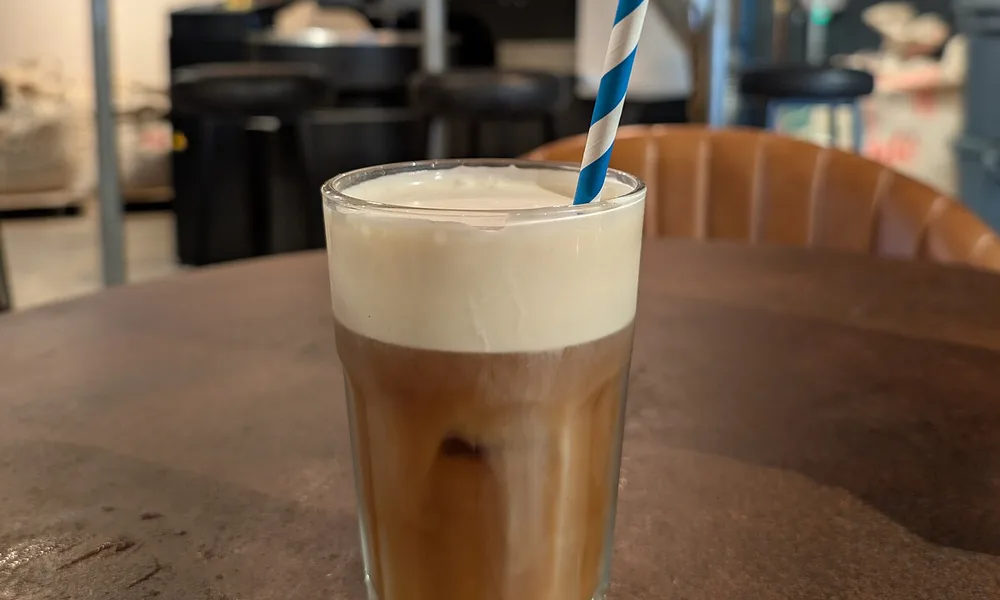
Flavoured cold brew is worth trying once you like the plain version. A splash of vanilla, a little maple syrup, or a pinch of cinnamon can lift the drink without hiding the coffee. Cold foam is easy to copy: shake cold milk and cream with a drop of vanilla in a jar until it thickens, then spoon it over the coffee. Keep additions light: a smooth cold brew needs very little help, and every sweetener pushes it further from the clean taste that makes it special.
A Simple Brew-at-Home Method
The home method is forgiving. Grind beans coarse, like raw sugar: fine grounds over-extract and leave the coffee bitter and cloudy. Combine one part coffee with four parts cold, filtered water in a large jar, stir gently so every ground is wet, then cover and leave it for 12 to 24 hours. Shorter steeps taste brighter, longer steeps richer, so 16 hours is a good first target.
When the time is up, strain slowly through a fine mesh sieve, then again through a paper filter or clean cloth for a really clear cup. The liquid is concentrate: dilute it one to one with cold water or milk and serve over ice. Store the rest sealed in the fridge, where it keeps for up to two weeks. The common beginner mistakes, grinding too fine, using too little coffee, rushing the steep, are all fixed by the next batch. For a change of pace on hot days, our guide to the best iced teas covers the best summer sipping alternatives.
Your Cold Brew Coffee Buying Checklist
- Choose your form first: a bottle for convenience, concentrate for daily drinking, or home brewing for value.
- Look for a 12 to 24 hour brew time on the label and a short ingredient list: coffee and water.
- Pick a medium roast, ideally Brazilian or Colombian, for the smoothest first cup.
- Taste it black before adding milk or sugar.
- Cold brew is often stronger than hot coffee, so start with a smaller glass.
- Store it sealed in the fridge and finish an opened bottle within two weeks.
Frequently Asked Questions
Is cold brew coffee stronger than regular coffee?
Yes, usually: it uses roughly twice as much coffee per cup as hot coffee, so undiluted concentrate can carry considerably more caffeine. Ready-to-drink bottles are diluted to normal strength, but check the label and start with a smaller serving if you are sensitive to caffeine.
How long does cold brew coffee last in the fridge?
Sealed cold brew keeps for up to two weeks in the fridge, and concentrate often lasts the full two weeks. Once opened, aim to finish a bottle within a week. If it smells sour or tastes sharp, it has turned and should be thrown away.
Can you heat up cold brew coffee?
You can, and it works better than most people expect: dilute the concentrate with hot water instead of cold for a smooth, low-acid hot coffee. Do not microwave or boil it: high heat brings back the bitterness cold brewing avoided.
Why does my homemade cold brew taste sour?
Sourness usually means the steep was too short, the roast too light, or the grind too fine. Try a medium roast, a full 16 to 24 hour steep, and a coarser grind. If it still tastes sour, switch to filtered water and try again.
Is cold brew coffee better for your stomach than hot coffee?
Many people find it gentler, because cold brewing extracts less acid than hot brewing. It is not acid-free, so a lot of it can still cause discomfort. If hot coffee bothers you, a small glass of well-diluted cold brew is worth trying.
What is the difference between cold brew and nitro cold brew?
Nitro cold brew is ordinary cold brew infused with nitrogen gas, usually served from a tap, giving it a creamy head and silky texture. The coffee underneath is the same. Nitro cans are best drunk fresh, and are the most expensive way to drink cold brew.
The Bottom Line
The best cold brew coffee in 2026 is the one that matches how you actually drink it: a ready-to-drink bottle for busy mornings, a concentrate for a household that drinks it daily, and home brewing for the cheapest route to a genuinely great cup. Whichever form you choose, look for a medium roast, a 12 to 24 hour brew, and a taste that is naturally sweet with no sour edge. Get those three right, and your glass will be smooth, strong, and worth the wait.