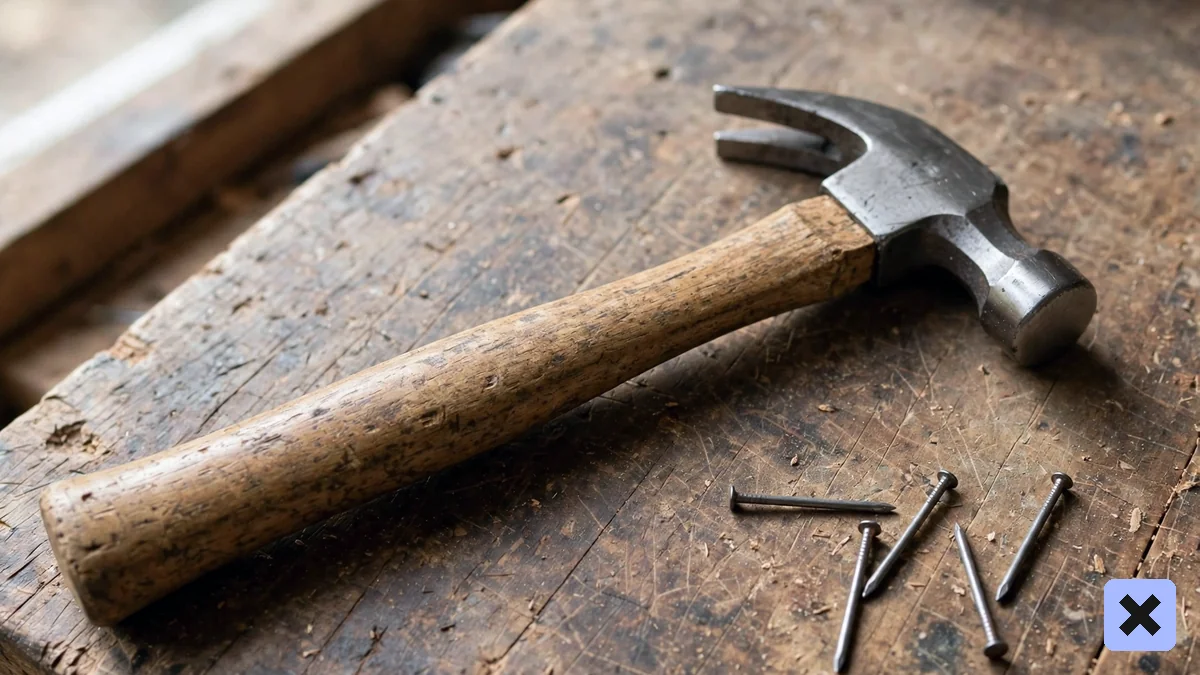
A hammer is the oldest tool in the house, and the one most people buy without thinking. It hangs a picture, knocks in a nail, pulls out a bent one, and taps flat-pack joints into place, and when it works well you barely notice it at all. When it works badly, the head slips off the nail, the handle vibrates in your hand, and every strike lands slightly wrong, bending nails and bruising thumbs. The difference between a good hammer and a bad one is rarely obvious in the shop, where both look solid and both promise a comfortable grip on the packaging.
The gap between the best and the worst hammers in 2026 is wider than the price tags suggest. Two hammers can share the same weight, the same claw shape, and the same glossy finish, yet one will still be driving nails cleanly in twenty years while the other has a loose head, a splintered handle, and a face that chips under use. The difference lives in the steel, the handle, the balance, and the way the head is fixed to the shaft, and it only shows up once you start using it for real work. This guide puts the two ends of the market side by side, across every type of hammer, so you can tell them apart before you spend anything.
Key Takeaways
- The best hammers drive nails straight, balance well in the hand, and keep their heads fixed for decades; the worst bend nails, vibrate, and work loose.
- Match the hammer to the job: a claw hammer for general work, a framing hammer for stud walls, a mallet for joints, and a ball-peen hammer for metal.
- Weight matters more than strength: a 16oz hammer suits most homes, while a 20oz hammer suits framing and heavy work.
- A hickory handle absorbs shock and can be replaced; a cheap handle splinters, and a loose head is dangerous.
- Check the face, the claw, and the grip before you buy, and retire a hammer the moment its head starts to move.
Pick the Right Type First
Before looking at any single hammer, decide what kind of work you will actually do. A curved claw hammer is the household standard: it drives nails, pulls them out, and levers apart joints, and a 16oz head covers most home jobs from hanging pictures to building shelves. A straight claw, or rip claw, hammer suits framing and demolition, where the straighter claw pries boards apart more easily. A framing hammer is heavier, usually 20oz or more, with a longer handle and a milled face that grips the nail head, and it is the right tool for stud walls and decking.
Other hammers suit narrower jobs. A ball-peen hammer, with a rounded peen on one side, shapes metal and sets rivets, and it belongs in a metalwork kit rather than a kitchen drawer. A rubber or wooden mallet taps joints together without marking the wood, which makes it the right choice for flat-pack furniture and chisels. A sledgehammer breaks concrete and drives fence posts, and it is far too heavy for anything else. If your projects also need holes drilled before the fixings go in, our guide to the best versus the worst drills in 2026 compares the drills worth buying across every type.

What Separates the Best From the Worst
The best hammers start with the head. A well-forged steel head has a face that is flat, smooth, and slightly bevelled at the edges, so it strikes the nail squarely instead of glancing off, and the claw is shaped to grip a nail firmly and lever it out without slipping. The head is fixed to the handle so tightly that it never moves, usually with a steel wedge driven into the top of the handle, and the whole tool balances at a point just below the head, so it swings naturally in your hand.
The worst hammers fail at the joint between head and handle first, and everywhere else soon after. The head is cast rather than forged, so the steel is brittle and the face can chip, throwing off sharp fragments. The claw is soft and bends when you lever a nail, or it is too thick to slide under a nail head at all. The handle may be loosely fitted, so the head wobbles with every swing, which is not just annoying but dangerous: a loose head can fly off mid-swing. The grip is often hard, shiny plastic that twists in a sweaty palm and vibrates with every strike.
Weight, Balance and the Swing
Weight decides what a hammer can do and how it feels to use. A 16oz claw hammer suits most homes: heavy enough to drive a nail in two or three strikes, light enough to use overhead without aching. A 20oz hammer drives larger nails faster and suits framing, but it tires your arm quickly on lighter work, and a 12oz hammer suits delicate jobs and smaller hands but struggles with anything bigger than a picture nail. The right weight is the one that lets you work all afternoon without strain.
Handles: Wood, Steel and Fibreglass
Hickory is the classic hammer handle, and for good reason. It absorbs shock, so your arm feels less vibration with every strike, and it gives a warm, natural grip that improves with use. A hickory handle can also be replaced when it breaks, which means a good head can last a lifetime on a series of handles. Look for straight, tight grain running along the length of the handle, with no knots or cracks, and a smooth finish that will not raise splinters.
Steel handles are the toughest option, usually forged in one piece with the head, so they can never work loose. The catch is vibration: steel passes every shock straight into your hand, so the best steel hammers have a thick rubber grip to absorb it. Fibreglass handles sit in between, lighter than steel and more weatherproof than wood, and they resist splitting if the hammer is left in a damp garage. Cheap handles fail in predictable ways: soft wood that splinters, thin plastic that cracks, and a grip that slides around when your hands are damp.

Claw Hammers in Detail
The claw hammer is the tool most homes need first, and the details decide whether it is a pleasure or a chore. The face should be smooth and flat, with a slight bevel so a glancing blow does not chip the edge, and a milled, or waffle, face grips the nail head but marks the wood, so it suits framing rather than finished work. The claw should be slim enough to slide under a nail head, curved enough to lever the nail out with control, and strong enough not to bend under load.
Framing, Ball-Peen and Mallets
A framing hammer is a specialist tool, and it earns its keep on stud walls, decking, and fencing. The longer handle and heavier head drive big nails in one or two strikes, and the milled face keeps the hammer from slipping off the nail head. The best framing hammers have a magnetic nail holder in the face, so you can start a nail one-handed while you hold the timber with the other hand, and a straight claw for prying boards apart.
Ball-peen hammers suit metalwork: the rounded peen shapes sheet metal, sets rivets, and peens over pins, while the flat face drives punches and chisels. A rubber mallet, meanwhile, is the gentle hammer: it taps joints together, seats chisels, and knocks tiles into place without marking the surface. The worst versions of all three are the same story: soft heads that deform, loose handles, and a balance that fights you on every strike.
The Worst Hammers: Red Flags
The worst hammers share a handful of warning signs, and spotting them in the shop saves you money and keeps you safe. The head moves even slightly when you twist it against the handle, which means it will only get looser with use. The face is rough, pitted, or chipped, and the claw bends when you press it against a hard surface. The handle is thin, has visible knots or cracks, or is made from soft wood that dents under your thumbnail. Sets that advertise a huge tool count for a tiny price almost always include a hammer built to this standard.
Another red flag is a hammer that feels wrong in the hand: too heavy at the head, too light at the handle, or with a grip that slides around. A hammer that vibrates harshly on a test swing will punish your elbow after an afternoon of work, and a head that rings like a bell is often cast rather than forged. A hammer is a striking tool, and a striking tool that is not solid is a hazard, not a bargain.

Care, Storage and the Rest of Your Kit
Good hammers last decades with almost no care, but a little attention goes a long way. Keep the head clean and lightly oiled to prevent rust, and store the hammer somewhere dry so a wooden handle does not swell or shrink. Check the head before every big job: grip it firmly and twist, and if it moves at all, stop using it until the wedge is tightened or the handle is replaced. Never strike a hammer face with another hammer, and never use a claw hammer as a lever beyond its strength, because both can chip the steel.
A hammer is only as useful as the kit around it. Keep it with the tools it works alongside, and our guide to the best versus the worst toolboxes in 2026 covers the boxes that keep every tool in its place. Measure twice before you strike, and a reliable tape measure is the cheapest insurance against a crooked shelf, as our guide to why a good tape measure matters more than you think in 2026 explains. A tidy kit means the right hammer is the one you can find, not the one buried at the bottom of a drawer.
Who Each Side Is For
The best hammers suit anyone who hangs a picture more than once a year, anyone who owns a home with timber to fix, and anyone who has ever bent a nail because the hammer glanced off it. Homeowners, renters, flat-pack builders, and weekend renovators all benefit from the same things: a head that stays fixed, a handle that absorbs shock, and a balance that lets the tool do the work. A good hammer is not a luxury; it is the tool that makes every small job quick instead of frustrating.
The Verdict
The best hammers of 2026 are not the ones with the heaviest head or the flashiest grip. They are the ones with a forged head that stays fixed, a handle that absorbs shock, and a balance that lets you swing all afternoon without aching. The worst hammers look like a bargain and work like a warning: they bend nails, vibrate harshly, work loose, and chip under use, and they cost more in ruined timber and sore elbows than the price you saved.
So buy slowly, hold the hammer before you pay, and choose the hammer for the work you actually do. Choose well, and it will still be driving nails cleanly, quietly, and reliably years after the bargain hammers have gone to the scrapheap.


