A handbag is the thing you carry every single day, and it is the one you reach for without thinking. The best handbags of 2026 make ordinary life easier: they hold everything you need, they sit comfortably on your shoulder, and they still look smart after years of being carried, set down, rained on, and stuffed full. The worst handbags do the opposite. They sag, they peel, their straps snap, and they turn every outing into a struggle with a bag that will not stay shut.
This comparison puts the best handbags of 2026 head to head against the worst, judging them the way you would actually use them: on the school run, on a crowded train, at work, on holiday, and on a night out. We look at leather, stitching, hardware, size, comfort, and whether the bag is still pleasant to carry after the new-bag smell has long gone. The same honest approach sits behind our guide to the best handbags of 2026, because a good bag starts with knowing what good looks like in the first place.
Key Takeaways
- Real leather ages well and cheap imitation leather does not, because only one of them gets better with wear.
- Stitching is the honest signal of quality: even, tight, and finished beats decorative stitching every time.
- Hardware should feel heavy and close smoothly, since a zip that sticks on day one will only get worse.
- Structure matters more than size, because a bag that holds its shape is easier to find things in.
- Buy the bag for the life you actually live, not the life you imagine having one day.
What Makes a Handbag Good or Bad
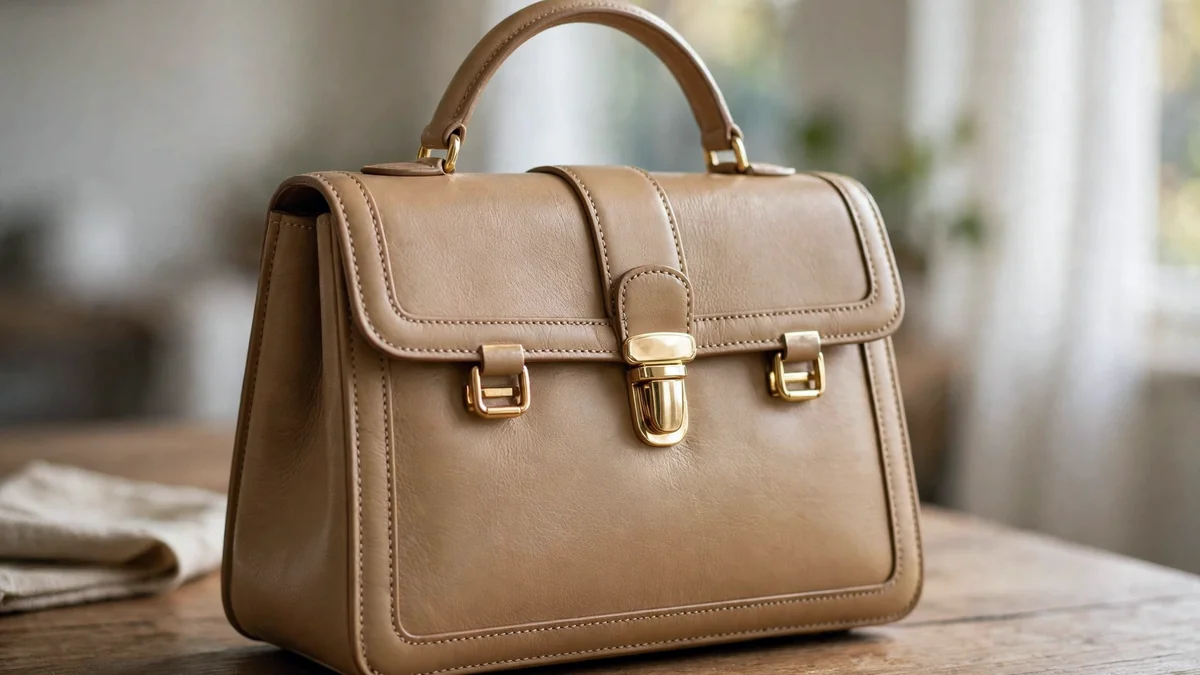
A good handbag starts with material. The best bags of 2026 are made from full-grain or top-grain leather, and the leather feels substantial in the hand, with a natural grain and a smell that is unmistakably real. It scuffs and then buffs out, it softens with use, and it develops a rich patina over the years. The worst bags are made from thin bonded leather or plastic-coated fabric that looks convincing in the shop and then starts to peel at the corners within months.
The second thing that separates good from bad is how the bag is put together. A good bag has stitching that is even, tight, and set slightly in from the edge, with no loose threads and no skipped stitches. The lining is sewn in properly, the pockets are placed where your hand expects them, and the base is reinforced so the bag stands up on its own instead of flopping over. A bad bag has stitching that wanders, a lining that pulls loose, and a base that collapses the moment you set it down.
Hardware is the third test, and it is the one most buyers never check. Open and close the zips, clips, and clasps of a good bag and they move smoothly, with a satisfying weight and a clean click. The metal is solid, the zip teeth are even, and nothing catches or snags. On a bad bag the zip sticks from the first week, the clasp feels light and hollow, and the plating wears off to show cheap metal underneath. Hardware is where cheap bags save money, and it is where they betray themselves first.
The Best Handbags of 2026
The best handbags of 2026 are mostly the classic ones, and that is exactly the point. They are the structured totes, the neat shoulder bags, and the practical crossbody bags that do everything well without shouting about it: comfortable straps that do not dig in, a clasp that closes with one hand, and room for everything without bulging at the seams. They are not the flashiest bags on the shelf, but they are the ones their owners reach for every single morning.

What the best bags share is a feeling of solidity. The bag keeps its shape whether it is full or half empty, the handles are stitched and riveted rather than simply glued, and nothing rattles, sags, or twists when you carry it. Their linings are generous too: a zipped pocket for valuables, a slip pocket for a phone, and enough light inside the bag that you can actually find your keys without emptying the whole thing onto a table.
Comfort is another area where the best bags quietly win. A good strap is wide enough to spread the weight, padded where it sits on the shoulder, and adjustable enough to wear crossbody on a busy day. A good handle is shaped to the hand and does not cut in, even when the bag is heavy. Whatever the style, the best bags are honest about their weight: they feel balanced on the shoulder rather than dragging you to one side.
The Worst Handbags of 2026
The worst handbags of 2026 are not always the cheapest, and that is what makes them so frustrating. Some look smart in the shop and come with a long list of features, but within a few months the problems start: the corners peel, the lining tears, a strap stitch gives way, and a zip that once closed smoothly now needs two hands and a prayer. Owners find themselves carrying a bag they no longer trust.
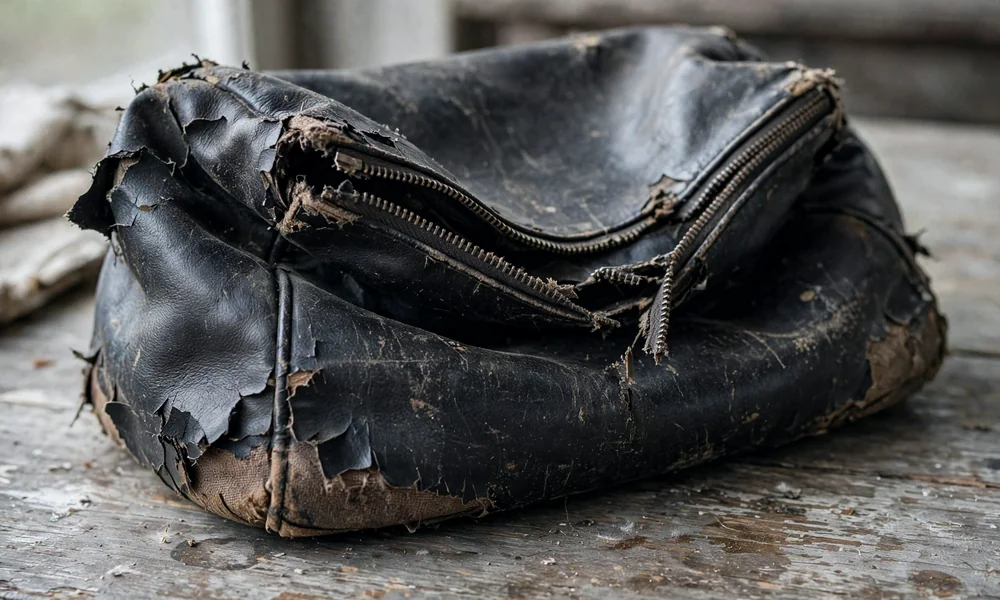
Shape is where many of the worst bags fall down hardest. They are often made from soft, unstructured material with no reinforcement, and the result is a bag that slumps into a shapeless heap the moment you set it down, spilling its contents across the table or the car seat. On a busy day the bag is hard to open, hard to close, and hard to find anything in, because everything has sunk to the bottom in one tangled pile. A bag that cannot hold its shape is a bag that fights you every time you use it.
Then there is the peeling. The worst bags are often made from imitation leather with a thin plastic coating, and the coating is the first thing to go. It flakes at the corners, cracks along the folds, and lifts away in strips, leaving a rough fabric underneath that looks worse with every week. No amount of cleaning or conditioning will bring it back, because the damage is in the material itself, not on the surface.
Best vs Worst at a Glance
| Feature | Best Handbags 2026 | Worst Handbags 2026 |
|---|---|---|
| Material | Full-grain or top-grain real leather | Thin bonded leather that peels |
| Stitching | Even, tight, set in from the edge | Wandering stitches that pull apart |
| Hardware | Solid metal that closes smoothly | Light clasps and sticking zips |
| Shape | Holds its shape full or empty | Slumps and spills when set down |
| Comfort | Wide straps and balanced weight | Thin straps that dig into the shoulder |
| Lifespan | Years of daily use, better with age | Months before peeling and tearing |
Tote, Shoulder Bag, or Crossbody: Which Wins
Totes win for carrying a lot, and it is not close. A good tote swallows a laptop, a book, a water bottle, and a lunchbox without bulging, and it is easy to reach into on a busy train. The best totes of 2026 have a reinforced base, a zipped top or at least a magnetic snap, and handles long enough to sit on the shoulder. Their weakness is security: an open tote is easy to dip into, and a heavy tote is hard on one shoulder. A roomy tote is a workhorse, and our guide to the best tote bags of 2026 shows what to look for.
Shoulder bags win for everyday elegance, and crossbody bags win for hands-free days. A neat shoulder bag is the sweet spot for most people: it carries the essentials, it looks smart at work and at dinner, and it stays close to the body without getting in the way. A crossbody is the best choice for travel, markets, and days with children, because both hands stay free and the bag cannot slip off your shoulder. The worst of each type share the same faults: thin straps, flimsy clasps, and no structure at all.
Leather, Size, and the Numbers That Actually Matter
Leather is the decision that matters most, and it is worth learning the words on the label before you buy. Full-grain leather is the top layer of the hide, with all its natural strength intact. Top-grain is the next layer down, still real leather and still very good. Genuine leather sounds reassuring but is actually one of the lowest grades, and bonded leather is mostly leather dust glued together. If the label will not say which kind it is, that silence is your answer. The same care applies to everything else you carry, and our comparison of the best and worst backpacks of 2026 shows how much difference good material makes.
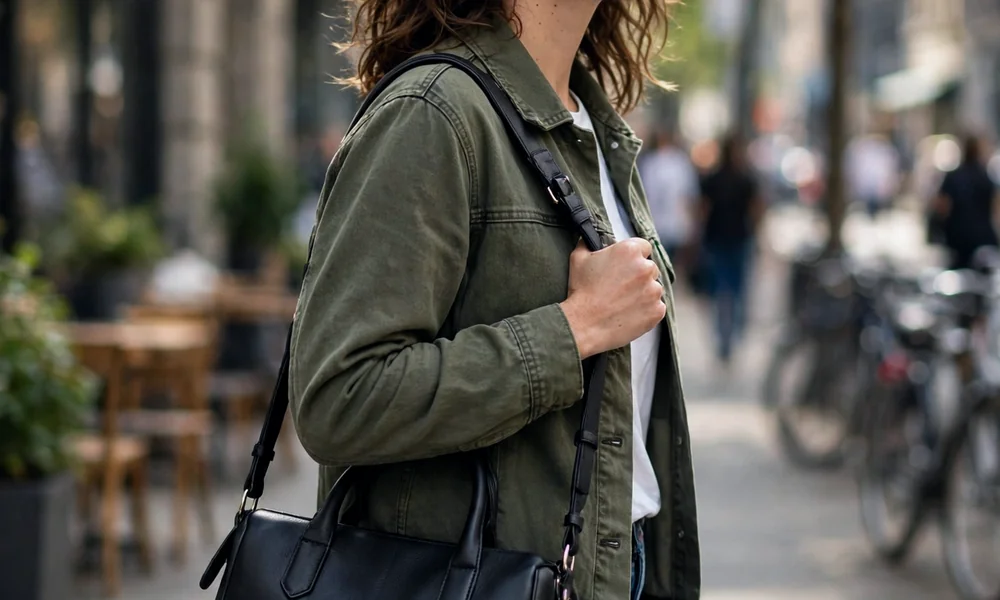
Size deserves the same attention as leather. A bag that is too small means carrying a second bag, and a bag that is too big means carrying everything you own and hurting your shoulder. Measure what you actually carry: phone, wallet, keys, water bottle, and whatever else goes with you daily. Then choose the smallest bag that fits it all comfortably, with a little room to spare. A bag that fits your real life is a bag you will love using.
How to Buy a Handbag Without Regret
The single most useful thing you can do before buying a handbag is to try it on properly. Put your own things inside it, carry it on your shoulder, walk around the shop, and sit down with it. If the strap digs in, the clasp needs two hands, or the bag flops open when you bend, believe it: it will feel worse after a month, not better. Check the stitching by pulling gently at the handles, and open and close every zip and clasp three times. A bag that passes these small tests in the shop will pass them in real life too.
Finally, do not be rushed by a sale. A good bag at full price that lasts five years is cheaper than five cheap bags that each last a few months, and it is far nicer to carry along the way. Buy the colour that goes with the clothes you actually wear, keep the receipt, and store the bag stuffed with tissue paper so it keeps its shape between outings. A little care goes a long way with real leather.
The Verdict
The best handbags of 2026 are the ones that make life easier without asking for much in return. They are made from real leather, they hold their shape, they close smoothly, and they sit comfortably on the shoulder day after day. They do not need to be expensive or flashy: they simply work, season after season, with very little fuss.
The worst handbags of 2026 are the ones that demand too much and give too little back: too much money spent on repairs and replacements, too much time spent fishing for keys at the bottom of a shapeless sack, and too much frustration with zips that stick and straps that snap. A handbag is a tool you rely on every day, and when the tool fails, everything else gets harder.
So buy with your head as well as your heart. Choose the leather that fits your real life and the size that fits your real load. Try it on properly before you buy it, check the stitching and the hardware, and walk away from anything that peels, sags, or sticks in the shop.


