A kitchen scale looks like the least exciting thing you could buy for your kitchen. It is a flat slab with a screen, it costs less than a bag of good coffee, and it sits quietly in a drawer most of the time. Yet the difference between the best and the worst kitchen scales of 2026 is the difference between a loaf that rises beautifully and one that comes out dense and dry. A cup of flour can weigh anywhere from 120 to 160 grams depending on how you scoop it.
This comparison puts the best kitchen scales of 2026 head to head against the worst, judging them the way you would actually live with them: how accurate they are, how easy they are to read, how well they handle a heavy bowl, and how long they last. The best kitchen scales of 2026 show what a well-designed scale looks like, and this guide uses those strengths as the benchmark for everything that follows.
Key Takeaways
- Weighing beats measuring by volume: a cup of flour can vary by 40 grams or more.
- Look for 1-gram increments, a capacity of at least 5 kilograms, and a tare function on any scale you buy.
- A large, flat platform and a display you can still read with a bowl on top matter more than fancy extras.
- The worst kitchen scales drift, read differently every time, or switch off halfway through weighing.
- Match the scale to your cooking: bakers need fine accuracy, coffee lovers need 0.1-gram precision, and busy families need high capacity.
Why Weighing Beats Measuring Every Time
Cups and spoons feel convenient, but they are surprisingly unreliable. Flour settles and compacts, brown sugar packs differently every time, and a cup of chopped vegetables depends entirely on how finely you chop. Weight has none of these problems: one hundred grams of flour is one hundred grams of flour, no matter who measures it. That consistency is the whole point of a scale, and it is why professional bakers weigh everything.
The difference shows up most clearly in baking, where small errors change the outcome. Too much flour makes cakes heavy and bread tough, while too little leaves cookies spreading into thin crisps. Weighing is also faster than scooping: place a bowl on the scale, press tare, and add each ingredient in turn. The best vs worst food processors of 2026 make the same point in a different corner of the kitchen: the tools that save you time are the ones that do one job properly, not the ones with the longest feature list.

The Best Kitchen Scales of 2026
The best kitchen scales share a simple quality: they disappear into the background of a kitchen. They weigh accurately, they are easy to read, they fit the bowls you actually use, and they survive daily life on a counter. They are the scales you reach for without thinking, whether you are baking bread or making coffee.
Accuracy You Can Trust
A good scale reads the same weight every time. Most good kitchen scales measure in 1-gram increments, which is fine for everyday cooking and baking. If you make pour-over coffee or bake with small amounts of yeast and salt, look for a scale that reads to 0.1 grams, since a single gram of error matters at that scale. Weigh an unopened 500-gram bag of sugar: a good scale reads 500 grams, and reads 500 grams again tomorrow. Avoid cheap scales that drift, because a scale that reads differently each time you weigh the same object is worse than no scale at all.
Capacity and Platform Size
A scale that tops out at 3 kilograms will struggle with a large bowl of bread dough, while 5 kilograms handles most kitchen tasks comfortably. Heavy-duty models reach 10 kilograms or more, which suits big families and batch cooking. The platform matters just as much as the capacity: a generous flat platform holds mixing bowls, plates, and pots securely, without wobbling or tipping. Stainless steel and tempered glass platforms are the easiest to wipe clean after weighing sticky ingredients,
A Display You Can Actually Read
A scale is only useful if you can read it while you cook. Look for a large, bright display with clear digits, ideally backlit so it stays readable in a dim kitchen. The display should sit where a bowl does not hide it; some of the best designs angle the display forward or pull it out from under the platform, so a big bowl never blocks the numbers. A scale that makes you lift the bowl to check the weight is a scale that slows you down every time you use it.
Speed, Stability, and a Long Life
The best scales are fast and stable. They settle on a reading within a second or two, and the number stays put while you add ingredients. They do not switch themselves off after thirty seconds, which is the most annoying fault in cheap models, because it means the scale dies halfway through a recipe and you lose your place. A good scale runs for months on a single battery, has an auto-off timer long enough to finish a recipe, and survives the occasional knock or spill.

The Worst Kitchen Scales of 2026
The worst kitchen scales do not announce themselves. They arrive in tidy packaging, look much like the good ones, and promise the same accurate weighing. By the second week, the problems start. The display is hard to read, the scale drifts by a few grams every time, the platform is too small for a bowl, and it switches itself off halfway through a recipe.
Scales That Drift and Lie
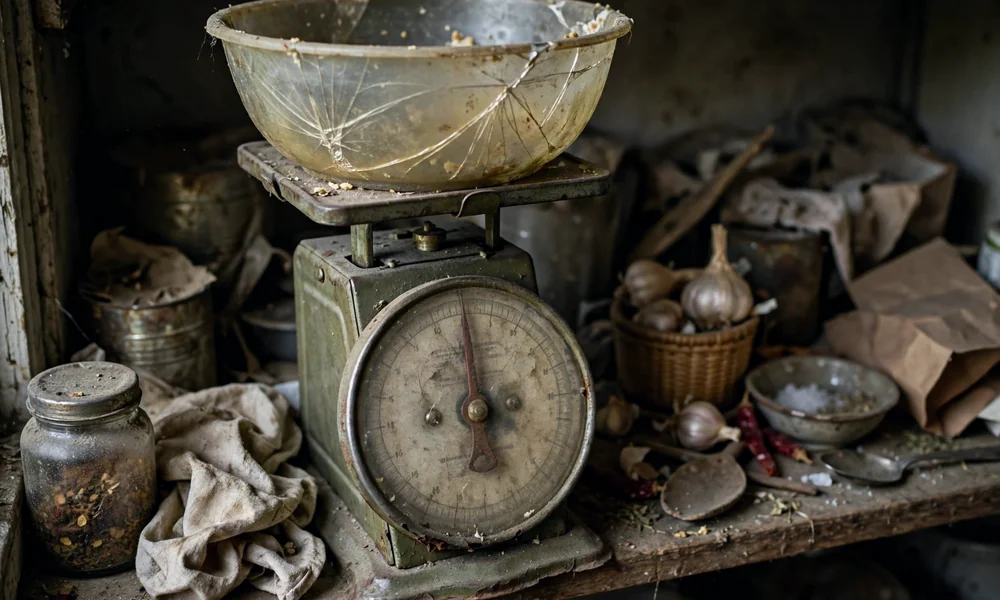
The most common failure in a bad kitchen scale is drift. A cheap scale reads 500 grams for a bag of sugar one minute and 512 the next, or it slowly creeps upward while the bowl sits still. That makes the numbers meaningless, and a cook who cannot trust the scale will stop using it. Drift usually comes from cheap sensors and poor calibration, and it gets worse as the scale ages. A scale that needs recalibrating every week will ruin more recipes than it helps.
Tiny Platforms and Hidden Displays
Bad scales often have platforms too small for the bowls people actually use. A mixing bowl overhangs the edges, wobbles, and tips. Worse, a big bowl covers the display entirely, so you have to lift the bowl to read the number, then put it back down and hope you remembered it correctly. Some cheap scales hide the display under the platform or put the buttons where a bowl presses them by accident, turning a simple task into a juggling act. A scale should fit your largest bowl with room to spare, and the display should stay visible at all times.
Controls That Fight You
Bad kitchen scales often hide behind fiddly controls. The buttons are small, stiff, or unresponsive, the tare function is buried in a menu, and the display is dim and hard to read in normal kitchen light. This matters more than it sounds, because weighing is a process you do with messy hands and a recipe to follow. A scale that makes you wipe your hands, hunt for a button, and squint at a tiny screen will slow you down every time.
Short Lives and Vanishing Accuracy
The final failure of a bad kitchen scale is that it does not last. The sensor drifts, the display fades, the buttons stop responding, and the battery cover falls off. Within a year, the scale that promised to last a decade is unreliable, and the manufacturer has stopped answering questions about it. A kitchen scale is a long-term purchase, and a brand that cannot keep its sensors accurate for a year has told you everything you need to know about its quality. Before buying, check whether the scale holds its calibration, whether the battery lasts for months, and whether the auto-off timer is long enough to finish a recipe. The best scales only get more familiar with use, while the worst ones are already lying to you.
Best vs Worst: The Head-to-Head
Put the two sides together and the difference is stark. The best kitchen scales read the same weight every time, settle in a second, and stay readable with a bowl on top. The worst drift, creep upward, and hide their displays behind the bowl. The best have a large platform, a capacity of at least 5 kilograms, and a battery that lasts for months. The worst have a tiny platform, a 3-kilogram limit, and an auto-off timer that kills the scale halfway through a recipe. The best feel solid and survive daily life. The worst feel light and rattly, and die within a year. None of these differences shows up in a product photo, which is why so many buyers end up with a bad scale and wonder what went wrong.
There is also a middle ground worth naming: a decent scale with one flaw. A scale that weighs accurately but has a dim display, or a scale with a great platform but a short auto-off timer, can still be a good buy if the flaw is one you can live with. A guide to baking with almond flour in 2026 shows the same pattern in a neighbouring skill: the winners are the ones that make an ordinary evening easier, and the losers are the ones that make it harder.
The Verdict
The verdict is clear: buy the best kitchen scale you can afford, and judge it by its accuracy, its platform, and its display, not by its preset count or its price tag. For most households, that means a well-made digital scale with 1-gram increments, a 5-kilogram capacity, a large flat platform, and a bright display you can read with a bowl on top. It is the easiest way to get consistent baking, honest portions, and faster cooking without learning a new skill. For coffee lovers and precise bakers, a 0.1-gram scale is the better buy, and it will pay for itself in better coffee and more reliable bread. A good kitchen scale should make you wonder how you ever cooked without it.
Who Each Kitchen Scale Is For
A good everyday digital scale is for busy households, regular bakers, and anyone who wants consistent results without fuss. It suits families who batch cook, workers who come home tired, and cooks who like to weigh ingredients and get on with dinner. A good precision scale is for coffee lovers, serious bakers, and people who work with small amounts of yeast, salt, and spices. It suits those who value accuracy above all and are happy to pay a little more for it. A good kitchen scale is one of the few kitchen purchases that genuinely gives you better food for almost no money.
Frequently Asked Questions
Do I really need a kitchen scale for baking?
Yes, if you want consistent results. A cup of flour can vary by 40 grams depending on how you scoop it, and that changes how a cake or loaf turns out. Weighing removes the guesswork entirely.
What accuracy do I need in a kitchen scale?
One-gram increments suit most cooking and baking. If you make pour-over coffee or work with tiny amounts of yeast and salt, look for 0.1-gram precision instead.
Why does my scale keep switching itself off?
Cheap scales have short auto-off timers to save battery, sometimes as little as thirty seconds. A good scale gives you at least two or three minutes, which is long enough to finish weighing a recipe.