
A nail file is the smallest tool in the bathroom drawer and the one that does the most quiet damage when it is wrong. It is a strip of grit, glass or metal, and it decides whether the edge of your nail is sealed and smooth or frayed and ready to split. A good file takes off length in a few light strokes, leaves a rounded edge that does not catch on jumpers or tights, and never leaves your nails sore. A bad file feels like sandpaper on a frayed rope: it tears the layers of the nail apart, and the split shows up days later, running down the side of the nail just when you thought the manicure was finished.
This comparison puts the best nail files of 2026 head to head against the worst, judging each one the way you would actually use it: shaping natural nails at the kitchen table on a Sunday evening, shortening a broken nail before work, smoothing the edge after clipping, and tidying up a set of nails before polish goes on. We look at how cleanly the file cuts, how smooth the edge it leaves is, how long it lasts, how comfortable it feels in the hand, and whether your nails still look good a week later. A great file disappears into the everyday routine, quietly doing its job. A bad one announces itself every time a nail snags.
Key Takeaways
- File in one direction only, from the side toward the centre. Sawing back and forth is the main cause of splitting and peeling.
- Glass and crystal files are the gentlest on natural nails and last for years, while emery boards are cheap and handy but wear out fast.
- Match the grit to the job: coarse grits shorten, fine grits shape and seal, and a buffer finishes the edge.
- Never file wet, freshly soaked nails. They are soft, bend under the file, and split as they dry.
- Filing is only the first step in a nail routine, which is why our comparison of the best and worst nail polishes of 2026 is worth reading once the shape is right.
How We Judged the Nail Files
We judged every nail file on five things that matter when you actually use it rather than when you read the packet. First, the cut: whether the file takes off length cleanly in a few strokes, or whether it drags, skips and chews at the edge. Second, the finish: whether the edge feels sealed and smooth when you run a finger across it, or rough and frayed. Third, lasting power: whether the file still works after weeks of use, or whether the grit clogs and goes blunt. Fourth, comfort: whether the file sits well in the hand and lets you control the angle, or whether it slips, bends or digs in. Fifth, the week after: whether the nails stay intact and unchipped, or whether splits and peeling layers appear within days.

The Best Nail Files of 2026
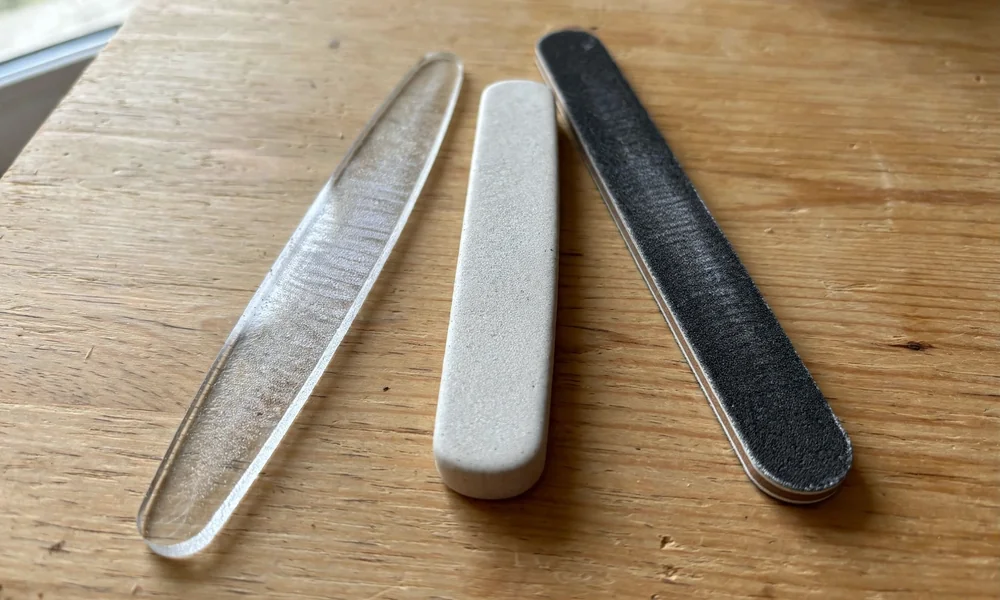
The best nail files of 2026 share one quality: they remove nail without tearing it. Glass files lead the field for natural nails. A good glass file is made from tempered glass with a finely etched surface, and it files with almost no pressure at all. The edge it leaves is sealed, smooth and slightly rounded, and because the surface never wears down, the same file works just as well in its third year as it did on its first day. It rinses clean under the tap, it does not harbour bacteria the way a worn emery board can, and it is the file most often recommended for nails that split easily. Its only real weakness is that it can break if you drop it on a tiled floor, so it belongs in a case rather than loose in a bag.
Crystal files are the close cousins of glass, and for many people they are the best of all. They are finer still, almost silky to the touch, and they are the gentlest option for thin, brittle or peeling nails. Where an emery board can catch and lift a layer, a crystal file glides, and the edge it leaves needs no further smoothing. They cost more than a packet of emery boards, but one crystal file outlasts dozens of them, so over a year it is often the cheaper buy. If your nails are weak, or if you file often, a crystal file is the safest place to start.
Fine-grit emery boards still earn their place, and the best of them are genuinely good tools. A fresh, fine-grit board with a firm core shapes quickly, costs very little, and is the file to keep in a travel bag or a desk drawer. The key word is fresh: a new board cuts cleanly, while a worn one tears. The best emery boards have a cushioned core that flexes slightly with the curve of the nail, a grit that is even rather than patchy, and a sealed edge of their own that does not fray. Used for shaping and finishing rather than heavy shortening, and replaced often, they are perfectly good files.
The Worst Nail Files of 2026
The worst nail files of 2026 are the ones that damage the nail while pretending to shape it. Coarse metal files sit at the bottom of the pile for natural nails. They are aggressive, they remove length fast, and they leave an edge that feels like a torn piece of paper. Metal files were made for hard acrylics and thick toenails, and on a natural fingernail they are simply too harsh. They catch, they lift layers, and they leave the edge so rough that it snags on everything for days. They also rust in a damp bathroom, and a rusted file is a file to throw away.
Cheap emery boards are the other great offender, and they are everywhere. A board that costs almost nothing is usually made with grit that is uneven, a core that bends like cardboard, and a surface that clogs after a single use. The first few strokes feel fine, and then the board goes smooth in the middle and rough at the edges, so you press harder, and pressing harder is exactly what tears the nail. A clogged board does not file at all: it drags, it heats the nail, and it leaves a frayed edge that peels within the week. If a board feels smooth when it should feel gritty, it is finished.
Grit, Shape and Technique
Grit is the number that decides what a file is for, and it is worth understanding before you buy. Coarse grits, around 80 to 100, are for shortening thick nails and acrylics. Medium grits, around 150 to 180, are the workhorses: they shorten natural nails at a sensible speed without tearing. Fine grits, around 240 and above, are for shaping, smoothing and sealing the edge. A file that tries to do everything with one grit usually does nothing well, and a two-sided board with a coarse side and a fine side is a better buy than a single-grit board for most people. Start coarse only when you need to remove real length, and always finish with the fine side.
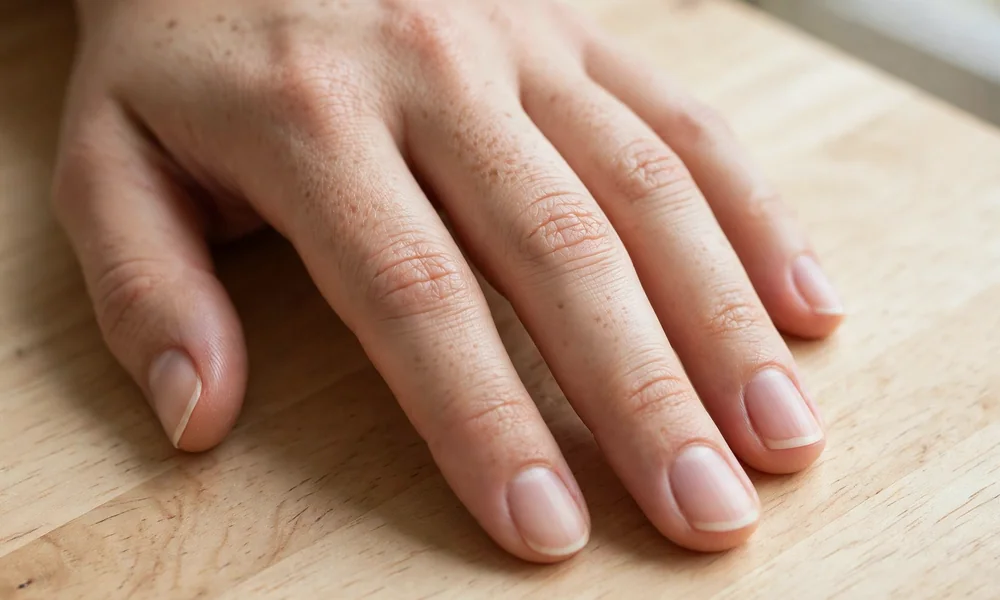
Shape matters more than length, and this is where most people go wrong. A slightly rounded or soft square edge resists breaks far better than a sharp point, because the corners take the knocks instead of the tip. Filing straight across leaves a square edge that catches; filing to a sharp point leaves a tip that snaps. The strongest everyday shape is a soft oval or a squoval, a square with rounded corners, and it is the shape a good file makes almost by itself if you follow the curve of the fingertip. Short nails with a good shape look neater than long nails with a ragged edge, and they break far less often.
Technique is the part no file can do for you. File in one direction only, from the side of the nail toward the centre, lifting the file away between strokes. Sawing back and forth frays the edge, and the fraying is what becomes a split. Use light pressure and let the grit do the work: pressing hard does not file faster, it only tears more. File dry nails, never wet ones, because a soaked nail is soft and bends under the file, then splits as it dries. And file before you moisturise, not after, because oil on the nail makes the file slip and clog.
Keeping a file clean is part of using it well. Rinse a glass or crystal file under warm water and let it dry, and it will work like new for years. Brush the dust out of an emery board after use, and replace the board when the grit feels smooth or the surface looks glazed. A clogged file is a damaging file, however expensive it was. The same care applies to the rest of the routine: clean hands, a little hand cream afterwards, and polish only on a smooth, sealed edge. Our comparison of the best and worst hand creams of 2026 covers what to reach for once the filing is done.
What to Avoid
The most common mistake is filing too often. Nails do not need filing every day, and filing a nail that is already short only thins the edge and invites splitting. Once a week is plenty for most people, with a quick tidy-up if a nail breaks. The second mistake is using the wrong tool for the job: a metal file on natural nails, a coarse board on thin nails, or a buffer when what you need is a file. A buffer smooths the surface of the nail; it does not shape the edge, and using one as a file thins the nail without fixing the shape.
The Verdict
The best nail files of 2026 are the gentle ones. A glass or crystal file, used lightly and in one direction, shapes natural nails without tearing them, lasts for years, and costs less over time than a drawer full of cheap boards. A fine emery board, replaced often, is the best budget choice. The worst files are the harsh ones: coarse metal files, cheap boards with uneven grit, and any file whose surface is clogged, peeling or worn smooth.
The real lesson is that the file matters more than it looks. It is the tool that decides the shape and the health of the edge, and a good one costs very little. Buy a glass file for your nails, keep a fresh emery board for travel, file dry nails in one direction, and finish with the fine side. Your nails will split less, peel less, and look better for longer, and the polish you put on afterwards will have a smooth edge to sit on. For the rest of the routine, our comparison of the best nail buffers of 2026 covers the tool that finishes what the file starts.


