A necklace is the one piece of jewellery that frames your whole outfit. A good one sits exactly where it should, catches the light when you move, and makes even a plain top look considered. A bad one twists, tangles, scratches your neck, or snaps at the clasp just as you are leaving the house. The difference between the best necklaces of 2026 and the worst is rarely the price on the tag. It is the chain, the clasp, the length, and the care that went into making them.
This comparison puts the best necklaces of 2026 head to head against the worst, judging them the way you would actually wear them: through a full working day, on a night out, under a coat in winter, and after a month in a jewellery box. We look at comfort, how the chain holds up, whether the clasp stays shut, how the length sits on real necks, and whether a necklace still looks good a year later. The same honest approach sits behind our guide to jewellery boxes worth buying to protect your collection.
Key Takeaways
- Length is the first test: a necklace that sits in the wrong place will never look right, however pretty the pendant.
- A strong clasp matters more than a striking pendant, because a snapped chain is a lost necklace.
- Tangle-free chains save time every morning and stop good necklaces ending up in knots.
- Honest metal keeps its shine, while cheap coating flakes and turns skin green.
- Buy the necklace for the necklines you actually wear, not for one imagined outfit.
What Makes a Necklace Good or Bad
A good necklace starts with the chain. Solid gold, sterling silver, and well-made steel chains are smooth against the skin, they lie flat, and they keep their colour with only a little care. The best necklaces of 2026 use chains that are strong for their weight, with links that are closed properly so they cannot snag hair or pull apart. The worst necklaces use thin, hollow chains that kink at the slightest twist, and once a chain kinks it never lies straight again.
The second thing that separates good from bad is the clasp. A good clasp closes with a clean click, stays shut all day, and opens easily when you want it off. The best necklaces have lobster clasps or sturdy spring rings sized to the chain, and many add a small extender so the length can be adjusted. A bad necklace has a clasp that is too small, too stiff, or too weak, so it pops open on the train or refuses to close when your hands are cold. Losing a necklace to a failed clasp is the most expensive lesson in jewellery.
Length is the third test, and it is the one most buyers underestimate. A good necklace is made in a length that suits real necks and real necklines, and it stays where it is put instead of sliding round to the back. The worst necklaces are either too short to sit comfortably or so long that the pendant swings and catches on everything. A necklace that spends the day twisted round your neck is a necklace you will stop wearing, however lovely it looked in the shop.
Best vs Worst at a Glance
| Feature | Best necklaces | Worst necklaces |
|---|---|---|
| Chain | Strong, smooth, lies flat | Thin, hollow, kinks easily |
| Clasp | Firm click, stays shut | Weak, pops open, hard to close |
| Length | Sits right on real necklines | Too short, too long, or twisting |
| Finish | Keeps its shine for years | Tarnishes and turns skin green |
| Value | Worth the price over time | Cheap to buy, dear to replace |
The Best Necklaces of 2026
The best necklaces of 2026 are mostly the quiet ones, and that is exactly the point. They are the fine gold chain with a small pendant that goes with everything, the pearl strand that lifts a plain dress, and the neat beaded necklace that adds colour without fuss. They are made well, they feel good from the first morning, and they look just as good with a jumper as they do with an evening dress.

What the best necklaces share is honest making. The links are closed cleanly, the pendant is fixed securely, and nothing has a rough edge to scratch skin or snag a jumper. Their finish is even and deep, not a thin wash that will rub away where the chain rests on the neck. They come with a clasp that fits the chain properly, and often with an extender, which tells you the maker expects you to wear them for years.
Versatility is another area where the best necklaces quietly win. A good fine chain works at the office, at lunch, and at a wedding, and a good pearl strand suits a teenager and her grandmother alike.
The Worst Necklaces of 2026
The worst necklaces of 2026 are not always the cheapest, and that is what makes them so frustrating. Some look lovely in the shop window and come in beautiful packaging, but within a few weeks the problems start: the gold colour rubs off where the chain touches the neck, the links catch on hair, and the clasp will not stay shut. The necklace twists round, the pendant ends up at the back, and the piece ends up in a tangled heap at the back of a drawer.
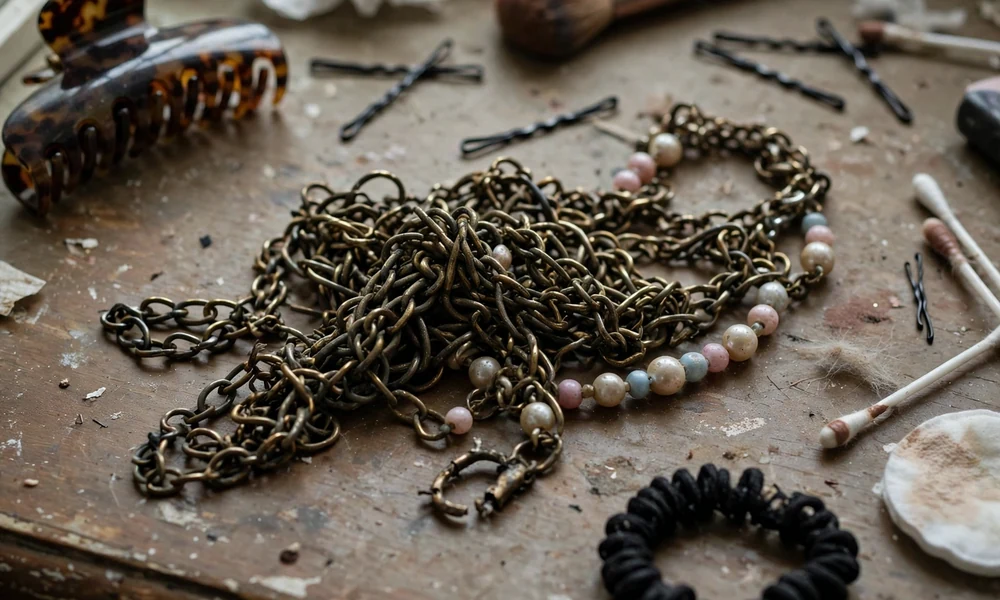
Tangling is where many of the worst necklaces fall down hardest. They are often made with fine, flimsy chains that knot at the slightest provocation, and once knotted they are almost impossible to undo without breaking a link. A necklace that takes ten minutes to untangle every morning is a necklace you will stop reaching for, however pretty the pendant is. Chains that are too thin for their pendant are the usual offenders, and they snap just when you need them most.
Then there is the finish. The worst necklaces are often coated rather than solid, and the coating is thinnest exactly where the chain rests against skin. Within a month the colour is patchy, the metal underneath shows through, and the necklace looks tired. Tarnish is the cruellest cut of all: a chain that turned your neck green is not just unworn, it is unwearable, and no amount of polishing brings back the colour it never really had.
Chains, Pendants, or Pearls: Which Style Wins
Fine chains win for everyday wear, and it is not close. A delicate chain with a small pendant is light, it cannot catch on much, and it suits every neckline and every outfit. The best fine chains of 2026 are simple and well made: a neat link, a secure pendant, and a clasp you can work with cold hands. Their weakness is drama: they will never make the statement a bold beaded necklace does. For a single necklace to wear every day, though, a good fine chain is hard to beat.
Pearls are the most versatile classic once you get the length right. A short strand suits a high neckline, a longer one suits an open collar, and a single pearl on a chain suits almost everything. Bold beaded necklaces are the special-occasion choice: beautiful for an evening, heavy for a whole day. The smart approach is to own one good fine chain and one good pearl piece, and to treat statement necklaces as a treat rather than a daily habit.
Materials, Clasps, and the Details That Actually Matter
Gold remains the safest choice for most wearers in 2026, especially solid gold rather than plated. A solid gold necklace costs more at the start and far less over the years, because it never flakes, it can be polished back to new, and it rarely irritates skin. Sterling silver is the honest budget choice: it can tarnish, but it cleans up well and it is kind to most skin. Stainless steel is the quiet hero for everyday chains, strong, light, and almost never irritating.
Plated necklaces have their place, but it is a narrower one than the shop displays suggest. A well-plated piece from a careful maker can last a year or two with gentle wear, but a cheap plated chain can fail in a month, and the neck is where wear shows first. The rule is simple: if the price seems too good for the metal claimed, it is the coating you are paying for, and coatings wear off. The same care applies to everything you wear with your necklace, and our comparison of the best and worst watches of 2026 shows how the same honest-materials test sorts the keepers from the disappointments.

Clasps deserve the same attention as the chain itself. Lobster clasps are safest for anything valuable, spring rings suit fine chains, and magnetic clasps are convenient but risky for a heavy pendant. It is worth checking the clasp before you buy, not after you lose a necklace, and keeping the length in mind: a chain that is too short will choke, and one that is too long will catch. Storage matters too: necklaces thrown loose in a drawer tangle into knots, while hanging them separately keeps each one ready to wear. Sunglasses chosen with the same care complete the look, and our comparison of the best and worst sunglasses of 2026 explains which ones are worth wearing.
How to Buy a Necklace Without Regret
The single most useful thing you can do before buying a necklace is to try it on properly. Put it on, wear it around the shop for ten minutes, and notice whether it twists, pulls, or sits in the wrong place. Check the clasp clicks shut firmly and opens again without a struggle, and look at the pendant in a mirror from the side as well as the front. If anything feels wrong, believe it: it will feel worse after a day, not better.
Check the metal with real questions before you pay. Ask whether the chain is solid, plated, or filled, and what the base metal is underneath. Look at the marks stamped on the clasp, and be wary of any piece that cannot tell you what it is made of. A reputable seller will answer plainly, and a seller who cannot is telling you something about what they sell.
Finally, do not be rushed by a bargain. Buy one good chain instead of five cheap ones, check the clasp as carefully as the pendant, and hang the necklace up properly when you take it off. Your neck will thank you every day you wear it.
The Verdict
The best necklaces of 2026 are the ones that make life easier without asking for much in return. They are comfortable, kind to skin, secure at the clasp, and honest in their materials, and they keep their shine because they were made properly in the first place.
The worst necklaces of 2026 are the ones that demand too much and give too little back: too much tangling, too much tarnish, and too much of your money spent on pieces that end up knotted in a drawer. A necklace is something you wear against your skin all day, and when it fails, everything about it feels wrong.
So buy with your head as well as your heart. Choose the metal that suits your skin and the length that suits your real necklines. Try the necklace on before you buy it, check the clasp as carefully as the pendant, and walk away from anything that kinks, twists, or will not stay shut.