A shampoo is the one product almost everyone uses and almost no one chooses carefully. A good one leaves your hair clean, soft and easy to manage, with a scalp that feels calm and comfortable for days. A bad one leaves your hair flat, frizzy or greasy by lunchtime, and your scalp itchy, flaky or sore. The difference is rarely the price on the bottle.
This comparison puts the best shampoos of 2026 head to head against the worst, judging them the way you would actually use them: how your hair feels after the wash, how it looks the next day, whether it suits your hair type, and whether your hair genuinely looks better after a month of regular use. The same honest testing sits behind our comparison of the best and worst hairbrushes of 2026, because a hair product earns its place the same way any other does: it has to work on a real person on a real day.
Key Takeaways
- Your scalp decides everything: a shampoo that suits your scalp will suit your hair, while a shampoo that fights your scalp will never give you a good hair day.
- Less is usually enough: a coin-sized amount worked into the scalp cleans better than a palm full of foam, and it rinses away far more easily.
- Lather is not a measure of cleaning power: a shampoo that barely foams can clean perfectly well, and a shampoo that foams like a bubble bath can still leave buildup behind.
- Match the formula to your hair type: fine hair needs light, volumising formulas, dry hair needs moisture, and curly hair needs gentle, sulfate-free creams.
- One month is the honest test: hair and scalp take weeks to settle into a new shampoo, so a bottle that promises overnight miracles is selling a story, not a result.
How a Shampoo Actually Works
A shampoo has one job, and it is simpler than the labels make it sound: it removes the oil, sweat, styling product and dirt that collect on your scalp and hair, without stripping away the natural oils that keep both healthy. Your scalp is skin, and it behaves like the skin on your face: it has a barrier that holds moisture in and keeps irritants out. A good shampoo respects that barrier. A bad one scrubs through it.
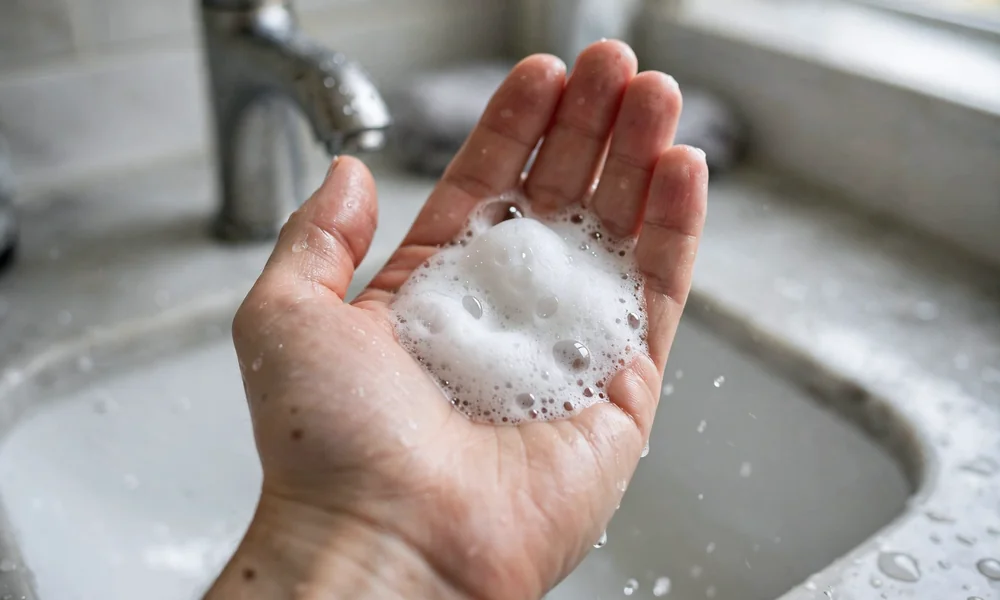
Shampoos work with ingredients called surfactants, which are molecules with one end that loves water and one end that loves oil. The oil-loving end grabs the sebum and dirt on your scalp, and the water-loving end lets the rinse carry it all away.Mild surfactants lift dirt gently and leave the scalp alone. Harsh ones, like the strong sulfates found in cheap shampoos, strip everything away, including the oils your hair needs to stay soft and shiny. That is why a harsh shampoo leaves your hair feeling squeaky clean in the shower and like straw once it dries.
Shampoos come in a few main forms, and each suits a different hair type. Light, clear shampoos suit fine and oily hair, because they clean well without weighing the hair down. Rich, creamy shampoos suit dry and thick hair, because they add moisture as they clean. Sulfate-free shampoos suit curly, coily and colour-treated hair, because they clean gently without disturbing the curl pattern or fading the colour.
Water temperature matters more than most people realise. Hot water strips oil from the scalp just as surely as a harsh shampoo does, and it leaves the hair cuticle rough and dull. Lukewarm water is the right choice, every time, and a cool rinse at the end helps the cuticle lie flat, which is what makes hair look shiny. The shampoo itself should stay on the scalp for about a minute: long enough to dissolve oil and product, short enough not to dry the scalp out.
What Makes a Shampoo One of the Best
The best shampoos of 2026 share one quality above all others: they clean thoroughly and leave the hair comfortable. Your hair feels clean after rinsing, but not stripped, not tangled, and not dry. The next morning it still looks good, with roots that are not greasy and lengths that are not frizzy.
A good shampoo matches its formula to a hair type and says so plainly. A shampoo for fine hair adds volume without heavy oils or silicones near the roots. A shampoo for dry hair adds moisture and leaves the lengths soft enough to comb easily. A shampoo for curly hair defines the curl without crunch or frizz. A shampoo for colour-treated hair protects the colour and fades it as slowly as possible.
Ingredients are the third mark of a good shampoo. The best formulas use mild surfactants and add a little of what the hair likes: glycerin to hold moisture, panthenol to smooth the cuticle, or a gentle dose of salicylic acid for a scalp that flakes. The amounts are sensible and the list is readable. A good shampoo does not need twenty active ingredients, and it does not hide harsh cleansers behind a long list of plant extracts.
Finally, a good shampoo is easy to live with several times a week. The pump or bottle gives the right amount every time, the texture spreads easily through wet hair, and it rinses away in seconds without leaving a film. A good shampoo works just as well on a quick morning wash as it does on a slow Sunday wash, and it leaves the hair ready for conditioner rather than fighting it. Our guide to the best shampoos for every hair type in 2026 covers the same ground from the other side: matching the formula to the hair is what makes the difference, whichever way you approach it.

What Makes a Shampoo One of the Worst
The worst shampoos fail loudly, and your hair tells you within a day. The most common failure is stripping: the shampoo leaves your hair feeling squeaky in the shower and like straw once it dries, with ends that tangle and snap. That stripped feeling is not cleanliness; it is the hair cuticle roughed up and the scalp barrier damaged, and it means your scalp will overproduce oil to compensate, leaving your roots greasy by lunchtime.
Irritation is the failure that matters most, because it is about your scalp, not your appearance. A bad shampoo leaves the scalp itchy, red or flaky within a week, and some are so harsh that they trigger breakouts along the hairline. Strong fragrance is a frequent culprit, and so is drying alcohol, which is often added to make a shampoo feel fresh while quietly damaging the scalp.
Some bad shampoos fail in the opposite direction: they do not clean at all. A shampoo that is too weak, or one loaded with heavy silicones, coats the hair in a waxy film that builds up with every wash, leaving the hair flat, dull and heavy. You can feel this easily: hair that never feels truly clean, however much you rinse, is hair with buildup. A shampoo that leaves your hair dirtier than it found it is as useless as one that strips it bare.
The last sign of a bad shampoo is how it behaves over time. A shampoo that works for a week and then starts drying your hair out is too strong for regular use, and a shampoo that goes off quickly, changes smell, or separates in the bottle was never made well. A pump that clogs, a cap that never seals, and a bottle that leaks in the shower all tell the same story: the packaging was an afterthought.

How to Test a Shampoo Before You Commit
The best test is the next-day test, and it takes no equipment at all. Wash your hair with lukewarm water, massage the shampoo into the scalp for about a minute, rinse, and let your hair dry naturally. Then wait until the next morning. If your hair still looks good, with roots that are not greasy and lengths that are not frizzy, the shampoo has passed its first test. If your hair is flat, greasy or tangled by morning, the shampoo is wrong for you, and it will not get better with time.
The second test is the four-week test, and it is the one most people skip. Use the shampoo for a full month, and keep the rest of your routine the same, so you know the shampoo is what made the difference. Take a photo of your hair in the same daylight at the start and at the end, and compare them honestly: is your hair shinier, softer and easier to manage, or does it look exactly the same, or worse. A good shampoo shows a real, visible change by week four.
Rinsing deserves its own test, because it decides whether you will keep using the bottle. Apply the shampoo to wet hair and notice how it spreads: does it glide easily, or does it tangle and drag. Rinse and notice what is left behind: a good shampoo rinses away in seconds, while a bad one leaves a slippery film that no amount of water seems to shift. Conditioner matters alongside any shampoo, so it is worth reading our guide to the best conditioners for soft, healthy hair in 2026 too: a shampoo can only do its job if the conditioner that follows it suits your hair as well.
Finally, check the bottle itself, because it tells you how long the shampoo will stay good. The shampoo should smell neutral or faintly fresh, not sharp or stale, and it should pour or pump evenly, without separating or clogging. The cap should seal tightly, and the bottle should be kept out of direct sunlight and heat, which break down the formula.
The Verdict
The best shampoos of 2026 are not the most expensive ones, and they are not the ones with the most dramatic advertising. They are the ones with mild cleansers that lift away oil and product without stripping the scalp, a formula matched honestly to a hair type, a short readable ingredient list, and a texture that rinses away cleanly in seconds. They leave your hair soft and your scalp calm, and they make the rest of your routine easier instead of harder. Buy one of those and your hair will look better for longer with far less effort.
The worst shampoos fail fast and keep failing: a stripped, straw-like feeling that means the cuticle is roughed up, irritation that leaves your scalp itchier than before, a waxy film that never rinses away, and a bottle that goes off before you have used half of it. Spend a little more on a shampoo that behaves, test it for a day and then for a month, and your hair will thank you every wash day. Choose the shampoo that leaves your scalp calm, and the rest of your routine gets easier. Pick the bottle that suits your scalp and your hair type, and wash day stops being a gamble.