
A toaster oven is the small appliance that quietly does the work of three. In the morning it toasts bread better than a slot toaster ever will, because you can watch it brown and pull it out at exactly the right moment. At lunch it roasts a tray of vegetables or reheats last night’s pizza without turning it soggy. In the evening it bakes a small tray of cookies, warms a plate of leftovers, or cooks dinner for one or two people without heating the whole kitchen. The best toaster ovens of 2026 do all of this so evenly and reliably that they become the appliance you reach for first. The worst ones burn the top of everything, leave the middle cold, and still take up the same space on your counter.
This comparison puts the best toaster ovens of 2026 head to head against the worst, judging them the way you would actually use them: toasting bread on a weekday morning, baking a small tray of biscuits on a Saturday, roasting vegetables after work, and reheating a casserole for the family. We look at how evenly they cook, how honestly they hold a temperature, how easy they are to use and clean, and how long they are likely to last. A toaster oven is not a small version of a full-size oven, and it is not a large version of a toaster: it is its own thing, and the same honest approach sits behind our comparison of the best and worst ovens of 2026, which covers the big built-in machines for whole-family cooking.
Key Takeaways
- Judge a toaster oven by how evenly it browns a tray of toast, not by the number of functions printed on the box.
- A true temperature matters more than a fancy display: the best toaster ovens hold within a few degrees of what you set.
- Measure your counter and check the interior fits a 12-inch pizza or a quarter sheet pan before you buy.
- Convection and air fry are genuinely useful, but only when the fan is quiet and the temperature stays steady.
- The worst toaster ovens share the same faults: hot spots, lying thermostats, flimsy racks and crumb trays that jam.
What Makes a Toaster Oven Good or Bad
The first thing that separates a good toaster oven from a bad one is evenness of heat. A good one spreads its warmth evenly across the whole rack, so two slices of toast brown at the same rate and a tray of biscuits comes out golden from one side to the other. The best toaster ovens of 2026 do this with well-placed elements top and bottom, a fan that actually circulates the air, and a cavity designed so the heat has nowhere to hide. The worst ones have hot spots that scorch one corner of a tray while the opposite corner stays pale, and no amount of turning the tray quite fixes it, because the heat itself is uneven.
The Main Types of Toaster Oven, Compared
A compact toaster oven suits toast, snacks and reheating, and it is the right choice if your counter is short on space. It preheats in three minutes, it uses far less energy than a full-size oven for a single tray of food, and it does not heat the whole kitchen in summer. Its weakness is size: it will not fit a 12-inch pizza, a quarter sheet pan, or a whole chicken, and if you try to cook a family meal in it you will be cooking in batches all evening. Buy compact only if you are honest about cooking for one or two people most of the time.
A mid-size convection toaster oven is the all-rounder most households should buy. It fits a quarter sheet pan and a 12-inch pizza, it has two rack positions so you can cook on two levels, and the fan evens out the hot spots that ruin cheaper machines. It roasts vegetables, bakes a small tray of cookies, and reheats dinner far better than a microwave ever will, which is the single most common reason owners say they would buy one again. A large air fry toaster oven suits families who want one machine to do everything, but it takes up roughly the same footprint as a large microwave, so measure before you buy.
The Best Toaster Ovens of 2026
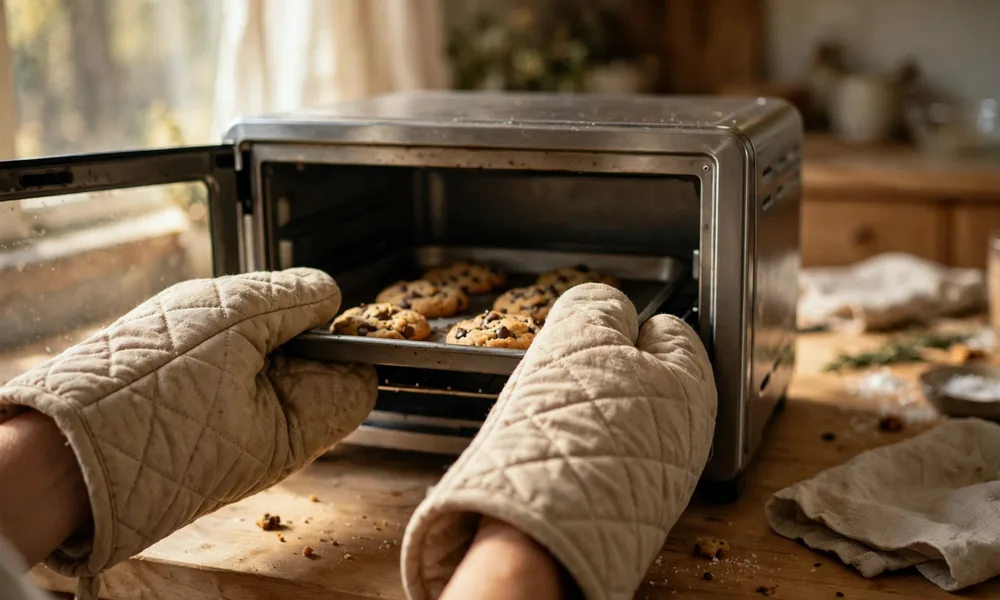
The best toaster ovens of 2026 are the ones that hold their temperature, heat evenly and fit the way you actually eat. Look for elements top and bottom that you can control separately, so you can brown the top of a dish without burning the bottom, and for a fan that runs quietly enough that you forget it is there. Two rack positions, a removable crumb tray that slides out smoothly, and a baking pan that actually fits the interior are the everyday features that separate good toaster ovens from frustrating ones. A digital display is nice to have, but a simple dial that tells the truth is worth more than a fancy screen that lies by twenty degrees.
The best toaster ovens also win on the small details that decide whether the machine gets used every day. The door should open smoothly and stay where you put it, the rack should slide out without catching, and the crumb tray should come out with one hand so you can empty it instead of letting crumbs build up and smoke. A light inside the cavity is genuinely useful, because a toaster oven is small enough that you need to see what is happening without opening the door and losing the heat. The best machines also stay cool enough on the outside that you can set a tea towel down nearby without worrying, and they switch themselves off reliably when the timer ends.
The Worst Toaster Ovens of 2026
The worst toaster ovens of 2026 share the same faults whatever their price, and the first of them is a thermostat that lies. A cheap toaster oven will claim to be at 200 degrees while the inside is barely at 170, or it will overshoot to 230 and burn the top of everything before the middle is cooked. Some of the worst machines have no thermostat worth the name at all: they simply run the elements at full power and rely on a timer, so the longer you cook, the hotter it gets. That is fine for toast, which takes two minutes, and useless for anything else, which is why so many cheap toaster ovens end up used for toast alone.
Hot spots are the second fault, and they are the one that ruins baking. On the worst toaster ovens one corner of the rack runs far hotter than the rest, so a tray of biscuits comes out burnt on one side and pale on the other, and a pizza browns in patches. The elements are often thin and unevenly spaced, the fan either does not exist or does nothing, and the cavity is shaped so the heat pools at the top. Flimsy racks that sag under a tray of food, crumb trays that jam and will not slide out, and doors that spring shut or fall open are the other signs of a machine built to a price rather than to a standard.

Toasting, Baking and Reheating: Three Different Tests
Toasting is the job every toaster oven is bought for, and it is also the easiest to get wrong. The best toaster ovens brown both sides of the bread evenly, with elements that wrap the heat around the slice and a rack that holds it in the centre. Our comparison of the best and worst toasters of 2026 shows how much even browning matters, and the same test applies here: if one side of the bread comes out pale while the other turns black, the machine has failed, whatever the dial says. A toaster oven has one advantage over a slot toaster, though, which is that you can toast thick sourdough, bagels and crumpets that would never fit in a slot.
Reheating is where a good toaster oven beats every other appliance in the kitchen, and it is the test that decides whether owners love their machine or leave it in a cupboard. A slice of pizza reheated in a toaster oven comes back crisp underneath and melted on top, while the same slice reheated in a microwave comes back soft and soggy. The same honest comparison sits behind our guide to the best and worst microwaves of 2026, because a microwave is faster but a toaster oven is better at almost everything except speed. Baking is the hardest test of all: a small tray of biscuits will expose a lying thermostat and a hot spot within ten minutes, so test any toaster oven on biscuits inside the return window.
How to Choose the Right Toaster Oven for Your Kitchen
Start by measuring, because size is the mistake most buyers make. Measure your counter, check the height under your cupboards, and check the interior fits a 12-inch pizza or a quarter sheet pan before you buy. A toaster oven that is too big will dominate a small kitchen and end up pushed into a corner where it never gets used, while one that is too small will not fit the food you actually cook. Then check the practical things: the parts should come apart easily, the crumb tray should slide out with one hand, and the pan and rack should be easy to wash. A toaster oven that takes ten minutes to clean after a five-minute job is one you will stop reaching for.
Then buy for the cooking you do every week, not the cooking you imagine doing one day. If you mostly toast bread and reheat leftovers, a compact model will serve you well for years. If you bake, roast vegetables and cook for two or three people most nights, a mid-size convection model is the right buy, and it is worth stretching your budget for one with an honest thermostat. Buy from somewhere with a generous return window, and test the machine on a tray of biscuits inside that window: if they bake evenly, you have a keeper, and if they burn on one side, send it back.

The Verdict
The best toaster ovens of 2026 are the ones that hold their temperature, heat evenly, fit your counter and your cooking, and last long enough that you forget what you paid for them. A compact model for toast and reheating, a mid-size convection model for most households, and a large air fry model for families who want one machine to do everything: buy the right size, check the thermostat with a tray of biscuits, and test it inside the return window. The worst toaster ovens are the ones that look like a bargain and turn out to be a repeat purchase, so spend a little more once and buy a machine that will still be toasting, baking and reheating in ten years.


