
A watch winder is the quiet machine that keeps an automatic watch running while you are not wearing it. An automatic winds itself from the movement of your wrist, so the moment it spends a few days in a drawer, it stops. Then comes the small ritual of resetting the time and date every time you pick it up. A watch winder turns the watch gently while it rests, so it is wound, set, and ready when you are.
The difference between a good winder and a poor one is not how it looks on the dresser, though that matters too. It is whether the turning is smooth, slow, and right for your watch. A winder that spins too fast, too long, or in only one direction can do more harm than leaving the watch still.
Key Takeaways
- A watch winder rotates an automatic watch to keep it wound. A box keeps a watch safe, but it cannot keep it running.
- The best winders turn slowly and rest between turns, in both directions, matching how a wrist moves through a normal day.
- Turns per day should be adjustable. Different automatic movements need different amounts of winding.
- A quiet motor matters more than a pretty case. A winder that hums or clicks will be switched off.
- Match the cushion to the watch: too tight stretches the strap, too loose lets the watch slip while it turns.
What a Watch Winder Actually Does
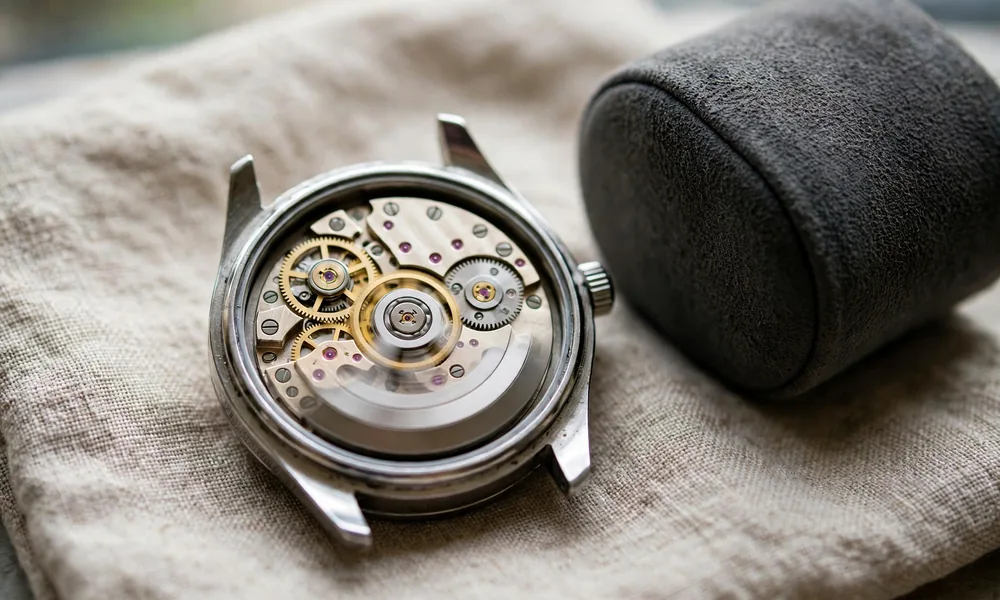
An automatic watch has a small weighted rotor inside it that swings as your wrist moves, winding the mainspring that powers the watch. Leave the watch still for a day or two and the stored power runs out: most automatics stop after around two days. A winder replaces your wrist with a slow, regular rotation, so the rotor keeps swinging and the mainspring stays wound.
That is a different job from storage. A watch box holds a watch safely and keeps dust and daylight off it, but a box cannot wind anything. If you own one automatic that you wear most days, you may not need a winder at all: your wrist does the work. A winder earns its place when you own two or more automatics, or when your watch has a calendar complication that is a nuisance to reset.
A winder also keeps the oils inside the movement distributed. A watch that sits still for months can develop dry spots in its lubrication, and a watch that runs gently stays in better health.

The Types of Watch Winder You Will Find
Most winders fall into three groups, and the right one depends on how many watches you own.
Single winders
A single winder holds one watch on one rotating cushion. They are compact enough for a bedside table, they cost the least, and they suit one automatic worn on weekends. Their weakness is that they do not grow with a collection: buy a second automatic later, and you will be buying a second winder too.
Double and multiple winders
Double winders hold two watches, and larger cabinets hold four, six, or more, often with extra storage drawers. They suit a small collection and are better value per watch than buying singles. The trade-off is size: a four-watch winder is a piece of furniture, not a bedside accessory, and it needs a permanent home on a dresser.
Travel winders
Travel winders are small, single-watch cases that run on batteries and pack into a bag, made for trips where you want to keep a watch running without wearing it every day. They are not a substitute for a home winder: they are usually noisier, and their batteries need replacing.
What to Look For Before You Buy
Start with turns per day, usually written as TPD: how many times the winder rotates in a day. It should be adjustable. Most automatic movements need between 650 and 900 turns a day, but the exact number depends on the movement inside your watch. Look for one with several settings, ideally with both clockwise and anticlockwise rotation.
Next, listen to the motor. This is the test most buyers skip, and the one they regret skipping. A good winder makes almost no sound: a faint whisper when it turns, and silence when it rests. A cheap motor hums, clicks, or buzzes, and a buzzing winder on a bedside table will be switched off within a week.
The cushion deserves the same attention. It should grip the watch firmly without squeezing it. A cushion that is too small lets the watch slide and bang against the case as it turns; one that is too large stretches a leather strap. Many winders come with a cushion you can adjust or swap, and that flexibility is worth paying for.
Think about power. A mains-powered winder suits one that lives on a dresser and runs every day. A battery-powered winder suits a travel case or a wardrobe without a socket nearby, but flat batteries mean a stopped watch.
Finally, look at the case honestly. A winder lives on display, so it should look like it belongs in your room, but the case is also protection. A glass front keeps dust off the watch while letting you see it. Wood, leather, and lacquer all look good when they are well made, and all look cheap when they are not. If you are choosing storage to go with it, our guide to the watch boxes worth keeping on your dresser covers the boxes that pair well.
Comparison Table
| Type | Best for | Watches held | Power | Price |
|---|---|---|---|---|
| Single winder | One automatic | 1 | Mains or battery | Low |
| Double winder | Two-watch rotation | 2 | Mains | Mid-range |
| Multiple cabinet | Small collection | 4 or more | Mains | Higher |
| Travel winder | Trips away | 1 | Battery | Low to mid-range |
The table makes one thing clear: there is no single best winder, only the best winder for the number of watches you own. A single winder is the right answer for one watch, and a cabinet is the right answer for four. And if the watch itself is the thing you are still choosing, our guide to watches that look expensive without the price tag is a good place to start.
How to Set Up a Watch Winder Properly
Setting up a winder takes ten minutes. First, find out what your watch needs: the movement inside it has a recommended turns-per-day figure, usually printed in the manual. Set the winder to the lowest figure that keeps the watch running. More turning is not better turning: extra rotation adds wear without any benefit.
Second, wind the watch fully by hand before you put it on the winder, or wear it for a day first. A winder maintains a wound watch; it is not designed to wind a stopped watch from nothing.
Third, fit the watch to the cushion carefully. Close the clasp, centre the watch on the cushion, and make sure it cannot slide. Then place the cushion in the winder, close the case, and let it run for a day. Check the time the next day: if the watch has gained or lost more than usual, adjust the setting.

What a Winder Cannot Do
A winder cannot service a watch. If your automatic is running fast, losing time, or stopping even on the winder, the movement needs a watchmaker, not more turning. A winder keeps a healthy movement running; it cannot fix a tired one.
A winder also cannot protect a watch from everything. It keeps dust off while the case is closed, but it does not make the watch waterproof or shockproof. Keep the winder somewhere stable, away from the edge of the table and away from strong magnets such as speakers, which can disturb a mechanical movement. A jewellery box with a soft lining is the right home for the pieces you are not winding.
Finally, a winder cannot make a quartz watch run. Quartz watches use a battery, not a rotor, and putting one on a winder does nothing except wear out the winder. If your collection is mostly quartz, spend the money on storage instead, and save the winder for the automatics.
Common Mistakes
The most common mistake is setting the turns per day too high. A watch that is already fully wound simply slips its mainspring and gains nothing from extra turns. The extra rotation only adds wear. Use the lowest setting that keeps the watch running, and no more.
The second mistake is leaving a watch on the winder for months without wearing it. A winder is for rotation, not for storage. Take it off every few weeks, wear it for a day, and check that everything is as it should be.
The third mistake is buying a winder before checking the direction your watch winds. Some movements wind in one direction only, and a winder set to the wrong direction will not wind them at all. Check the movement and set the direction to match.
Checklist: Before You Buy a Watch Winder
- Turns per day are adjustable, with a range that covers your watch movement’s needs.
- It rotates in the direction your watch winds, or both ways.
- The motor is quiet enough to run in a bedroom without being noticed.
- The cushion fits your watch snugly without stretching the strap or letting the watch slip.
- Power suits where it will live: mains for a dresser, battery for travel or a wardrobe.
- The case is sturdy, closes properly, and keeps dust off the watch.
Frequently Asked Questions
Do I need a watch winder if I only own one automatic watch?
Probably not. If you wear the watch most days, your wrist keeps it wound. A winder earns its place when you rotate between two or more automatics, or when your watch has a calendar complication that is a nuisance to reset every time it stops.
Can a watch winder damage my watch?
A good winder will not. Damage comes from winders that turn too fast or with a jerky motion, and from cushions that let the watch bang around. A well-made winder that turns slowly, rests between turns, and holds the watch firmly is gentle on a movement.
How many turns per day does my watch need?
It depends on the movement, but most automatics need between 650 and 900 turns a day. Your watch manual usually gives the figure. Start at the low end of the range and increase only if the watch stops or loses time.
Should I leave the winder running all the time?
Yes, if a watch is on it. A winder is designed to run continuously, turning for a while and then resting, mimicking the way a wrist moves and rests through a day. Switch it off only when no watch is mounted on it.
Can I put a quartz watch on a winder?
You can, but it does nothing. A quartz watch runs on a battery and has no rotor to wind, so the turning has no effect on it. Save the winder for automatic watches and store quartz watches in a box.
Is a noisy winder a sign of a fault?
Not always, but it is a sign of a cheap motor. A little sound when the winder turns is normal, but a hum or buzz you can hear across the room means the motor is poor quality. If the noise appears suddenly on a winder that was quiet before, the motor may be wearing out.
The Bottom Line
A watch winder is a small kindness to a watch you love: it keeps it wound, set, and ready, so you can pick it up and wear it without the resetting ritual. The best watch winders of 2026 turn slowly and quietly, let you adjust the turns per day and the direction, and hold your watch snugly without stretching its strap. Buy a single for one watch, a double or cabinet for a collection, and a travel winder for trips.


