Top Weight Plates 2026: Bumper, Cast Iron and Calibrated Plates Compared
The top weight plates in 2026 are the ones that fit your bar snugly, survive being dropped, and weigh what they claim to weigh, not the cheapest discs in the sale or the prettiest set on the rack. Weight plates are the load itself: the iron and rubber that turn an empty bar into a training weight. Every squat, deadlift, press and clean you do is only as honest as the plates on the bar, so choosing the right type matters far more than most lifters realise.
Bumper plates, cast iron plates, calibrated steel plates and fractional plates now crowd the same price range, and the differences are not obvious from a product photo. The best weight plates for you depend on how you train, how much you lift and where you train.
Key Takeaways
- Bumper plates are the best all-round choice for most home gyms: quiet, floor-friendly and safe to drop from overhead.
- Cast iron plates are the cheapest per kilogram and the best value for slow powerlifts, but they are loud and hard on floors.
- Calibrated steel plates are the most accurate plates you can buy, weighed to within grams, and the right choice for competition lifters.
- Check the centre hole: Olympic plates need a 50 mm hole, and a loose or tight fit is a problem every session.
- Buy plates in kilograms or pounds and stick to one system, because mixing the two makes loading the bar a maths test.
How We Picked the Top Weight Plates
We judged every weight plate on five things: accuracy, durability, fit, noise and value. The weight should be honest, because a plate marked 20 kg that weighs 19 kg cheats your progress. The plate should survive drops without cracking or chipping, the centre hole should fit a 50 mm Olympic sleeve snugly, and the price per kilogram should be fair for the years of training the plates will deliver.
Top Weight Plates by Type
Each type earns its place for a different reason. The table below compares them at a glance.
Bumper Plates: Best for All-Round Home Training
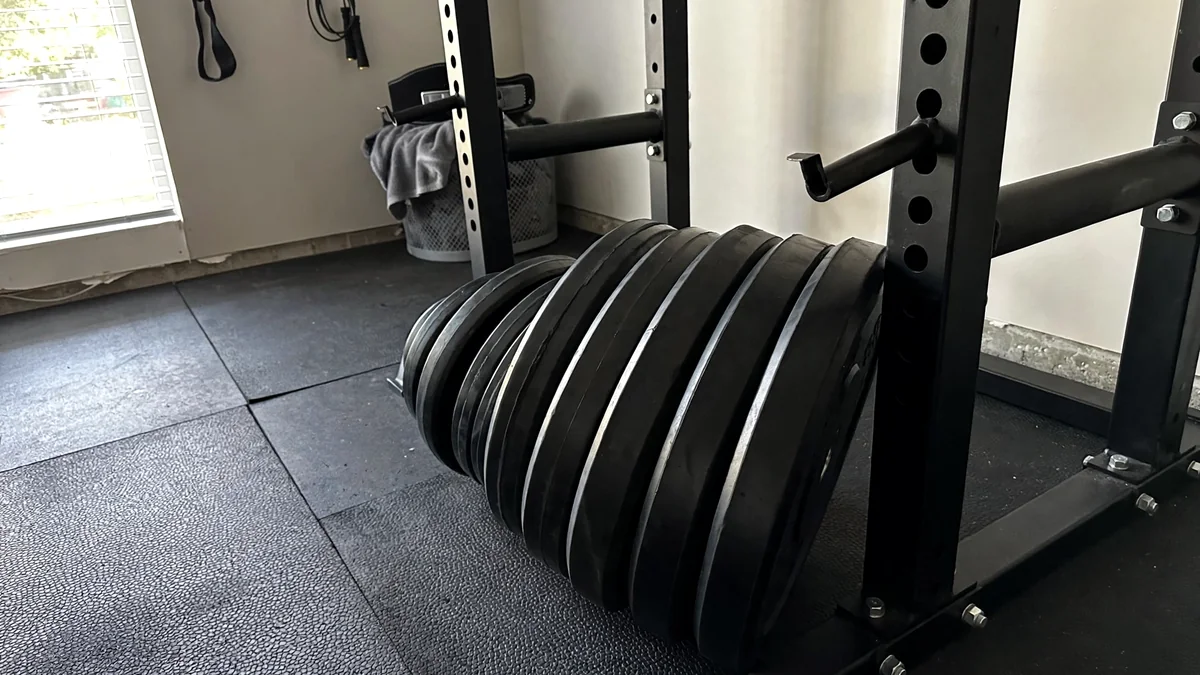
Bumper plates are solid rubber discs, usually black, with a steel centre ring. They are the standard plate for Olympic lifting and for any home gym where the bar gets dropped, because rubber absorbs the impact instead of passing it into your floor and your bar. Most home lifters should start here. The trade-off is thickness: a 20 kg bumper plate is far wider than a 20 kg iron plate, so you fit fewer plates on the bar, and bumper plates cost more per kilogram than iron. Our guide to the best barbells of 2026 explains how bumper plates pair with a bar built to be dropped.
Cast Iron Plates: Best Value for Powerlifting
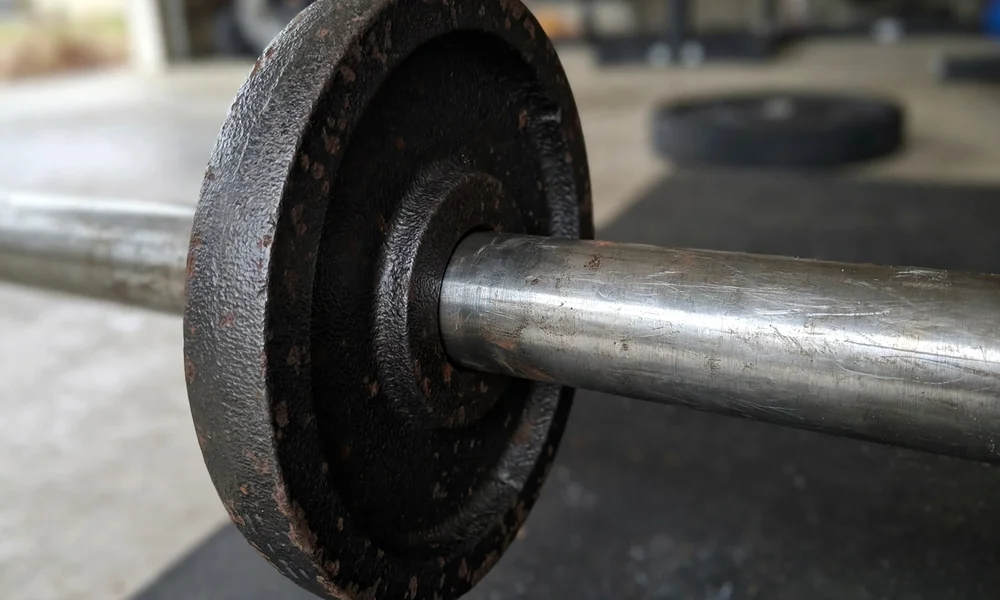
Cast iron plates are the classic gym plate: a solid disc of iron, often with handles cut into the rim and a baked enamel or powder-coat finish. They are thin, so you can load far more weight on the bar than with bumpers, and they are the cheapest plates per kilogram. For slow powerlifts, squats, bench press and deadlifts where the bar is never dropped, iron plates are the best value. The downside is noise and damage: iron plates clang, they chip concrete and wooden floors, and they can bend a bar if dropped from height.
Calibrated Steel Plates: Best for Competition Lifters
Calibrated plates are thin steel discs machined to exact weights, usually accurate to within 10 to 20 grams, and colour-coded by weight like competition plates. They are the plates used in powerlifting competitions, and they are the right choice if you compete or if you want your training numbers to be exact. They are also the thinnest plates available, so you can load a bar to its full capacity. The trade-off is price: calibrated plates cost several times more per kilogram than iron, and they are not meant to be dropped.
Fractional and Change Plates: Best for Small Progress
Fractional plates, also called change plates, weigh 0.25 kg to 2.5 kg and let you add weight in small steps. They are the most underrated plates in any home gym, because strength builds in small increments and jumping from 60 kg to 65 kg is too big a leap for most lifts. A set of 0.5 kg and 1 kg plates costs little and extends the life of every other plate you own. If you train with a belt for heavy lifts, our guide to the best weightlifting belts of 2026 covers the support that pairs with small, steady progress.
What Makes a Weight Plate Worth Buying
The best weight plates share a few qualities no matter what they cost. The weight is honest, the centre hole fits the bar, the material survives your training, and the plate stays round and flat. Cheap plates fail on exactly these points: weights are off by a kilogram or more, holes are too tight or too loose, rubber cracks and crumbles, and iron chips and rusts. Accuracy is the hidden difference: a set where every plate is a little light makes your lifts look better than they are, and a set where plates vary makes loading uneven, which twists the bar.
Top Weight Plates Compared
| Plate Type | Best For | Accuracy | Typical Price | Downside |
|---|---|---|---|---|
| Bumper, rubber | Home gyms, Olympic lifts | Good, ±1% | £2–£4 per kg | Thick, fewer fit on the bar |
| Cast iron | Powerlifting, value | Fair, ±3% | £1–£2 per kg | Loud, hard on floors |
| Calibrated steel | Competition lifters | Excellent, ±0.1% | £5–£9 per kg | Expensive, not for dropping |
| Fractional, 0.25–2.5 kg | Small progress steps | Good, ±1% | £20–£50 a set | Too light to train with alone |
| Urethane coated | Quiet gyms, clean floors | Good, ±1% | £3–£6 per kg | Costs more than iron |
Centre Holes, Diameter and Fit Explained
The centre hole is the detail most buyers forget to check, and the one they regret ignoring. Olympic plates need a 50 mm hole to fit an Olympic bar sleeve, and the fit should be snug: loose enough to slide on easily, tight enough not to rattle. A plate that rattles on the bar shifts during a lift and throws your balance off, while a plate that sticks needs hammering on and off, which damages the sleeve. Beware of plates sold as Olympic that actually have a 51 mm or 52 mm hole.
Diameter matters too. A standard 450 mm diameter plate puts the bar at the right height for a deadlift, about 22 cm off the floor, which is the competition standard. Smaller plates sit lower and change your deadlift starting position, which is fine for technique work but not for serious deadlifts.
Thickness decides how much weight fits on the bar. A 20 kg bumper plate is about 70 mm thick, while a 20 kg iron plate is about 50 mm and a 20 kg calibrated plate is about 30 mm. On a standard bar with 40 cm of loadable sleeve, that is the difference between 200 kg of bumpers and 400 kg of calibrated plates. If you lift heavy, thin plates are not a luxury, they are a necessity.

How Many Weight Plates Do You Need?
A useful starter set for one lifter is two 20 kg plates, two 10 kg plates, two 5 kg plates and two 2.5 kg plates, plus a pair of fractional plates. That covers a 60 kg deadlift with room to grow, and you add pairs of 20 kg and 25 kg plates as you get stronger.
Buy in kilograms or pounds and stick to one system. Mixing the two makes loading the bar a maths test, and it makes sharing plates with a training partner confusing. Kilograms are the standard in most gyms outside the United States, and competition plates are sold in kilograms, so a kilogram set is the safer long-term choice.
Storage is the other constraint. A full set of plates weighs hundreds of kilograms and takes real floor space, so plan for a plate tree or a wall-mounted rack before the plates arrive. Plates stored on the floor get tripped over, chip each other and rust faster. A plate tree keeps them organised, off the floor and easy to load. Our guide to the best squat racks of 2026 shows how plate storage fits into a complete home gym setup.
Weight Plate Care: Keep Your Plates Accurate and Rust-Free
Plates last decades with simple care. Wipe rubber bumpers down after a sweaty session, brush iron plates with a wire brush if rust appears, and oil the centre ring lightly to keep it from seizing on the sleeve. Store plates on a tree or a rack, never stacked loose on a damp floor, because iron rusts and rubber degrades in standing water. Never drop iron or calibrated plates from height: the shock chips iron, bends thin steel and cracks the floor underneath.
Check your plates once a year on a bathroom scale. A plate that has lost a kilogram to rust or a chunk of rubber is a plate that lies about your lifts, and a set that drifts apart makes loading uneven. Replace damaged plates rather than training around them, and keep fractional plates in a small box near the rack so they do not get lost.

Weight Plate Buying Checklist
- Choose bumper plates for a home gym where the bar gets dropped, and cast iron plates for slow powerlifts on a budget.
- Check the centre hole is 50 mm and fits your bar snugly without rattling or sticking.
- Weigh a sample plate if you can: it should be within 1% of its marked weight.
- Buy full-diameter 450 mm plates so deadlifts start at the right height.
- Pick one system, kilograms or pounds, and do not mix the two on the same bar.
- Budget for a plate tree or rack, and add a set of fractional plates for small progress steps.
Frequently Asked Questions
What are the best weight plates for a home gym?
Bumper plates are the best weight plates for most home gyms. They are quiet, floor-friendly and safe to drop from overhead, and a good set lasts for years. Add a pair of fractional plates for small progress steps.
Are bumper plates or iron plates better?
Bumper plates are better if you drop the bar, train Olympic lifts or care about your floor. Iron plates are better if you lift heavy on a budget and never drop the bar, because they are thinner and cheaper per kilogram.
How accurate should weight plates be?
Good plates are accurate to within 1% of their marked weight, so a 20 kg plate should weigh between 19.8 kg and 20.2 kg. Calibrated plates are accurate to within 0.1%.
How many weight plates do I need to start?
A starter set is two 20 kg plates, two 10 kg plates, two 5 kg plates and two 2.5 kg plates, plus fractional plates. That covers a 60 kg deadlift with room to grow, and you add heavier pairs as you get stronger.
Do weight plates fit all barbells?
No. Olympic plates have a 50 mm centre hole and fit Olympic bars, while standard plates have a one-inch hole and fit only standard bars. Check your bar’s sleeve diameter before you buy plates.
Should I buy weight plates in kilograms or pounds?
Buy kilograms if you train in a gym that uses kilograms or plan to compete, because competition plates are sold in kilograms. If you already own pounds plates, stay with pounds rather than mixing the two systems.
Bottom Line
The top weight plates for most home gyms in 2026 are rubber bumper plates with a 50 mm centre hole, full 450 mm diameter and accuracy within 1% of their marked weight, plus a set of fractional plates for small progress steps. Buy for the lifter you will be in a year, and check the fit and the weight before you buy.