A good night of sleep can feel out of reach when your mind will not slow down. You toss, you turn, and the hours slip away. For many people, the answer is not another gadget or a stronger sleep aid. It is something far simpler: the best weighted blankets for better sleep in 2026, a heavy, evenly distributed layer that helps your body settle and your breathing slow.
A weighted blanket works through gentle, even pressure across your body, a sensation often called deep pressure stimulation. It feels a little like a firm hug, and that pressure can calm the nervous system and make it easier to drift off. People who struggle with light sleep or anxiety at bedtime often notice the difference on the very first night.
Not every weighted blanket is worth buying, though. The wrong weight can feel suffocating, the wrong fabric can trap heat, and cheap fillings can shift into lumps. This guide walks through how to pick the right weight and the best materials for every season.
Key takeaways
- Choose a blanket that weighs about 10 percent of your body weight for the most comfortable pressure.
- Glass microbeads distribute weight more evenly than plastic pellets and stay cooler through the night.
- Breathable cotton or bamboo covers matter more than brand names if you sleep hot.
- Weighted blankets suit most adults, but children under three should never use one.
- Wash the removable cover weekly and the inner blanket only as directed.
What Makes a Weighted Blanket Different
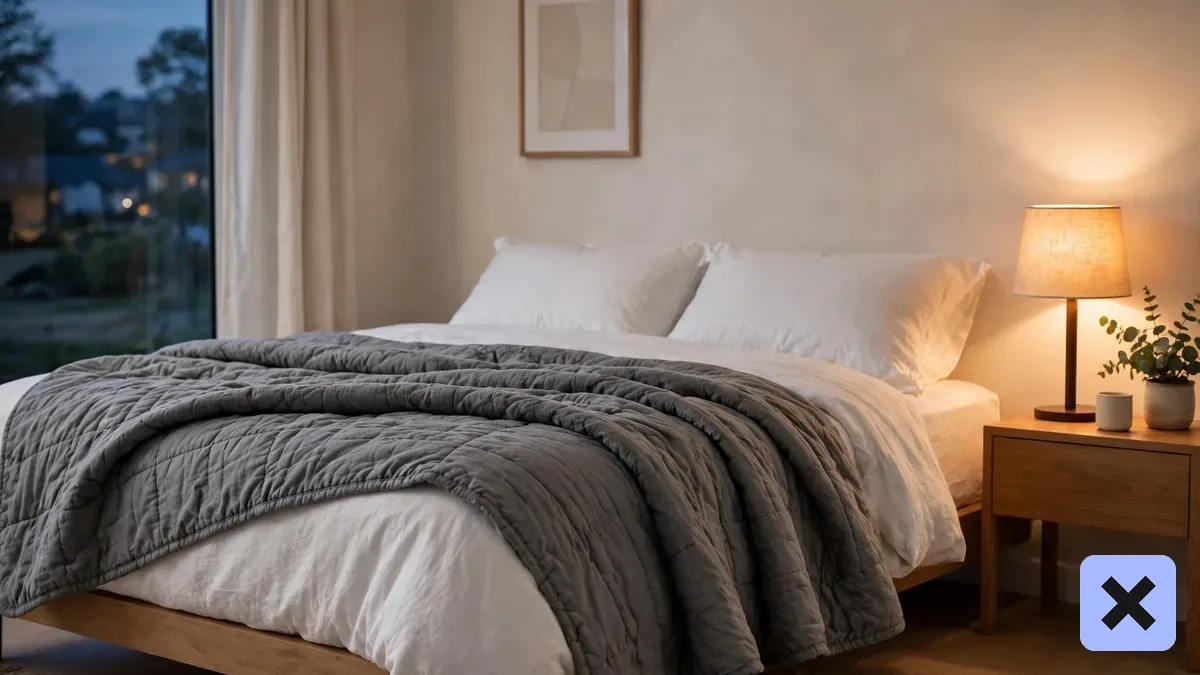
A weighted blanket looks like an ordinary throw, but its construction is entirely different. Inside the fabric shell, the weight is divided into dozens of small square compartments, each filled with the same amount of tiny glass beads or plastic pellets. This grid stops the filling from pooling in one corner and keeps the pressure even from your shoulders to your feet.
That even pressure is the whole point. A regular duvet rests lightly on top of you and moves whenever you shift. A weighted blanket stays put, moulding gently to your body. Studies link this deep pressure to lower heart rate and reduced cortisol.
The effect is subtle rather than dramatic. Most people describe falling asleep a little faster, waking up less often, and feeling more rested in the morning. The blanket does not fix every sleep problem, but for restless sleepers it removes one of the biggest obstacles: the feeling of being unsettled in your own bed.
How Weighted Blankets Help You Sleep
Sleep is not just about feeling tired. Your body needs signals that it is safe to let go, and pressure is one of the oldest signals there is. Babies calm down when they are swaddled, and adults respond the same way to a firm, even weight across the torso.
Many users report that their legs stop twitching and their urge to keep shifting position fades. The weight discourages tossing and turning, which means fewer micro-awakenings through the night. Even if you do not remember waking, those small disturbances fragment your sleep and leave you groggy.
The benefits extend beyond the bedroom. People who use a weighted blanket while reading or watching television often feel calmer and more focused. Pairing it with other sleep basics, like the best sleep masks for blocking out light, can turn an ordinary bedroom into a restful space.

How to Choose the Right Weight
Weight is the single most important decision: pick a blanket that weighs roughly 10 percent of your body weight. A person who weighs 70 kilograms should look at a 7 kilogram blanket, while someone at 90 kilograms will be more comfortable with a 9 kilogram option. Most brands sell blankets in steps of 2 to 3 kilograms, so choose the closest size.
Size matters almost as much as weight. A weighted blanket should cover your body, not your whole bed. If it drapes over the edges, gravity pulls it off during the night and the weight distribution changes. A single sleeper usually needs a twin or full size, while a couple needs a queen or king.
Best Weighted Blankets for Better Sleep 2026
The best weighted blanket is the one that matches your weight, your temperature, and your sleeping style. The table below compares the main types at a glance.
| Blanket type | Best for | Weight range | Warmth |
|---|---|---|---|
| Glass bead cotton | Everyday sleepers | 5 to 12 kg | Medium |
| Bamboo cooling | Hot sleepers | 5 to 11 kg | Cool |
| Chunky knit | Lounging and naps | 5 to 7 kg | Warm |
| Kids weighted blanket | Children over three | 2 to 5 kg | Medium |
| Dual-sided minky | Cold sleepers | 5 to 12 kg | Very warm |
Glass Bead Cotton Blankets
The classic weighted blanket uses tiny glass microbeads inside a cotton shell, and it remains the best all-round choice for most people in 2026. Glass beads are dense, so the blanket stays thin and drapes well instead of feeling bulky. Look for a model with a removable, washable cotton cover and small stitched compartments, so the beads cannot migrate.
Bamboo Cooling Blankets
Hot sleepers often give up on weighted blankets because they overheat, but bamboo covers change that equation. Bamboo fabric wicks moisture and breathes far better than polyester, and the best cooling models pair it with a lightweight glass bead fill. Keep the bedroom cool as well, and consider a white noise machine for sleep to mask household sounds while the blanket does its work.
Chunky Knit Blankets
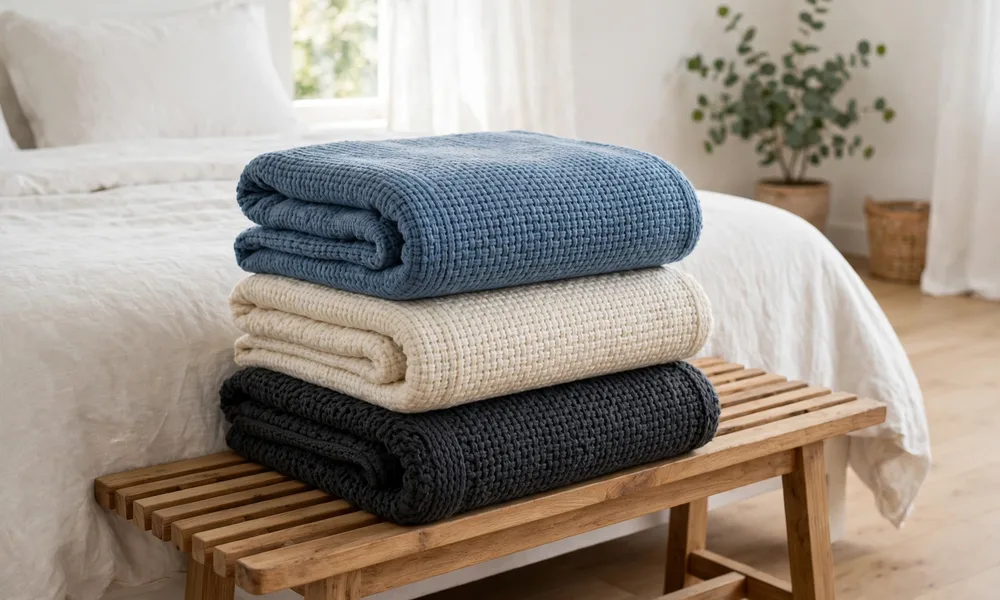
Chunky knit weighted blankets are made from thick woven yarn rather than beads, and they look beautiful draped over a sofa or the end of a bed. They breathe well and feel soft against the skin, which makes them excellent for reading, napping, and relaxing. They are less practical as a full-night sleep blanket because they are usually lighter and harder to wash.
Kids Weighted Blankets
Children over three can benefit from a lighter weighted blanket, typically 10 percent of their body weight and never more than 5 kilograms for a young child. The blanket should be sized to the child, not the bed, and a parent should always be able to lift it easily off the child. Choose a washable cover and avoid any model with loose beads or weak stitching.
Materials and Fabrics That Matter
The cover fabric decides whether your blanket feels cool, warm, soft, or scratchy, so it deserves as much attention as the weight. Cotton is the safest default: breathable, durable, and easy to wash. Bamboo viscose is the coolest option, while minky fleece is the warmest and feels soft in winter.
Inside the blanket, glass microbeads are the best filling for most buyers. They are hypoallergenic, silent, and dense enough to keep the blanket slim. Plastic poly pellets are cheaper but bulkier, noisier, and more likely to trap heat. Some premium blankets use a layered construction with a breathable inner liner, which helps the beads stay in place.
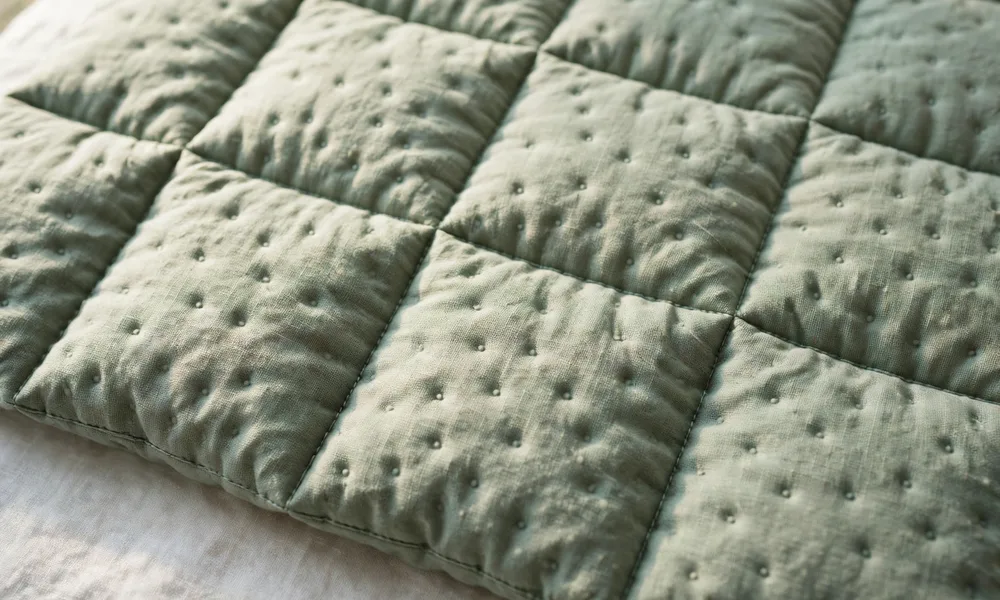
Check the stitching before you buy. The compartments should be small and evenly filled, with reinforced seams that will survive the washing machine. A blanket with a duvet-style cover is easier to keep clean, because you can wash the cover weekly and the heavy inner blanket far less often.
Who Should Use One and Who Should Skip It
Most healthy adults can use a weighted blanket safely, and the people who benefit most are light sleepers, anxious sleepers, and anyone who feels restless at bedtime. People with insomnia often find the gentle pressure helps them stop clock-watching and settle faster.
Some people should skip weighted blankets entirely. Children under three should never use one, because they cannot push it off themselves. Adults with sleep apnoea, breathing difficulties, low blood pressure, or claustrophobia should talk to a doctor first.
Pregnant people should check with their doctor before using a weighted blanket, especially in the later stages of pregnancy. When in doubt, a lighter blanket used over the legs only is a gentler way to test whether the pressure suits you.
Care and Cleaning
A weighted blanket is heavier than ordinary bedding, so cleaning needs a little planning. The removable cover can go in the washing machine on a gentle cycle with mild detergent, and it should be washed weekly like any other bedding. Line dry it or tumble dry on low, and avoid fabric softener.
The inner blanket should be washed far less often, usually every few months or when it is visibly soiled. Many glass bead blankets are machine washable on a gentle cycle, but check the label first, because some are spot clean only. Use a front-loading machine when possible, since a top loader with a central agitator can stress the seams.
Between washes, air the blanket out in fresh air and sunlight when you can. A quick shake restores the loft of the compartments and keeps the beads evenly spread. Store the blanket folded flat rather than hanging it.
Weighted Blanket Buying Checklist
- Match the weight to about 10 percent of your body weight, rounding down if you are between sizes.
- Pick a size that covers your body, not the whole bed, so gravity does not drag it off at night.
- Choose glass microbeads over plastic pellets for even weight, less bulk, and cooler sleep.
- Match the cover to your temperature: bamboo for hot sleepers, cotton for most people, minky for cold sleepers.
- Check that the compartments are small and the seams are reinforced before you commit.
- Buy a model with a removable, machine-washable cover to make cleaning simple.
Frequently Asked Questions
How heavy should my weighted blanket be?
Aim for about 10 percent of your body weight. A 70 kilogram adult should choose a 7 kilogram blanket, and a 90 kilogram adult should choose a 9 kilogram one. If you are between sizes, pick the lighter option, because a blanket that is too heavy can feel restrictive.
Can I sleep under a weighted blanket all night?
Yes, most adults can use a weighted blanket all night once they are used to it. Give yourself a week to adjust, starting with a few hours at bedtime and building up to the full night. If you feel hot or trapped at any point, remove the blanket and try a lighter weight or a cooler cover.
Are weighted blankets safe for children?
Weighted blankets are safe for children over three when the blanket weighs about 10 percent of the child’s body weight and the child can remove it unaided. Never use one for a baby or toddler under three. Choose a washable cover and check the stitching regularly for loose beads.
Do weighted blankets really help with anxiety?
Many users report feeling calmer under a weighted blanket, and the deep pressure effect is supported by research into the nervous system. The blanket is not a treatment for anxiety on its own, but it can be a useful part of a bedtime routine.
Can I wash a weighted blanket in the washing machine?
Most glass bead blankets with a removable cover are machine washable on a gentle cycle, but always check the care label first. Wash the cover weekly and the inner blanket every few months. Use a front-loading machine when possible and dry on low heat or flat to protect the seams.
What is the best weighted blanket for hot sleepers?
A bamboo cooling blanket with glass microbeads is the best choice for hot sleepers, because bamboo wicks moisture and breathes better than cotton or polyester. Pair it with lightweight bedding and a cool room. For winter, the best throw blankets for cold nights offer a warmer alternative when a cooling blanket feels too light.
The Bottom Line
The best weighted blankets for better sleep in 2026 are the ones that fit your body, your temperature, and your habits. Choose a blanket at about 10 percent of your body weight, pick glass beads in a breathable cover, and give yourself a week to adjust. Get those three decisions right and the blanket becomes the reason you sleep deeper and wake up feeling rested.