Why Wind Spinners Make a Garden Feel Alive in 2026
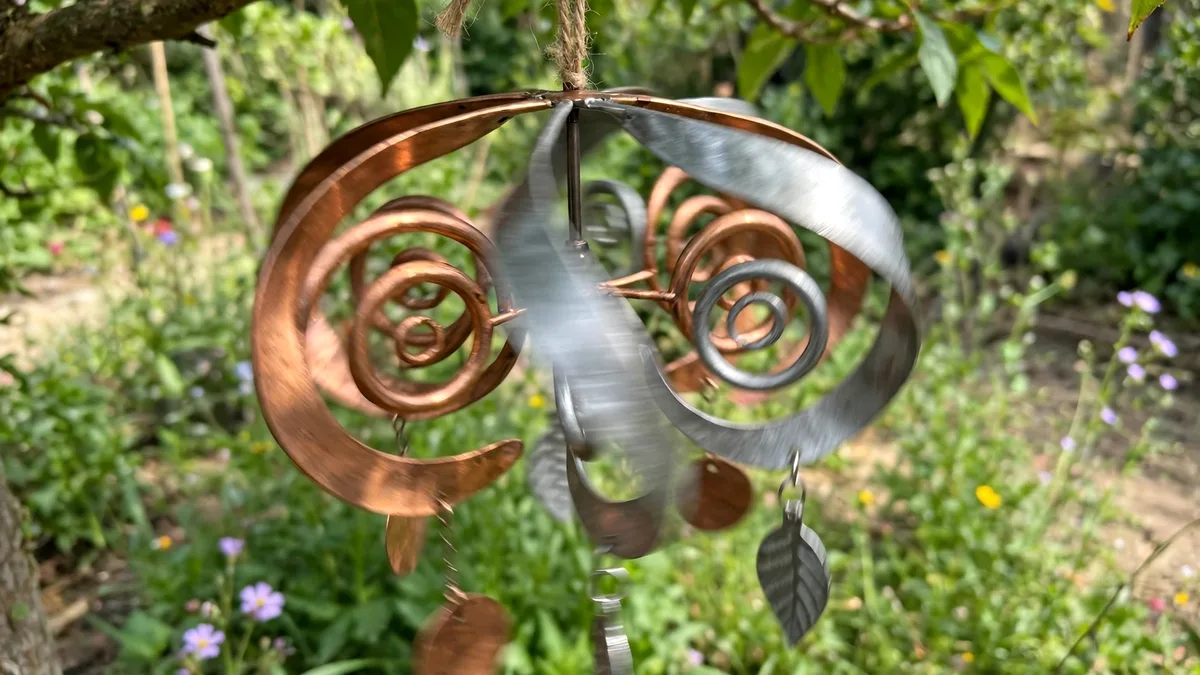
Why do wind spinners make a garden feel alive when everything else in it stands still? Because a wind spinner is the one garden ornament that moves: it catches the lightest breeze and turns it into slow, silent motion, flashing copper and steel as it turns. A good wind spinner adds movement and colour without making a sound or needing power. This guide explains which types suit which garden, and how to choose one that keeps spinning for years.
Key Takeaways
- A wind spinner is a silent, kinetic ornament: it moves in the breeze and adds life to a garden without making any noise at all.
- Hanging spinners suit trees, porches and pergolas, while stake spinners suit beds, borders and lawns where there is nothing to hang from.
- The bearing decides whether a spinner spins: a sealed ball bearing turns in a light breeze, while a cheap swivel sticks and squeaks.
- Copper and stainless steel last longest outdoors; painted steel rusts first, and glass looks beautiful but breaks in a fall.
- Hang or place a spinner where the wind reaches it and where you can see it from the house, not in a sheltered corner behind a fence.
What a Wind Spinner Is, and What It Is Not
A wind spinner is a kinetic garden ornament: shaped metal, glass or plastic blades arranged around a central spindle, so the wind pushes the blades and the whole piece turns. The classic form is a hanging spinner, a flat spiral or a three-dimensional ball of curved blades suspended from a hook, turning slowly and catching the light. The movement is the whole point: a spinner that does not turn is just a sculpture.
It is not a wind chime, though the two are often sold side by side. A wind chime makes sound: tuned metal tubes struck by a clapper, judged by tone and pitch. A wind spinner makes no sound at all, and it is judged by movement, balance and how it looks while it turns. Our guide to the best wind chimes covers the sound side of the garden; this guide is about the silent side, the ornaments you watch rather than listen to. It is not a garden flag either: a flag is fabric that ripples and shows a picture, while a spinner is metal or glass that turns on a bearing.
The Main Types of Wind Spinner
Almost every wind spinner falls into one of four designs. Pick the mounting first, because it decides where the spinner can live at all.
Hanging Spinners
A hanging spinner is the most common type, and the best all-round buy for most gardens. It hangs from a tree branch, a porch hook, a pergola beam or a shepherd’s hook, turning freely on its swivel in whatever breeze reaches it. Look for one about 25 to 35 centimetres across for a tree or porch, and larger for an open garden seen from a distance.
Stake Spinners
A stake spinner stands on its own pole, pushed into the soil in a bed, a border or a lawn. It suits gardens with no tree or pergola to hang from, and it puts the movement at eye level where it is easy to enjoy. A tall pole in soft soil leans after rain, and a cheap pole bends in the first strong wind.
Whirligigs
A whirligig is a spinner with a sense of humour: a small propeller drives a moving figure, a woodcutter sawing, a bird flapping, a windmill turning. Whirligigs are usually wood, painted in bright colours, and they suit a cottage garden or a spot near a path where the movement is close enough to see. Wood needs oiling or repainting every year or two, and the moving parts wear faster than a plain metal spinner.
Solar Spinners
A solar spinner adds light to the movement: a small solar panel charges by day and lights the spinner from inside after dark, so the blades glow as they turn. It suits a spot near a path or a seating area, where the evening glow is actually seen. The panel needs direct sun for at least four hours a day, and the battery will need replacing after a year or two. A shaded panel is a dead panel, as our guide to the best solar lights explains. Buy a solar spinner for the spin first and the glow second.
Wind Spinners at a Glance
| Spinner type | Best for | Movement | Approx. price |
|---|---|---|---|
| Hanging spinner | Trees, porches, pergolas | Slow, graceful turn | $20–$50 |
| Stake spinner | Beds, borders, lawns | Steady turn at eye level | $25–$60 |
| Whirligig | Cottage gardens, near paths | Figure moves with propeller | $30–$70 |
| Solar spinner | Paths, seating areas | Turns by day, glows at night | $40–$90 |
What Makes a Spinner Spin Well
A spinner that turns in a whisper of wind and one that needs a gale are not the same product. The difference is in three parts you can check before you buy.
The Bearing
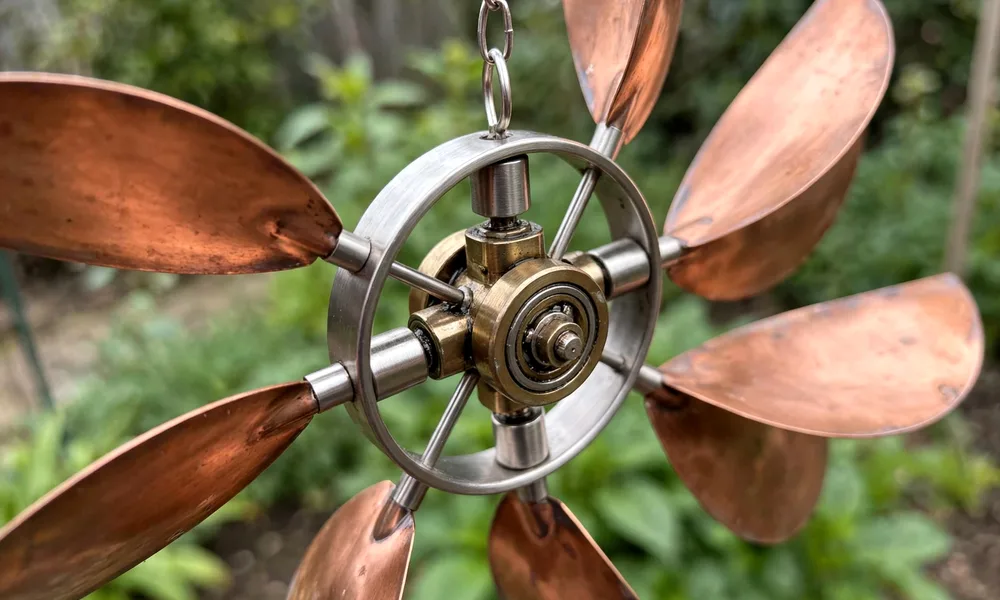
The bearing is the single most important part of a wind spinner. A sealed ball bearing lets the spinner turn smoothly in a light breeze, stays smooth for years, and never needs oiling. A cheap swivel, really just a bent piece of wire, sticks in damp weather, squeaks in dry weather, and eventually seizes altogether. A good bearing costs a little more, but it is the difference between a spinner that moves every day and one that hangs still.
Balance
A spinner must be balanced, or it wobbles instead of turning. The blades should be symmetrical, the same weight on every side, so no one blade drags the spin to a stop. A wobbling spinner also wears its bearing out faster.
Blade Angle
The blades must be angled to catch the wind, and the angle decides how much wind the spinner needs. Blades angled at about 30 to 45 degrees catch a light breeze and turn slowly, while flat blades need a strong wind to move at all. The best spinners have blades you can bend slightly by hand, so you can steepen the angle in a sheltered garden and flatten it in an exposed one. Weight matters too: copper and thin stainless steel turn easily yet stay calm, while glass is heavy and plastic is the lightest of all.

Materials: What Lasts Outdoors
A wind spinner lives outside in all weathers, and the material decides whether it still looks good in three years or is a rusted tangle by next spring. Copper is the most popular spinner material: it is light enough to turn in a breeze, strong enough to hold its shape, and it ages beautifully, developing a green-brown patina that many people love. Stainless steel is the toughest choice: it does not rust or tarnish, and holds a bright finish for years, but it is heavier than copper. Glass spinners catch the light like nothing else, but they are heavy and fragile.
Where to Hang or Place a Spinner
Placement is the part most people get wrong, and it matters more than the spinner itself. Hang a spinner where the wind reaches it: at the edge of a tree canopy rather than deep inside it, on the windward side of a pergola, or on a shepherd’s hook out in the open lawn. Hang it at about head height, where the breeze reaches it, and keep it clear of branches and furniture it could swing into.
Think about the view as well as the wind. The best spot for a spinner is where you see it from the house: from the kitchen window, from the patio chairs, from the room where you sit in the evening. It sits naturally near the other things that make a garden a place to sit: a garden fountain that adds calm, a bench under a tree, or a bird bath on a post nearby. Give it room: a hanging spinner needs at least its own width of clear air on every side.
Mistakes That Stop a Spinner Spinning
Most spinner problems are easy to avoid once you know them. The first is hanging it in dead air: behind a wall, under a dense tree, or in the lee of the house, where the breeze never reaches. The second is hanging it too low, so it swings into branches or furniture and stops dead every time the wind picks up. The third is buying a spinner with a cheap swivel instead of a ball bearing, which sticks after the first damp winter. The fourth is never cleaning it: dust and spider webs build up on the bearing, and a spinner that turned beautifully in spring grinds to a halt by autumn.
Wind Spinner Buying Checklist
- Check for a sealed ball bearing, not a plain wire swivel, so the spinner turns in a light breeze.
- Match the size to the spot: 25 to 35 centimetres for a tree or porch, larger for an open garden seen from afar.
- Choose copper or stainless steel for the longest life, and accept that powder-coated steel will need touch-ups.
- Hang or place it where the wind reaches it and where you can see it from the house, with clear air on every side.
- Test the balance before you buy: a gentle push should give a smooth, even turn that keeps going.
- Plan for care: wipe the blades and oil the bearing twice a year, and take glass spinners down before a hard frost.
Frequently Asked Questions
How much wind does a wind spinner need?
A good spinner with a ball bearing turns in a light breeze of about 5 to 8 kilometres per hour, the kind that barely moves the leaves. Cheap spinners with plain swivels need a steady wind of 15 kilometres per hour or more.
Will a wind spinner make noise?
No. A wind spinner is silent: the blades turn on a bearing with no striking parts, unlike a wind chime. A squeaking spinner has a dry or worn bearing, and a drop of light oil usually fixes it at once.
Can I leave a wind spinner out all winter?
Metal spinners can stay out all year, though taking them down in a storm is wise. Glass spinners should come down before a hard frost, and whirligigs benefit from a winter under cover.
Where is the best place to hang a wind spinner?
Where the wind reaches it and where you can see it: the edge of a tree canopy, a pergola beam, or a shepherd’s hook in open lawn, at about head height. Avoid dead air behind walls and dense trees.
Do wind spinners scare birds away?
A spinning, flashing spinner can put birds off a feeder placed right beside it, but a spinner hung a few metres away rarely bothers them, and many gardens have both. If birds avoid a feeder, move the spinner further away.
How do I stop my wind spinner tangling?
Use a proper swivel or a ball-bearing hook, hang the spinner with a short, stiff cord rather than a long string, and keep it clear of branches. A spinner that tangles is usually hung too low or too close to something it can catch on.
The Bottom Line
A wind spinner is the simplest way to make a garden feel alive: it turns the breeze you cannot see into movement you can watch, silently, all day, without power or upkeep beyond an occasional wipe. Buy a copper or stainless steel spinner with a sealed ball bearing, sized to the spot, hang it where the wind reaches it and where you can see it from the house, and it will turn for years. Get the bearing and the placement right, and the garden does the rest.