Window film is the cheapest way to change what a window does without changing the window itself. A thin sheet of plastic, stuck to the inside of the glass, can turn a street-facing pane into a private one, cut the glare on a television, keep a bathroom bright without putting it on display, and take the edge off a room that overheats every afternoon. The trick is buying the right kind, because frosted, mirrored, solar and decorative films all look similar in the packet and do very different jobs once they are on the glass.
Key Takeaways
- Frosted film gives the strongest all-day privacy and still lets most of the daylight through, which makes it the best choice for bathrooms and street-facing rooms.
- Mirrored and one-way film only works while it is brighter outside than inside, so it gives daytime privacy and almost none at night.
- Solar film is the one to buy for heat and glare, and a good one blocks most ultraviolet light, which protects floors, fabrics and furniture from fading.
- Static-cling film is the renter-friendly choice because it peels off cleanly, while adhesive film lasts longer but needs more care to remove.
- Measure the glass, not the frame, and buy a roll at least five centimetres wider and taller than the pane so you can trim it to a clean edge.
What Window Film Actually Is
Window film is a thin polyester sheet, usually between 50 and 100 microns thick, with a coating that decides what it does. The sheet itself is clear. The coating is what frosts it, tints it, mirrors it, or turns it into a heat filter. It sticks to the inside face of the glass, never the outside, where rain and weather would lift the edges within weeks.
There are two ways it sticks. Adhesive film has a glue layer under a backing sheet, and once it is pressed onto wet glass it bonds firmly and lasts for years. Static-cling film has no glue at all. It holds itself to the glass with static charge and a thin layer of water, which means it can be peeled off, repositioned and reused, and it leaves nothing behind.
The Main Types of Window Film Compared
Shops sell film under a dozen names, but almost everything falls into five types. The differences matter more than the brand, so read the packet for what the film actually does rather than what it is called.
| Type | What it does | Privacy | Best for | Watch out for |
|---|---|---|---|---|
| Frosted film | Scatters light so shapes blur | Strong, day and night | Bathrooms, front windows | Blocks the view both ways |
| Mirrored film | Reflects light like a mirror | Strong by day, none at night | Street-facing rooms | Useless after dark without a blind |
| Solar film | Blocks heat and ultraviolet | Little on its own | Sunny rooms, south-facing glass | Can darken the room slightly |
| Decorative film | Pattern, colour or stained-glass effect | Moderate, depends on pattern | Doors, feature windows | Patterns date faster than plain film |
| Static-cling film | Any of the above, glue-free | As the film type | Renters, short-term fixes | Edges can lift in steamy rooms |
Frosted film
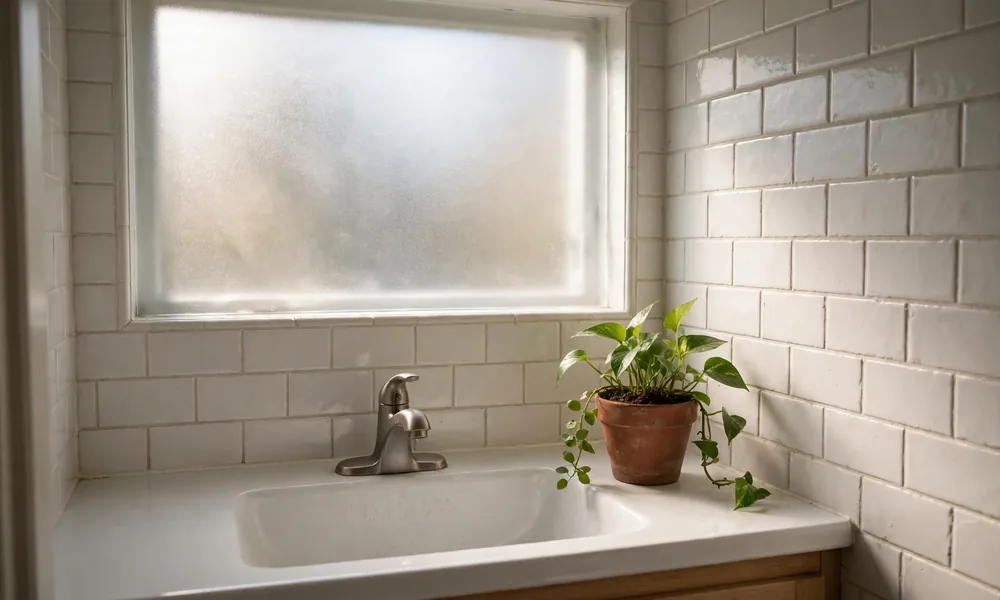
Frosted film is the workhorse. It turns clear glass into a milky surface that lets light through but blurs everything behind it into soft shapes. Someone standing outside can tell the light is on, and perhaps that someone is moving, but they cannot see a face, a body or what is on the table. The price is the view: a frosted window shows no garden, no street and no sky, only light.
Mirrored and one-way film
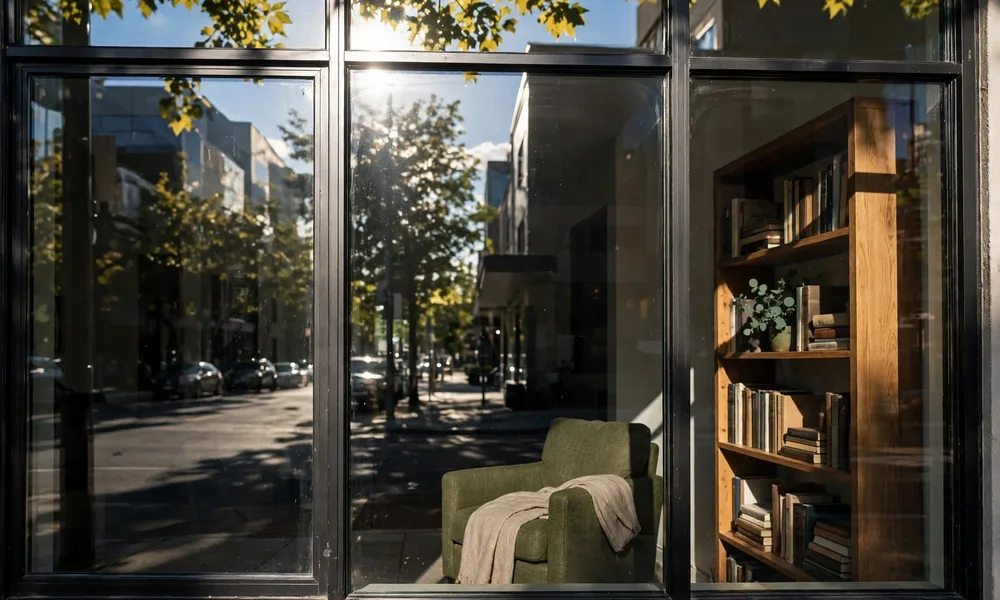
Mirrored film works on a simple rule of light: the brighter side sees its own reflection, and the darker side sees through. In daylight, the outside of the house is brighter than the room, so passers-by see a mirror and you see the street. After dark, the room is brighter than the street, the effect reverses, and anyone outside can see straight in while you see your own reflection.
Solar and heat-control film
Solar film is the least visible and the most useful in a hot room. A good solar film cuts a noticeable share of the heat coming through the glass, takes the sting out of direct sun on a sofa or a desk, and blocks nearly all ultraviolet light, which is what fades wooden floors, rugs and book covers.
Decorative film is the odd one out, because it is bought for looks first and privacy second. Stained-glass patterns, frosted leaf designs and simple geometric prints can turn a plain glass door or a borrowed-light window into a feature, and they hide a surprising amount from the street when the pattern is dense. The trade-off is taste: a bold pattern that looks charming in a cottage can look dated in a modern flat within a couple of years, so plain frosted film is the safer choice if you are unsure. Decorative film applies exactly like any other film, and it peels off the same way, so it is a low-risk way to try a pattern before committing to it.
How Much Privacy Each Film Really Gives
Privacy is not one thing, and the right film depends on which kind you need. Daytime privacy means nobody can see in while the sun is up. Night-time privacy means nobody can see in when the lights are on. Full privacy means nobody can see in at any hour, and nobody can make out shapes or movement either. Mirrored film gives daytime privacy only. Solar film gives none.
The honest test is the one you do before you buy the whole roll. Stick a sample square on the window, stand outside at noon and again at nine in the evening with the lights on, and look in. Our guide to blackout curtains that actually block the light covers the evening half of that problem for bedrooms, where film alone is rarely enough.

How to Apply Window Film Without Bubbles
Applying film is a wet job, and the water is the whole secret. The glass and the adhesive side of the film both need to be thoroughly wet with a spray of water and a drop of washing-up liquid, because the water lets you slide the film into position and stops it grabbing the glass before it is straight.
Cut the film about five centimetres larger than the glass on every side, peel the backing away while spraying the sticky side, and lay the sheet onto the wet pane. Slide it until it sits square, then work from the centre outward with a squeegee, pushing the water out toward the edges in firm, overlapping strokes. Once the sheet is flat, trim the edges with a sharp blade held against the frame, and run the squeegee around the border once more.
Window Film for Renters
Renters have the most to gain from window film and the most to lose if they choose the wrong kind. Static-cling film is made for this situation. It goes up with water, holds itself in place, and peels off in one sheet when you move out, leaving the glass exactly as it was. It is the right choice for a bathroom window, a bedroom that faces a neighbour, or a front window where the landlord will not allow blinds to be screwed into the frame.
Where Window Film Works Best, Room by Room
The bathroom is the obvious first window. A frosted film on the bathroom pane gives full privacy, lets in the morning light, and never needs washing, unlike a blind that goes mouldy in the steam. In a bathroom, film beats every other option on practicality, and it costs less than any of them.
The front room and the ground-floor bedroom are the next best candidates. A street-facing window needs privacy at eye level, and film gives it without blocking the light from the top of the window, especially if you frost only the lower half and leave the upper pane clear. That half-and-half approach is the most popular way to use film in a living room: privacy where people walk past, and a clear view of the sky above.
Sun-facing rooms are where solar film earns its keep. A south-facing living room or a home office with a west-facing window can become unusable on a summer afternoon, and a solar film takes the worst of it off without darkening the room the way a blind does. For the room-by-room thinking behind blinds, our guide to the best blind for every room in your home pairs well with this one, because the two solutions solve different halves of the same window.
Window Film vs Blinds and Curtains
Film, blinds and curtains are not rivals so much as tools for different jobs, and most well-dressed windows use two of them. Film wins on privacy without darkness, on cost, and on windows that are hard to dress, like high panes, narrow panes and glass doors. Blinds win on control: you can open them, close them, tilt them and adjust the light through the day, which film cannot do.
Window Film Checklist
- Decide the real job first: daytime privacy, night-time privacy, heat, glare or decoration, because no single film does all five well.
- Test a sample on the glass at noon and again at night with the lights on before buying a full roll.
- Measure the glass, not the frame, and add five centimetres on every side for trimming.
- Choose static cling for rented homes and adhesive film for a long-term fit you plan to keep for years.
- Clean the pane twice and pick off every speck before the film goes on, because dirt under film cannot be fixed later.
- Pair mirrored film with a blind or curtain for the evening, since it gives no privacy once the room is brighter than the street.
Frequently Asked Questions
Does window film block the view from inside?
Frosted film blocks the view in both directions, because it scatters light coming through the glass. Mirrored and solar films keep the view from inside during the day, though they tint it slightly.
Can window film be removed without damaging the glass?
Static-cling film peels off cleanly with no residue. Adhesive film needs warming with a hairdryer and slow peeling, followed by a razor scraper and soapy water for any glue left behind.
Will window film stop a room overheating?
Solar film reduces the heat coming through the glass noticeably, and it is most effective on windows that get direct sun for several hours a day.
Does window film work on double glazing?
Yes, on the inside face of the inner pane, which is where all window film belongs. Check the film maker’s guidance for your glazing type before using a dark solar film on double glazing, because a very dark film can make the glass run hotter than the manufacturer intends.
How long does window film last?
A good adhesive film lasts five to ten years indoors without peeling or yellowing. Static-cling film lasts two to five years, depending on how often it is removed and reapplied.
Is window film better than sheer curtains for privacy?
For daytime privacy, frosted film is stronger than any sheer, because sheers turn nearly transparent at night while frosted film does not. Our guide to sheer curtains for soft light and privacy explains the sheer side of that trade-off, including how to layer them with heavier curtains for the evening.
The Bottom Line
Window film is the smallest, cheapest change that makes the biggest difference to a window. Start with the job that bothers you most: frosted film for a bathroom or a street-facing pane, mirrored film for daytime privacy on a ground floor, solar film for a room that overheats. Done that way, a roll of film and an afternoon’s work give you privacy, cooler rooms and softer light for years,