Why the Right Winter Boots Are Worth the Money in 2026
Winter boots are the one purchase where spending more usually means suffering less. A good pair of winter boots keeps your feet warm on a freezing pavement, grips an icy step, and stays dry through slush, snow and salt, while a cheap pair soaks through by lunchtime and leaves you cold for the rest of the day.
This guide explains what actually makes winter boots worth the money in 2026, from insulation and waterproofing to the soles that keep you upright on ice. It compares the strongest boot styles of the year, so you can buy once and walk through winter comfortably instead of replacing a disappointing pair halfway through the season.
Key takeaways
- Warmth comes from insulation plus a windproof, waterproof upper, because cold air and wet snow steal heat faster than low temperatures alone.
- A waterproof membrane or sealed seam matters more than the brand name: boots that leak are worse than no boots at all on a slushy day.
- Deep, widely spaced lugs grip snow and ice far better than a flat fashion sole, and a rubber compound that stays soft in the cold grips better still.
- Buy winter boots a half size larger than your normal shoes so thick socks fit and warm air can circulate around your toes.
- A good pair of winter boots should last three or four winters, which makes the cost per wear lower than two cheap pairs that fail in one season.
How we judged the best winter boots
Every boot style here was judged on the same five points: warmth while standing still in the cold, waterproofing through a full day of slush and snow, grip on ice and packed snow, comfort after hours on your feet, and value measured in how many winters the boot will last.
The best winter boots at a glance
| Winter boots | Best for | Warmth | Waterproofing | Approx. price |
|---|---|---|---|---|
| Insulated lace-up boots | Everyday winter walking | Very high | High | $120–$220 |
| Tall insulated snow boots | Deep snow, long spells outside | Very high | Very high | $100–$200 |
| Duck boots | Slush, rain and wet snow | High | Very high | $130–$240 |
| Waterproof hiking boots | Winter trails and rough ground | High | High | $140–$260 |
| Chelsea winter boots | Smart commutes, city winters | Medium | Medium | $110–$200 |
| Pac boots | Extreme cold, outdoor work | Very high | Very high | $150–$280 |
| Slip-on winter boots | Quick trips, school runs | Medium | High | $80–$160 |
The 7 best winter boots for 2026
1. Best overall: insulated lace-up boots
The insulated lace-up boot is the best winter boot for most people because it does every winter job well. A warm lining, a waterproof membrane and a grippy lug sole come together in a boot that handles the school run, the commute and a snowy weekend walk without fuss. Look for 200 grams of insulation or more, a gusseted tongue that stops snow sneaking in through the laces, and a sole with deep lugs.

2. Best for deep snow: tall insulated snow boots
When the snow is deeper than your ankle, height is what keeps you dry. Tall insulated snow boots reach halfway up the calf, so you can step through drifts without snow pouring in over the top, and the thick insulation keeps your feet warm even when you are standing still. The best ones use a waterproof nylon or leather upper with a rubber lower, a drawcord at the top, and a sole built for packed snow.
3. Best for slush: duck boots
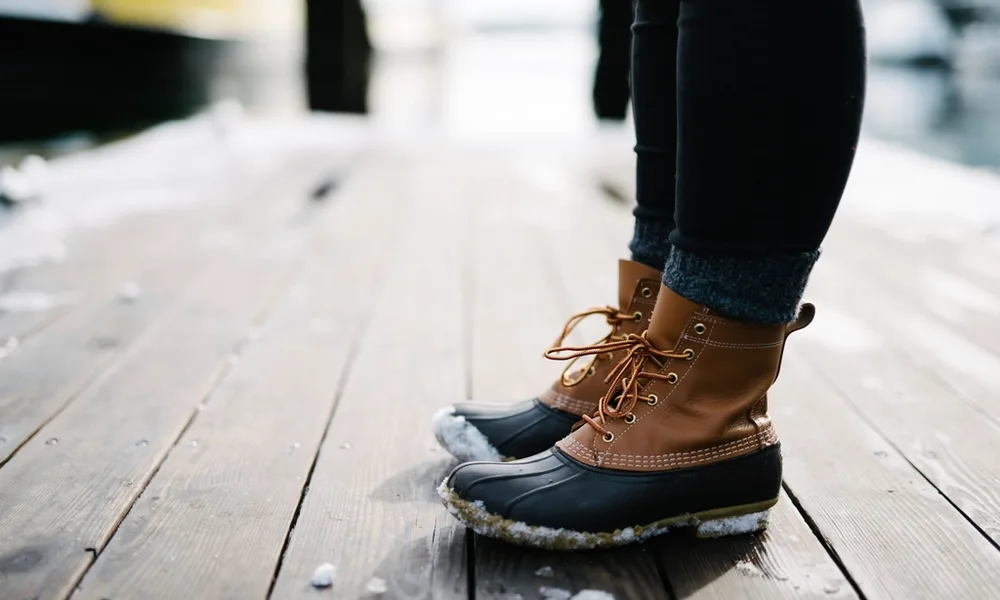
Duck boots were built for wet weather, and slush is where they earn their keep. The rubber lower is completely waterproof, so puddles, melting snow and road salt never reach your feet, while the leather or nylon upper keeps the boot light enough for all-day wear. Duck boots are not the warmest style on their own, so pair them with thick wool socks on the coldest days, and our guide to wool socks that keep feet warm without the itch explains which thickness suits which boot.
4. Best for winter trails: waterproof hiking boots
A waterproof hiking boot is the right winter boot if your winter happens off the pavement. The stiff sole protects your feet on frozen ruts and rocky paths, the ankle support stops twists on uneven ground, and a waterproof membrane keeps wet snow out. Choose a winter version with at least 200 grams of insulation and a sole with deep, widely spaced lugs that shed snow instead of packing into a smooth slab.
5. Best for smart commutes: Chelsea winter boots
Chelsea boots are the smartest winter boots, and the winter versions fix the one weakness of the classic design. A normal Chelsea is a fair-weather boot, but the winter version adds a waterproof membrane, a thicker sole and a warm lining, so it handles a snowy commute without looking like a hiking boot. The compromise is height: the ankle cut lets snow in if you wade through drifts, so they suit cleared pavements and city winters rather than deep snow.
6. Best for extreme cold: pac boots
Pac boots are the warmest winter boots you can buy, and they exist for the days when normal boots give up. A removable felt or synthetic liner sits inside a waterproof rubber shell, trapping a thick layer of warm air around your foot, and the wide, flat sole grips snow with deep lugs. They are bulky, heavy and not at all elegant, which is exactly the point: nobody buys pac boots for how they look. They suit outdoor work, ice fishing, long walks in sub-zero temperatures and anyone whose feet are always cold.
7. Best for quick trips: slip-on winter boots
Slip-on winter boots are for the trips that do not justify lacing up: taking the bins out, the school run, popping to the shop in a snow shower. The best ones are still properly insulated and waterproof, with a grippy sole and a snug elastic or zip closure that keeps snow out. If your heel lifts, the boot will rub, and no amount of breaking in will fix it.
What actually keeps your feet warm
Warmth comes down to three things working together: insulation, dryness and fit. Insulation traps a layer of warm air next to your foot, and the standard measure is grams per square metre: 100 grams suits mild winters, 200 grams handles most cold days, and 400 grams is for serious cold. Dryness matters just as much, because wet feet lose heat far faster than dry ones, which is why a waterproof boot with damp socks still feels cold. Fit is the third part, and it is the one people get wrong most often: boots that are too tight squeeze out the warm air and press on your toes, so your feet get colder, not warmer.

Waterproofing, grip and the sole that matters
Waterproofing is not one feature but a system. A membrane keeps water out while letting sweat escape, sealed seams stop water creeping in at the stitching, and a gusseted tongue stops snow and slush entering through the laces. The test in the shop is simple: look for a membrane name on the label, check that the seams feel smooth and sealed inside, and press the tongue to see if it is joined to the upper. Grip is the other half of winter safety, and it lives in the sole. Deep lugs shed snow as you walk, widely spaced tread stops the sole packing smooth, and a rubber compound that stays flexible in the cold grips ice better than hard plastic.
The mistakes that make winter boots fail
Most winter boots fail for the same few reasons, and all of them are avoidable. The first is buying too small, which squeezes out the warm air and makes feet colder. The second is choosing fashion over function: a flat fashion sole on ice is an accident waiting to happen, however good the boot looks. The third is neglecting the upper, because leather dries out and cracks without wax, and waterproof membranes clog with dirt and stop breathing. The fourth is wearing cotton socks, which hold sweat against the skin and chill your feet; wool keeps feet warm even when damp. A winter coat matters too, and our guide to winter coats that actually keep you warm covers the other half of staying warm outside. Finally, remember that rain boots are not winter boots: our guide to the best rain boot for muddy days explains why rubber wellingtons are brilliant in mud but cold and slippery in snow.
Winter boots buying checklist
- Try boots on in the afternoon, wearing the thick socks you will actually use.
- Leave a thumb’s width between your longest toe and the front of the boot.
- Check for a waterproof membrane and sealed seams, not just a water-resistant label.
- Press the sole: deep lugs and flexible rubber grip ice far better than a flat sole.
- Walk up and down a slope in the shop to check your heel stays put.
- Confirm the insulation rating matches your winters: 200 grams for most cold days, 400 for extreme cold.
Frequently asked questions
Are expensive winter boots really worth it?
Usually, yes, because the expensive parts are the ones that keep you warm and dry: the membrane, the insulation, the sole and the sealed seams. A cheap boot cuts those corners first, and it shows within one winter. That said, an expensive fashion boot with a flat sole is worse than a mid-priced boot with a proper lug sole, so spend the money on function, not on a logo.
How warm should winter boots be?
Match the insulation to your winter. Around 100 grams suits mild winters with temperatures near freezing, 200 grams covers most cold days and snowy commutes, and 400 grams is for long spells below minus ten degrees. If you stand still outside a lot, go one step warmer than you think you need.
Should winter boots be waterproof or water-resistant?
Waterproof, every time. Water-resistant means the boot will keep out a light shower for a while, then soak through. Waterproof means a membrane and sealed seams that keep slush and snow out all day. In winter, wet feet are cold feet, so waterproofing is not a luxury.
Do I need to size up for winter boots?
Yes, usually by half a size. Thick socks take up room, and your feet need space for warm air to circulate. Boots that fit perfectly with thin socks will feel tight with winter socks, and tight boots make feet colder. Try them on with your thickest socks before you decide.
How do I stop winter boots smelling?
Take the insoles out after wearing them, let the boots dry fully at room temperature, and rotate between two pairs if you can. Wool socks help, because wool resists odour far better than cotton or synthetics. Never dry boots on a radiator, because the heat damages the glue and the leather.
How long should winter boots last?
A good pair should last three or four winters of regular use, and longer with care. Re-proof the leather or fabric each autumn, clean off road salt before it dries into the seams, and resole them if the tread wears smooth. When the waterproofing fails and the boots soak through, it is time to replace them.
The bottom line
The right winter boots are worth the money because they change winter from something you endure into something you barely notice. Warm, dry feet with grip on ice mean you walk confidently, stay out longer, and stop thinking about your footwear altogether. A pair that lasts four winters costs less per wear than two cheap pairs that fail in one season, and it keeps you warmer on every single day of those four winters.