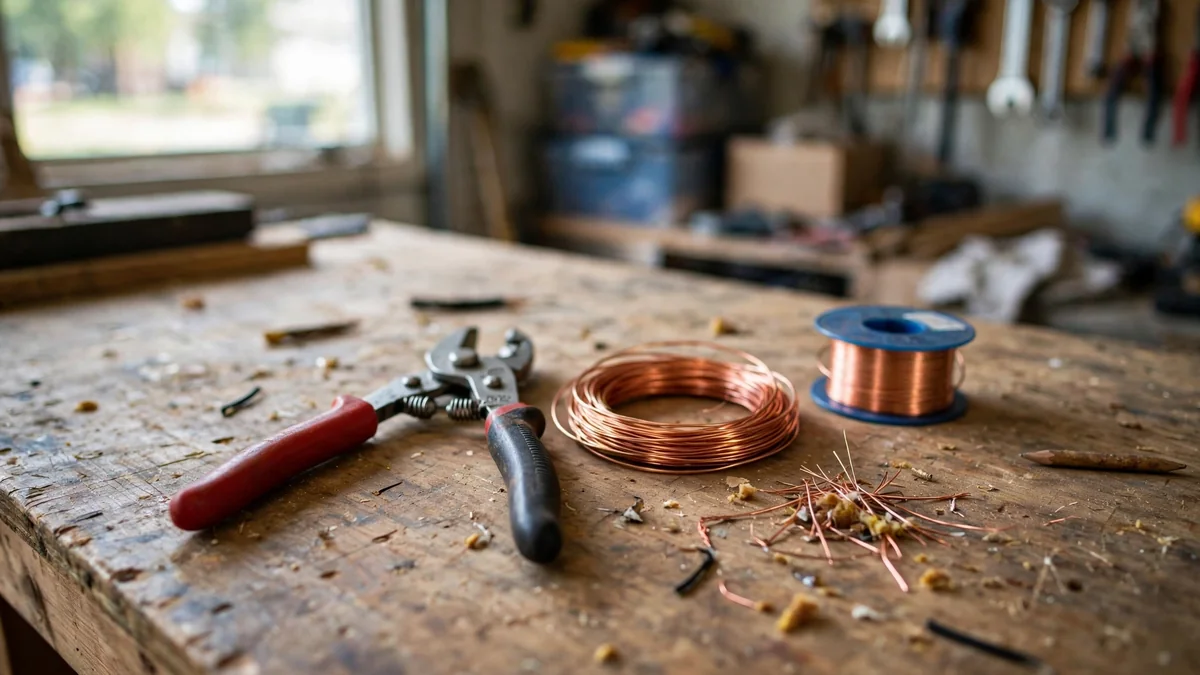
Wire Strippers That Cut Clean Without Nicking in 2026
Wire strippers that cut clean without nicking are the difference between a solid electrical connection and a weak point that heats up, loosens, or fails months later. A nicked conductor loses cross-section, and that thin spot becomes the hottest part of the circuit every time current flows. The best strippers in 2026 solve this with precisely machined holes and a clean shearing action that grips insulation without touching the copper. This guide tests what matters in real use: how cleanly each tool strips solid and stranded wire, how it handles the gauges you actually meet at home, and how comfortable it stays after a full afternoon of work.
We focused on strippers for home wiring, appliance repair, automotive work, and hobby electronics. Every pick here strips cleanly across its rated range and leaves the conductor bright and undamaged. Whether you are rewiring a light switch or building a project on the bench, one of these five will cut clean the first time.
Key Takeaways
- Match the stripper to your wire gauge first: a tool rated 10 to 22 AWG covers most home wiring, while finer work needs a precision model.
- Self-adjusting strippers are the safest choice for beginners because they grip and strip without a gauge setting to get wrong.
- Manual strippers with labelled holes give the most control on solid copper, the wire used in most household circuits.
- A nicked conductor is a failed connection in waiting, so always inspect the stripped end in good light before you connect it.
- Comfort matters more than it looks: spring-loaded handles and cushioned grips prevent hand fatigue on long jobs.
Comparison Table
| Pick | Best For | Gauge Range | Key Strength | Price Band |
|---|---|---|---|---|
| Best Overall Stripper | Everyday home wiring | 10 to 22 AWG | Cleanest cut on solid copper | Mid-range |
| Best Self-Adjusting Stripper | Beginners and mixed wire | 10 to 24 AWG | No gauge setting needed | Mid-range |
| Best Precision Stripper | Electronics and fine wire | 20 to 30 AWG | Delicate jaws for thin wire | Budget to mid-range |
| Best Combination Stripper | One tool for many jobs | 10 to 22 AWG | Strips, cuts, crimps and loops | Budget |
| Best Heavy-Duty Stripper | Thick cable and automotive | 8 to 18 AWG | Power through thick insulation | Mid-range to premium |
1. Best Overall Wire Stripper
The best overall wire stripper is the one you reach for without thinking, and in 2026 that means a manual stripper with precisely labelled holes from 10 to 22 AWG, a comfortable spring-loaded action, and a cutting edge that shears insulation instead of tearing it. On solid copper household wire, it leaves a clean ring of exposed conductor with no scoring or thinning, and the holes are etched clearly enough to read in dim light.
What sets this pick apart is consistency. Strip after strip, the cut lands in the same place, and the insulation slides off in one piece rather than shredding. The hardened steel jaws stay sharp through hundreds of strips. It also includes a wire cutter and a looping hole for terminal screws.
2. Best Self-Adjusting Wire Stripper
Self-adjusting strippers are the friendliest option for anyone who strips a mix of gauges and does not want to hunt for the right hole each time. Squeeze the handles and the jaws grip the insulation, sense the wire size, and pull the sleeve off in one smooth motion, removing the most common cause of nicks: picking a hole one size too small.
The best self-adjusting stripper in 2026 handles 10 to 24 AWG, including the stranded wire found in appliances, car looms, and flexible cords. It grips stranded conductors gently enough that the fine strands stay together instead of splaying, and the adjustable stop lets you strip the same length every time. It costs a little more than a manual stripper, but for mixed work and for beginners it pays for itself in wires you do not have to cut back and redo.

3. Best Precision Wire Stripper
Fine wire needs a different tool. Electronics and low-voltage work use conductors from 20 to 30 AWG, and a standard stripper will crush or sever them. The best precision stripper uses small, finely machined jaws with a light spring action, so you can feel the insulation give way without forcing it.
This pick shines on delicate work: sensor leads, ribbon cable, small appliance wiring, and hobby electronics. The handles are slim and the pivot is smooth, giving you the feedback to stop the moment the insulation releases. It also strips the thin insulation on data and signal cable without cutting the shielding underneath. Keep one in your electronics kit even if your main stripper handles the household work, because the day you need it, no other tool will do.
4. Best Combination Wire Stripper
A combination stripper is the one-tool answer for a home toolbox. It strips wire from 10 to 22 AWG, cuts wire and small screws, crimps terminals, and loops wire ends for screw terminals. If you only want one electrical hand tool beyond a screwdriver, this is the sensible choice.
The pick here earns its place because its stripping holes are genuinely accurate, not an afterthought on a multi-tool. The crimper is properly shaped, so terminals grip firmly instead of flattening and slipping off, and the cutter is positioned where it can reach into a crowded junction box. It is also the most affordable pick in this guide, which makes it an easy recommendation for a first home toolkit or a spare to keep in the car.
5. Best Heavy-Duty Wire Stripper
Thick cable fights back. Battery cables, welding leads, and automotive wiring use 8 to 18 AWG conductors with tough insulation that a standard stripper can barely dent. The best heavy-duty stripper answers with long handles for leverage and a shearing edge that cuts insulation cleanly instead of chewing it.
On thick stranded cable this tool is a revelation: one squeeze and the insulation parts cleanly, leaving every strand intact and ready for a lug or terminal. The handles are long enough that you do not need a death grip, and the pivot is built to take the force without flexing. It is overkill for a light switch, and exactly right for a garage, a workshop, or anyone who works on vehicles and heavy equipment.

How to Choose Wire Strippers
Start with the wire you actually strip. Household circuits use 14 and 12 AWG solid copper, and appliance cords use stranded wire from 16 to 18 AWG. A stripper rated 10 to 22 AWG covers all of that. If you also work on electronics, add a precision stripper for 20 to 30 AWG.
Manual or Self-Adjusting?
Manual strippers give you exact control and the cleanest results on solid wire, because you choose the hole and the tool does exactly what you ask. They reward a little practice and they last for years. Self-adjusting strippers are faster on mixed wire and more forgiving for beginners, because they remove the gauge decision entirely. If you strip one gauge all day, choose manual. If you strip a different gauge every few minutes, choose self-adjusting.
What to Check Before You Buy
Check the jaw quality first. The stripping holes should be cleanly machined with no burrs, and the two halves should meet evenly when closed. Squeeze the handles: the spring should return them smoothly. Avoid strippers with loose pivots or flexing handles, because flex means uneven pressure and uneven pressure means nicks.
How to Strip Wire Without Nicking It
Good technique matters as much as a good tool. Choose the hole that matches your wire gauge exactly, or let a self-adjusting tool do the choosing. Place the wire in the hole, squeeze firmly but not violently, and rotate the stripper a quarter turn if the insulation is tough. Then pull the insulation off in a straight line along the wire, not at an angle, because pulling sideways drags the cutting edge across the conductor.
After every strip, inspect the bare copper in good light. It should be bright, smooth, and the same diameter all the way along. If you see a ring or groove, cut the wire back and strip again with the next size up. On stranded wire, twist the strands gently back together, and never tin the end with solder for a screw terminal, because solder creeps under pressure and the connection loosens.
Safety belongs in the same routine. Always switch off the circuit at the breaker and test it is dead before stripping anything in a wall or ceiling. Wear safety goggles that stay fog-free on the job when you work overhead, because cut insulation and copper fragments fall straight down. Keep a tool belt that keeps your strippers and testers within reach so you are not climbing down a ladder every time you need a different tool. And when you need to find a stud before you cut into a wall, a stud finder that hits the stud first time saves you from drilling into a cable you did not know was there.

Wire Stripper Checklist
- Confirm the gauge range covers the wire you strip most, with 10 to 22 AWG as the home baseline.
- Check that the stripping holes are cleanly machined with no burrs or rough edges.
- Squeeze the handles and confirm the spring returns them smoothly without sticking.
- Strip a test piece and inspect the copper for nicks, grooves, or thinning.
- Make sure the grip fits your hand and stays comfortable after twenty strips.
- Confirm the extra features you need, such as a cutter, crimper, or strip-length stop.
Frequently Asked Questions
What size wire stripper do I need for home wiring?
A stripper rated 10 to 22 AWG covers almost all home wiring, including 12 and 14 AWG lighting and socket circuits and 16 to 18 AWG appliance cords. Add a precision stripper only if you regularly work on electronics below 20 AWG.
Why does my wire stripper keep nicking the copper?
The usual cause is a hole one size too small for the wire, which forces the cutting edge into the conductor. Move up one hole size, squeeze more gently, and pull the insulation straight off instead of at an angle. If the tool still nicks, the jaws may be worn or poorly machined, and it is time to replace it.
Are self-adjusting wire strippers better than manual ones?
Self-adjusting strippers are better for mixed gauges and for beginners, because they remove the gauge decision. Manual strippers give more control and often a cleaner result on solid copper. Many experienced electricians own both.
Can I use wire strippers on stranded wire?
Yes, but technique matters. Use the correct hole size, squeeze once, and pull straight. After stripping, twist the strands gently together so none stick out, and check that no strands were cut away, because losing strands reduces the current the wire can safely carry.
How do I know if a stripped wire is safe to connect?
The bare copper should be bright, smooth, and full diameter along its whole length, with no ring, groove, or scratch. If you see any damage, cut the wire back and strip a fresh end. A damaged conductor creates a hot spot.
Do I need a separate cutter if my stripper has one built in?
For most home jobs, the cutter on a good stripper is enough. Keep a dedicated pair only if you regularly cut thick cable or steel wire the stripper cutter cannot handle cleanly.
The Bottom Line
The best wire strippers in 2026 cut clean without nicking because their jaws are precise and they match the wire in front of them. For most homes, a quality manual stripper rated 10 to 22 AWG is the right starting point, with a self-adjusting model best for mixed wire and a precision stripper for fine electronics work. Buy the tool that fits your wire, strip a test piece first, and inspect every conductor before you connect it.


