Safety Goggles That Stay Fog-Free on the Job in 2026
The best safety goggles of 2026 stay fog-free on the job, because goggles you cannot see through end up on the bench instead of on your face. A good pair seals out dust, chips and spray, keeps a clear view through a long shift, and feels comfortable enough that you forget you are wearing them.
Most eye injuries at work happen in a second, and most are preventable. A shard from a grinder, a splash of cleaning spray, or fine dust from sanding can reach your eyes before you blink. This guide compares the pairs worth buying in 2026 and explains how to keep them clear.
Key Takeaways
- Buy goggles with a recognised impact rating, because a pair that only looks protective can shatter when a fragment hits it.
- Indirect vents beat direct vents for dusty work, since they let air in while keeping fine dust and splashes out.
- Anti-fog coatings work, but they wear off with rough cleaning, so treat the lenses gently and reapply when they fade.
- Fit decides whether you wear them, so look for a soft seal, an adjustable strap, and a frame that seals without pressing.
- Keep a spare pair and a microfibre cloth with the tool, because a scratched or fogged lens is a pair that will not get worn.
Safety Goggles 2026 at a Glance
| Best for | Goggle type | Lens | Standout strength |
|---|---|---|---|
| Best overall | Sealed indirect-vent | Clear polycarbonate | Clear, sealed and hard to fog |
| Best for dusty work | Foam-sealed goggle | Clear with foam seal | Keeps fine dust out of the eyes |
| Best for splash work | Chemical splash goggle | Clear, sealed | Stops splashes from every angle |
| Best over glasses | Over-glasses fit | Clear, wide frame | Fits over most spectacles |
| Best for outdoor work | Tinted vented goggle | Grey tinted | Cuts glare without dimming detail |
| Best budget pair | Classic clear goggle | Clear polycarbonate | Strong protection at a low price |
Why Safety Goggles Fog
Fog is condensation: warm, damp air from your face meets a cooler lens, and the moisture settles on it as tiny droplets. The harder you work, the faster it happens, which is why goggles fog most on the jobs where you need them most. The fix is airflow, not wiping. A goggle that lets a little air move across the inside of the lens carries the damp air away before it can condense, while a fully sealed goggle traps it.
The Main Types of Safety Goggles
Sealed indirect-vent goggles
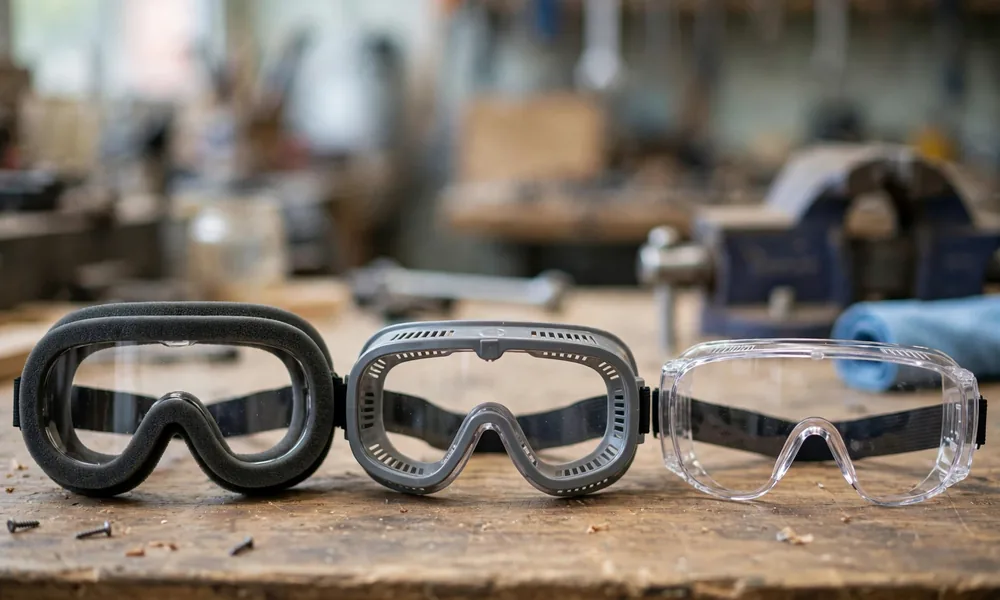
The best all-rounder for most jobs. The vents are hooded or angled, so air can flow in while dust, chips and splashes cannot follow the same path. They suit sanding, sawing, drilling and general workshop work, and they are the pair to buy first if you only buy one.
Foam-sealed goggles
Foam-sealed goggles add a soft foam ring around the frame, closing the gap between the goggle and your face. They are the right choice for fine dust, such as plaster, sanding dust and insulation fibres, because dust that gets past the seal goes straight into the eyes. The foam also makes them comfortable for long wear, though it needs replacing when it flattens with age.

Chemical splash goggles
Chemical splash goggles are fully sealed, with no vents at all, and they are built for liquids rather than dust. Mixing paint or cleaning chemicals calls for this type, because a splash can reach the eye from any angle, including from below. They fog faster than vented goggles, so buy a pair with a strong anti-fog coating and accept that you will need to pause and let them clear on long jobs.
Over-glasses goggles
Over-glasses goggles are wider and deeper than standard goggles, so they fit over most spectacles without pressing the frames into your temples. They matter because a worker who wears glasses and cannot fit goggles over them will simply not wear goggles at all. Check the fit with your own glasses on, and look for a strap long enough to sit over the arms of the spectacles.
Goggles or Safety Glasses: Which Do You Need?
Goggles and safety glasses protect the eyes in different ways, and the job decides which you need. Safety glasses are open at the sides, so they are lighter and cooler, but dust and splashes can reach the eye around the frame. Goggles seal against the face, so nothing gets in from the side, from below, or from above. For dusty, dirty or splash-prone work, goggles are the right choice. For light, clean work, glasses may be enough, and our guide to the best safety glasses of 2026 covers the glasses that stay clear, fit under a hard hat, and survive a dusty site.
Anti-Fog Coatings: What Works and What Wears Off
Anti-fog coatings make the lens surface attract water, so condensation spreads into a thin, transparent film instead of droplets. The best coatings last for months, but they are a surface treatment, and rough cleaning wears them away. Never wipe a fogged lens with a dry paper towel or a shirt corner: both scratch the coating and make the next fogging worse. Rinse under clean water, shake off the excess, and dry with a soft microfibre cloth. Anti-fog sprays can restore a faded coating, and they are cheap enough to keep in the toolbox.
Fit, Comfort and the Seal
Fit decides whether goggles protect you at all, because goggles left on the bench protect nobody. A good pair sits close to the face without pressing on the nose or cheekbones, and it stays put when you bend over. The seal should touch the skin all the way around, with no gaps at the corners of the eyes, where dust sneaks in. A strap that is too tight causes a headache within the hour, and one that is too loose lets the goggles slip. Check it with your dust mask on, since a mask pushing warm breath upwards is the most common cause of fogging.
Lenses, Standards and Markings
The lens is usually polycarbonate, a tough plastic that resists impact far better than ordinary spectacle lenses, and the frame is built to hold it in place when something hits it. Clear lenses are the default for indoor work: they give a true view and work under artificial light. Grey-tinted lenses suit bright outdoor work, cutting glare without changing colours, which matters when you need to tell a wire or a mark apart. Check the markings on the lens and frame for the impact standard they meet, and do not buy a pair that carries no marking at all.
Goggles as Part of the Kit
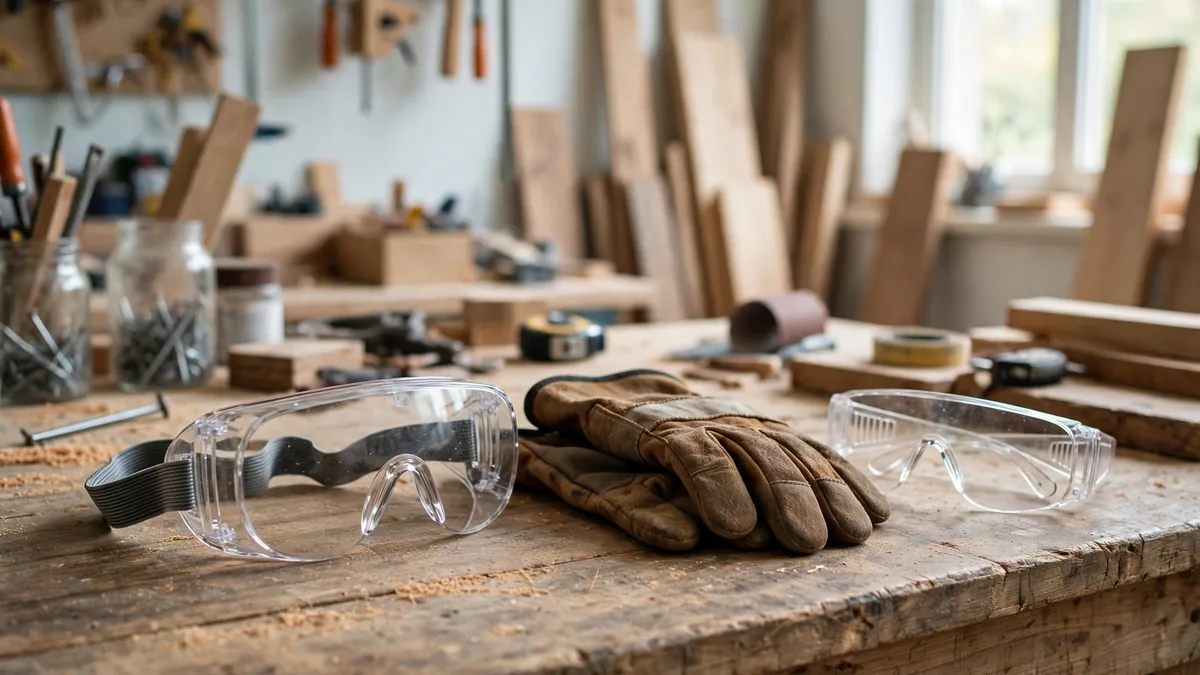
Eye protection belongs with the rest of the safety kit. Gloves protect the hands from the same dust, chips and splashes that threaten the eyes, and a pair that fits properly protects better than a tougher pair that does not. Our guide to the best work gloves of 2026 covers gloves matched to the job, from tough leather riggers to dexterous coated gloves. A dust mask belongs with the goggles on any dusty job, and a hard hat belongs with them on a building site.
Cleaning, Storage and When to Replace
Cleaning is where most goggles are ruined. Rinse off dust and grit under running water before you touch the lens, because wiping a dusty lens grinds the grit into the coating. Wash with mild soap and lukewarm water, rinse again, and dry with a microfibre cloth. Store the goggles in a pouch, lens up, away from tools that can scratch them. Replace the pair when the seal flattens or tears, the strap loses its stretch, the coating no longer clears, or the lens is scratched.
How to Fit Goggles So They Stay Fog-Free
Fit the goggles before the job starts, not after the dust is already in the air. Loosen the strap, settle the seal against your face, and tighten until the seal touches all the way around without pressing. Put on your dust mask first, then the goggles, so the top of the mask sits under the bottom of the goggle seal and warm breath is directed downwards, not up into the lenses. Work for a few minutes and check the view: mist that clears on its own is normal, but mist that stays means the vents are blocked.

Before You Buy: A Short Checklist
- Check the impact marking on the lens and frame, and do not buy a pair that carries no standard at all.
- Choose indirect vents for dusty work, and a fully sealed pair only when splashes are the main risk.
- Look for an anti-fog coating, and check that it can be reapplied with a spray when it fades.
- Try the pair on with your glasses, mask and hard hat, and check the seal touches all the way around.
- Adjust the strap until the seal holds without pressing, and check it stays put when you bend over.
- Buy a spare pair and a microfibre cloth, and replace any goggle with a torn seal or a scratched lens.
Frequently Asked Questions
Why do my safety goggles keep fogging up? Warm, damp air from your face meets a cooler lens and condenses on it. Vents that move air across the lens are the main fix, and an anti-fog coating is the second line of defence. A mask that pushes breath upwards makes it worse.
Are safety goggles better than safety glasses? Goggles seal against the face, so they protect against dust and splashes from every angle. Glasses are lighter and cooler, but open at the sides. For dusty or splash-prone work, goggles are the better choice.
Can I wear safety goggles over my glasses? Yes, if you buy an over-glasses fit, which is wider and deeper than a standard goggle. Try it on with your own spectacles, and check the frames are not pressed into your temples.
How do I stop goggles fogging without a coating? Improve the airflow: check the vents are clear, loosen a strap that is too tight, and fit your mask so breath goes downwards. A cooler lens fogs less, so let the goggles sit in the room first.
How often should I replace safety goggles? Replace them when the seal flattens or tears, the strap loses its stretch, the lens scratches, or the coating no longer clears. A pair used daily may last a few months,.
Do tinted safety goggles work indoors? No, not usually. A grey tint dims the view, which makes detail harder to see under artificial light. Use clear lenses indoors, and save tinted lenses for bright outdoor work.
The Bottom Line
The safety goggles that stay fog-free on the job in 2026 are the ones that move air across the lens while sealing dust and splashes out. An indirect-vent goggle with a good anti-fog coating is the best all-rounder, a foam-sealed pair is right for fine dust, and a fully sealed pair is the choice for splash work. Whichever type you choose, the fit decides everything: a seal that touches all the way around, a strap that holds without pressing, and a mask fitted underneath.
Buy the pair that fits your face and your work, keep it clean with a microfibre cloth, and keep a spare close by. Clear goggles are goggles you will actually wear, and the pair you wear is the pair that protects you. For the bench they will live on, our guide to the best workbenches of 2026 covers the benches that give a workshop a proper place to work.