
Choosing between a hotel vs Airbnb for long stays matters far more than it does for a weekend break. When you are staying somewhere for three weeks, a month or longer, the place you sleep becomes the place you live, work, cook and relax. A room that feels charming for two nights can feel cramped by day twenty, while a home that looks perfect in photos can disappoint if the Wi-Fi is weak or the neighbourhood does not suit you.
Neither option wins outright. Hotels offer service, flexibility and zero chores, while Airbnbs offer space, kitchens and the feeling of living somewhere rather than just visiting it. The right choice depends on how long you are staying, how you work, how much you cook and how much you value convenience over independence.
This guide compares hotels and Airbnbs for long stays across the factors that shape daily life: total cost, space, comfort, work setup, location, cleaning, laundry and flexibility. By the end, you will know which option fits your trip and how to book it without expensive surprises.
Key takeaways
- For stays under two weeks, hotels usually win on convenience; for a month or more, Airbnbs usually win on space and cost.
- Monthly Airbnb discounts of 30 to 60 percent can make a whole apartment cheaper than a hotel room.
- A kitchen saves real money on long stays, often cutting food spending by a third or more.
- Hotels suit flexible plans, while Airbnbs reward travellers who can commit to one place for several weeks.
- Always test the Wi-Fi speed, check the cancellation policy and read recent reviews before booking any long stay.

The Short Answer: It Depends on How Long “Long” Really Is
Length of stay is the biggest factor. For seven to ten days, a hotel is often simpler and sometimes even cheaper, once you add Airbnb cleaning fees, service charges and the cost of buying basics like cooking oil and detergent for a short visit. You arrive, unpack, someone else cleans, and you leave.
Past the two-week mark, the balance shifts. Weekly Airbnb discounts of 10 to 20 percent and monthly discounts of 30 to 60 percent can bring a whole apartment below the price of a mid-range hotel room, and living out of a suitcase for a month, with nowhere to cook and nowhere to sit except the bed, grows tiring fast.
Cost: The Real Price of a Month in a Hotel vs an Airbnb
A nightly rate tells you almost nothing about the true cost of a long stay, because the two prices include very different things and both carry extras that appear only at checkout or during the trip itself.
Nightly Rates vs Monthly Discounts
Hotels rarely discount deeply for long stays, although some offer 10 to 15 percent off for two weeks or more. Airbnb hosts, by contrast, set weekly and monthly discounts because an occupied home for a month is worth more to them than short bookings with gaps and turnover costs. A hotel room at 120 dollars a night costs about 3,600 dollars a month. A one-bedroom Airbnb at 110 dollars a night with a 40 percent monthly discount costs roughly 2,000 dollars before fees, and even after cleaning and service charges it can come out hundreds of dollars cheaper, with twice the space and a kitchen.
The Hidden Costs Most Travellers Forget
Hotels add resort fees, city taxes, parking and breakfast, often 20 to 40 dollars a day. Eating every meal out is the largest hidden cost: 40 dollars a day on food is 1,200 dollars a month, while cooking half your meals in an Airbnb might cost 500 to 700 dollars in groceries. Airbnbs carry their own extras: cleaning fees of 50 to 250 dollars, service charges near 14 percent, and household basics. Compare the full monthly total, including food, laundry and transport, not the nightly rate. Family travellers face the same puzzle, and our guide to Airbnb vs hotels for family trips shows how the numbers shift when more people share the space.
Space and Comfort: Living vs Sleeping
Space is the clearest Airbnb advantage. A hotel room gives you 25 to 35 square metres: a bed, a desk, a bathroom and a wardrobe. A similar-priced Airbnb often gives you 50 to 80 square metres, with a separate living room, a real kitchen and sometimes a balcony. That extra room changes how a long stay feels.
In an apartment you can cook breakfast in your own time, work at a dining table, invite a friend for dinner and do laundry without leaving the building. In a hotel room, every activity happens in the same space, which makes it hard to switch off. For most people staying longer than a few weeks, private space wins.
Work, Wi-Fi and Daily Routine
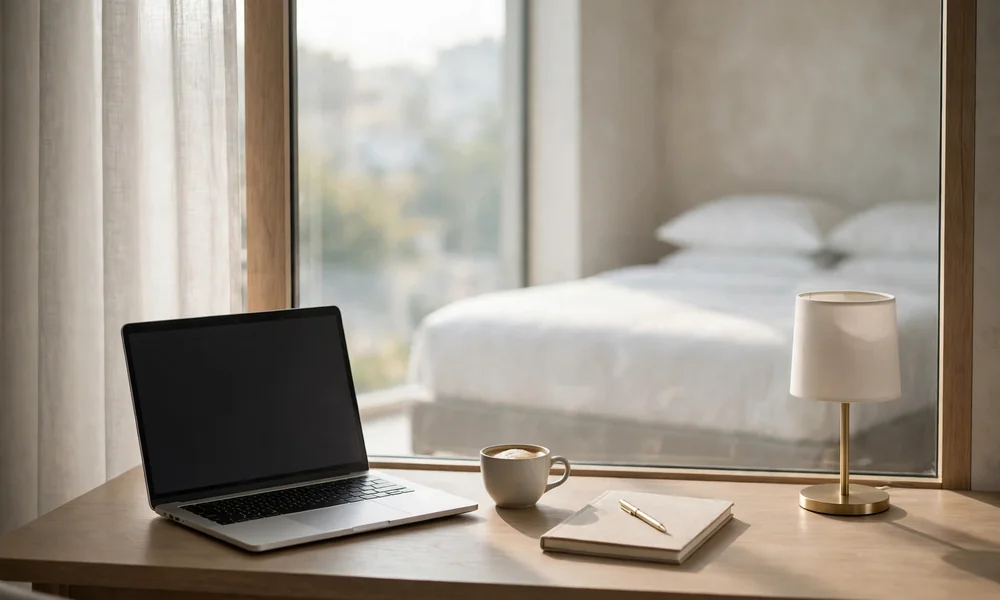
For anyone working during a long stay, the work setup deserves as much attention as the price. A hotel desk is usually small, the chair uncomfortable for eight hours, and the lighting made for reading in bed, not video calls. An Airbnb with a proper table and chair can be a better office, but only if the Wi-Fi is strong. Slow internet is the most common complaint in long-stay reviews, so message the host for actual speeds and look for reviews that mention working from the apartment.
Hotels handle the chores: your room is cleaned, towels replaced, and you never think about the rubbish. In an Airbnb you cook, clean and do laundry yourself, which takes time but gives the stay a normal rhythm. Many long-stay travellers say that routine is exactly what makes a place start to feel like home.
Location and Neighbourhood Life
Hotels cluster in central, tourist-friendly areas with easy transport and restaurants nearby. That suits short trips, but for a long stay it can mean higher prices, more noise and a neighbourhood built for visitors. The nearest supermarket may be a small expensive shop aimed at tourists.
Airbnbs sit in residential neighbourhoods, one of their greatest strengths for long stays: a quiet street, a bakery on the corner, a local market and cheaper groceries. The trade-off is distance from the sights and reliance on buses or longer walks. Check the map before booking: supermarket, pharmacy and transport stop, and whether you would be happy walking there at night. Location mistakes are a theme in our roundup of the worst airport hotels.
Cleaning, Laundry and the Little Things
Daily cleaning is the hotel’s strongest card. Coming back to a freshly made room every evening is a small luxury that adds up over a month, though some long-stay hotels cut housekeeping to a few times a week, so check what is included.
Laundry is the opposite story. Hotel laundry is charged per item and can cost several hundred dollars over a month, while an Airbnb with a washing machine lets you wash for free and pack lighter. For stays over two weeks, a washing machine is one of the most practical things to look for.
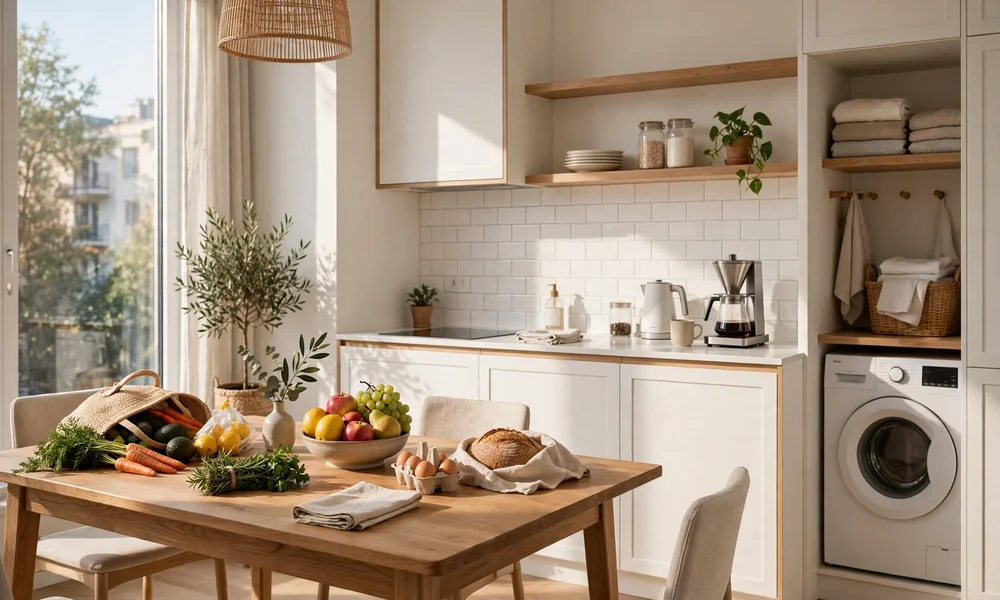
The little things add up too. Hotels provide toiletries, fresh towels and a safe for valuables. Airbnbs give you a full kitchen, more storage and often extras like a coffee maker and an iron.
Flexibility, Cancellation and Booking Risk
Flexibility is where hotels are clearly stronger. Most bookings can be changed or cancelled free of charge up to a day or two before arrival, and you can extend or shorten your stay without penalty. If your plans change, a hotel changes with them.
Airbnb policies are stricter, and stricter still for monthly stays, which are often non-refundable after the first few days. That is a real risk if your plans are uncertain. And if something goes wrong, a hotel moves you to another room the same night, while an Airbnb fix depends on how responsive the host is. For a month-long stay, a responsive host is worth more than a slightly lower price.
Hotel vs Airbnb for Long Stays: Side-by-Side Comparison
| Factor | Hotel | Airbnb |
|---|---|---|
| Monthly cost | Higher, few long-stay discounts | Lower, weekly and monthly discounts |
| Space | One room, 25 to 35 sq m | Full apartment, 50 to 80 sq m |
| Kitchen | Rare, only in apart-hotels | Standard, full cooking facilities |
| Cleaning | Daily or several times a week | Your responsibility |
| Laundry | Expensive per-item service | Usually a washing machine included |
| Flexibility | Easy changes, free cancellation | Stricter, especially monthly stays |
| Privacy | Less private, staff nearby | Full privacy in your own home |
| Social life | Lobby, bar, gym on site | Quieter, residential feel |
Who Should Choose a Hotel?
A hotel is the better choice if your plans are flexible, your stay is under two weeks, or you do not want to think about chores. Business travellers, people visiting for medical treatment, and anyone who values daily cleaning and a front desk will be happier in a hotel. Hotels also suit the first few nights of a longer trip, letting you explore neighbourhoods in person before moving into an Airbnb for the rest of the stay.
Who Should Choose an Airbnb?
An Airbnb is the better choice if you are staying three weeks or more, travelling with family or a partner, working remotely, or planning to cook most of your meals. Families benefit most from extra bedrooms, a kitchen and living space. If you enjoy cooking, shopping at local markets and having a quiet home to return to, an apartment will feel like a reward. Before a month-long booking, read our guide to the best travel insurance for 2026 as well.
Long-Stay Booking Checklist
- Compare the full monthly total, including fees, food, laundry and transport, not just the nightly rate.
- Check the cancellation policy, especially what happens if you leave a monthly stay early.
- Confirm the Wi-Fi speed and look for reviews that mention working from the property.
- Make sure there is a washing machine, or a cheap laundrette within a short walk.
- Check the map for a supermarket, pharmacy and transport stop, and judge the street at night.
- Read the most recent reviews first, noting comments about the host and the neighbourhood.
Frequently Asked Questions
Is it cheaper to stay in a hotel or an Airbnb for a month?
Usually an Airbnb. Monthly discounts of 30 to 60 percent bring a whole apartment below the price of a hotel room in most cities, but always compare the full monthly total, including fees and food.
How long before an Airbnb makes sense?
From around two weeks, when weekly discounts apply and the lack of a kitchen starts to feel expensive. For a month or more, an apartment is the better choice for most travellers.
Can you negotiate a discount for a long hotel stay?
Yes. Contact the hotel directly, mention the length of your stay, and ask about extended-stay rates, often 10 to 20 percent below the online price. Smaller hotels are usually the most flexible.
What should I check before booking a long-stay Airbnb?
The monthly discount, cleaning fee, cancellation policy, Wi-Fi speed, washing machine, exact location and recent reviews. Be wary of few reviews, vague photos or a slow host.
Are apart-hotels a good middle ground?
Yes. You get a kitchen and extra space like an Airbnb, plus hotel cleaning, reception and flexible cancellation. They cost slightly more than a comparable Airbnb, but they suit travellers who want both.
Is it safe to book a month-long Airbnb sight unseen?
Generally yes, if the listing has many recent positive reviews, a responsive host and clear photos, and you pay through the platform. For peace of mind, book a hotel for the first few nights first.
The Bottom Line
For most travellers, hotel vs Airbnb for long stays comes down to time. Stay a week, choose a hotel and enjoy the service. Stay a month, choose an Airbnb and enjoy the space, the kitchen and the savings. Book carefully, check the Wi-Fi and the cancellation policy, and pick the place that fits the way you actually live.


