An ab wheel is the cheapest core tool a beginner can buy, and the easiest one to get wrong. The worst ab wheels for beginners of 2026 fail in ways that leave a new roller tipping sideways onto the floor, a handle pulling free mid-roll, or a beginner convinced their core is too weak for the exercise when the wheel was the problem all along. They are narrow, flimsy, and built from plastic that flexes under bodyweight, with grips that spin and no knee pad to protect a beginner’s knees. Beginners buy them expecting a simple tool that teaches core strength. What they get is a tool that teaches them to quit. A beginner who concludes their core is too weak for the exercise has usually been failed by the wheel, not by their own body, and that is the saddest failure of all.
The Narrow Wheel That Tips Beginners Over
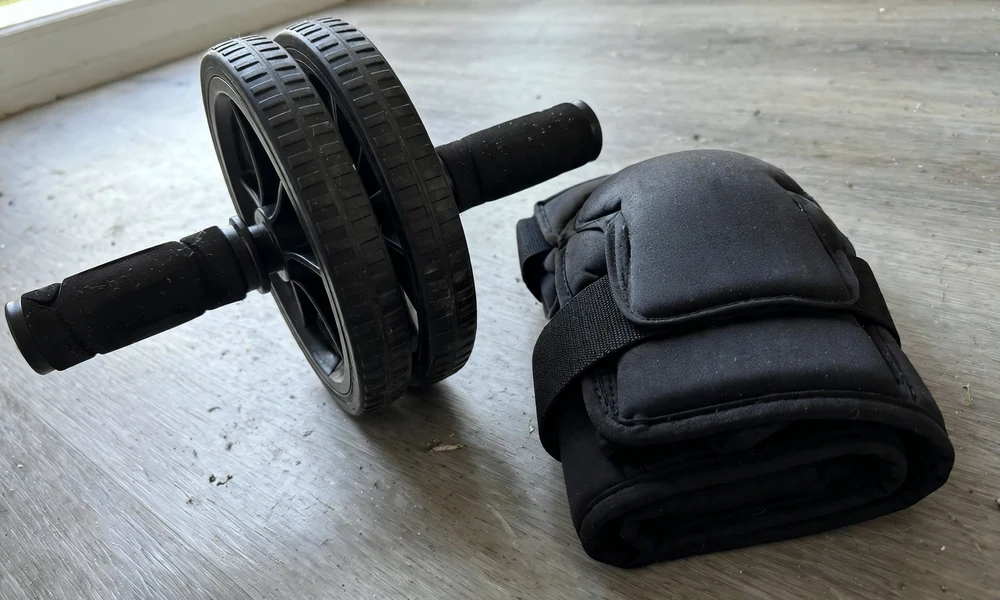
Width is the first thing that decides whether a beginner survives an ab wheel, and it is the first thing cheap wheels get wrong. A single narrow wheel, less than five centimetres wide, has no margin for error. The moment one side of the body tires before the other, the wheel tips, the rep collapses, and the beginner lands hard on a shoulder or a hip. Beginners blame their own strength for this, but the wheel is usually the problem: a wide dual wheel or an ultra-wide wheel would have held steady through the same rep. A wheel that is ten centimetres wide gives a beginner a stable base, while a wheel half that width has no margin for error at all.
The difference is easy to feel before you buy. Hold the wheel by its handles and press down on one side: a narrow wheel rolls sideways at once, while a wide wheel stays planted. A beginner should start with a wheel at least ten centimetres wide, and fifteen is better still, because the extra width makes every rep feel steady and forgiving. That stability lets a new roller focus on keeping the lower back flat instead of fighting to stay upright. Our comparison of the best and worst ab wheels of 2026 shows why width matters more than brand or price.
Plastic Axles That Crack Under Weight
The axle is the part that takes all of a beginner’s bodyweight, and the worst wheels build it from plastic. A plastic axle creeps and cracks under repeated load, and the failure is rarely dramatic at first: a small crack near the handle, a little extra flex, a creak on the third rep. Then the handle pulls out while the beginner is fully extended, and they land hard on their shoulders or their face. A wheel with a plastic axle is not a bargain. It is a broken wheel waiting to happen. A wheel with a plastic axle is not a bargain, it is a broken wheel waiting to happen, and the break will come at full stretch, which is the worst possible moment.
A solid steel axle runs straight through the wheel and into both handles, and it does not bend or flex under bodyweight. If the listing does not state the axle material, assume it is plastic and move on. Check the weight limit too: a good wheel is rated for at least 120 kilograms, and the best ones for 150 or more. A beginner who is heavier than average needs that margin most of all, because the forces in a rollout are larger than they look. Press the handles towards each other and pull them apart: any movement at the joint is a warning.
Grips That Spin and Slide
Grips decide whether a wheel is pleasant or punishing, and the worst ones fail within weeks. Foam grips feel soft in the shop but soak up sweat, compress unevenly, and start spinning on the axle after a few months, so the beginner’s hands slide while the wheel stays still. Handles set too narrow force the shoulders into a cramped position, while handles that are glued rather than fixed pull loose under load. A beginner with sore hands and spinning grips will not come back for a second week. A beginner with sore hands and spinning grips will not come back for a second week, and a wheel that is not used builds no strength at all.
Rubberised grips with a textured surface stay put and stay comfortable, and handles set around shoulder width let a beginner brace properly. Test the grips by twisting them hard with both hands: if they move on the axle, they will move more when sweaty. A thick foam knee pad matters just as much, because a beginner spends every rep on their knees, and a thin pad on a hard floor turns a short session into a painful one. A wheel sold without a pad is a wheel sold by someone who has never used one.
Gimmick Wheels That Waste a Beginner’s Money
The worst value in the category is the gimmick wheel: built-in speakers, phone holders, flashing lights, or app connectivity, and every one of those features is a distraction from the one job a wheel has to do. The electronics add weight in the wrong place and push the price up for no training benefit, and the gimmick models are often built on the cheapest narrow-wheel chassis. An ab wheel does not need Bluetooth. It needs to roll straight and come back. A phone holder encourages a beginner to watch a screen instead of their back position, and a speaker adds weight that makes the wheel harder to control.

A beginner is the easiest buyer to sell a gimmick to, because everything about the exercise is new and every feature sounds helpful. It is not. A phone holder encourages a beginner to watch a screen instead of their back position, and a speaker adds weight that makes the wheel harder to control. Spend the same money on a wide wheel with a steel axle and a thick knee pad, and the tool will still be working when the gimmick’s battery has died.
No Help on the Way Back
The hardest part of an ab wheel rep is the return, and the worst beginner wheels offer no help with it at all. A beginner rolls out, cannot pull back, and collapses onto the floor, which teaches the body that the exercise ends in failure. Auto-rebound wheels, with a spring that helps on the way back, are the sensible bridge for someone learning the movement, because the assistance means more good reps with good form. A standard wheel is fine once the core is strong, but a beginner needs the bridge first. A beginner who rolls out, cannot pull back, and collapses onto the floor learns that the exercise ends in failure, and that lesson lasts longer than any muscle soreness.
The mistake is not the wheel alone but the way it is sold. Cheap wheels are marketed to beginners with no mention of the return, no guidance on range, and no warning that full rollouts from the toes are an advanced movement. A beginner should roll out only as far as they can while keeping the lower back flat, and add distance over weeks, not days. A wheel that comes with honest guidance is worth more than a wheel that comes with a speaker, and a beginner who finishes a session feeling strong will come back tomorrow.
Wheels That Slip on Smooth Floors
An ab wheel needs grip against the floor, and the worst ones slide across it. A hard plastic tread on a wooden floor or a tiled kitchen slips without warning, especially when the wheel is loaded at full stretch, and a beginner who feels the wheel slide will tense up and lose the flat back that keeps the exercise safe. Rubber tread grips far better on smooth floors, and a wheel with a tread that is already worn smooth in the middle is a wheel that will slip exactly where the beginner needs it to hold. A wheel that grips the floor lets a beginner focus on the core instead of the slide, and that focus is the whole point of the exercise.

A mat underneath helps, but it should be a thin, firm mat that does not bunch under the wheel, not a thick soft one that lets the wheel sink and wobble. Test the wheel on the floor where it will actually be used, not on carpet in a shop, and roll out slowly with a hand near a wall for the first few sessions. A wheel that grips the floor lets a beginner focus on the core instead of the slide, and that focus is the whole point of the exercise.
What to Buy Instead
The wheels worth buying share a short list of features, and none of them is expensive on its own. A wide dual wheel or an ultra-wide wheel, so the rep stays steady when one side tires. A solid steel axle rated for at least 120 kilograms, with no flex at the joint. Rubberised grips fixed firmly in place, set around shoulder width. A thick knee pad, and honest guidance on starting with short, controlled rollouts. If a wheel fails any one of those checks, keep looking. A wheel that works on day one and still works in a year is worth every penny, and a wheel that fails in the first month teaches the same lesson for free.
Fit matters as much as build, and the wheel should suit the beginner in front of you rather than the athlete in the photograph. A heavier beginner needs a higher weight rating and a wider wheel, a beginner with a sore lower back needs an auto-rebound wheel as a first purchase, and anyone with hard floors needs a thick pad and a rubber tread that will not slip. Try the wheel on your own floor, roll out only as far as your back stays flat, and build distance over weeks. A wheel that works on day one and still works in a year is worth every penny. If you want another simple tool to pair with it, our guide to the best kettlebells for beginners of 2026 covers the kettlebell weights that suit a new trainer.
The Bottom Line
The worst ab wheels for beginners of 2026 share a pattern: a narrow wheel that tips, a plastic axle that cracks, grips that spin, gimmicks that add nothing, and no help on the way back. Avoid those five failures and you avoid almost every beginner regret. Buy wide, buy steel, check the grips, take the knee pad, and roll out only as far as your back stays flat. Do that three times a week, and the ab wheel will do more for your core than any machine in a commercial gym. And if you want the full picture before you buy, our guide to the best ab wheels of 2026 covers the wheels that earn their place year after year.