
The Worst Car Haulers of 2026: Vehicle Transporters That Damage Cars and Deadlines
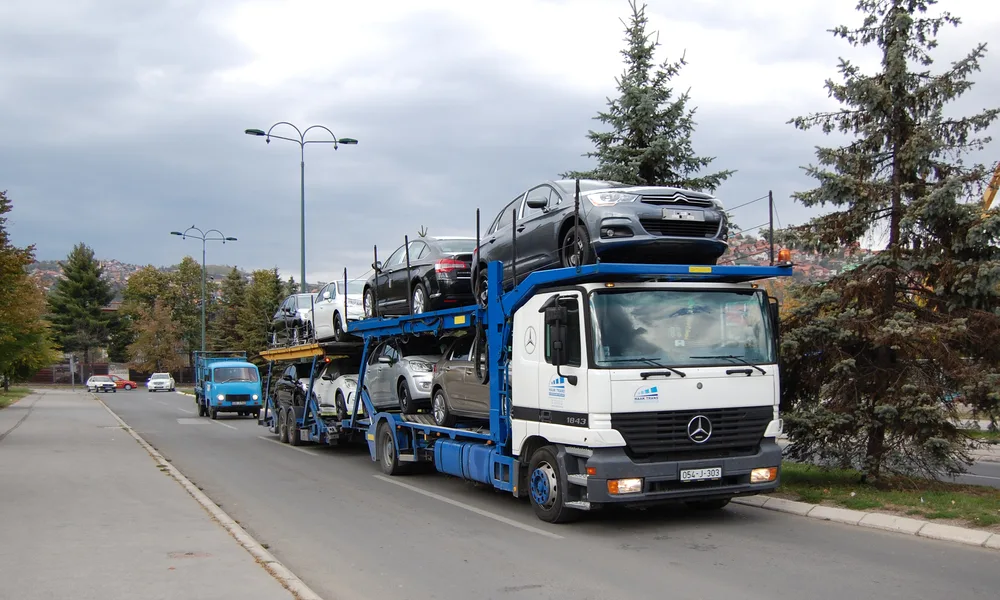
The worst car haulers of 2026 are not the oldest trailers on the lot or the cheapest ones on the forecourt. They are the haulers that look like a bargain when you buy them and turn into a repair bill the first time you load a car: decks that flex under a family saloon, ramps that bend under a single axle, tie-downs that pull out on the first motorway run, and axles rated for far less than the cars sitting on them. This guide ranks the worst types of car hauler in 2026, so you can spot the patterns before you load anything valuable.
Key takeaways
- A car hauler fails at the basics first: the deck holds the weight, the ramps take the load, and the tie-downs keep the car where you put it.
- Payload ratings on the brochure are not the payload you can use: the trailer’s own weight, the ramps and the spare wheel all eat into it.
- An open deck is honest about what it is, but it leaves paint, glass and soft tops exposed to stones, salt and weather for the whole journey.
- Sway is a trailer problem, not a tow-vehicle problem: short drawbars, poor weight distribution and worn couplings cause it long before the wind does.
- Always load the car, strap it down and tow it loaded before you buy, and walk away from any seller who will only show you an empty trailer.
How the worst car haulers of 2026 were chosen
Every type below was scored on five measures. Load capacity comes first: does the deck, the axle rating and the coupling honestly carry the cars the trailer claims to carry, once the trailer’s own weight is counted? Deck and ramp strength is second, judged on whether the deck flexes, the ramps bend and the tie-down points hold under a real car rather than a brochure number. Stability is third, because a hauler that sways, porpoises or pushes the tow vehicle on a downhill run is dangerous however cheap it was. Protection is fourth: what the trailer does to the car it carries, from stone chips on an open deck to heat and fumes in a sealed box. Running costs are the fifth measure: tyres, brakes, bearings and repairs, counted over a full year of real hauling rather than a single trip.
Two notes before the list. First, no single brand or model is named as the worst, because the same bad patterns appear across many makers, and what matters is learning to recognise them in whatever hauler you inspect. This follows the approach of our guide to the worst RV campers of 2026, which also ranks trailer types rather than naming brands. Second, a car hauler is a vehicle-transport trailer or truck, and that is a different job from the neighbours: a tow truck recovers broken vehicles, as our guide to the worst tow trucks of 2026 shows, while a flatbed truck carries freight on an open deck, as our guide to the worst flatbed trucks of 2026 explains. The truck chassis underneath those vehicles are ranked by model in those guides; here the hauler itself is judged, as a trailer.

Comparison table: the worst car haulers of 2026
| Rank | Hauler type | Biggest problem | Warning sign |
|---|---|---|---|
| 1 | The overloaded open single-car trailer | Axles rated below the load | Tyres bulging at the sidewall |
| 2 | The rusted budget wedge trailer | Frame rust under fresh paint | Bubbling paint on the rails |
| 3 | The enclosed trailer with no ventilation | Heat, damp and fumes build up | Condensation on every wall |
| 4 | The gooseneck trailer on the wrong tow vehicle | Pin weight overloads the truck | Rear suspension sitting flat |
| 5 | The hydraulic-lift stacker trailer | Lift fails with a car on top | Slow, jerky or leaking rams |
| 6 | The too-short multi-car hauler | Cars overhang the deck | Rear wheels past the tail lights |
| 7 | The home-built car trailer | No rating, no brakes, no papers | No plate, no paperwork, no test |
The worst car haulers of 2026
1. The overloaded open single-car trailer
The overloaded open single-car trailer is the worst car hauler type of 2026 because it fails the one job a hauler has: carrying a car safely. These trailers are sold on a headline payload that ignores the trailer’s own weight, the ramps, the spare wheel and the toolbox bolted to the drawbar. Load a family car and the axles are already at their limit; load a large saloon or a small SUV and they are past it. A trailer that cannot carry its rated load with a margin is not a bargain; it is a breakdown waiting for a motorway.
2. The rusted budget wedge trailer
The rusted budget wedge trailer looks like a deal because the paint is fresh and the price is low. Look closer and the frame tells a different story. Wedge trailers live outside, they are loaded in the rain and washed rarely, and rust starts where the deck meets the frame and where the ramps hinge. Fresh paint hides bubbling on the rails, soft steel under the deck boards and seized hinge pins that will snap the first time a heavy car climbs the ramp. Walk away from any wedge trailer whose paint is newer than its tyres.
3. The enclosed trailer with no ventilation
The enclosed trailer with no ventilation promises protection and delivers a greenhouse. On a warm day the inside of a sealed box climbs far above the outside temperature, and the car inside sits in heat, damp and exhaust fumes with nowhere for any of it to go. Condensation forms on every wall, drips onto the paint and feeds rust in the places you cannot see. The check is simple: open the trailer on a warm day after it has sat closed in the sun, and feel the air inside. If it hits you like an oven and the walls are wet, the trailer needs vents, a roof vent and a fan, and the seller should have fitted them years ago.
4. The gooseneck trailer on the wrong tow vehicle
The gooseneck trailer on the wrong tow vehicle is a good trailer hitched to a truck that cannot carry it. A gooseneck puts a fifth or more of its loaded weight directly over the rear axle of the tow vehicle, and that pin weight is what breaks the deal. A half-ton pickup with a gooseneck rated for three cars will sit flat on its rear suspension, steer light at the front and brake badly, because the front axle has lost the weight it needs to steer and stop. The test is a loaded run with a hill, a bend and a firm stop. If the rear suspension bottoms out, the steering goes light or the brakes feel long, the combination is wrong, however good the trailer is on its own.

5. The hydraulic-lift stacker trailer
The hydraulic-lift stacker trailer doubles the cars you can carry by lifting one deck above another, and it is brilliant until the lift fails with a car on the top deck. The rams, hoses and valves on a stacker work hard, and when they leak, stick or move unevenly the top deck tilts, jams or drops. Test the lift empty and loaded, watch for one side rising faster than the other, and look for fresh fluid on the rams and the floor. A stacker with a tired lift is the most expensive trailer on this list to fix, because the lift is the trailer.
6. The too-short multi-car hauler
The too-short multi-car hauler tries to carry one car more than its deck allows, and the extra car pays for it. When a car overhangs the back of the deck, its rear wheels sit past the tail lights, its weight hangs behind the rear axle, and the trailer’s balance shifts backwards. That is the recipe for sway: the trailer starts to wag at motorway speed, the tow vehicle fights it, and every correction makes the next swing worse. If the last car does not fit with room to spare, the trailer carries one car fewer than the seller claims, and no amount of strapping changes that.
7. The home-built car trailer
The home-built car trailer is the cheapest hauler you will find and the riskiest one on this list. The axles may come from a scrapped caravan, the coupling may be rated for half the load, and the brakes may be missing entirely on a trailer that legally needs them. There is no plate to check, no maker to call and no test history to read, so the only inspection is your own, and it has to be thorough: every weld, every bolt, the coupling rating and the brake function.
Checklist: buying a car hauler in 2026
- Read the axle rating plate, weigh the empty trailer, and confirm the real payload covers your heaviest car with a margin.
- Load the car, strap it down and tow it loaded before you pay, including a hill and a firm stop.
- Inspect the frame underneath the deck for rust, and test every ramp hinge and tie-down point under load.
- Check the coupling rating, the brakes and the lights, and ask for the service record on any hydraulic lift.
- Measure the deck against the cars you actually carry, and reject any hauler that needs an overhang to fit them.
- Confirm the trailer’s paperwork, rating plate and road legality before money changes hands, and walk away if any of it is missing.
Frequently asked questions
Which car hauler should I avoid first in 2026?
The overloaded open single-car trailer, because its axles, tyres and brakes are already at their limit with an ordinary family car on board. A trailer with a genuine payload margin is the safer buy.
Are car haulers the same as tow trucks?
No. A tow truck is a recovery vehicle with a winch, wheel lift or carrier bed that rescues broken or crashed vehicles. A car hauler is a trailer or transporter that moves working cars from one place to another, usually several at a time.
Are car haulers the same as flatbed trucks?
No. A flatbed truck is a freight hauler with an open deck that carries steel, lumber and machinery. A car hauler carries vehicles on ramps, decks and wheel chocks, with tie-downs made for cars rather than cargo straps for freight.
Is an enclosed car hauler always better than an open one?
Not always. An enclosed hauler protects paint from stones and weather, but a sealed box with no ventilation cooks the car in heat and damp. An open deck is honest and easy to inspect, and it suits short moves and sturdy cars.
How much payload margin should a car hauler have?
Enough to cover your heaviest car plus the ramps, straps, spare wheel and toolbox, with room left over. If the numbers only just add up on paper, they do not add up on the road.
Can any pickup tow a gooseneck car hauler?
No. A gooseneck puts a large share of its loaded weight on the truck’s rear axle, so the truck needs the real payload to carry it. Check the truck’s payload rating, not just its towing headline, before you hitch up.
Bottom line
The worst car haulers of 2026 are the ones that let a car owner down where it hurts: a deck that flexes, an axle that is already overloaded, a ramp that bends, a lift that jams or a trailer that sways at motorway speed. A car hauler is a vehicle-transport trailer, not a tow truck, a flatbed truck or a camper, and it should be judged on vehicle transport alone. Check the rating plate, the frame, the brakes and the loaded tow before you buy, and the hauler will earn its keep instead of eating it.


