
The worst documentaries about space in 2026 are not usually bad because space is boring — it is the most spectacular subject on Earth,. They are bad because of how they are made: recycled footage dressed up as new discovery, CGI spectacle with no science underneath, a doom montage with no solutions, or an alien tease that never delivers a fact. Space documentaries fail in predictable ways, and once you know the patterns, you can spot a bad one in the first ten minutes.
This guide ranks the worst types of space documentaries by what decides a real viewing: whether the footage is genuine, whether the science holds up, and whether the story earns its runtime. We rank types of production, not individual films — the problem is the formula, and the same formula ruins film after film.
Key Takeaways
- The worst space documentaries fail in predictable ways — recycled footage, empty CGI, doom with no solutions, and alien teases.
- Computer graphics are the most common disguise for a weak film: if the CGI does all the work, the science usually does not.
- Recycled stock is the clearest tell — the same rocket launch, the same Earth shot, and the same nebula appear in film after film.
- Doom-only films leave viewers less informed than they started, because fear without solutions teaches nothing.
- The fix: check who filmed it and whether the film names its scientists — then watch the best space documentaries instead.
The worst types of space documentaries at a glance
| Worst type | Main flaw | Telltale sign | Score |
|---|---|---|---|
| The recycled-stock compilation | No original footage at all | Same launch in three different “missions” | 1.5 / 10 |
| The CGI spectacle | Graphics with no science | Ten minutes of animation, one fact | 2.0 / 10 |
| The doom montage | Fear with no solutions | Asteroid shots, no scientists, no fixes | 2.0 / 10 |
| The alien-conspiracy tease | Speculation sold as mystery | “Could it be…?” every five minutes | 2.5 / 10 |
| The celebrity travelogue | Presenter never explains anything | Launch-pad selfies, no engineering | 2.5 / 10 |
| The single-mission stunt film | One launch, ninety minutes | Same countdown repeated six times | 3.0 / 10 |
| The talking-head lecture | Experts in chairs, no space | Ten minutes of space per hour | 3.0 / 10 |
| The lazy sequel | Repeats the original, worse | Old clips re-cut with new narration | 3.5 / 10 |
The pattern is the pattern of the whole genre: the lowest-rated types fake space itself. A recycled-stock compilation and a CGI spectacle both fail the same test — they show you the cosmos without ever engaging with it. The types in the middle fail differently: they engage, but only with one mission, one presenter, or one conspiracy. The tells are visible within minutes.
The worst types of space documentaries, ranked
1. The recycled-stock compilation
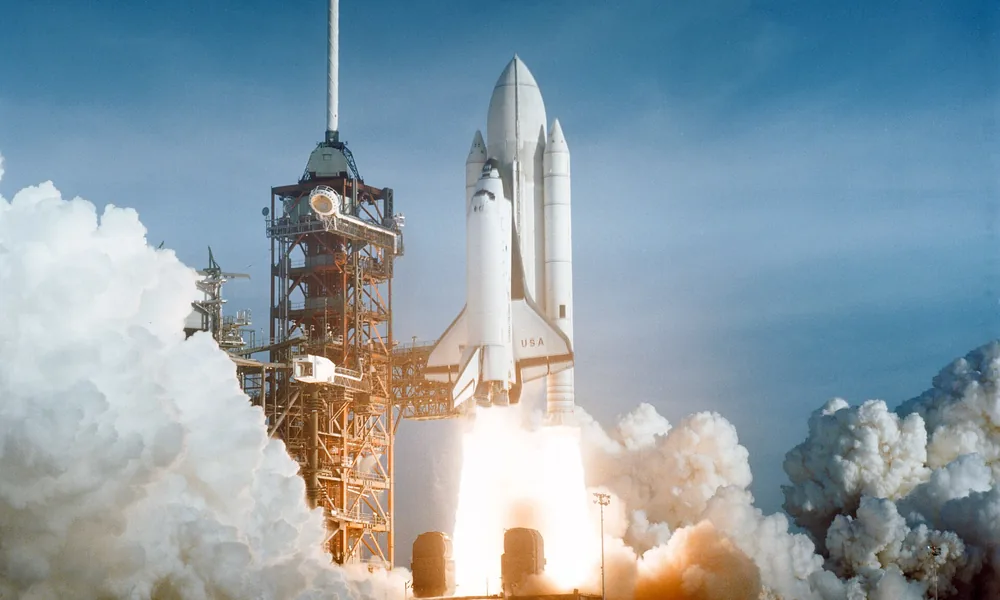
The worst type of all is the film with no original footage: library clips stitched together with narration that pretends the crew followed a mission. The tell is repetition — the same rocket launch appears in a film about the Moon and another about Mars. The failure is a film with nothing of its own to show. If it never names a verifiable mission or credits a cinematographer, it did not film space. It bought it.
2. The CGI spectacle
The CGI spectacle opens with a beautiful animation — a black hole swallowing a star, a planet forming from dust, a spacecraft gliding past Saturn — and then never stops animating. The graphics are genuinely impressive, which is the problem: they hide the fact that the film has almost nothing to say. A good documentary uses CGI to show what cameras cannot, like the inside of a star or the shape of spacetime, and then returns to real evidence. The spectacle film uses CGI instead of evidence, because animation is cheaper than a mission, an observatory, or an interview with someone who knows.
3. The doom montage
The doom montage opens with an asteroid, a dying sun, a dead planet, and a voiceover intoning that humanity is doomed — then ends, having offered nothing. No scientists explain what is happening, no solutions are shown, and no viewer leaves knowing what to do. Fear is easy to film and hard to argue with, which is why weak productions lean on it. A good documentary shows the mechanism — how an impact is detected, how a deflection mission works — and the people working on fixes. The doom montage shows the damage and stops, because stopping is cheaper than explaining.
4. The alien-conspiracy tease
The alien film promises a mystery — a signal, a structure on the Moon, a craft “science cannot explain” — and then spends ninety minutes not finding it. Every five minutes the narrator asks “could it be…?” and every answer is another question. The footage is real enough: a blurry light, a radar blip, a witness who saw something once. The dishonesty is structural — the film is built around an absence, filled with speculation, music, and CGI of a craft that never appears. It teaches less about space than a five-minute clip of a real telescope at work.
5. The celebrity travelogue
The celebrity travelogue sends a famous face to a launch site and calls it a space documentary. The presenter walks around the pad, interviews engineers from a viewing stand, and gazes at the sky — but never explains how a rocket works, never spends time with the data, and never lets the science lead. The tell is the ratio: if an hour-long film contains less than ten minutes of real explanation, it is a travel show with a space theme. The best space films are made by people who spend months with the subject; the worst by people who spent a long weekend near it.
6. The single-mission stunt film
The single-mission stunt film picks one charismatic event — usually a launch, a landing, or a spacewalk — and stretches it across ninety minutes. The first twenty minutes are genuinely good: the rocket is magnificent, the footage is strong, and the engineering is real. Then the film runs out of material and repeats itself: the same countdown six times, the same fact restated by three experts. A great single-subject film goes deep; a stunt film goes wide and shallow, mistaking one beautiful launch for a whole story about space.
7. The talking-head lecture
The talking-head lecture is the opposite failure: all science, no space. Experts sit in chairs, in offices and studios, and explain the cosmos while the camera stays firmly on the ground. Footage of space appears in brief, decorative bursts between interviews. The information is often accurate, but the film forgets that a documentary is a visual medium. A lecture belongs in a classroom. A documentary about space should show you space, and a film that spends an hour telling you about the stars you never see has failed at its one job.
8. The lazy sequel
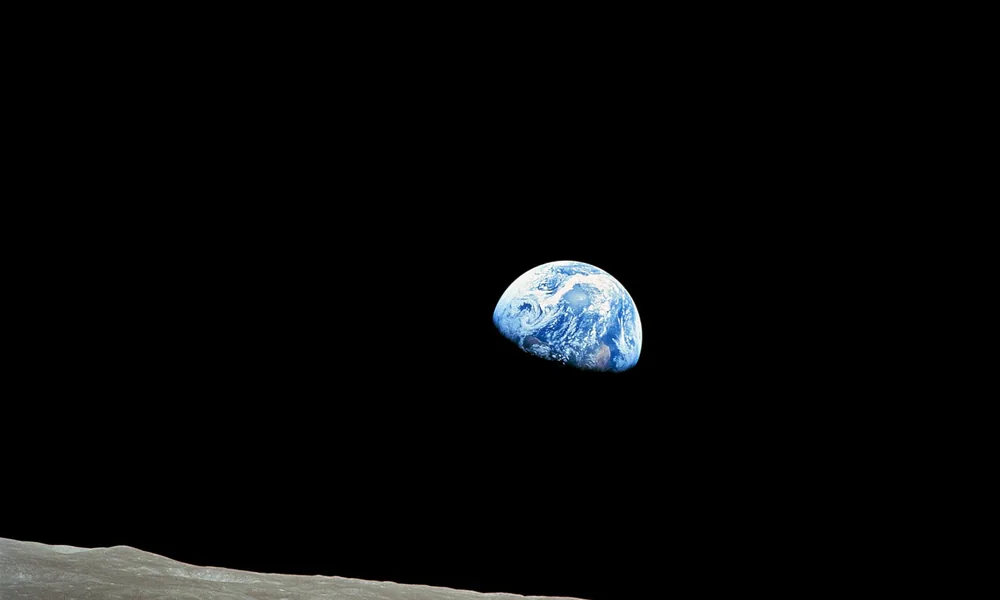
The lazy sequel takes a good space documentary and makes it again, worse. Old clips are re-cut with new narration, a few fresh interviews are bolted on, and the title promises a revelation that never arrives. The original earned its reputation with months of research; the sequel earns its budget with an editing suite. Fans of the original are the most disappointed, because they recognise the footage — the same launch, the same Earthrise, the same astronaut — and realise they are watching a film they have already seen, narrated as if it were new.
How to spot a bad space documentary in the first ten minutes
The fastest test is the credits and the first real sequence. A serious documentary names its advisers, missions, and sources in the opening minutes, and its first real sequence shows a specific place doing something specific — a telescope tracking, a control room during a burn, a rover on real terrain. A weak one opens with generic beauty shots and a narrator calling space “vast,” “mysterious,” and “largely unexplored.” Count the minutes before you see a scientist doing fieldwork rather than sitting in a chair. Three “could it be” moments in ten minutes is an alien film. Zero scientists at work in ten minutes is a travelogue.
What the best space documentaries do instead
The best space documentaries do the opposite of everything above. They film in named places, with named scientists, over months rather than days, and they show the work: the wait, the failed test, the launch that did not go, the data that did not fit. They explain mechanisms, not just outcomes — not only that a star explodes, but why the physics says it must. They give you scale, from a single photon to a whole galaxy. The strongest ones also admit what they do not know — the most reliable sign of honest science filmmaking.
Checklist: before you press play
- Check the credits: does the film name scientific advisers, real missions, and its sources?
- Watch the first ten minutes: a specific place doing something specific, or only generic beauty shots?
- Count the “could it be” moments — three in ten minutes means an alien film, not a documentary.
- Look for scientists at work, not just in chairs — fieldwork separates a film from a lecture.
- Check who funded it: a single sponsor with no independent broadcaster is a warning sign.
- If the same launch or Earth shot appears in two “missions,” stop — it is recycled stock.
Frequently asked questions
What makes a space documentary bad?
The most common failures are recycled stock footage, CGI covering for weak science, doom with no solutions, and speculation sold as mystery. A bad space documentary shows you the cosmos without engaging with it.
Are space documentaries with celebrity presenters always bad?
No. A presenter is fine when the presenter does the work — visiting observatories, spending time with scientists, and letting the science lead. The problem is the travelogue, where the presenter stays on the surface. Judge the film by its explanation minutes, not its star.
How can I tell if space documentary footage is recycled?
Watch for the same launch, Earth shot, or nebula appearing in different “missions,” and check whether the film names its missions and sources. Serious productions credit specific shoots; compilations hide behind generic narration.
Why are so many space documentaries about doom?
Fear is cheap to film and hard to argue with, so weak productions lean on it. Space holds real dangers, but a good documentary explains the mechanism and the fixes. A film that shows only asteroids leaves viewers less informed than they started.
What should a good space documentary show instead?
Named places, named scientists, months of research, and mechanisms explained — not just outcomes. The best films show the work behind the footage and admit what science does not know yet.
Where can I find the best space documentaries?
Start with films that credit real missions, independent broadcasters, and named scientific advisers, and use the best space documentaries as your baseline.
The bottom line
The worst documentaries about space in 2026 are bad because of how they are made. Recycled stock, CGI with no science, doom with no solutions, alien teases, dry travelogues, single-mission padding, talking-head lectures, and lazy sequels all waste the most spectacular subject there is. The fix is simple: check the credits, watch the first ten minutes, and demand named missions, scientists at work, and mechanisms explained.
For the other side of the comparison, our guide to the best documentaries about space in 2026 covers the films that get it right. The same warning signs apply across the genre — see the worst documentaries about science and the worst documentaries about nature.


