The worst doormats for your entrance look harmless in the shop, yet they quietly undo everything your hallway is supposed to do. They slide underfoot, shed fibres across clean floors, trap rainwater against wood, and let mud walk straight past them into the rest of the house.
Most bad doormats fail in the same predictable ways. They are too thin to scrape shoes properly, too light to stay in place, too absorbent to dry out, or made from materials that fall apart after a few wet weeks. The problem is rarely the price alone.
This guide looks at the worst doormats for your entrance, from flimsy coir mats that shed everywhere to smooth rubber mats that turn slippery when wet. It explains why each type fails and what to look for instead, so you can choose a mat that keeps dirt outside.
Key takeaways
- The worst doormats are too thin, too light, or too smooth to trap dirt and stay safely in place.
- Loose coir, cheap foam, and novelty mats shed, curl, crack, or soak up water instead of handling it.
- A good entrance mat needs a heavy base, a non-slip backing, and enough texture to scrape shoes.
- Measure your doorway before buying, because a mat that is too small leaves mud on the floor beside it.
- Replace a mat when its edges curl, its backing cracks, or it no longer dries between uses.
Why a Bad Doormat Causes More Trouble Than No Mat
A bad doormat creates a false sense of security. You wipe your shoes, assume the dirt stayed outside, and then wonder why the hallway needs mopping every day. A thin mat lets grit and moisture pass through, and those particles scratch hard floors and embed themselves in carpets.
Safety is the bigger concern. A mat that slides, bunches, or curls at the corners is a trip hazard, especially for children, older visitors, and anyone carrying shopping through the door. A smooth mat holding a film of water is just as dangerous.
Bad mats also damage the floor beneath them. A soaked mat left on wood can leave dark stains and encourage mould between boards, while a cheap rubber backing can stick, crack, and leave black marks that are hard to remove. Choosing the wrong mat is a daily cleaning and safety problem.
The Worst Doormats for Your Entrance
The mats below cause the most complaints, the most replacements, and the most mess. Some fail on day one, while others seem fine for a month and then fall apart quickly. What they share is a basic mismatch between what an entrance needs and what the mat delivers.
Thin Loose Coir Mats That Shed Everywhere
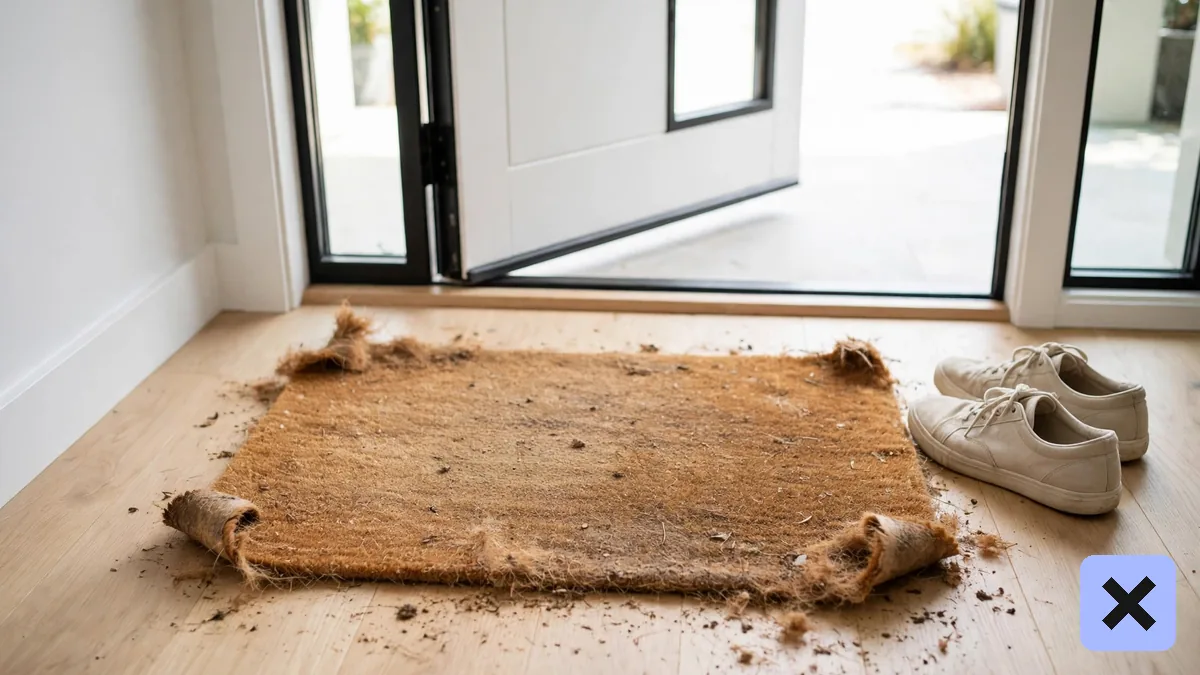
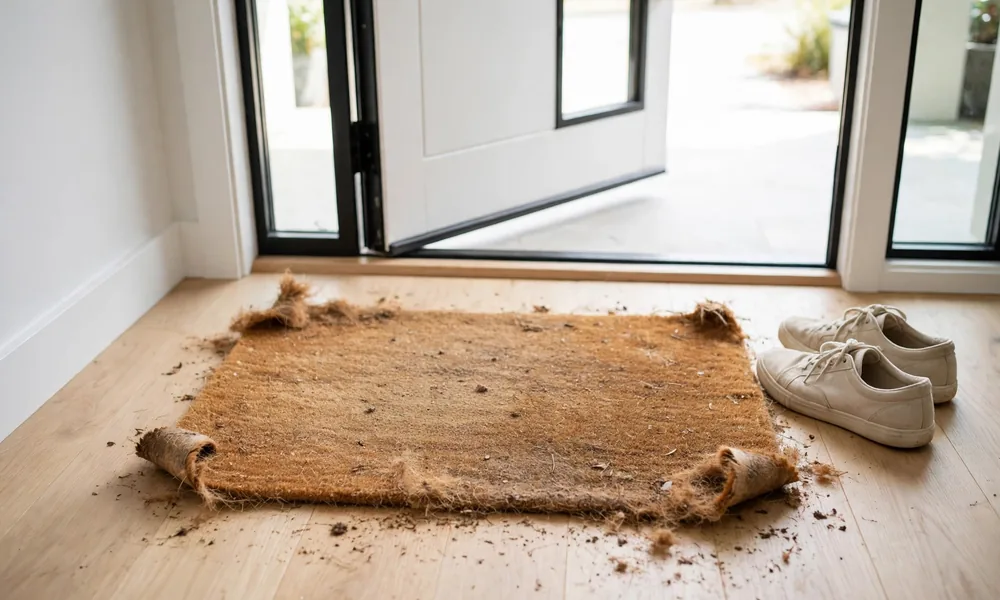
Coir can be excellent when it is thick, tightly woven, and properly backed, but thin loose coir is one of the worst choices for an entrance. The fibres pull out with every footstep, leaving a trail of brown strands across the hallway, and the mat thins in the middle where feet land most often.
Smooth Rubber Mats With No Texture
A smooth rubber mat sounds practical because it is waterproof and easy to hose down, but a flat rubber surface does almost nothing to clean shoes. Dirt and water sit on top of it instead of being scraped off, and the next person to step on it carries that mixture straight inside. When the surface is wet, it becomes slippery.
Lightweight Foam and Fabric Mats
Foam and thin fabric mats are designed for comfort, not for entrances. They feel soft underfoot, which is pleasant in a bedroom, but they compress under shoes, hold moisture, and offer almost no scraping power. A fabric mat at the front door soaks up rain like a sponge and quickly develops a sour smell.
Novelty and Slogan Mats
Novelty mats with jokes and bright pictures are fun for about a week, and then the problems begin. Most are made from thin printed fabric glued to a flimsy rubber base, so the print wears off, the fabric peels, and the base cracks. They are usually too small for a proper entrance, so visitors step half on the mat and half on the bare floor.
Mats That Are Too Small for the Doorway
Size is one of the most overlooked features of a doormat, and a mat that is too small is one of the worst doormats for your entrance no matter how well it is made. A good mat should be at least as wide as the door and long enough for two steps, so both feet land on it before stepping onto the clean floor.
Cheap Mats With No Non-Slip Backing
A doormat without a proper non-slip backing is a hazard on hard floors. Wood, tile, and laminate offer almost no friction, so a mat with a smooth underside will creep forward every time someone steps on it. Over a day, it can end up halfway across the hallway or folded under the door.
High-Pile and Shaggy Entrance Mats
High-pile and shaggy mats look luxurious, but they are a poor choice for an entrance. The long fibres trap dirt deep inside where a vacuum cannot reach it, and they hold moisture for hours after rain. Shoes sink into the pile instead of scraping against it, so mud stays on the soles.
How the Worst Doormats Compare
The table below summarises the main failures of the worst entrance mats, so you can spot a bad buy before you bring it home. The worst mats are light, thin, smooth, or poorly backed, while the best mats are heavy, textured, and easy to clean.
| Mat type | Main problem | Biggest risk | How long it lasts |
|---|---|---|---|
| Thin loose coir | Sheds fibres constantly | Mould and mess indoors | Weeks to months |
| Smooth rubber | No scraping texture | Slips when wet | Months before cracking |
| Foam or thin fabric | Soaks up water | Smells and slides | A few weeks |
| Novelty slogan mat | Print wears off fast | Curls and peels | One season |
| Too-small mat | Misses most footsteps | Dirt spreads past it | Looks wrong from day one |
| No non-slip backing | Slides on hard floors | Trips and falls | Until the backing wears out |
| High-pile shaggy mat | Traps dirt deep inside | Stays damp and dirty | Flattens within months |
Use the table as a quick check when you shop. If a mat matches two or more rows, it is almost certainly a bad choice for a busy entrance.
Signs Your Current Doormat Belongs in the Bin
Many people keep a bad doormat far too long, because the damage happens gradually. The mat thins in the middle, the edges lift, and the hallway gets dirtier, but each change is small enough to ignore. A monthly check will tell you whether your mat is still doing its job.
Start by looking at the floor around the mat. If there is a clear trail of dirt, grit, or fibres beyond it, it is no longer trapping enough. Lift the mat and check underneath. Damp patches, dark stains, or a musty smell mean it is holding water against the floor, and a thin, flat, or spongy middle means it has lost its structure.
Finally, test the grip. Stand on the mat and shift your weight from side to side, then step on it at an angle as you would when coming through the door in a hurry. If it moves or bunches, replace it. A good mat should stay where you put it and spring back after use.
What to Look for Instead
A good entrance mat is not complicated, but it does need the right combination of features. Weight comes first. A heavy mat stays in place, resists wind, and feels solid underfoot. Look for a mat that is difficult to lift with one hand and that has a dense, substantial feel when you press it.
Texture comes next. The surface should have ridges, grooves, bristles, or a rough woven pattern that scrapes dirt from soles. Run your hand across it. If it feels smooth or soft, it will not clean shoes properly. The best mats combine scraping power with drainage, so water runs off instead of pooling.
Backing and size matter just as much. Choose a mat with a thick, flexible, non-slip rubber backing that grips hard floors without leaving marks, and make sure the mat is wide enough for the door and long enough for two steps. The material should be easy to clean and quick to dry. Think about your entrance as a whole, not just the mat. For a wider look at floor coverings that fail in similar ways, the guide to the worst rugs for different rooms shows how the same mistakes repeat across the house.
Entrance Doormat Checklist
Use this checklist before you buy, and again when you are deciding whether to replace the mat you already have. If a mat fails more than two items, it is probably one of the worst doormats for your entrance.
- It is at least as wide as the door and long enough for two steps.
- It is heavy enough to stay in place on a smooth floor without sliding.
- It has a textured surface that scrapes shoes instead of feeling smooth.
- It has a proper non-slip backing that still grips after weeks of use.
- It drains or sheds water quickly and dries fully between rainy days.
- It is easy to clean by shaking, brushing, or hosing, and it shows no curling, cracking, or shedding.
Frequently Asked Questions
How often should an entrance doormat be replaced?
Most entrance mats last between one and three years, depending on traffic, weather, and material. Replace a mat sooner if its edges curl, its backing cracks, it sheds constantly, or it no longer dries between uses.
Are coir doormats good or bad for entrances?
Thick, dense coir with a strong backing can be excellent, because the stiff fibres scrape shoes well and the material handles outdoor use. Thin, loose coir is one of the worst choices, because it sheds, absorbs water, and falls apart quickly.
What is the best material for a wet entrance?
Textured rubber, heavy-duty polypropylene, and dense synthetic bristles work best in wet entrances, because they scrape shoes, drain water, and dry quickly. Avoid fabric, foam, and high-pile mats in wet conditions, because they soak up water and stay damp for hours.
Should a doormat go inside or outside the door?
Ideally, use both. An outdoor mat scrapes off the worst mud and water before shoes cross the threshold, while an indoor mat catches the finer dirt that remains. Two mats also last longer, because each one does less work.
Why does my doormat keep sliding across the floor?
A sliding mat usually has a worn, smooth, or missing non-slip backing, or it is simply too light for a hard floor. Water underneath the mat makes sliding worse, so dry the floor before putting the mat back. The same sliding problem affects other floor coverings too, and the guide to the worst car mats shows how a poor backing causes trouble in vehicles as well.
How do I clean a doormat properly?
Shake or beat the mat outside once a week, brush the surface to lift embedded dirt, and hose it down once a month if the material allows it. Let the mat dry completely before putting it back, and clean the floor underneath at the same time. If a mat still smells after cleaning and drying, it should be replaced, much like the worst cleaning products that promise a deep clean but leave residue and odour behind.
The Bottom Line
The worst doormats for your entrance are the ones that look welcoming but fail at the only job that matters. They shed, slide, soak, curl, and let dirt walk straight into your home, while a good mat quietly traps mud, stays put, and keeps the hallway clean. Choose a heavy, textured mat with a proper non-slip backing, size it to your doorway, and replace it the moment it stops doing its job.


